What is Vassar College’s overall acceptance rate, and how selective is it?
Vassar College’s overall acceptance rate for the Class of 2029 was approximately 17.7%, placing it firmly in the top-15 LAC selectivity tier alongside Hamilton, Wellesley (13.7%), and Wesleyan. Vassar’s selectivity reflects strong applicant pool quality and the college’s longstanding national reputation among intellectually serious applicants drawn to its specific institutional culture (creative, literary, dramatic, multidisciplinary). Admitted students typically present academic profiles with middle 50% SAT scores in the 1450-1530 range, comparable to peer top-15 LACs.
The strategic implication for affluent families is that Vassar is not a “safety” relative to top-10 LACs. Vassar’s culture is distinctive enough that strong applicants who do not authentically fit Vassar’s intellectual and creative identity often face deferral or denial regardless of academic credentials. For broader context on top-tier LAC selectivity, see our Williams vs. Amherst vs. Swarthmore guide. For LAC vs research university comparisons, see our Liberal Arts Colleges vs. Research Universities guide.
What is Vassar’s Early Decision strategy?
Vassar offers both Early Decision I (binding, November 15 deadline) and Early Decision II (binding, January 1 deadline). The college has not yet formally published the exact Class of 2029 ED-specific acceptance rate, but historical patterns are well-documented: the Class of 2028 ED rate was 31.20%, the Class of 2027 was 33.46%, and the Class of 2026 was 38.62% (per institutional admissions reports). The trend toward tighter ED rates reflects Vassar’s growing application volume and selectivity over recent admissions cycles. The Class of 2029 ED rate is estimated at approximately 33% based on the documented 2.1x ED advantage over the overall rate.
The strategic implication is that ED applicants face a meaningfully higher admit probability than Regular Decision applicants – approximately twice the overall rate. Vassar fills approximately half of its incoming class through ED I and ED II combined, similar to peer top-15 LACs. The choice to apply ED to Vassar should be driven by genuine first-choice fit with Vassar’s specific intellectual and creative culture rather than perceived statistical advantage. Vassar’s admissions readers are skilled at identifying strategic ED applications without authentic engagement. For broader analysis of ED versus RD strategy, see our ED vs. RD Advantage Calculator.
What does the Class of 2029 student profile look like?
| Metric | Vassar Class of 2029 |
|---|---|
| Overall acceptance rate | ~17.7% |
| ED acceptance rate (Class of 2029, estimated) | ~33% (~2.1x ED advantage over RD) |
| ED acceptance rate (Class of 2028, historical) | 31.20% |
| ED acceptance rate (Class of 2027, historical) | 33.46% |
| ED acceptance rate (Class of 2026, historical) | 38.62% |
| Middle 50% SAT | 1450-1530 |
| Total undergraduate enrollment | ~2,400 |
| Setting | Poughkeepsie, New York (Hudson Valley, ~75 miles north of NYC) |
| Defining academic features | Open Curriculum (no distribution requirements); strong drama, film, English, art history, multidisciplinary programs |
| Coed since | 1969 (originally a Seven Sisters women’s college, founded 1861) |
| Athletics conference | Liberty League (Division III) |
| 2025-26 cost of attendance | ~$94,000-$95,000 |
| Financial aid policy | Need-blind for U.S. applicants; meets 100% of demonstrated need |
What is Vassar’s Open Curriculum, and how does it shape the academic experience?
Vassar operates an Open Curriculum: students are not required to complete distribution requirements across academic divisions, and there is no required general education core beyond a single freshman writing seminar. Students can begin substantive work in their area of interest from their first semester and pursue intellectual depth without checking general-education boxes. The Open Curriculum is similar in structure to those at Brown, Amherst, Smith, and Hamilton, and meaningfully different from the structured curricula at Williams, Wellesley, and Pomona.
The strategic implication for applicants is that Vassar is selecting for students who can articulate a coherent intellectual trajectory and use the Open Curriculum responsibly. Applications that emphasize a specific intellectual interest, demonstrate coursework or independent work in that area, and articulate how the Open Curriculum will accelerate genuine intellectual development consistently outperform applications that present as well-rounded without intellectual focus. The Open Curriculum is a feature, not a forgiving structure: students who arrive without intellectual focus often struggle to make full use of the academic flexibility it offers.
What is Vassar’s distinctive multidisciplinary and creative identity?
Vassar’s defining academic features include the strongest drama, film, art history, and English programs of any liberal arts college, plus distinctive multidisciplinary programs (Africana Studies, Cognitive Science, Earth Science and Geography, Environmental Studies, Film, International Studies, Jewish Studies, Latin American and Latinx Studies, Media Studies, Religion, Science Technology and Society, Urban Studies, Women’s Studies). The college’s long tradition of creative and intellectual seriousness has produced graduates who shape American literature, film, theater, journalism, academia, and public life: Meryl Streep, Lisa Kudrow, Anne Hathaway, Jonathan Chait, Anthony Bourdain, and many others.
The strategic implication for applicants is that Vassar is selecting for intellectual and creative seriousness paired with multidisciplinary curiosity. Applicants who present as narrow specialists in one traditional discipline without engagement with creative or multidisciplinary work often signal poor fit. Strong Vassar applications demonstrate authentic engagement with at least one of Vassar’s distinctive areas (drama, film, art history, English, multidisciplinary studies, creative writing) plus the intellectual range to engage with the full Open Curriculum.
What is Poughkeepsie, New York like as a setting?
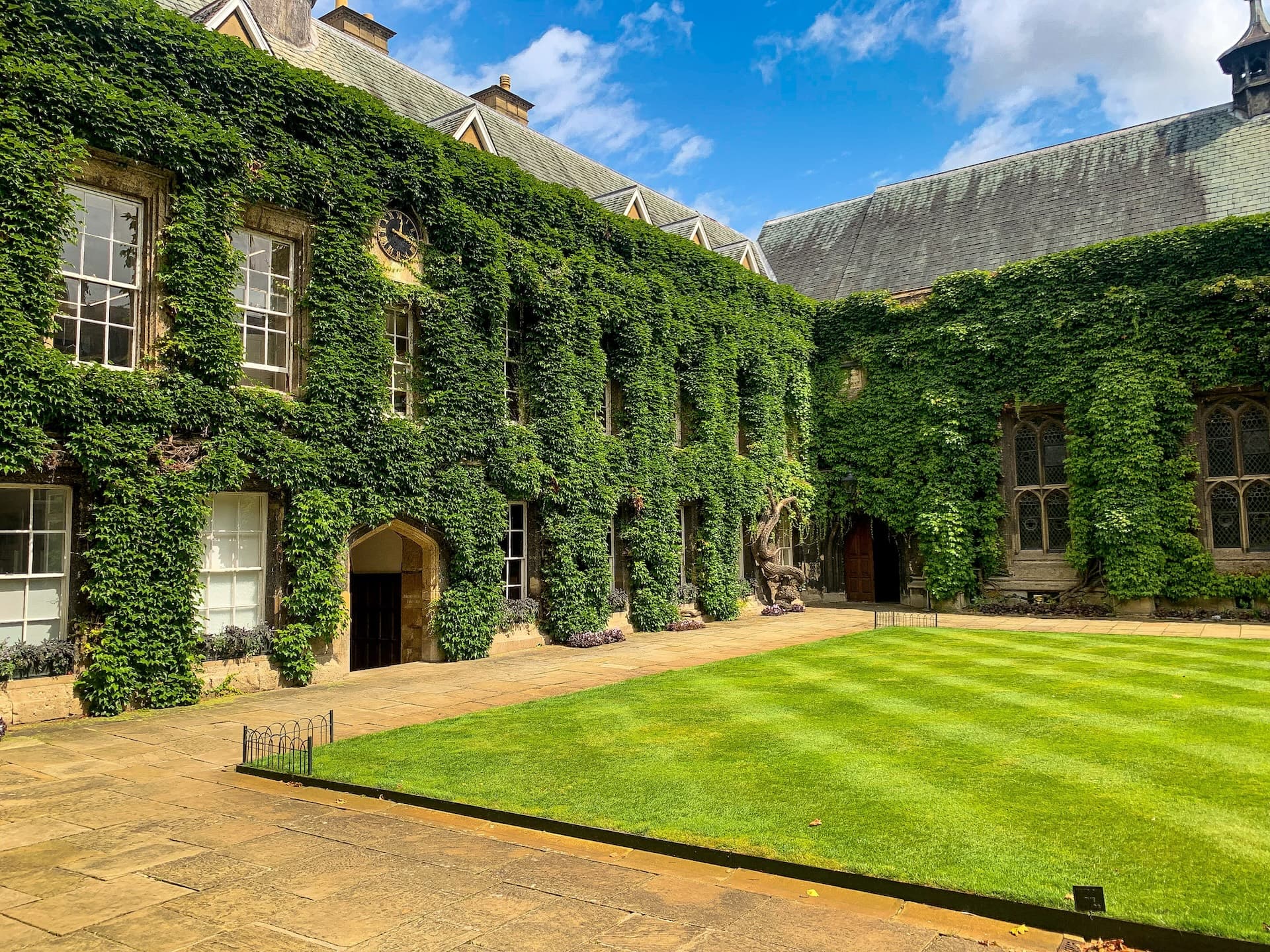
Vassar occupies a contiguous campus in Poughkeepsie, New York, in the Hudson Valley approximately 75 miles north of New York City. The campus is genuinely beautiful: 1,000 acres of architecturally distinctive Tudor-Gothic buildings, the Vassar Farm and Ecological Preserve, traditional quads, the Frances Lehman Loeb Art Center, and the iconic Bridge for Laughing and Crying. The setting blends rural New England-style residential character with proximity to a major metropolitan area: Manhattan is approximately 90 minutes by Metro-North train, making weekend trips and internship access straightforward.
Poughkeepsie itself is a mid-sized Hudson Valley city of approximately 30,000 residents that is meaningfully less affluent than the Vassar campus and that offers a more limited downtown experience than Northampton (Smith) or Burlington (Middlebury). Students who want urban energy use New York City via the train; students who want a contained residential college experience in a beautiful natural setting find Vassar appealing. The Hudson Valley setting also produces year-round outdoor access (hiking the Catskills, foliage, kayaking) that distinguishes Vassar from contained suburban LACs.
What kind of applicant does Vassar actually admit?
Vassar admissions readers are looking for intellectual and creative seriousness paired with authentic engagement with the college’s specific identity. Vassar’s culture is genuinely distinctive: students describe a campus where intellectual conversation is a daily expectation, creative work is taken seriously across disciplines, and political and social engagement is woven into student life rather than treated as an extracurricular sideline. Admissions readers screen for fit with that culture: applicants who present primarily through individual achievement metrics without demonstrating intellectual or creative engagement, or whose interests are purely preprofessional without intellectual depth, often face deferral or denial.
The strongest Vassar applications demonstrate three things. First, intellectual depth in at least one substantive area aligned with Vassar’s distinctive strengths (drama, film, art history, English, creative writing, multidisciplinary studies, social sciences). Second, authentic creative or intellectual engagement beyond resume-building, demonstrated through original work, sustained projects, independent reading, or substantive engagement with creative or intellectual communities. Third, character and engagement with Vassar’s specific institutional culture (intellectual conversation, creative seriousness, political and social engagement). Applications that present as well-rounded preprofessional profiles without these three elements consistently underperform expectations.
What is Vassar’s supplemental essay strategy?
Vassar’s supplemental essay set is shorter than some peer LACs but no less consequential. The “why Vassar” essay rewards applicants who demonstrate concrete engagement with the college’s distinctive features: named professors whose work the applicant has engaged with, specific drama, film, English, art history, or multidisciplinary programs, the Open Curriculum philosophy, or specific Vassar intellectual traditions. Generic answers about “small classes,” “supportive community,” or “beautiful campus” fail to demonstrate authentic fit.
Vassar also typically includes a “Your Space” prompt or similar that probes the applicant’s intellectual or creative personality through a freer-form response. Strong responses demonstrate authentic creative or intellectual engagement (a project the applicant has pursued, a question they want to answer, a creative or intellectual community they have shaped or been shaped by), not resume content. The strategic implication is that families should approach Vassar’s supplements as opportunities to demonstrate substantive intellectual or creative alignment with the college’s pillars. Applicants who can articulate why the Open Curriculum, the multidisciplinary tradition, or the creative seriousness of the campus specifically matters to their intellectual trajectory consistently outperform expectations. Generic Vassar applications written as if Vassar were any other top LAC fail.
How does Vassar compare on cost and financial aid for high-income families?
Vassar’s 2025-26 total cost of attendance is approximately $94,000-$95,000. The cost is comparable to peer top-tier LACs (Williams, Amherst, Pomona, Swarthmore, Wellesley, Smith, all in the $93,000-$97,000 range) and to elite research universities (Yale, Penn, Harvard at or near $94,000). Vassar is need-blind for U.S. applicants and meets 100% of demonstrated financial need with strong institutional aid backed by a substantial endowment.
For affluent families above standard need-based thresholds, Vassar’s institutional aid is meaningful but per-student endowment is somewhat smaller than the wealthiest peers (Williams, Amherst, Pomona, Swarthmore). Families should evaluate the actual aid package after applying rather than assume aid generosity comparable to the wealthiest peer LACs. Vassar does not currently offer the most expansive tuition-free policies that some peers (Mount Holyoke, with its 2025-26 tuition-free policy for families under $150,000) have implemented. For broader analysis of how high-income families fare under elite financial aid policies, see our Harvard financial aid expansion guide.
What is the right academic profile for a Vassar applicant?
Vassar publishes detailed enrollment, testing, and academic profile data through its Common Data Set via the Office of Institutional Research. Vassar’s admitted student profile sits at the upper end of selective LAC admissions. Successful applicants typically present unweighted GPAs in the 3.85-4.0 range with rigorous course loads (multiple AP, IB, or college-level courses, particularly in their area of intellectual focus). Standardized testing is currently optional at Vassar, but admitted students who submitted scores reported middle 50% SAT scores in the 1450-1530 range or ACT scores of 33-34. Strong applicants who can submit scores in this range typically benefit from doing so.
Beyond grades and scores, the academic profile that succeeds at Vassar demonstrates intellectual or creative depth in at least one substantive area aligned with Vassar’s distinctive strengths. Successful applicants often show evidence of original creative work (writing, film, theater, art), independent research, sustained engagement with intellectual or creative communities, or substantive engagement with multidisciplinary topics. The “spike plus institutional fit” profile that succeeds at peer LACs also succeeds at Vassar, with particular weight given to creative and intellectual seriousness over preprofessional resume-building.
What are Vassar’s distinctive programs and post-graduation outcomes?
Vassar’s research, creative, and post-graduation outcomes are exceptional for an institution of its size. The college sends strong cohorts to top graduate programs in academia (PhD placement is among the strongest at any LAC, particularly in English, history, art history, and film), top medical schools, top law schools, and top employers across journalism, publishing, film, theater, finance, consulting, and the arts. The Frances Lehman Loeb Art Center provides distinctive curricular and research access for art history and studio art students, and the Powerhouse Theater (a professional summer theater on the Vassar campus operated in partnership with New York Stage and Film) provides nationally significant pre-professional opportunities for drama and theater students.
Vassar’s alumni network is among the most influential of any LAC in journalism, publishing, film, theater, and the arts. Notable alumni include Meryl Streep, Lisa Kudrow, Anne Hathaway, Jonathan Chait, Anthony Bourdain, Jane Smiley, Nicholas Negroponte, and many others who have shaped American literary, dramatic, journalistic, and cultural life. The alumni network is geographically dispersed but particularly strong in New York City, Los Angeles, and the cultural and creative capitals where Vassar graduates concentrate.
What are the most common mistakes applicants make when applying to Vassar?
Five mistakes recur. First, treating Vassar as a “safety” relative to top-10 LACs. Vassar’s 17.7% Class of 2029 acceptance rate is competitive, and Vassar’s distinctive culture means strong applicants without authentic fit face deferral or denial regardless of credentials. Second, presenting as a preprofessional applicant without intellectual or creative seriousness. Vassar is selecting for intellectual and creative depth, and applications focused on resume-building without authentic engagement signal poor fit.
Third, generic “why Vassar” essays that could apply to any top LAC. Strong essays demonstrate specific engagement with Vassar’s drama, film, English, art history, multidisciplinary programs, the Open Curriculum, or specific Vassar intellectual traditions. Fourth, applying ED based on perceived statistical advantage rather than authentic fit with Vassar’s specific identity. Vassar’s admissions readers identify strategic ED applications without substantive engagement. Fifth, ignoring the multidisciplinary tradition in essays. Vassar is selecting for students who can articulate intellectual range and connections across disciplines, and applications that emphasize narrow specialization signal poor fit.
For deeper analysis of why high-stat applicants get rejected, see why valedictorians get rejected from Ivies. For broader application strategy, see our college application spike strategy guide. Vassar’s pattern of admissions reader recognition is broadly consistent with NACAC-documented norms across the most selective LACs (see the National Association for College Admission Counseling State of College Admission report and IECA guidance for elite LAC applicants).
Best for which student?
Best for students drawn to creative seriousness across drama, film, art history, English, and the multidisciplinary tradition: Vassar is the strongest LAC for these specific disciplines. Best for students who want the Open Curriculum freedom to design their academic path with authentic intellectual focus: Vassar over more structured LACs like Williams or Wellesley. Best for students drawn to the Hudson Valley setting with proximity to New York City via Metro-North: Vassar over more remote LACs like Williams or Middlebury. Best for students whose post-graduate trajectory points toward journalism, publishing, film, theater, art, or the cultural professions: Vassar’s alumni network in these fields is among the strongest at any LAC. Best for students who value creative and intellectual seriousness in daily campus culture: Vassar’s culture is genuinely distinctive in this regard. For federal enrollment, financial aid, and outcome data on Vassar, see the NCES College Navigator profile for Vassar.
Frequently Asked Questions About Getting Into Vassar College
Vassar sits in the Hudson Valley city of Poughkeepsie, in New York State, roughly 75 miles north of Manhattan. Its nearly 1,000-acre campus is a designated arboretum prized for its scenery and architecture, and a rail line reaches New York City in under two hours. The setting pairs a self-contained, leafy residential campus with reasonable access to the city, suiting students who want both calm surroundings and connection.
Hard; Vassar’s acceptance rate runs in the high teens to around 20 percent, selective though more accessible than the most elite liberal arts colleges. Admitted students typically present strong grades and rigorous courses, and because Vassar values fit and demonstrated interest, essays and engagement carry real weight alongside academics. Holistic review means a thoughtful, well-rounded application matters as much as raw numbers at Vassar’s level of selectivity.
Vassar is known for distinction in the arts, humanities, and creative disciplines, a flexible open curriculum, and a long progressive, intellectually independent tradition. Its strongest reputations span theater, film, the study of art history, literature, and the sciences, alongside a striking campus. Historically a women’s college and a Seven Sisters member, it retains a reputation for academic freedom and a distinctive, artsy culture among elite liberal arts schools.
Yes to both; Vassar was founded in 1861 as a women’s college and was one of the historic Seven Sisters. It became coeducational in 1969, after declining an offer to merge with Yale, and has enrolled men and women ever since. Today it is fully coed across all programs, though its Seven Sisters heritage remains part of its identity and progressive reputation.
Vassar has used a test-optional policy in recent admissions cycles, allowing applicants to choose whether to submit SAT or ACT scores, with non-submitters not disadvantaged in review. Testing policies among selective colleges shift frequently, so confirm the current requirement on Vassar’s admissions site for your application year. Under a test-optional policy, strong scores can still strengthen a file, but the review remains holistic regardless of whether you submit.
Yes, for applicants who choose to submit scores; Vassar considers the highest section results across multiple test dates, combining them into the best composite. A stronger Math from one sitting and stronger Reading and Writing from another count together, rewarding focused retakes. Because Vassar has been test-optional, sending scores is optional, but those who do benefit from the superscoring approach when their sections peaked on different dates.
No; Vassar awards only need-based financial aid and gives no merit, athletic, or academic scholarships. All aid follows demonstrated financial need, and Vassar meets full need for admitted students, with a longstanding commitment to access that includes generous, often loan-reduced packages. A high-achieving applicant cannot earn a discount for grades or scores, but families with financial need frequently find Vassar more affordable than its sticker price suggests.
Not a traditional standalone engineering major; Vassar is a liberal arts college focused on the arts and sciences, but it offers strong physics and a multidisciplinary path, and runs a 3-2 engineering option letting students combine Vassar study with an engineering degree at a partner university. Students set on a conventional engineering degree should weigh this, while those wanting a liberal arts foundation with science depth may find the structure appealing.
About Oriel Admissions
Oriel Admissions is a Princeton-based college admissions consulting firm advising families nationwide on elite university admissions strategy. Our team brings deep expertise across every dimension of the application, and our distinctive 360 approach develops strategy, positioning, activities, essays, and interviews as one coherent whole. To discuss your family’s admissions strategy, schedule a consultation.