How to Get Into The Dalton School: Admissions Strategy for NYC’s Progressive Pioneer
By Rona Aydin
What is The Dalton School and what makes it distinctive?
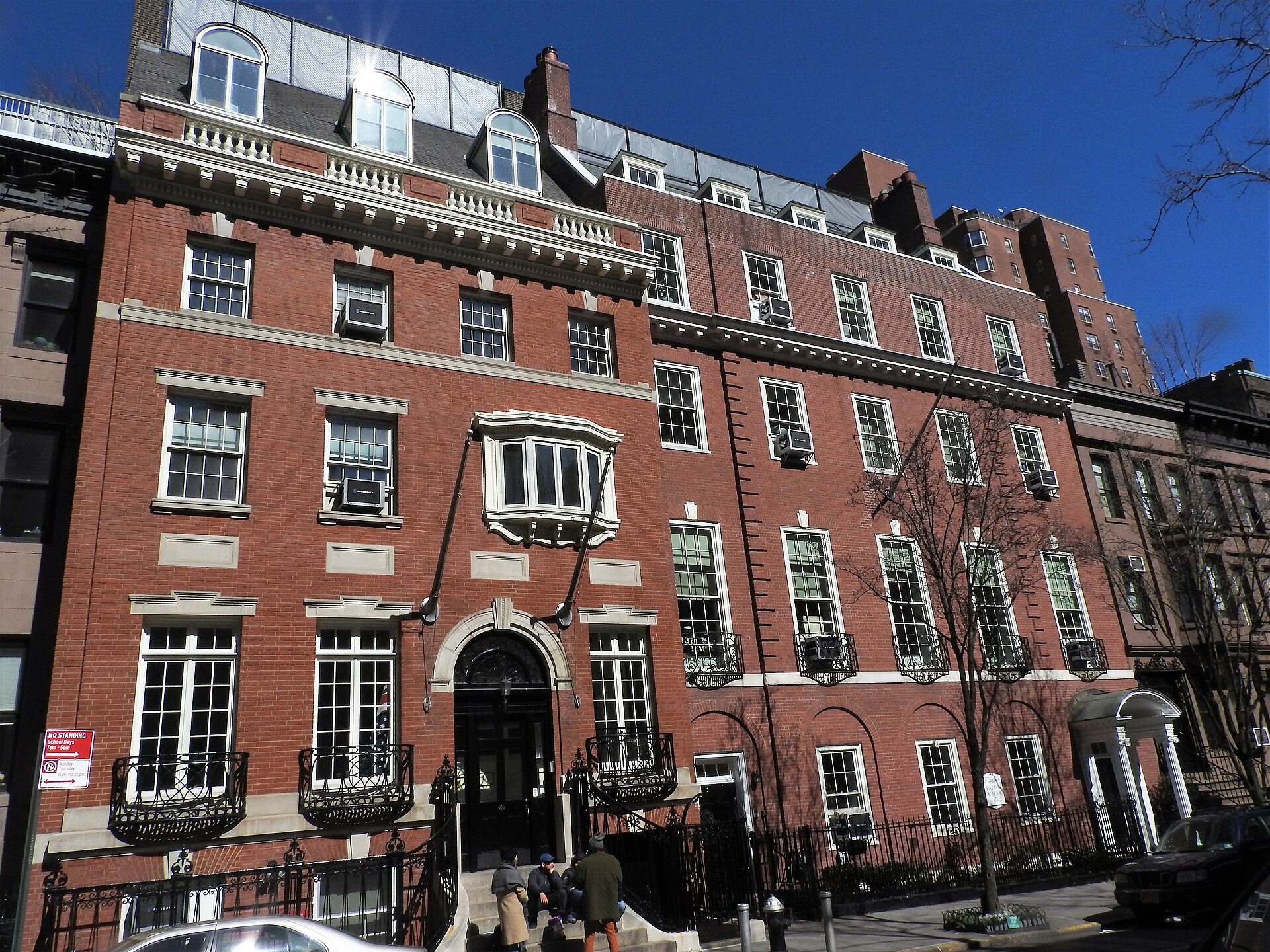
The Dalton School is a coeducational K-12 independent day school founded in 1919 by Helen Parkhurst as the Children’s University School. The school enrolls approximately 1,300 students across four buildings on Manhattan’s Upper East Side. Dalton operates with a 6:1 student-teacher ratio and an average class size of 16 students. The school is a member of the Ivy Preparatory School League and the New York Interschool.
| The Dalton School at a Glance | Detail |
|---|---|
| Type | Coed K-12 progressive independent day school |
| Founded | 1919 by Helen Parkhurst as Children’s University School |
| Location | Manhattan, Upper East Side (four buildings) |
| Enrollment | ~1,300 students |
| Student-faculty ratio | 6:1 |
| Average class size | 16 students |
| Acceptance rate (estimate) | ~13-15% at Kindergarten and Grade 9 entry points |
| Primary entry points | Kindergarten and Grade 9 |
| Tuition (2025-2026) | $67,480 (all-inclusive) |
| Financial aid | Over 20% of students receive aid (~$15M+ annual budget) |
| Affiliations | Ivy Preparatory School League, NY Interschool |
| Distinctive feature | Dalton Plan progressive curriculum (individualized learning, House system, Lab periods) |
What distinguishes Dalton from peer NYC private schools is the Dalton Plan, the progressive educational framework Helen Parkhurst developed after experimentation with Maria Montessori and visits to progressive schools in Europe including Bedales School in England. The Dalton Plan emphasizes individualized learning, student-teacher collaboration on personalized academic goals, House structure for mentorship, and Laboratory-style instructional periods. The school’s motto, “Go forth unafraid,” reflects its emphasis on student autonomy and intellectual courage.
What is Dalton’s acceptance rate?
Dalton does not publish an official acceptance rate. Independent admissions analyst estimates place Dalton’s acceptance rate near 13-15% at the Kindergarten and Grade 9 entry points (EduAvenues estimate, 2025). Dalton is among the larger top-tier NYC private schools, which gives the school more capacity per cohort than peer schools like Brearley or Collegiate but also generates more applications.
Non-entry grades (Grades 1-4, 5-8, 10-12 outside of the main entry points) admit only when current students leave the school, which is uncommon given Dalton’s strong retention. Families targeting non-entry grades should apply but maintain realistic expectations and parallel applications to peer NYC schools.
How does Dalton’s admissions process work?
Dalton follows the ISAAGNY coordinated calendar. Applications open in early September on the Ravenna platform. The priority financial aid application deadline is December 1. The complete Dalton application includes the online application form, parent statement, student essay (Grade 5 and up), teacher recommendations from current English and Math teachers plus a counselor, transcripts for the current and prior year, ISEE or SSAT scores (Grade 5 and up), and the required in-person interview and school visit.
The interview at Dalton must be done in person as part of a required school visit (Ivy Scholars admissions guide). There is no formal parent interview, though a written parent statement is required. Dalton’s admissions office reviews applications holistically and weighs each component. Decisions follow ISAAGNY’s schedule and are typically issued mid-March. Families respond via Ravenna within one week of decision and submit deposits to hold their spot.
What does Dalton cost in 2025-26 and what financial aid is available?
Dalton’s tuition for the 2025-2026 school year is $67,480 (Dalton School Office of Admission). The tuition is all-inclusive and covers class field trips and grade-level trips (e.g., second-grade NYC Landmarks/Empire State Building trip, eighth-grade Washington D.C. trip, ninth-grade orientation trip, and the senior trip). Musical instrument rental for music classes and ensembles (Grades 3-12), athletics uniforms and equipment (except footwear), and transportation to games (Grades 7-12) are also included. Parents Association dues ($100 per family) are separate, and Dalton Global Initiatives travel opportunities carry separate costs.
Over 20% of Dalton’s student body attends with the support of more than $15 million in need-based financial aid. The school commits to meeting 100% of demonstrated financial need by filling the gap between a family’s ability to pay and full tuition. All aid is need-based; no merit awards. Apply for aid concurrent with the admissions application; later requests are only considered for emergency circumstances.
What ISEE or SSAT scores does Dalton expect?
Dalton accepts both the ISEE and SSAT for Grade 5-12 applicants. Testing should be completed between August and mid-January, following the ISAAGNY schedule. The school does not publish a required cutoff score; admissions officers review scores in context with the broader application. Competitive Dalton applicants typically present ISEE stanines in the 7-9 range across all four sections (Verbal, Quantitative, Reading, Math).
Dalton’s admissions process is holistic, weighing the parent statement, student essay, teacher recommendations, the interview, and the in-person school visit alongside standardized test results. The Dalton Plan’s emphasis on student autonomy means the school values applicants who demonstrate intellectual curiosity, self-direction, and engagement with ideas. Strong scores cannot rescue an application that fails to show alignment with the Dalton Plan.
How does Dalton compare to Trinity, Collegiate, and Horace Mann?
Dalton, Trinity, Collegiate, and Horace Mann are the four most prestigious coed and all-boys (Collegiate) K-12 day schools in Manhattan and Riverdale. The key differences are pedagogical and structural.
Dalton operates under the progressive Dalton Plan with greater student autonomy and is the largest at 1,300 students. Trinity (1,001 students) emphasizes traditional liberal arts with discussion-based classes. Collegiate (670 all-boys students) offers a tight-knit single-sex environment with strong tradition. Horace Mann (1,800 students in Riverdale) offers the broadest curricular menu including over 180 courses and 20+ AP options. All four produce comparable elite college matriculation. The right choice depends on culture, size, and specific child fit rather than relative ranking.
What college outcomes do Dalton graduates achieve?
Dalton produces among the strongest college matriculation outcomes of any K-12 day school in the United States. Independent admissions platforms rank Dalton with A+ matriculation outcomes, with admissions to Princeton, MIT, and other elite universities. Dalton graduates regularly matriculate to Harvard, Yale, Princeton, Columbia, Penn, Brown, Cornell, Stanford, MIT, the University of Chicago, and top liberal arts colleges. The school’s 1,300-student size supports a large college counseling office with established relationships at top admissions offices.
These outcomes do not guarantee admission for Dalton graduates. Ivy League acceptance rates have reached historic lows for the Class of 2030, and even Dalton graduates face rejection at the most selective programs. Dalton families should plan strategically and build distinctive applications that complement the school’s reputation rather than rely on it.
How should families maximize their Dalton chances?
For Kindergarten applicants, the strongest determinants of admission are the in-person school visit, nursery-school recommendation, parent statement, and sibling/legacy status. Dalton emphasizes the in-person visit as a core part of the admissions process; do not skip or schedule it casually. The parent statement should articulate fit with the Dalton Plan’s progressive framework, your child’s capacity for self-direction, and your family’s engagement with experiential learning.
For Grade 5-12 applicants, the in-person interview and school visit, student essay, and teacher recommendations dominate the file. Dalton looks for students who demonstrate intellectual curiosity, self-directed learning capability, and the maturity to thrive within a less structured progressive environment. Apply to peer schools (Trinity, Horace Mann, Riverdale Country School, Collegiate for boys) as a parallel strategy. The mid-March decision date will concentrate joy and disappointment into a single window.
Frequently Asked Questions About Dalton School Admissions
Dalton is located on the Upper East Side of Manhattan, its main building on East 89th Street with additional facilities nearby. Founded in 1919 by Helen Parkhurst, it occupies an urban campus typical of New York’s independent schools. The location places it among a cluster of elite private schools and gives students ready access to the cultural and educational resources of the surrounding city.
Dalton is a coeducational school serving Kindergarten (its First Program) through 12th grade, organized into divisions across the lower, middle, and high school years. The main entry points are Kindergarten, which offers the most seats, and other transition grades with fewer openings. Because many students enter early and stay through graduation, admission to upper grades is more competitive given how few spaces become available.
Yes; Dalton is fully coeducational, enrolling boys and girls together from Kindergarten through 12th grade. This places it alongside other top coed NYC schools such as Trinity and Horace Mann, and distinguishes it from the city’s single-sex independent schools. The coed structure is part of its identity as a comprehensive, progressive school serving a balanced student body across all grade levels.
The primary entry point is Kindergarten, which has the largest number of available seats, followed by smaller intakes at transition grades such as the start of the middle or high school years. Because most students enter at Kindergarten and continue through 12th grade, openings in later grades are limited. Families should target Dalton’s main entry points, since applying for a grade with few openings sharply reduces the odds of admission.
Dalton is known as a pioneering progressive school, famous for the Dalton Plan, an educational approach emphasizing individualized learning, student responsibility, and close teacher mentorship through assignments, labs, and house groups. Founded in 1919, it pairs this philosophy with rigorous academics and strong college placement. Among NYC independent schools it stands out for combining progressive pedagogy with high achievement and a distinctive, century-old educational model.
Yes; Dalton provides need-based financial aid and is committed to socioeconomic diversity, awarding assistance to qualifying families based on demonstrated financial need through a separate aid application during admissions. The school does not offer merit scholarships; aid is determined entirely by financial circumstances, and families with significant need may receive substantial support. Because aid decisions accompany admission, families seeking support should apply for it alongside the admission application.
No; while Dalton sends many graduates to highly selective colleges, attendance guarantees nothing, and Ivy admission has grown intensely competitive even for its students. Dalton helps through rigorous academics, experienced college counseling, and a strong track record, but each student must still excel and present a compelling individual application. Treating any top private school as an automatic path to the Ivy League is a costly misconception.
Like many independent schools, Dalton considers sibling and legacy connections as one factor among many, since enrolling families and alumni ties matter to the school community, but such connections are not decisive and do not guarantee admission. A strong applicant profile and good fit remain essential. Families with a sibling or alumni relationship should still prepare a competitive application, since preference is modest and never a substitute for genuine qualifications.
Sources: Dalton School official site, New York State Association of Independent Schools (NYSAIS), National Association of Independent Schools (NAIS), NCES Private School Universe Survey, Parents League of New York, ERB (Educational Records Bureau), and independent NYC private school admissions analyses.
About Oriel Admissions
Oriel Admissions is a Princeton-based college admissions consulting firm advising families nationwide on elite university admissions strategy. Our team brings deep expertise across every dimension of the application, and our distinctive 360 approach develops strategy, positioning, activities, essays, and interviews as one coherent whole. To discuss your family’s admissions strategy including NYC private school admissions, schedule a consultation.