For students aspiring to study at one of the world’s most prestigious universities, Oxford and Cambridge offer a uniquely rigorous and rewarding academic experience. However, the application process for Oxford and Cambridge is significantly different from that in the United States, even for highly selective universities.
If you are a student living in the United States but wanting to study at the University of Oxford or the University of Cambridge, here is a guide about everything that you should know!
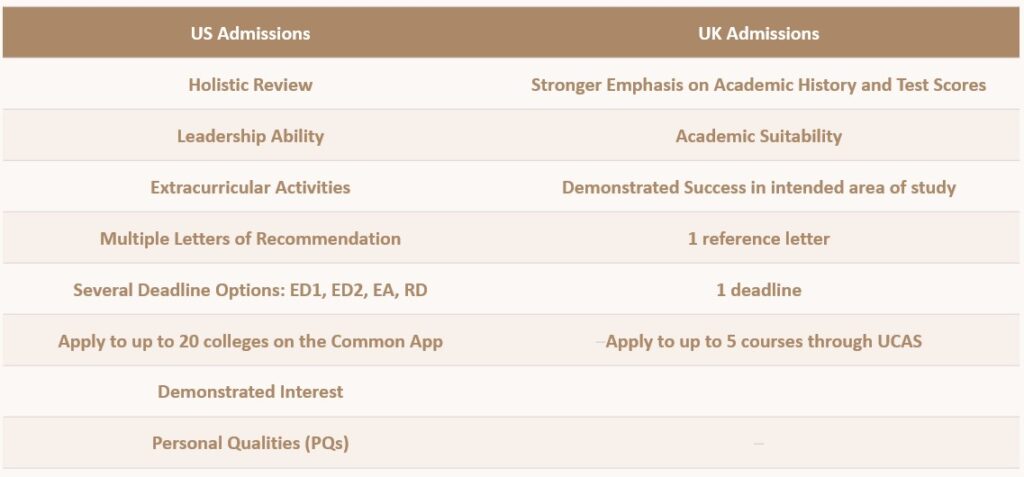
Here are some key differences between US and UK admissions.
A Key Distinction About the UK: Applying to Five Courses
One of the most important distinctions in the UK university admissions process is that students apply to a specific course, and they are limited to five course choices through the UCAS application system. A course is essentially a major. Unlike the US system, where students can enter undecided and explore different subjects before declaring a major in their sophomore year, UK universities expect students to know what they want to study from the outset.
This academic focus means the entire application, particularly the personal statement, must show clear aptitude, interest, and relevant experience for the chosen course. Through UCAS, students may apply to five different universities for the same course, or a mix of courses and universities. However, this does not apply to Oxford and Cambridge.
Applying to Only One: Oxford or Cambridge
Although Oxford and Cambridge are often grouped together as “Oxbridge,” applicants can only apply to one university in any given admissions cycle. This differs significantly from the US, where students can apply to all eight Ivy League schools if they wish.
Given this policy, it is essential to research both universities thoroughly to determine which one aligns best with the student’s academic goals and personal preferences.
Selecting a College
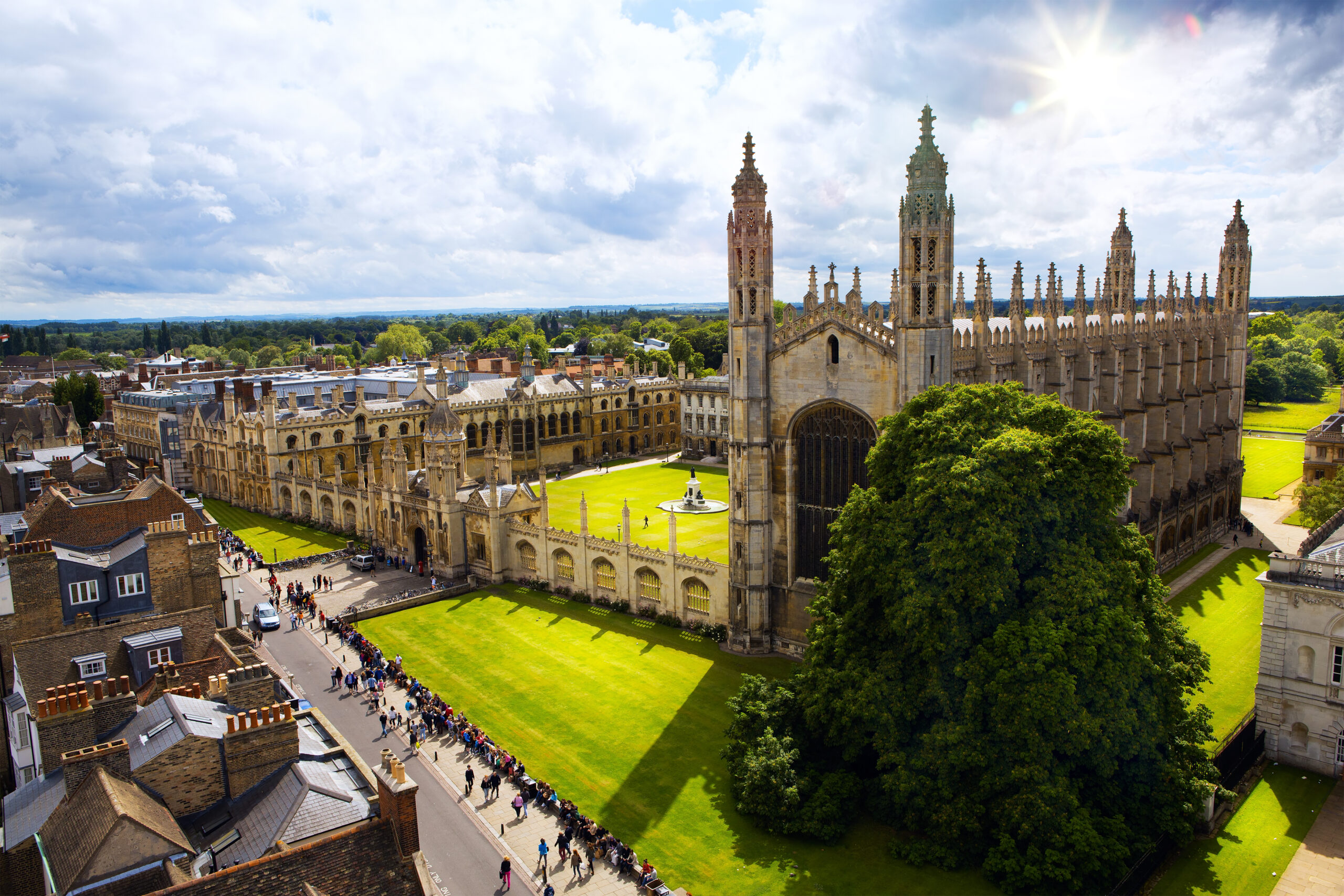
At both universities, students belong to multiple academic communities: the university, their course (department), and a college. The college system is unique to Oxford and Cambridge and makes for a distinctive experience.
Oxford has 39 colleges and 6 permanent private halls, while Cambridge has 31 colleges. Each college is an independent institution with its own traditions, resources, and facilities.
Colleges offer residence halls, dining halls, libraries, and other facilities. Student experiences can differ widely depending on the college. When applying to Oxford and Cambridge, a student is given the option to select a college or to submit an open application, which would allow multiple colleges to consider their application.
Tutorial System
The tutorial system, also called the supervision system at Cambridge, is a hallmark distinction of the universities. Tutorials are run by individual colleges where they offer small-group teaching. In these sessions, students meet weekly with a subject expert to discuss essays, problem sets, or readings, encouraging deep thinking and personalized feedback. Tutors also act as mentors, guiding students’ academic progress. While lectures and exams are organized by the university, the college tutors provide close academic support.
Entrance Exams
Most Oxford courses require a written entrance test, typically taken in late October at an authorized test center. Common examples include the TSA (for PPE and Economics), LNAT (Law), and MAT (Math). These assessments vary by subject and may include essays, logic puzzles, or subject-specific problems. Oxford uses these tests alongside written work and interviews to shortlist candidates.
Cambridge also uses course-dependent assessments. Some courses require pre-interview tests (e.g., ESAT for Engineering and Natural Sciences), while others include at-interview assessments (e.g., History or English). Cambridge Law applicants must take the LNAT before the application deadline. These exams focus on subject insight, comprehension, and problem-solving.
Interviews
Both universities require most shortlisted candidates to attend interviews, which are central to the admissions process. These interviews resemble the teaching style students will experience: interactive, analytical, and focused on how applicants think, not just what they know.
Oxford interviews are typically held in early to mid-December. Candidates may be interviewed by one or more colleges, sometimes for multiple sessions. Questions often relate to material in the personal statement, unfamiliar topics, or critical thinking exercises.
Cambridge interviews also take place in December. Most candidates are interviewed by the college they applied to or were assigned. Interviews may include academic discussion, written exercises, or real-time problem solving. Some applicants are also asked to complete an at-interview assessment. For international applicants, including those from the US, interviews may be conducted online.
How Oriel Admissions Can Help
At Oriel Admissions, we help students craft Oxford and Cambridge focused personal statements that demonstrate academic depth, intellectual curiosity, and alignment with course requirements. We also provide expert guidance on selecting the most suitable course and college to maximize a student’s chances of admission. Our advice is based on subject compatibility, level of competitiveness, and the unique character and strengths of each college.
Our experienced tutors offer targeted preparation for Oxford and Cambridge entrance exams such as the TSA, LNAT, and MAT, using past papers and proven techniques to build confidence and subject mastery. We also provide comprehensive interview preparation, including mock interviews that simulate the Oxbridge style, helping students develop clear, thoughtful responses and refine their academic thinking under pressure.
You can download our UCAS Application Checklist here. To learn more about how Oriel Admissions can support your Oxford or Cambridge application, get in touch today!