American University Acceptance Rate: 65.6% Overall, 80.6% Early Decision, and a 22% Jump in Applications
By Rona Aydin
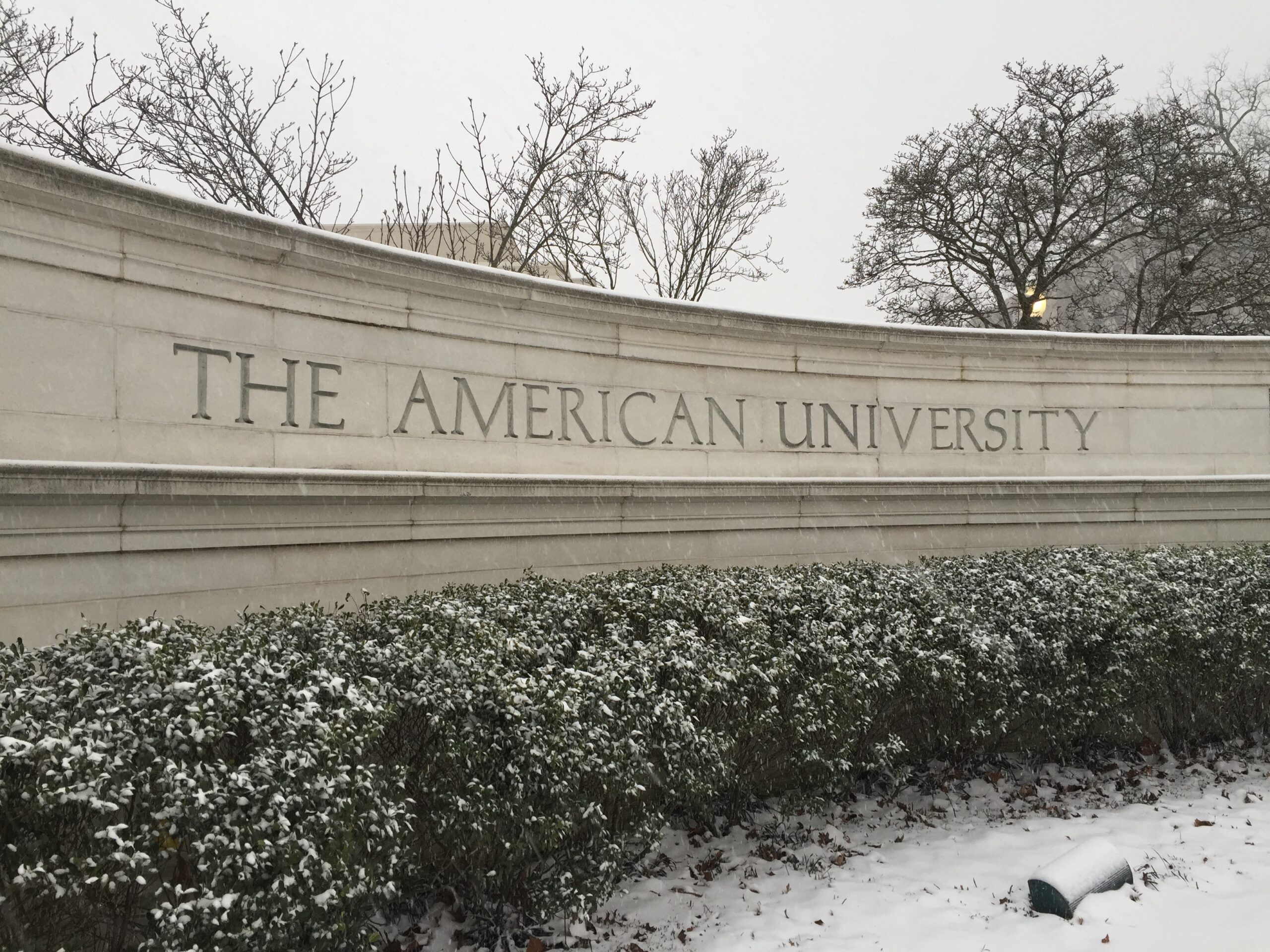
What Is the American University Acceptance Rate?
The American University acceptance rate for the fall 2025 entering class is 65.6 percent. American reports 20,960 first-year applicants, 13,741 admitted students, and 1,545 enrolled first-years in section C1 of its Common Data Set 2025-2026, published by the Office of Institutional Research and Assessment in April 2026. Women were 65.3 percent of applicants and were admitted at 66.6 percent (9,129 of 13,697); men were admitted at 63.6 percent (4,605 of 7,241). The enrolled class was 61.7 percent women, and 11.2 percent of admitted students enrolled, a yield that is low even among private universities in the same range and that explains most of what follows.
The year before, American admitted 10,613 of 17,154 applicants, 61.9 percent, and enrolled 1,662 (Common Data Set 2024-2025). In one cycle, applications rose 22.2 percent, admits rose 29.5 percent, and the enrolled class fell 7.0 percent, so the yield dropped from 15.7 percent to 11.2 percent. A university that receives a fifth more applications and admits nearly a third more students to enroll fewer of them is one where the growth came from students for whom American was a backup, and the fall 2025 waitlist, discussed below, confirms it: American admitted 1,182 students from the waitlist, against 328 the year before.
| Measure | Fall 2025 | Fall 2024 |
|---|---|---|
| First-year applicants | 20,960 | 17,154 |
| Admitted | 13,741 | 10,613 |
| Acceptance rate | 65.6 percent | 61.9 percent |
| Enrolled first-year students | 1,545 | 1,662 |
| Yield (enrolled divided by admitted) | 11.2 percent | 15.7 percent |
| Early Decision applicants and admits | 392 and 316 (80.6 percent) | 726 and 579 (79.8 percent) |
| Waitlist offered, accepted, admitted | 4,928, 1,785, 1,182 | 4,079, 948, 328 |
| First-year retention (prior cohort) | 87.3 percent | 88.2 percent |
For a family, the practical reading is that American is admitting about two of every three applicants and is working hard to enroll the ones it admits. That makes demonstrated interest, a well-argued choice of school within the university, and an early application worth more here than at a school with a 20 percent yield. American admits into the School of International Service, the College of Arts and Sciences, the Kogod School of Business, the School of Public Affairs, the School of Communication, and the School of Education, and it does not publish rates by school; the School of International Service and the School of Public Affairs are the programs the university is known for and draw the deepest pools.
How Does the American University Acceptance Rate Vary by Residency?
Section C1 breaks the pool into three groups. Domestic applicants from outside the District of Columbia were admitted at 67.0 percent (12,864 of 19,194) and made up 95.2 percent of the enrolled class. International applicants were admitted at 50.5 percent (655 of 1,297) but enrolled only 36 students, 2.3 percent of the class. Applicants from the District were admitted at 44.7 percent (197 of 441) and enrolled 38 (Common Data Set 2025-2026, C1). The year before, the rates were 63.8 percent for out-of-state applicants (9,957 of 15,605), 43.1 percent for international applicants (195 of 452), and 42.0 percent for District residents (461 of 1,097), so the out-of-state rate rose three points while the international rate rose seven.
| Residency | Applied | Admitted | Acceptance rate | Enrolled |
|---|---|---|---|---|
| Out-of-state (domestic) | 19,194 | 12,864 | 67.0 percent | 1,471 |
| International | 1,297 | 655 | 50.5 percent | 36 |
| District of Columbia residents | 441 | 197 | 44.7 percent | 38 |
| All first-year applicants | 20,960 | 13,741 | 65.6 percent | 1,545 |
The international figures deserve a second look. A 50.5 percent rate is generous for a university with a School of International Service, but the yield of 5.5 percent (36 of 655) means American enrolled fewer international first-years than some liberal arts colleges a quarter of its size. International applicants are admitted readily and mostly decline, which usually reflects cost: American lists tuition of $62,680 before fees, housing, and food. An international family that can pay should apply with confidence; one that needs significant aid should read the aid policy for international students before building the list around American.
What SAT, ACT, and GPA Do American University Students Have?
American is test-optional and its enrolled students overwhelmingly apply without scores: for fall 2025, 15.9 percent submitted an SAT score and 6.1 percent an ACT score, an unusually low share even among test-optional private universities (Common Data Set 2025-2026, C9). Among the submitters, the SAT middle 50 percent was 1320 to 1440 with a median of 1380 (reading and writing 630 to 710, math 680 to 740), and the ACT middle 50 percent was 30 to 33 with a median of 32. American does not report class rank or an average GPA in its Common Data Set. The year before, with 22 percent submitting an SAT, the range was 1300 to 1430 and the ACT 29 to 32.
| Measure (enrolled) | Fall 2025 | Fall 2024 |
|---|---|---|
| Submitted SAT / ACT | 15.9 percent / 6.1 percent | 22 percent / 8 percent |
| SAT middle 50 percent | 1320 to 1440 (median 1380) | 1300 to 1430 |
| SAT reading and writing / math, middle 50 percent | 630 to 710 / 680 to 740 | Not compared here |
| ACT composite middle 50 percent | 30 to 33 (median 32) | 29 to 32 |
| Class rank and average GPA | Not reported | Not reported |
When fewer than one in six students submit a score, the reported range describes a small self-selected group, and it should be read as the bar for sending scores rather than the bar for admission. A student with a 1400 or a 32 should submit; a student with a 1300 is below the 25th percentile of submitters and should not. Because American publishes no GPA data, the transcript standard has to be inferred from the peer group: a student with a 3.7 or higher unweighted GPA in a rigorous program is a solid applicant, and the 65.6 percent rate means that most such students are admitted.
How Do American University Early Decision, Early Action, and Regular Decision Compare?
American offers four plans, and it reports its Early Decision result. For fall 2025, 392 students applied Early Decision and 316 were admitted, 80.6 percent (Common Data Set 2025-2026, C21). The rest of the pool, 20,568 applicants, produced 13,425 admits, an implied rate of 65.3 percent, so the Early Decision advantage was about 15 points. Two features stand out. The Early Decision pool is tiny, 1.9 percent of applicants and 2.3 percent of admits, so American is not filling its class early; and the pool shrank from 726 to 392 in one year even as total applications rose by a third, which means the students who committed early were a small and shrinking group.
| Plan | Binding | Deadline | Notification | Deposit due | Fall 2025 rate |
|---|---|---|---|---|---|
| Early Decision I | Yes | November 1 | Mid-December | January 15 | 80.6 percent (ED I and II combined) |
| Early Action | No (non-restrictive) | November 1 | Mid-January | May 1 | Not published separately |
| Early Decision II | Yes | January 15 | Mid-February | March 1 | Included in the 80.6 percent |
| Regular Decision | No | January 15 | April 1 | May 1 | Not published separately |
The sensible default is Early Action. It is non-binding, non-restrictive, due November 1, and returns a decision in mid-January, and because American considers every admitted student for merit scholarships, an early file is in the first scholarship review. Early Decision adds about 15 points to a rate that already sits near two in three, which is a real advantage for a student whose file is at the margin but a small one for a student who is already above the median. It is worth using when American is the clear first choice and the net price calculator has been run, and not otherwise. Our guide to Early Decision acceptance rates compares the American gap with schools where the advantage is larger, and our Early Action acceptance rates guide covers the non-binding round.
How Does the American University Waitlist Work?
The fall 2025 waitlist is the most revealing number in American’s filing. American offered waitlist places to 4,928 applicants, 1,785 accepted, and 1,182 were admitted, 66.2 percent of those who stayed on the list and 8.6 percent of all offers of admission (Common Data Set 2025-2026, C2). The year before, American offered 4,079 places, 948 students accepted, and 328 were admitted, 34.6 percent of those who stayed on. Waitlist admits rose 3.6 times in a single cycle, which shows a university that admitted nearly a third more students, watched its yield fall to 11.2 percent, and then went to the waitlist to fill the class.
For a waitlisted student the implication is clear: accept the place, confirm interest, and send updated grades, because American has shown it will admit two thirds of the students who stay on the list when the class comes in short. For an applicant, the implication is subtler. A university that is drawing this heavily on its waitlist is one that values a demonstrated intention to enroll, and Early Action or Early Decision, a campus visit, and a specific answer to the question of why American are the ways to show it.
What Does American University Cost?
American lists tuition of $62,680 and required fees of $1,722 for 2025-2026, so the tuition-and-fees line is $64,402 before housing, food, books, and travel (Common Data Set 2025-2026, G1). The application fee is $75. First-year retention was 87.3 percent for the most recent cohort, down from 88.2 percent, and both figures are a few points below those at GW, Fordham, and Syracuse, which is consistent with a class in which many students arrived from the waitlist or from a backup position. All admitted students are considered for merit scholarships without a separate application (American University decision plans), and the CSS Profile and FAFSA are due about two weeks after each application deadline.
For a full-pay family, American’s tuition and fees are about $8,000 below GW’s and its acceptance rate about 18 points higher, so it is often the safer of the two Washington choices on a list built around international affairs, public policy, or communication. For a family that needs aid, the merit awards are the lever, and an Early Action file by November 1 is the way to be in the first round of them.
How Should Families Approach the American University Application?
American asks applicants to choose a school, and the choice should be argued. The School of International Service and the School of Public Affairs want a record of interest in the subject, in coursework, activities, or work, and a specific reason to study it in Washington; the School of Communication wants a portfolio of work, formal or not; Kogod wants quantitative preparation. A student who names the School of International Service because it is the best-known program, with no supporting record, is in the deepest pool with the weakest case, and the application should be built for the school that fits the record.
- Grades carry the file: fewer than one in six enrolled students sent an SAT, and American publishes no GPA data, so the transcript and course rigor are what the reader sees.
- Submit an SAT of 1380 or higher or an ACT of 32 or higher; below 1320, apply test-optional as most admits did.
- Apply Early Action by November 1: it is non-restrictive, it returns a decision in mid-January, and it puts the student in the first merit scholarship review.
- Use Early Decision only when American is the first choice and the aid estimate works; the advantage is about 15 points on a rate that is already 65.6 percent.
- Show that the student would enroll: with an 11.2 percent yield and 1,182 waitlist admits, American reads for commitment.
American is a school where a solid applicant is admitted two times in three, where the Early Decision applicant is admitted four times in five, and where the university’s own difficulty enrolling its admits gives a committed applicant more leverage than the rate suggests. Our guides on whether you need an admissions consultant and when to bring one in explain how we help families build a list around schools like this one, and our college acceptance rates guide puts American next to its peers.
Frequently Asked Questions
American admitted 65.6 percent of first-year applicants for fall 2025, so most well-prepared applicants are admitted. Enrolled students who submitted scores had an SAT middle 50 percent of 1320 to 1440, and only 15.9 percent of the class submitted an SAT at all.
For fall 2025, American admitted 316 of 392 Early Decision applicants, 80.6 percent, against an implied 65.3 percent for the rest of the pool. Early Decision I is due November 1 and Early Decision II on January 15.
Yes. Early Action is non-binding and non-restrictive, due November 1, with decisions in mid-January and a May 1 deposit date. American does not publish a separate Early Action acceptance rate.
Yes. For fall 2025, 15.9 percent of enrolled students submitted an SAT score and 6.1 percent an ACT score. Students who submit should be at or above the medians of 1380 on the SAT and 32 on the ACT.
Applications rose from 17,154 to 20,960, 22 percent, in one cycle. American admitted 29.5 percent more students in response, but enrolled 117 fewer, and its yield fell from 15.7 percent to 11.2 percent, so the growth came largely from applicants for whom American was not the first choice.
For fall 2025, American admitted 655 of 1,297 international applicants, 50.5 percent, compared with 67.0 percent for domestic applicants from outside the District of Columbia. Only 36 international admits enrolled.
For fall 2025, American offered 4,928 waitlist places, 1,785 students accepted, and 1,182 were admitted, about two thirds of those who stayed on the list. The year before, 328 of 948 students who accepted a waitlist place were admitted.
American lists tuition of $62,680 and fees of $1,722 for 2025-2026, $64,402 before housing and food. The application fee is $75, and all admitted students are considered for merit scholarships without a separate application.
Sources: American University Common Data Set 2025-2026 (April 2026), American University Common Data Set 2024-2025, American University Office of Institutional Research and Assessment, Common Data Set index, American University first-year decision plans and deadlines
About Oriel Admissions
Oriel Admissions is a Princeton-based college admissions consulting firm advising families nationwide on elite university admissions strategy. Our team brings deep expertise across every dimension of the application, and our distinctive 360 approach develops strategy, positioning, activities, essays, and interviews as one coherent whole. To discuss your family’s admissions strategy, schedule a consultation.