Deferral Acceptance Rates at Top Universities: Published Figures, School by School (Class of 2028 to 2030)
By Rona Aydin

What deferral acceptance rates do top universities publish?
Two colleges in our table publish an admit-from-deferral figure, and they sit far apart; the mechanics of a deferral are in our overview of what deferred means in college admissions. MIT’s statistics page lists, for the Class of 2029, 12,052 Early Action applicants, 721 Early Action admits, 7,486 “Deferred to Regular Action” and 175 listed as “Deferred applicants admitted during Regular Action” (2.3% of the deferred group by our calculation) (MIT Admissions statistics). Its deferred-applicant FAQ adds that “in the past few years” it has admitted between 150 and 250 deferred students in Regular Action each year (MIT EA Deferred FAQs). Georgetown, which defers every Early Action candidate it does not admit, says “Typically, about 15 percent of the candidates deferred from Early Action are successful during the spring review” (Georgetown Early Action program). Harvard offers a statement rather than a number: past deferred applicants “have been admitted at various rates, often approximating the rate for Regular Decision candidates” (Harvard admissions FAQ).
| College (plan) | Share of early applicants deferred | Cycle | Admitted from deferral | Source |
|---|---|---|---|---|
| MIT (Early Action) | 7,486 of 12,052 (62.1%) | Class of 2029 | 175 of 7,486 (2.3%); “in the past few years” between 150 and 250 deferred students admitted a year | MIT Admissions statistics page; MIT EA Deferred FAQs |
| MIT (Early Action) | 7,738 of 11,883 (65.1%) | Class of 2030 | Not yet published for this class | MIT Admissions blog, December 16, 2025 |
| Georgetown (Early Action) | All candidates not admitted are deferred (policy) | Standing policy | “Typically, about 15 percent of the candidates deferred from Early Action are successful during the spring review” | Georgetown Early Action program page |
| Harvard (Restrictive Early Action) | 83.1% of 7,921 applicants; 692 admitted | Class of 2028 (last cycle with figures) | No rate; “admitted at various rates, often approximating the rate for Regular Decision candidates” | The Harvard Crimson, December 14, 2023; Harvard Gazette, December 14, 2023; Harvard admissions FAQ |
| Yale (Single-Choice Early Action) | 18% of 7,140 (about 1,285 by our calculation); 779 admitted, 70% denied | Class of 2030 | Not published | Yale News, December 17, 2025 |
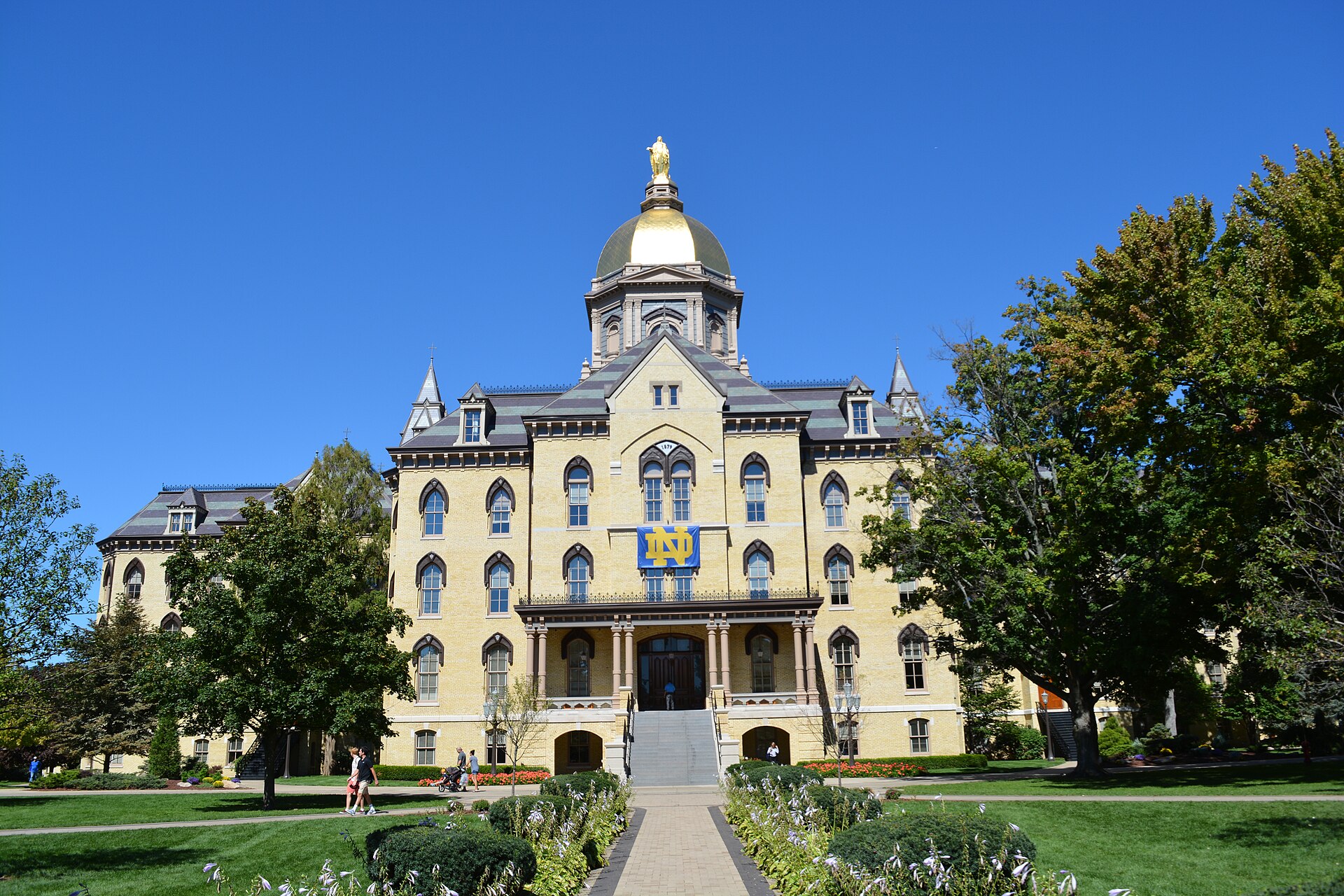
| Notre Dame (Restrictive Early Action) | 2,608 of 13,711 (19%); 1,617 admitted | Class of 2030 | Not published | Notre Dame Enrollment Division, December 19, 2025 |
The deferral share is published more often than the conversion rate, and it ranges from 18% at Yale to 65.1% at MIT for the Class of 2030, with Harvard at 83.1% in its last reported cycle. Harvard has released no early figures since the Class of 2028; The Harvard Crimson reported on December 19, 2025 that the College released Class of 2030 early decisions “while once again withholding data on acceptance rates and applicant demographics for the second straight year” (The Harvard Crimson, December 19, 2025). MIT’s Class of 2030 admit-from-deferral count will appear on its statistics page when that page is updated; the page still shows the Class of 2029.
Which colleges publish no deferral figures, and what do they say instead?
Princeton, Columbia, Penn, Brown, Dartmouth, Cornell, Duke, Caltech and UVA publish neither a deferral share nor an admit-from-deferral rate on the pages, although several publish their early admit counts. Brown admitted 890 of 5,406 Early Decision applicants for the Class of 2030 (Brown news, December 17, 2025), Duke 731 of 6,159 Early Decision applicants plus 116 QuestBridge matches, 847 in all (Duke Today, December 18, 2025), and UVA made 1,225 Early Decision offers on 5,108 applications (UVA Notes from Peabody); none of the three releases counts the deferred. Cornell is the most direct about the gap, telling postponed applicants that it is not able to estimate their chances for admission at this time (Cornell FAQ for postponed applicants). Each row links to our school guide.
| College (plan) | What the college says about deferral | Source |
|---|---|---|
| Princeton (SCEA) | Admission Statistics page lists the enrolled Class of 2030 only; the FAQ says “Many strong applicants are deferred and reconsidered in context of the regular decision pool” | Princeton Admission Statistics; Princeton Early Action FAQ |
| Columbia (ED) | “If you are deferred under the Early Decision plan, a final decision on your candidacy will be made with the Regular Decision applicant pool, and you will be notified by April 1” | Columbia Early Decision page |
| Penn (ED) | “Deferred applicants are released from the binding commitment of early decision once they are moved to regular decision consideration” | Penn, After You Have Applied |
| Brown (ED) | December 17, 2025 release: 890 admitted of 5,406 ED applicants; no deferral count. FAQ: “Students whose Early Decision applications are deferred are well-qualified for study at Brown” | Brown news, December 17, 2025; Brown ED FAQ |
| Dartmouth (ED) | “the Admissions Committee will review your application again during our regular admissions process” | Dartmouth Admissions, Deferred |
| Cornell (ED) | Cornell says it is not able to estimate chances for admission at this time and adds “Please know there is sincere interest in continued review of your application” | Cornell FAQ for postponed applicants |
| Duke (ED) | December 18, 2025 release: 731 of 6,159 ED applicants admitted (11.9%, by our calculation) plus 116 QuestBridge matches; no deferral count. Duke reports Early Decision and Regular Decision admit rates (12.6% and 4.2% in 2025-2026), which it does not reconcile with the release counts, and no deferral figures | Duke Today, December 18, 2025; Duke Resources and FAQs |
| Caltech (REA) | “Caltech is very judicious with our deferment offers, only choosing this option for students we are very interested in learning more about”; deferred applicants receive “admit or deny” in mid-March, never a waitlist | Caltech first-year deadlines |
| UVA (ED) | December 12, 2025 blog: 5,108 ED applications, 1,225 offers (Virginia 25%, out of state 23%); no deferral count | UVA Notes from Peabody, December 12, 2025 |
Why do most colleges not publish deferral numbers?
Because no standard report asks for them. The Common Data Set, which most of these colleges file each year, asks in item C21 for the number of Early Decision applications and admits and in item C22 whether the college offers Early Action; neither item asks how many early applicants were deferred or how many of them were later admitted, so disclosure is voluntary. Harvard has gone the other way, withholding its early-round figures in December for two cycles running and holding Class of 2030 data until the following October, as The Harvard Crimson reported in December 2025. The College Admissions Transparency Index graded 50 universities on this kind of disclosure, and in our view the deferral gap is one of its clearest findings: families make January decisions on numbers most colleges decline to release.
How should you read deferral odds?
Three rules keep the numbers honest. First, a deferral share and a conversion rate mean nothing apart: Georgetown defers every candidate it does not admit and converts about 15 percent, while MIT deferred 65.1% of its Class of 2030 early pool and converted 2.3% the year before, so the same December letter carries different odds at each. Second, check the cycle label: the Harvard share is from the Class of 2028, the MIT conversion rate from the Class of 2029, and the Yale, Notre Dame and MIT shares from the Class of 2030. Third, compare the conversion rate with the regular round, not with the early round: at MIT, 603 applicants were admitted during Regular Action for the Class of 2029 including 175 deferred students, so 428 of the 17,229 students who applied Regular Action were admitted, 2.5%, against 2.3% for the deferred group (MIT Admissions statistics). Georgetown says “both our Early Action and Regular Decision pools will have roughly the same acceptance rate.” Harvard says deferred applicants are admitted at rates “often approximating the rate for Regular Decision candidates.” In the view of Oriel Admissions, the published evidence supports one conclusion: at these colleges a deferred applicant should expect roughly Regular Decision odds, not early-round odds, and should plan the rest of the list accordingly.
What do these numbers mean for a deferred applicant in December 2026?
Use them for calibration, not consolation. For fall 2027 entry the early decisions arrive in mid-December 2026, and the deferred file is decided with the Regular Decision pool in mid-March to early April 2027 (MIT and Caltech mid-March; Yale, Princeton and Cornell late March; Columbia, Dartmouth and UVA by April 1; Brown by early April). In our view, a 2.3% conversion at MIT or about 15 percent at Georgetown says the Regular Decision list is the main campaign and the deferral is one open application that deserves exactly what the college asks for: the midyear report, MIT’s February Updates and Notes Form, or one brief update where Brown, Cornell or Notre Dame invite a letter. Our post-deferral guide covers the December 2026 release dates and the Early Decision II deadlines of January 1 to 4, 2027, and our guide to the deferral letter of continued interest gives each college’s channel.
Frequently Asked Questions About Deferral Acceptance Rates
Most selective universities publish no figure. MIT admitted 175 of 7,486 deferred applicants for the Class of 2029, or 2.3% by our calculation, and Georgetown says about 15 percent of candidates deferred from Early Action are admitted in its spring review. Harvard says deferred applicants have been admitted at rates often approximating its Regular Decision rate.
Georgetown defers every Early Action applicant it does not admit, as a matter of policy. Among colleges that report shares, Harvard deferred 83.1% of its Class of 2028 early pool, its last reported cycle, and MIT deferred 65.1% for the Class of 2030. Yale deferred 18% and Notre Dame 19% for the Class of 2030.
No, but the published odds are modest. MIT, the only college in our table that publishes both figures, admitted 2.3% of deferred applicants for the Class of 2029, and Caltech says deferred applicants receive admit or deny in mid-March with no waitlist. The deferred file deserves one update and a fully built Regular Decision list.
To compare promising early files against the full pool with senior-year grades in hand. Notre Dame says it wants to evaluate deferred applications within the context of the larger Regular Decision pool and only defers students it feels will be competitive later, and Caltech says it is very judicious with deferment offers.
Rarely. MIT and Georgetown publish them, Yale and Notre Dame publish the share deferred, and Harvard last reported early figures for the Class of 2028. The Common Data Set has no item for deferrals, so other figures in circulation are estimates. Oriel Admissions carries only figures a college or a named newspaper published, with the cycle.
Structurally yes. A deferred file receives a full second review with the Regular Decision pool and can be strengthened with midyear grades, while a waitlisted file waits on enrollment numbers after decisions are out; MIT admitted 10 of 561 students offered a waitlist place for the Class of 2029.
Not where figures exist. At MIT for the Class of 2029, 2.3% of deferred applicants were admitted against 2.5% of students who applied Regular Action, by our calculation from the MIT statistics page. Georgetown says its Early Action and Regular Decision pools have roughly the same acceptance rate, and Harvard says deferred applicants are admitted at rates often approximating its Regular Decision rate.
On the MIT Admissions statistics page, the Georgetown Early Action program page, and the December admissions releases of Yale News and the Notre Dame Enrollment Division. For most other elite colleges no official deferral data exists, and the Common Data Set does not collect it.
Sources: MIT Admissions, Admissions Statistics, MIT Admissions, EA Deferred FAQs, MIT Admissions blog, December 16, 2025, Georgetown Undergraduate Admissions, Early Action Program, Harvard College, Frequently Asked Questions, The Harvard Crimson, December 14, 2023, Harvard Gazette, December 14, 2023, The Harvard Crimson, December 19, 2025, Yale News, December 17, 2025, Notre Dame Enrollment Division, December 19, 2025, Notre Dame Undergraduate Admissions, Deferred Applicants, Princeton Admission, Admission Statistics, Princeton Admission, Early Action FAQ, Columbia Undergraduate Admissions, Early Decision, Penn Admissions, After You Have Applied, Brown Undergraduate Admission, Early Decision FAQ, Brown University news, December 17, 2025, Dartmouth Admissions, Deferred, Cornell Admissions FAQ, Postponed Applications, Duke Today, December 18, 2025, Duke Undergraduate Admissions, Resources and FAQs, Caltech Undergraduate Admissions, First-Year Deadlines, UVA Notes from Peabody, December 12, 2025.
About Oriel Admissions
Oriel Admissions is a college admissions consulting firm advising families nationwide on elite university admissions strategy, with offices in Princeton, New Jersey and New York. Our team pairs deep admissions expertise with a distinctive 360 approach spanning academic planning, extracurricular strategy, essays and application execution. To discuss your strategy, schedule a consultation.