What Is the Fordham Acceptance Rate?
The Fordham University acceptance rate for fall 2026 is 47 percent. The Office of Undergraduate Admission reports 53,605 completed applications (applications to the School of Professional and Continuing Studies are excluded), 25,304 offers of admission, and 2,660 enrolled students for the Class of 2030 (Fordham Undergraduate Admission Facts, updated September 8, 2026). The enrolled count is about 10.5 percent of those admitted, which is the yield, and it means Fordham admits roughly nine and a half students for every seat it fills.
That 47 percent is a new number for Fordham. When the university announced the Class of 2030 in March 2026, it reported more than 54,000 submitted applications, a record and “an unprecedented 23% increase over the year before,” and said that “approximately 47% of applicants were offered admission, a dramatic shift in selectivity over last year” (Fordham News, March 2026). A 23 percent rise in applications implies a pool of roughly 43,600 the year before. Fordham does not publish the prior cycle’s rate on its admission facts page, but The Fordham Ram, the student newspaper, reported it as 58 percent, an 11-point drop in one year (The Fordham Ram, 2026). Fordham’s Common Data Sets are posted as spreadsheets through its Office of Institutional Research, so families should treat the trend as a sharp one-year tightening rather than a long series.
| Measure (fall 2026, Class of 2030) | Figure | Source |
|---|---|---|
| Completed applications | 53,605 | Admission Facts, September 8, 2026 |
| Offers of admission | 25,304 | Admission Facts |
| Acceptance rate | 47 percent | Admission Facts |
| Enrolled first-year students | 2,660 | Admission Facts |
| Yield (enrolled divided by admitted) | 10.5 percent | Computed |
| Change in applications from the prior year | Up 23 percent | Fordham News, March 2026 |
| Target class size stated in March | About 2,500 | Fordham News |
Two cautions belong next to the headline. First, Fordham evaluates applicants “for the campus and college to which they apply” (Fordham dates and deadlines), so a single university-wide rate blends Fordham College at Rose Hill, Fordham College at Lincoln Center, and the Gabelli School of Business on both campuses, and Fordham does not publish per-college rates. Second, the fall 2026 pool grew far faster than the national trend: Fordham noted that Common App institutions saw a 5 percent rise over the same period. A jump of that size usually reflects a marketing push and test-optional reach as much as a change in who can get in, and the academic profile of admitted students, which Fordham says “showed the same levels of academic achievement” as in past years, supports that reading.
What GPA and Test Scores Do Admitted Fordham Students Have?
Fordham publishes two profiles, one for admitted students and one for the students who actually enrolled, and the gap between them tells you where the bar sits. Admitted students for the Class of 2030 had a mean high school GPA of 3.76, an SAT middle 50 percent of 1380 to 1490, an ACT middle 50 percent of 32 to 34, and 54 percent stood in the top tenth of their class (86.5 percent in the top quarter). Enrolled students averaged 3.63, with SAT scores of 1355 to 1470, ACT 31 to 34, and 39 percent in the top tenth (Admission Facts). Fordham’s March announcement put the mean GPA of all applicants at 3.53 and of admitted students at 3.77 (Fordham News).
| Measure | Admitted (Class of 2030) | Enrolled (Class of 2030) |
|---|---|---|
| High school GPA (mean) | 3.76 | 3.63 |
| SAT middle 50 percent | 1380 to 1490 | 1355 to 1470 |
| ACT composite middle 50 percent | 32 to 34 | 31 to 34 |
| Top 10 percent of class | 54 percent | 39 percent |
| Top 25 percent of class | 86.5 percent | 71.9 percent |
| Applied without test scores | 60.3 percent of admits | 70.2 percent of enrolled |
Read the score ranges with the submission rates in mind. Only about 40 percent of admitted students sent a score, and the students who submit are the ones with scores worth showing, so 1380 to 1490 describes the strongest submitters rather than the whole admitted class. A student with a 1400 is comfortably inside that band; a student with a 1320 is better off applying without scores and letting a 3.8 or higher GPA and a rigorous schedule carry the file. Fordham has been test-optional since the fall 2021 entering class and says applicants who withhold scores “will not be penalized,” and it has stated it will stay test-optional “for the foreseeable future.”
How Do Fordham Early Action, Early Decision, and Regular Decision Compare?
Fordham offers four routes in the 2026-2027 cycle, and they matter because Fordham does not publish plan-by-plan acceptance rates, so the choice is about commitment and timing rather than a known rate advantage. Early Action is non-binding and due November 1, 2026, with decisions on December 20. Early Decision I is binding, also due November 1, with the same December 20 notification and a January 15 deposit. Regular Decision is due January 3, 2027, with decisions on April 1. Early Decision II is binding, due January 3, with decisions on February 15 (Fordham dates and deadlines). The CSS Profile and FAFSA deadlines run about two weeks after each application deadline for domestic students.
| Plan | Binding | Application deadline | Decision released | Deposit due |
|---|---|---|---|---|
| Early Action | No | November 1, 2026 | December 20, 2026 | May 1, 2027 |
| Early Decision I | Yes | November 1, 2026 | December 20, 2026 | January 15, 2027 |
| Early Decision II | Yes | January 3, 2027 | February 15, 2027 | Not stated; binding on admission |
| Regular Decision | No | January 3, 2027 | April 1, 2027 | May 1, 2027 |
For most families the right sequence is Early Action first. It costs nothing in flexibility, it puts the application in front of readers before the Regular Decision surge, and it returns a decision before the January deadlines at other schools. Early Decision at Fordham makes sense only for a student for whom Fordham is the clear first choice and for whom the financial aid estimate has already been run, because a binding commitment at a university where more than 95 percent of first-years receive aid still depends on what the package looks like. Our guide to Early Decision acceptance rates explains how to weigh a binding plan when the school does not publish its ED advantage.
Who Is in the Fordham Class of 2030?
The enrolled class is 63.8 percent female and 36.2 percent male. Domestic students of color make up 46.8 percent of the class (Hispanic or Latinx 20.6 percent, Asian 14.7 percent, Black 5.7 percent, two or more races 5.6 percent), international students 7.1 percent, and White students 42.9 percent. First-generation students are 22.1 percent of the class and Pell recipients 23.9 percent. About 17.5 percent of the class comes from New York City’s five boroughs; outside the tri-state area, the largest sending states are California, Massachusetts, Pennsylvania, Florida, Texas, Illinois, Virginia, and Maryland, and the largest international sources are Vietnam, India, Canada, China, France, and Italy. By school type, 56.5 percent attended public high schools, 30.2 percent private, and 3.8 percent Jesuit or Cristo Rey schools (Admission Facts).
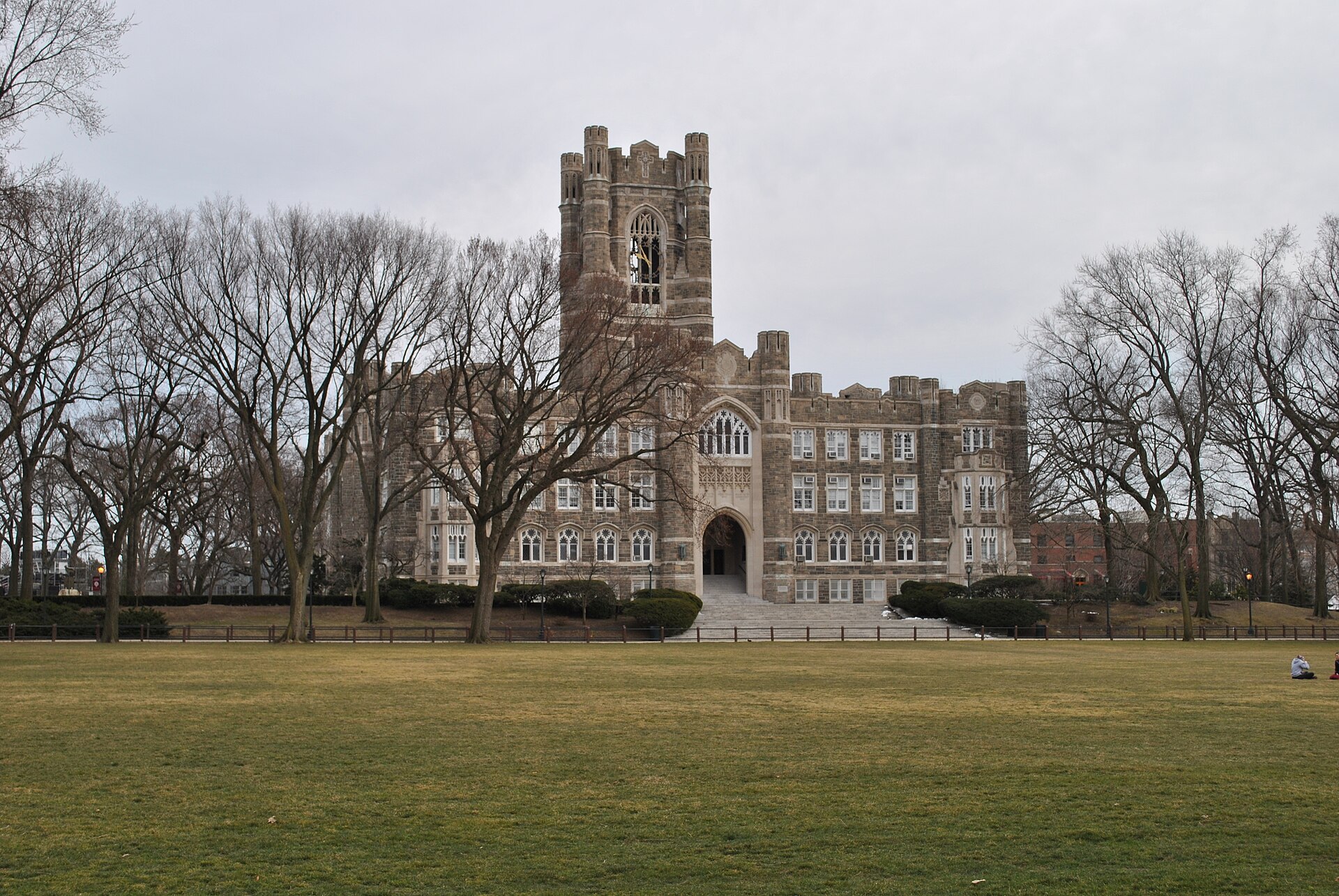
Admitted students came from more than 6,700 high schools, all 50 states, and 125 countries, and about 8 percent of admits were international (Fordham News). The 7.1 percent international share of the enrolled class is small for a New York City university, which is one reason international applicants with strong profiles do well here. Fordham enrolls 10,396 undergraduates across Fordham College at Rose Hill (3,780), Fordham College at Lincoln Center (2,370), and the Gabelli School of Business at Rose Hill (2,807) and Lincoln Center (693); 77.2 percent of first-years live on campus, first-year retention is 87 percent, the average class has 23 students, and the graduation rate is 81 percent.
How Much Does Fordham Cost and Who Receives Merit Scholarships?
Fordham states that more than 95 percent of its first-year students receive some type of financial aid, and its merit program is unusually visible for a school of its size. In the Class of 2030 cycle, about 9 percent of admitted students were awarded the Dean’s Scholarship, with an average GPA of 3.95, and roughly 3 percent, with an average 4.0 GPA, received the full-tuition Fordham Scholarship (Fordham News). Both are awarded at admission with no separate application, which makes the academic record through junior year the real scholarship application. The financial aid page for first-year students sets out the FAFSA and CSS Profile requirements, and the deadlines table above shows that aid forms are due about two weeks after each application deadline.
For a family that will not qualify for need-based aid, the practical question is whether the student sits in the top few percent of the admitted pool, because that is where the Dean’s and Fordham Scholarships go. A 3.95 unweighted GPA with a demanding schedule and, if the score is in range, a 1450 or higher SAT is the profile Fordham has rewarded, and Early Action gets that file read first.
How Should Families Approach the Fordham Application?
Start with the campus and college choice, because it is the one variable Fordham says it evaluates. Fordham College at Rose Hill and Fordham College at Lincoln Center are both liberal arts colleges, but Rose Hill in the Bronx offers the traditional residential campus and the larger science and pre-health programs, while Lincoln Center in Manhattan houses theatre, dance, and the smaller, more urban college. The Gabelli School of Business admits directly into business at either campus. The application should read as if it were written for that specific college, with the essay and activities speaking to what the student would do there rather than to Fordham in general.
- Grades first: with 60 percent of admits test-optional, the transcript carries the file. Rigor in the junior year and an upward trend matter more than one more activity.
- Decide on scores using the enrolled band, 1355 to 1470, not the admitted band. Above roughly 1400, submit; below 1350, do not.
- Apply Early Action by November 1. It is non-binding and puts the student in the first round of merit awards.
- Treat Early Decision as a financial decision as much as an admissions one, and run the net price calculator before committing.
- Show the Jesuit fit in the essay through action: Fordham highlighted admitted students who founded nonprofits, published research, and led service work, and it reads those stories closely.
Fordham is a school where a well-built application from a strong but not extraordinary student is admitted at close to a coin flip, and where the top few percent are paid to attend. Our guides on whether you need an admissions consultant and when to bring one in explain how we help families plan a list around schools like this one, and our college acceptance rates guide puts Fordham next to its peers.
Frequently Asked Questions
Fordham admitted 47 percent of applicants for fall 2026, so it is moderately selective. The admitted profile is demanding for a school at that rate: a 3.76 average GPA, SAT scores of 1380 to 1490 among submitters, and 54 percent of admits in the top tenth of their class.
Applications rose 23 percent in one year to a record 53,605, while Fordham aimed for a class of about 2,500 and enrolled 2,660. More applicants for the same number of seats pushed the rate down to 47 percent from 58 percent the year before, which Fordham described as a dramatic shift in selectivity.
No. Fordham reports one university-wide acceptance rate on its admission facts page and does not break out Early Action, Early Decision, or Regular Decision rates there. Its Common Data Set spreadsheets are posted through the Office of Institutional Research.
Yes. Fordham has been test-optional since the fall 2021 entering class, 60.3 percent of admitted students for the Class of 2030 did not submit scores, and the university has said it will remain test-optional for the foreseeable future.
Admitted students who submitted scores had an SAT middle 50 percent of 1380 to 1490 and enrolled students 1355 to 1470. A score of about 1400 or higher strengthens the file; below that, applying without scores is usually the better choice.
Yes, at admission and without a separate application. For the Class of 2030, about 9 percent of admitted students received the Deans Scholarship (average GPA 3.95) and about 3 percent received the full-tuition Fordham Scholarship (average GPA 4.0). More than 95 percent of first-years receive some aid.
To a campus and college: Fordham College at Rose Hill, Fordham College at Lincoln Center, or the Gabelli School of Business at either campus. Fordham states that applicants are evaluated for the campus and college to which they apply.
Fordham enrolled 2,660 first-year students for fall 2026 from 25,304 offers, a yield of about 10.5 percent, and it enrolls 10,396 undergraduates in total across its two New York City campuses.
Sources: Fordham Undergraduate Admission Facts (updated September 8, 2026), Fordham News: A Look at the Admitted Class of 2030 (March 2026), Fordham first-year dates and deadlines, Fordham financial aid guidance for first-year students, The Fordham Ram: Admissions Rate Declines for Class of 2030, Fordham Common Data Set index
About Oriel Admissions
Oriel Admissions is a Princeton-based college admissions consulting firm advising families nationwide on elite university admissions strategy. Our team brings deep expertise across every dimension of the application, and our distinctive 360 approach develops strategy, positioning, activities, essays, and interviews as one coherent whole. To discuss your family’s admissions strategy, schedule a consultation.