College Golf Recruiting: The Scores and Grades an Ivy League Program Publishes, the 2026-27 Golf Recruiting Calendars, Rosters, and the NESCAC Path
By Rona Aydin
When Can College Golf Coaches Contact You?
On the general Division I dates. Under Bylaw 13.4.1 and Bylaw 13.1.3.1, recruiting materials, electronic correspondence, and recruiting calls may not begin before June 15 at the conclusion of sophomore year. Under Bylaw 13.1.1.1, Bylaw 13.6.2.1, and Bylaw 13.7.1.1, in-person off-campus contact, the first official visit, and an unofficial visit with athletics department involvement may not occur before August 1 at the beginning of junior year, and under Bylaw 13.12.1.5.1 a recruiting conversation at the college’s own camp is barred before the same date. Division II coaches have no limits on contacts and calls after June 15 preceding junior year outside dead periods; Division III coaches may write and evaluate without dated restriction and may make off-campus contact once the prospect has completed sophomore year. The guide to when college coaches can contact you gives the bylaws behind each date.
The Yale men’s golf recruiting document describes what the rule looks like from the coach’s desk: the program files every email and letter from freshmen and sophomores, sends nothing back beyond a reply stating the NCAA rule, and answers with a longer introductory email in the summer after sophomore year. It also says coaches cannot meet prospects or families on or off campus until August 1 before junior year, that families are welcome to tour campus and the golf facilities on their own before then, and that the staff will always try to meet a prospect who visits after the date. A sophomore’s email is therefore read and kept; the guide to emailing college coaches covers what it should contain, and in golf the ranked tournament record is what the coach reads: the Yale document notes that it is not necessary to see a candidate in person for him to become a top recruit.
What Do the 2026-27 Golf Recruiting Calendars Say?
As revised on October 23, 2026, Bylaw 13.17 no longer sets out sport calendars in the manual: it refers readers to the recruiting calendars published on ncaa.org and keeps only 13.17.1, a contact period exception. For 2026-27 the NCAA publishes a Division I men’s golf calendar, updated July 30, 2026, while women’s golf sits on the Other Division I Sports calendar, updated August 4, 2026, which lists only its dead periods. The period definitions come from Bylaw 13.02.5 and are explained in the guide to the NCAA recruiting calendar. Both calendars leave most of the year open to contact, so in college golf recruiting the practical restrictions are the dead stretches.
| 2026-27 dates | Men’s golf (Division I men’s golf calendar) | Women’s golf (Other Division I Sports calendar) |
|---|---|---|
| August 1 through November 25, 2026 | Contact period; November 9 through 12 dead (signing week) | Contact period; November 9 through 12 dead (signing week) |
| November 26 through 29, 2026 | Dead period (Thanksgiving through Sunday) | Dead period (Thanksgiving through Sunday) |
| November 30 through December 22, 2026 | Quiet period; December 8 through 10 dead for the GCAA convention, with evaluation allowed at the showcase and combine held with it | Contact period; December 8 through 10 dead for the WGCA convention |
| December 23, 2026 through January 1, 2027 | Dead period | Contact period except December 24 through 27, a dead period |
| January 2 through July 31, 2027 | Contact period | Contact period |
Because a golf coach may watch a tournament and meet a family on almost any date after August 1 of junior year, the calendar imposes no rhythm of its own; the junior tournament schedule does. The Yale document says the staff travels to as many tournaments as needed in late June, July, and early August after junior year to evaluate candidates, and that it is not necessary to be seen in person to become a top recruit, because the scores are already on the ranking sites. The guide to official and unofficial visits explains what a visit adds; Yale says only a few prospects are invited on official visits and more are welcome on unofficial ones, which accomplish much of the same thing.
What Scores Get a Golfer Recruited?
Most college programs describe their recruits in general terms; Yale’s men’s golf program puts numbers on the page. Its recruiting document for high school prospects, updated in June 2026 and read by Oriel Admissions in September 2026, sets out the golf benchmarks below for a top recruit at a Division I program that wins the Ivy League title in some years (2011, 2018, 2022, and 2024, by its own count) and aims at an NCAA regional bid every year.
| Benchmark | What the Yale document says |
|---|---|
| Scoring | The ability to consistently shoot around par, and more than occasionally break par, in elite tournaments |
| Results | Winning an AJGA event or a state junior amateur, or qualifying for the U.S. Junior Amateur and reaching match play |
| Handicap | A tournament-tested, proven handicap of +3 or better |
| Ranking | A -2.50 scoring differential on Junior Golf Scoreboard, or a top 100 national ranking within the class |
| Combined | Value placed on selection to the AJGA Scholastic All-American team |
| Competition for a place | About 300 unsolicited emails a cycle; the program can support two or three candidates from each class, and in a typical year supports two academically vetted candidates |
Two things about these numbers matter for college golf recruiting beyond Yale. First, they are stated as tournament results, not practice rounds: a handicap earned in competition, a differential computed from ranked events, a win or a match-play run in a named championship. A player whose scoring average comes from casual play has no number a coach can use. Second, the arithmetic of two supported recruits from 300 emails means the golf benchmark is the entry ticket and the academic record and the timing decide the rest, which is why the same document spends as many words on grades and test scores as on golf.
What Academic Record Does an Ivy League Golf Program Ask For?
The same Yale document states the academic side plainly. Candidates need to be at or near the top of their high school class, with a grade point average as close as possible to an unweighted 4.0 while taking the most rigorous classes the school offers. Yale requires a standardized test score again, and the program prefers candidates to have sat the SAT or ACT more than once by June of junior year; there are no absolute benchmarks, but a prospect remains on the recruiting radar with an SAT superscore above 1480, an ACT of 33 or higher, or a TOEFL of around 108 or higher.
| Step | What the Yale document says | When |
|---|---|---|
| Pre-read request | All serious prospects are asked to send complete academic information: the transcript for freshman, sophomore, and junior years, every SAT, ACT, TOEFL, and AP score, and the senior class schedule; a school profile and class rank are helpful | Second half of June after junior year |
| Pre-read verdict | The admissions liaison reviews completed profiles and returns one of three answers: Continue to Recruit, Recruit with Caution, or Stop Recruiting; the program cannot support a candidate without admissions’ blessing | No sooner than July 1 |
| Application | Supported candidates almost always apply early action, and usually submit the completed application by the end of September, because October 1 is the earliest the coach can trigger an early read | September of senior year |
| Likely letter | Admissions may begin sending likely letters to athletic recruits, who are then admitted formally on December 15 with the rest of the early action applicants | As soon as October 11 |
| Aid | No athletic scholarships at Yale or any Ivy League school; need-based aid through the financial aid office | With admission |
The Academic Index is the number the pre-read is checking, and the guide to Ivy League athletic scholarships explains why the coach’s support never turns into athletic money. For a golfer, the practical reading of the sequence is that the transcript through junior year and the test scores by June of junior year are the whole academic file the coach can take to admissions; a strong senior fall changes nothing about the pre-read.
What Are the Odds of Playing College Golf?
The NCAA publishes the estimated probability of competing in college by sport, from the National Federation of State High School Associations participation survey and its own sponsorship report. On the NCAA’s current table, built from the 2024-25 survey and the 2024-25 NCAA Sports Sponsorship and Participation Rates Report, golf sits in the middle of the range, with a larger share of the college places in Division III than in Division I, which is where much of college golf recruiting for strong students actually happens.
| Sport | High school participants | NCAA participants | High school to NCAA | To Division I | To Division II | To Division III |
|---|---|---|---|---|---|---|
| Men’s golf | 162,357 | 8,818 | 5.4% | 1.8% | 1.5% | 2.1% |
| Women’s golf | 85,385 | 5,861 | 6.9% | 2.7% | 1.9% | 2.3% |
| Men’s tennis | 158,667 | 7,473 | 4.7% | 1.5% | 1.0% | 2.1% |
| Women’s tennis | 204,721 | 8,137 | 4.0% | 1.4% | 0.9% | 1.7% |
| Men’s lacrosse | 113,696 | 16,691 | 14.7% | 3.4% | 3.3% | 7.9% |
The high school count is the high school team, not the junior tour, so the pool a college coach actually evaluates, the players with ranked tournament results, is far smaller than 162,357, and the competition for the 1.8 percent of Division I places is between those players. The guide to Division I versus Division III sets out what the two paths ask of a strong student; in golf the Division III path includes programs that win national titles at academically selective schools, covered below.
How Big Are College Golf Rosters, and Who Gets Aid?
Under the roster limits the NCAA Division I Board of Directors adopted in June 2025 for schools in the defendant conferences and those that opted into the House settlement, men’s and women’s golf rosters carry 9, and those schools may put any rostered athlete on aid with no sport-specific scholarship cap; a scholarship may not be revoked for roster management, athletic performance, or injury unless the student transfers. The Ivy League announced in January 2025 that it would not opt into the settlement, so the 9-player cap does not bind its programs, but Ivy golf rosters are small anyway: Yale listed 8 players on its 2026-27 men’s roster and 8 on the women’s. The Yale document says the program is open-minded about walk-ons, that it is subject to roster size limits under NCAA compliance so walk-on places cannot be guaranteed every year, and that a walk-on needs to be competitive for the starting five when playing well.
A roster of eight or nine with a starting five is the arithmetic behind every college golf recruiting conversation: two recruits a year, a qualifier for the five travel spots each week, and no place on the team that is not expected to compete for the lineup. A written offer of athletics aid at a scholarship program may be provided from August 1 of senior year and signed from the second Wednesday in November: November 11, 2026 for the class of 2027 and November 10, 2027 for the class of 2028, with Monday through Thursday of that week a dead period. The guide to college athletic commitments explains the written offer and what replaced the National Letter of Intent; the guide to preferred walk-ons explains the roster spot without aid.
How Does Ivy League Golf Recruiting Work?
The Ivy League runs golf recruiting on Division I dates with no athletic aid at the end of it. Under the league’s prospective athlete statement, financial aid is need-based only and set by each financial aid office, a coach may ask admissions for a pre-read of a recruit’s transcript and scores from July 1 after junior year, and a likely letter may be issued from October 1 of senior year once the application is complete. A coach’s verbal commitment is not an offer of admission. The guide to Ivy League athletic scholarships and the guide to likely letters cover both in detail, and the Academic Index is the number the pre-read is checking.
For a golfer the Ivy timeline runs: correspondence and calls from June 15 after sophomore year, contact and visits from August 1 of junior year, evaluation at the summer tournaments after junior year, the pre-read from July 1, an early action or Early Decision application in the fall of senior year, and a likely letter from October 1 once the application is complete. The Yale document adds the program’s own practice within those rules: the pre-read request goes out in the second half of June, the supported applicants file by the end of September, and the likely letters can begin on October 11. The application is by Early Decision at Brown, Columbia, Cornell, Dartmouth, and Penn, Single-Choice Early Action at Princeton and Yale, or Restrictive Early Action at Harvard, and the Early Decision acceptance rates show what the round is worth on its own. On the NCAA championship record the Division I titles belong to programs like Auburn (2026 and 2024), Oklahoma State (2025), and Stanford (2026 and 2024 in women’s golf); an Ivy League golfer is recruited for the league title and the regional, and the Yale document says as much.
How Do NESCAC and Division III Golf Programs Recruit?
The NESCAC colleges recruit golf as Division III programs with no athletic scholarships and no recruiting calendar. The NESCAC Admissions Statement says that all admissions decisions are rendered and delivered in writing by the admissions office only, that communications from anyone else are preliminary and subject to change, and that no coach has the authority to offer, promise, or otherwise guarantee a place in the class. Under Division III Bylaw 13.1, in-person off-campus contact may begin once the prospect has completed sophomore year, there is no limit on evaluations, and official visits begin January 1 of junior year. The guide to Division I versus Division III compares the two paths for a strong student.
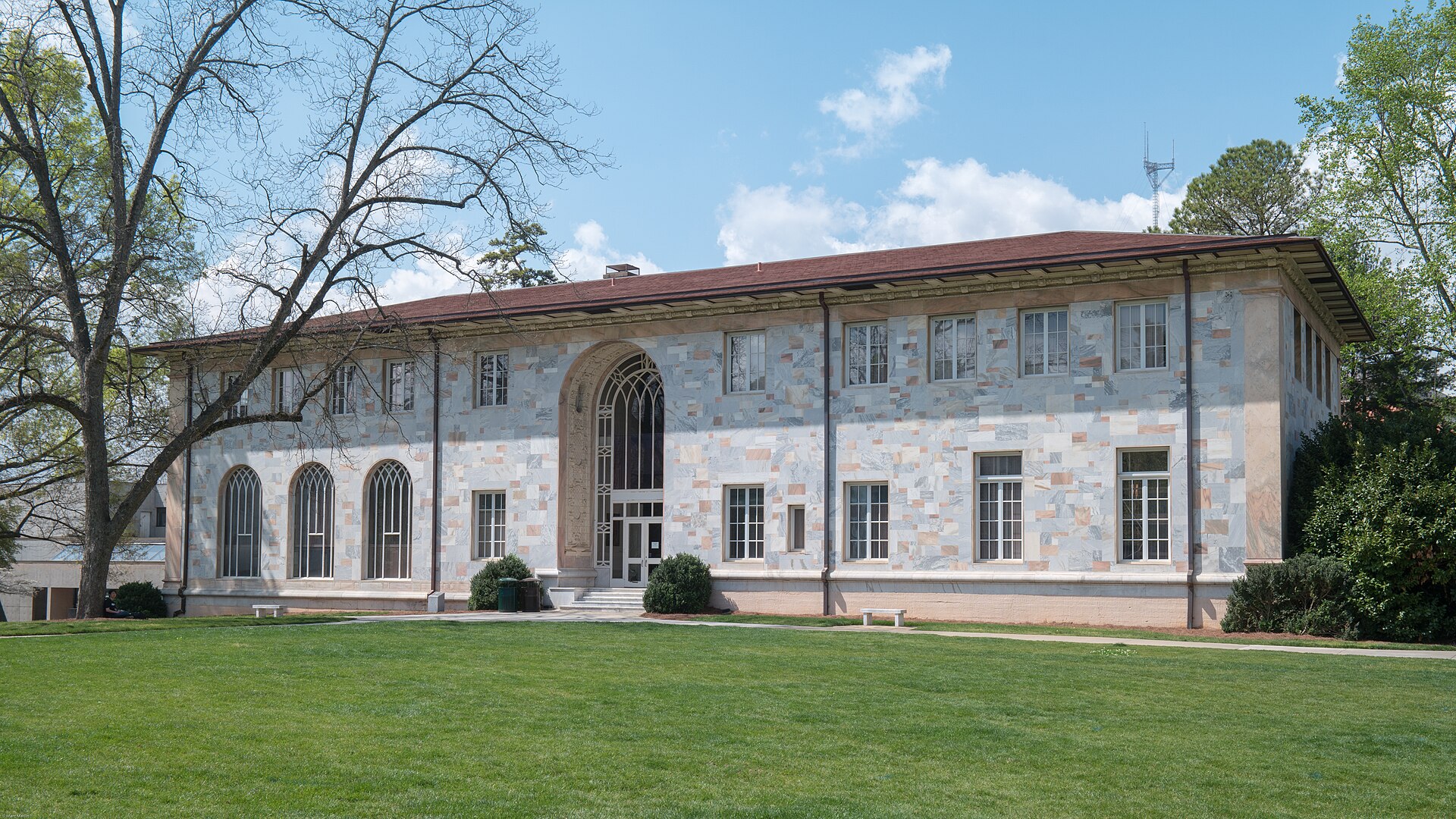
The NESCAC is eleven colleges (Amherst, Bates, Bowdoin, Colby, Connecticut College, Hamilton, Middlebury, Trinity, Tufts, Wesleyan, and Williams) whose presidents control athletic policy and whose rules are, in the conference’s own words, usually more restrictive than Division III’s on season length, number of contests, and postseason competition. In golf, Division III national titles go to academically selective schools of the same kind: on the NCAA record, Claremont-Mudd-Scripps won the 2026 Division III men’s championship, Carnegie Mellon won in 2023 and was runner-up in 2024, and Emory won the Division III women’s championship in 2025 and 2026 with Carnegie Mellon runner-up both years. Division III golf has no recruiting calendar and no camp-conversation date, so a coach may write to a sophomore, evaluate at any event, and speak at a camp; what the coach cannot do is promise admission, and the support is spent in Early Decision.
What Is the College Golf Recruiting Timeline?
The college golf recruiting timeline below places the general dates, the golf calendars, and the sequence one Ivy League program publishes against the admissions year, for the class of 2028 in the 2026-27 cycle.
- Freshman and sophomore years: play ranked junior events so a Junior Golf Scoreboard differential and an AJGA record exist, take the NCAA core courses, and register with the Eligibility Center. Email coaches and complete their questionnaires knowing the reply comes after June 15 of sophomore year.
- June 15 after sophomore year: correspondence and calls open; send the summer schedule and the ranking profile.
- August 1 of junior year: off-campus contact, official visits, unofficial visits with the coach, and camp conversations open, inside a contact period that runs to November 25.
- Junior year: contact periods with the November 9 through 12 signing-week dead period, Thanksgiving week dead, the December convention dead days, and the holiday dead period; sit the SAT or ACT more than once by June.
- June after junior year: the pre-read request (transcript, every test score, senior schedule); coaches at the summer tournaments from late June.
- July 1 after junior year: the admissions verdict; August 1, written offers of aid may be provided at scholarship programs.
- Senior year: early action or Early Decision applications filed by late September where the coach has asked; Ivy League likely letters from October 1; the November 10, 2027 signing date (the second Wednesday in November); December 15 early decisions.
What Should Golf Families Watch For?
- The number is the tournament. A +3 handicap, a -2.50 differential, an AJGA win: every published benchmark is a competition result, and a practice-round average has no published equivalent.
- Two a year. Three hundred emails, two or three candidates the program can support, two in a typical year. The academic file decides between golfers who all clear the golf bar.
- Tests by June of junior year. The pre-read uses the transcript through junior year and the scores already sitting in the file; a senior-fall retake arrives after the verdict.
- Nine, or eight. Rosters are nine at schools under the limits and eight at Yale, and the Yale document describes weekend qualifiers for the lineup. Ask the coach how many players at each class are in the lineup.
- Ivy and NESCAC together. The two leagues recruit from the same junior tournaments on different rules; the NESCAC coach can say more sooner and can promise less, and neither offers athletic aid.
- The calendar is nearly open. Outside Thanksgiving week, the signing week, the conventions, and the holidays, a Division I golf coach may watch and meet on any date after August 1 of junior year; the tournament schedule sets the rhythm.
Oriel Admissions treats golf recruiting as one strand of a full admissions strategy: the coach’s support, the academic record the pre-read will test, the application, and the financial decision are planned together, because at the selective programs every one of them can end the recruitment. The guide to how to get recruited for college sports sets out the general process, the guide to recruited athlete admissions explains what a coach’s support is worth, and the NCAA recruiting calendar gives the 2026-27 dates. Related sport guides: tennis, lacrosse, and swimming.
Frequently Asked Questions
One published answer comes from the Yale golf recruiting document for men (June 2026): a tournament-tested handicap of +3 or better, a -2.50 Junior Golf Scoreboard scoring differential, or a top 100 national ranking in the class, with the ability to shoot around par and more than occasionally break par in elite events. In the view of Oriel Admissions, treat these as one Ivy League benchmark, since other programs set their own bars.
The Yale document says a prospect remains on the recruiting radar with an SAT superscore above 1480, an ACT of 33 or higher, or a TOEFL around 108 or higher, alongside a GPA as close as possible to an unweighted 4.0 in the most rigorous courses, and it prefers the test taken more than once by June of junior year. Yale requires a test score.
Not with recruiting correspondence before June 15 after sophomore year, under Bylaw 13.4.1. The Yale document says the program files freshman and sophomore emails and answers in the summer after sophomore year. Off-campus contact, official visits, and unofficial visits with the coach open August 1 of junior year.
Yes. In 2026-27 both golf calendars are dead November 9 through 12 (signing week), November 26 through 29 (Thanksgiving), and December 8 through 10 (the coaches conventions). The Division I calendar for men is also dead December 23 through January 1 and has a quiet period from November 30 to December 22, and the calendar for women is dead December 24 through 27. The rest of the year is open to contact.
The Yale document says the program can support two or three candidates from each class and in a typical year supports two academically vetted candidates, from about 300 unsolicited emails a cycle. Its 2026-27 roster lists 8 players.
Nine at Division I schools under the roster limits adopted in June 2025, with no sport-specific scholarship cap at those schools. The Ivy League did not opt into the settlement; Yale listed 8 men and 8 women in 2026-27. Division III has no such limit.
The NCAA estimates 5.4 percent of high school boy golfers and 6.9 percent of girl golfers go on to an NCAA roster: 1.8 and 2.7 percent to Division I, 1.5 and 1.9 percent to Division II, and 2.1 and 2.3 percent to Division III. The count excludes junior-tour play outside the school team.
On the NCAA record, Claremont-Mudd-Scripps won the 2026 Division III championship for men, Methodist won in 2024 and 2025, and Carnegie Mellon in 2023; Emory won the championship for women in 2025 and 2026 with Carnegie Mellon runner-up both years. Division III programs recruit with no calendar, no athletic aid, and support spent in Early Decision.
Sources: Yale University Men’s Golf, Recruiting Document for High School Prospects (updated June 2026); Yale University Athletics, 2026-27 Men’s Golf Roster; NCAA Division I Manual, Bylaw 13.4.1 (LSDBi); NCAA Division I Manual, Bylaw 13.1.3.1 (LSDBi); NCAA Division I Manual, Bylaw 13.1.1.1 (LSDBi); NCAA Division I Manual, Bylaw 13.6 (LSDBi); NCAA Division I Manual, Bylaw 13.7 (LSDBi); NCAA Division I Manual, Bylaw 13.12, Sports Camps and Clinics (LSDBi); NCAA Division I Manual, Bylaw 13.17, Recruiting Calendars, revised October 23, 2026 (LSDBi); 2026-27 NCAA Division I Men’s Golf Recruiting Calendar (updated July 30, 2026); 2026-27 NCAA Other Division I Sports Recruiting Calendar (updated August 4, 2026); 2026-27 NCAA Division II Coaches Off-Campus Recruiting Guide; NCAA Division III Manual, Bylaw 13.1 (LSDBi); NCAA.org, DI Board of Directors formally adopts changes to roster limits, June 23, 2025; NCAA.org, Probability of Competing Beyond High School; NCAA.com, DI Men’s Golf Championship History; NCAA.com, DIII Men’s Golf Championship History; NCAA.com, DI Women’s Golf Championship History; NCAA.com, DIII Women’s Golf Championship History; Ivy League Prospective Athlete Information; NESCAC, About the NESCAC; NESCAC Admissions Statement.
About Oriel Admissions
Oriel Admissions is a college admissions consulting firm advising families nationwide on elite university admissions strategy, with offices in Princeton, New Jersey and New York. Our team brings deep expertise across every dimension of the application, and our distinctive 360 approach develops strategy, positioning, activities, essays, and interviews as one coherent whole. To discuss your family’s admissions strategy, schedule a consultation.