What is The Chapin School and why is it a top all-girls school?
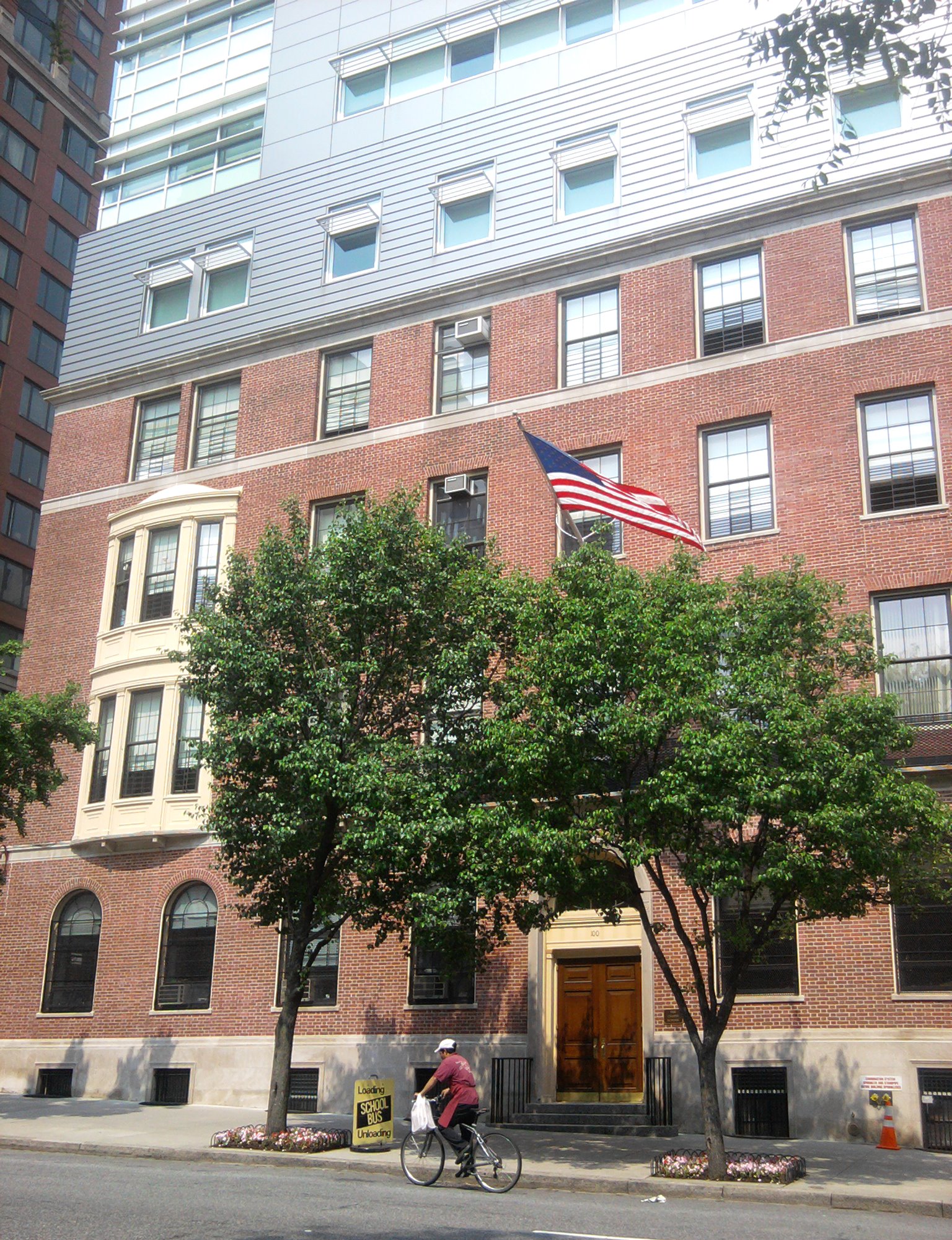
The Chapin School is an all-girls independent K-12 day school founded in 1901 by Maria Bowen Chapin. The school enrolls approximately 830 students at 100 East End Avenue between 84th and 85th Streets on Manhattan’s Upper East Side. Chapin operates with a 6:1 student-faculty ratio and is divided into three divisions: Lower School (Kindergarten through Grade 3), Middle School (Grades 4 through 7), and Upper School (Grades 8 through 12). Approximately 60 students start in Kindergarten across three classes.
| The Chapin School at a Glance | Detail |
|---|---|
| Type | All-girls K-12 independent day school |
| Founded | 1901 by Maria Bowen Chapin |
| Location | Manhattan, Upper East Side (100 East End Avenue) |
| Enrollment | ~830 students under one roof |
| Student-faculty ratio | 6:1 |
| Divisions | Lower (K-3), Middle (4-7), Upper (8-12) |
| Acceptance rate (estimate) | ~7-15% at Kindergarten and Grade 9 entry points |
| Primary entry points | Kindergarten (~60 admits) and Grade 9 |
| Tuition (2025-2026) | ~$66,000-$67,000 |
| Financial aid | 18.5% of students receive aid (~$8.5M budget); median recipient income $204,245 |
| Affiliations | NY Interschool (sister schools: Brearley, Spence); Collegiate primary coed-program partner |
Chapin is one of three sister schools in the New York Interschool consortium alongside Brearley and Spence. The all-boys Collegiate School serves as the primary coed-program partner. Chapin’s mission emphasizes preparing young women to thrive and lead through the pursuit of academic excellence, personal integrity, and community responsibility. The school developed from a small elementary school Maria Chapin and Alice Wetmore founded in 1894 to prepare young girls for success at Brearley.
What is Chapin’s acceptance rate?
Chapin does not publish an official acceptance rate. The school is widely considered one of the three most selective all-girls K-12 day schools in NYC alongside Brearley and Spence. Independent admissions analyst estimates place Chapin’s acceptance rate near 7-15% at the Kindergarten and Grade 9 entry points. PrivateSchoolReview cites a 20% acceptance rate, while EduAvenues cites approximately 7%; the discrepancy reflects different methodology and data vintage. Chapin’s graduating classes are typically near 40 students.
Chapin reports that applicants to Kindergarten come from about 162 different schools each cycle. Middle and Upper School applicants come from more than 77 public and charter schools in NYC, more than 58 non-public schools (including independent and parochial), and 27 schools in other states and countries.
How does Chapin’s admissions process work?
Chapin follows ISAAGNY’s coordinated calendar. Applications open in early September on the Ravenna platform. The application deadline for all grades at Chapin is December 1. A complete Chapin application includes the online application form, parent statement, student essay (Grade 5 and up), teacher recommendations (current English and Math teachers plus counselor or principal), transcripts for the current and prior year, ISEE or SSAT scores (Grade 5 and up), and the required in-person interview and tour.
Chapin hosts an open house in December for parents and guardians of children who have applied to Kindergarten through Grade 3. This evening event provides families with the opportunity to learn more about Chapin’s program and meet members of the school community, including students, faculty, administrators, and current parents. Kindergarten applicants must be five years old by August 31 of the year they would enroll.
What does Chapin cost in 2025-26 and what financial aid is available?
Chapin’s tuition for the 2025-2026 academic year is approximately $66,000-$67,000 across K-12 grades (Chapin School Office of Admission). The tuition is comprehensive and includes most program costs. Chapin provided approximately $8.5 million in tuition aid for 18.5% of the student body in the 2025-2026 school year. The financial aid application deadline is December 1 for applicant families and November 1 for current families.
One striking feature of Chapin’s financial aid program: the median household income of families receiving tuition assistance for the 2025-2026 school year was $204,245 (Chapin School Tuition Assistance Office). This higher-than-typical median reflects Chapin’s commitment to socioeconomic access for families above traditional aid thresholds. There is no income cap to apply for tuition assistance; Chapin’s Tuition Assistance Committee assesses each family individually using the Clarity Application based on income, assets, liabilities, family size, and cost of living.
What ISEE or SSAT scores does Chapin expect?
Chapin accepts both ISEE and SSAT scores for Grade 5-12 admissions. The school does not publish a required cutoff score. Competitive Chapin applicants typically present ISEE stanines in the 7-9 range across all four sections (Verbal, Quantitative, Reading, Math). The admissions office reviews scores in context of the broader application file. Chapin phased out AP courses in recent years and focuses on advanced courses of their own design called FOCUS courses, offered to students starting in 10th grade.
Chapin maintains a traditional curriculum with required Latin (fulfilled in 7th and 8th grade) and at least one modern language (Spanish, French, or Mandarin). The school’s 17 AP courses (per privateschoolreview historical data) and rigorous independent studies make the academic environment intense without being narrow.
How does Chapin compare to Brearley and Spence?
Chapin, Brearley, and Spence form the top tier of NYC all-girls K-12 day schools. All three are sister schools through the New York Interschool consortium with shared facilities, athletics through the AAIS, and common coed-program partnership with the all-boys Collegiate School. Academically, all three are comparably rigorous; the differences are cultural and structural.
Chapin emphasizes traditional liberal arts education within a tight-knit single-roof community. Lower School, Middle School, and Upper School operate within one building, fostering cross-grade mentorship. Brearley emphasizes humanities-intensive academics and intellectual debate. Spence emphasizes science research depth with extensive Fellows programs. The right choice depends on your daughter’s learning style and community needs rather than relative ranking; all three produce comparable college outcomes.
What college outcomes do Chapin graduates achieve?
Chapin produces among the strongest college matriculation outcomes of any K-12 day school in the United States. The colleges and universities most often selected by Chapin students include Brown University, Columbia University, Cornell University, Duke University, Georgetown University, Harvard University, Princeton University, University of Chicago, University of Pennsylvania, and Yale University. Chapin publishes its 2021-2025 matriculation data on its admissions website for prospective families.
Chapin’s reputation among elite university admissions offices is established. The school’s relatively small graduating class size (approximately 40 students) supports individualized college counseling, and the college counseling office maintains established relationships with admissions offices at top universities. College acceptance rates have reached historic lows, and Chapin families benefit from strong school-based counseling but must still build distinctive individual applications.
How should families maximize their Chapin chances?
For Kindergarten applicants, the strongest determinants of admission are the child visit, nursery-school recommendation, parent statement, and sibling/legacy status. Attend Chapin’s December open house for Kindergarten and Lower School applicants. The parent statement should substantively articulate fit with Chapin’s tight-knit community and the school’s traditional liberal arts approach. Submit the application well in advance of the December 1 deadline to maximize interview slot availability.
For Grade 5-12 applicants, the interview, student essay, and teacher recommendations dominate the file alongside strong ISEE or SSAT scores. Chapin’s admissions office reviews each application holistically. Apply to peer NYC schools (Brearley, Spence, Trinity for coed option) as a parallel strategy; the ISAAGNY mid-February decision day will concentrate outcomes. Visit Chapin’s campus to confirm the single-building community structure matches your daughter’s learning style before committing to the application.
Frequently Asked Questions About Chapin School Admissions
The Chapin School is located on the Upper East Side of Manhattan, at 100 East End Avenue, overlooking the East River near Carl Schurz Park. Its single-building campus houses all grade levels under one roof. The location places it among the cluster of historic independent schools on Manhattan’s East Side, within the neighborhood long associated with the city’s most established girls’ schools.
Yes; Chapin is an all-girls independent school, enrolling girls only from Kindergarten through 12th grade. It is one of the historic New York City girls’ schools, alongside Brearley, Spence, and Nightingale-Bamford. The single-sex environment is central to Chapin’s mission and identity, built around educating young women, and it does not admit boys at any grade level.
Chapin serves girls from Kindergarten through 12th grade, all within a single building, an arrangement the school describes as its ‘under one roof’ community. The primary entry point is Kindergarten, where most of the class is admitted, with a smaller number of spots opening at later transition grades. Because so much of the class enters at Kindergarten, admission to upper grades is especially limited and competitive.
Yes, extremely; Chapin is among the most selective girls’ schools in New York City, with the bulk of seats filled at Kindergarten and very few openings afterward. The applicant pool is deep with high-achieving families, so beyond assessments the school weighs fit, family engagement, and a child’s readiness. Mid-grade admission is particularly difficult given how rarely spots become available in continuing classes.
Chapin is known for rigorous academics, a strong tradition of educating young women leaders, and notable alumnae including Jacqueline Kennedy Onassis and Vera Wang. Its ‘under one roof’ structure keeps all grades in one building, fostering a close community and mentorship between older and younger students. Among NYC girls’ schools it is regarded as a flagship for academic excellence and a tight-knit, tradition-rich environment.
Yes; like its peer NYC independent schools, Chapin’s process includes a child visit or assessment, a parent interview or tour, standardized testing (the ISEE or the early-childhood admissions assessment for younger applicants), and school reports or recommendations. The components vary by entry grade, with young applicants assessed through play-based observation rather than formal testing. Families should confirm the current cycle’s specific requirements on Chapin’s admissions site.
Yes; Chapin provides need-based financial aid and is committed to socioeconomic diversity, awarding aid to families across a range of incomes based on demonstrated need. The school does not offer merit scholarships; assistance is determined solely by financial circumstances through a separate aid application submitted during the admissions cycle. Aid decisions accompany admission, so families seeking support should apply for it concurrently with the admission application.
Maria Bowen Chapin established the school in 1901, originally as Miss Chapin’s School for Girls, and it grew into one of New York City’s premier independent schools. It relocated to its current East End Avenue building in 1928. Across more than a century it has held to its founding commitment to academically rigorous education for girls, becoming a fixture among the city’s historic women’s schools with a long roster of accomplished alumnae.
Sources: Chapin School official site, New York State Association of Independent Schools (NYSAIS), National Association of Independent Schools (NAIS), NCES Private School Universe Survey, Parents League of New York, ERB (Educational Records Bureau), and independent NYC private school admissions analyses.
About Oriel Admissions
Oriel Admissions is a Princeton-based college admissions consulting firm advising families nationwide on elite university admissions strategy. Our team brings deep expertise across every dimension of the application, and our distinctive 360 approach develops strategy, positioning, activities, essays, and interviews as one coherent whole. To discuss your family’s admissions strategy including NYC private school admissions, schedule a consultation.