South Carolina Honors College: Admissions Strategy for the Nation’s Best Public Honors Bet
By Rona Aydin
TL;DR: The South Carolina Honors College – long marketed and repeatedly ranked as the nation’s best public honors college – admits a class whose middle 50 percent scores 1430 to 1530 on the SAT or 32 to 35 on the ACT, sits on average in the top 5 percent of the high school class with weighted GPAs around 4.5 and above, and applies test-optionally through an honors application that appears in the USC Admissions Portal within about 48 hours of the university application (South Carolina Honors College). The honors file adds two essays and exactly one recommendation letter, credentials close December 1, decisions release on a rolling basis from late December through late February, and every admitted honors student receives a university merit scholarship, with offers out by mid-March. An honors fee of 750 dollars per semester underwrites nearly 600 honors courses a year plus funded research, study abroad, and the senior thesis. How the application really works and how to sequence it. To build that plan, schedule a consultation with Oriel Admissions.
What Is the South Carolina Honors College
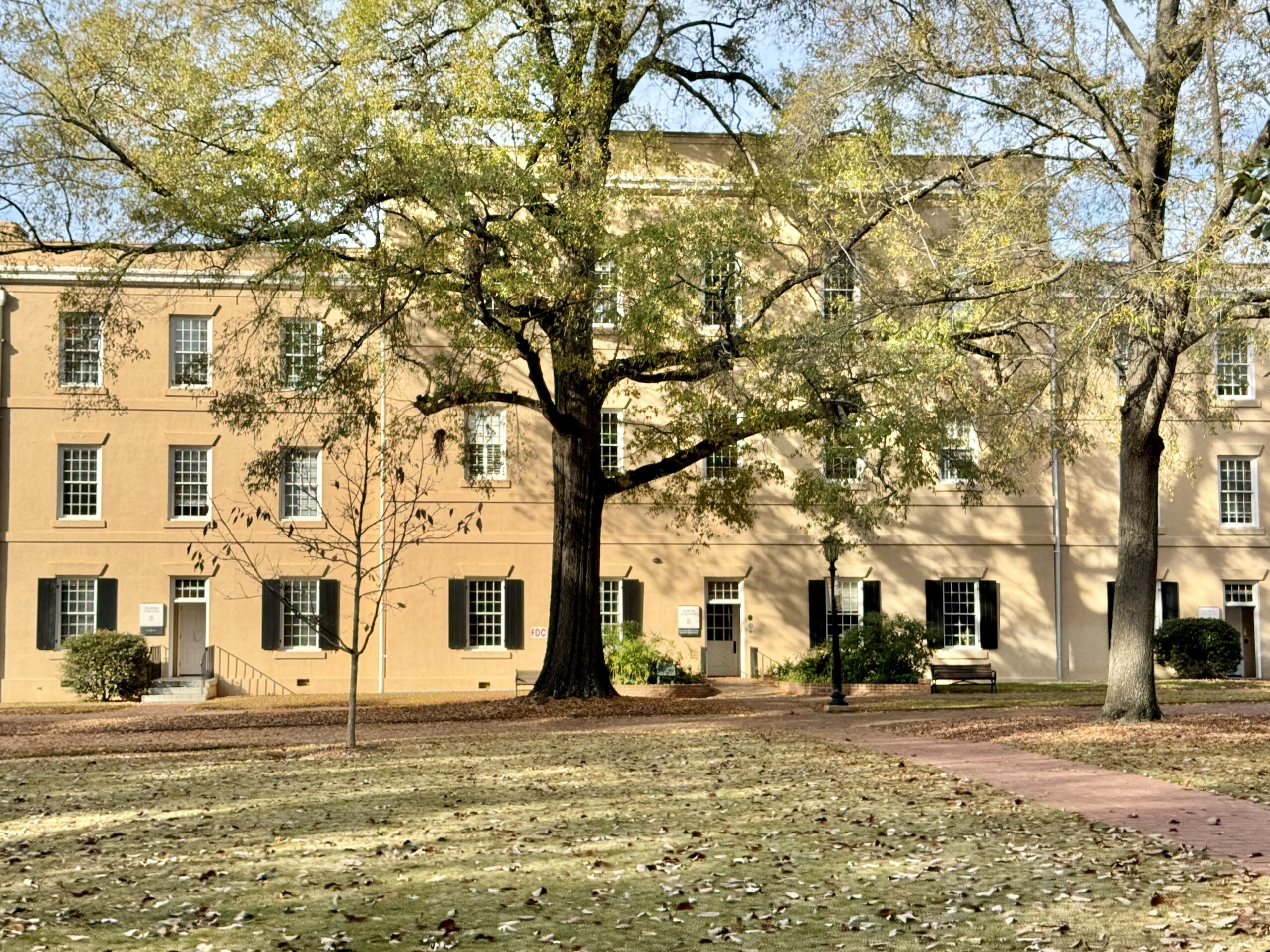
Walk the historic Horseshoe in Columbia and the lampposts say it plainly: nation’s best public honors college. The claim is a fixture of national honors rankings, and the architecture behind it is concrete – honors classes averaging 16 students, a catalog of nearly 600 honors courses a year, honors living on and around the Horseshoe itself in buildings like Harper College, and a curriculum that runs from first-year seminars through a required senior thesis. The South Carolina Honors College also holds structural privileges most honors programs cannot match: the BARSC degree that lets a student design a major from scratch, guaranteed-admission options into pre-med and pre-law tracks, and guaranteed entry into the Global International Business classic track and the Smart Start Nursing pathway. For a family calibrating value, the honest summary is that South Carolina offers the most private-college-like honors experience in the public flagship market – a small, credentialed, residential college grafted onto a major university – and admits accordingly.
How Hard Is It to Get Into the South Carolina Honors College
| Admitted Class Marker | Profile |
|---|---|
| SAT middle 50 percent | 1430 to 1530 |
| ACT middle 50 percent | 32 to 35 |
| Class rank | Top 5 percent of the high school class on average |
| Weighted GPA | Around 4.5 and above |
| Testing policy | Test-optional – scores are considered only if the applicant chooses |
Those are selective-private numbers wearing a public-flagship price tag, and families should calibrate accordingly: the South Carolina Honors College admits a class that looks statistically like a top-25 university, and the essays carry real weight because nearly everyone in the pool already has the transcript. A candidate at the bottom of the ranges is viable with distinctive essays and a sharp recommendation; a candidate assuming flagship-level admission standards is preparing a surprise.
How to Apply to the South Carolina Honors College
The flow is portal-driven and mercifully simple. A student applies to the University of South Carolina through either the USC Application or the Common Application – the university states no preference – and answers yes to the honors interest question; within about 24 to 48 hours the honors application appears on the USC Admissions Portal checklist. The honors file adds two additional essays and one letter of recommendation – only one letter is considered, submitted either by the counselor through Common App, Scoir, or Naviance, or emailed directly by the recommender – plus an optional resume, with credentials due December 1. Students who answered no and change their minds can request access by email. The strategic read: because only a single recommendation counts, its selection is a genuine decision rather than a formality – choose the adult who can testify to intellectual character, not merely classroom performance – and because the two honors essays are the primary differentiators in a statistically compressed pool, they deserve the same drafting cycle a family would give a top-25 supplemental.
When Do South Carolina Honors Decisions Come Out
Honors decisions run on their own track, separate from the university decision: they release on a rolling basis from late December through late February, with the earliest complete files hearing first. The money answer follows quickly – every student admitted to the South Carolina Honors College receives a merit-based scholarship from the Office of Undergraduate Admissions, with offers released by mid-March through email and the portal. The sequencing consequence for families: an early, complete honors file converts South Carolina into one of the first elite honors answers of the cycle, which makes it a superb psychological and financial anchor while holistic decisions elsewhere – the Fellowship interviews in Athens, the spring rounds at Barrett – are still months away.
The Fee and What It Buys
The honors fee is 750 dollars per semester, and unlike most program fees it maps to visible machinery: it primarily defrays the cost of offering nearly 600 honors courses a year and funds student research, internships, study abroad, service learning, and senior thesis work. Set against the guaranteed merit scholarship every honors admit receives, the net math favors the family in essentially every scenario – but the fee is worth naming honestly because it signals what the college actually is: a funded, staffed, small-college operation inside the university, not a transcript notation. The senior thesis deserves the same framing – it is the artifact that converts four years of honors coursework into a research credential graduate and professional schools can evaluate, and the fee-funded thesis support is what makes it feasible across majors. Students already completing a second undergraduate semester, at USC or elsewhere, may also be eligible to apply – a narrow but real second door.
Where South Carolina Fits in an Honors Strategy
The South Carolina Honors College is the prestige pick of the public honors market, and it slots naturally against the other archetypes: Barrett at ASU for scale and a spring-late application door, Morehead at UGA for the scholarship-fused November 1 gate, the Alabama Honors College for published-threshold certainty, and Schreyer at Penn State for the Northeast version of the funded honors seat. South Carolina’s distinctive card is the combination: top-of-market selectivity, a guaranteed scholarship attached to every admit, and the strongest ranking narrative in the category. Compare the full financial picture with the merit aid finder and the upper-middle-class financial aid strategy guide.
Frequently Asked Questions About the South Carolina Honors College
Selective at a top-private level: the middle 50 percent of admitted students score 1430 to 1530 on the SAT or 32 to 35 on the ACT, sit on average in the top 5 percent of their class, and carry weighted GPAs around 4.5 and above. Review is test-optional, which pushes real weight onto the two honors essays and the single recommendation.
Apply to the University of South Carolina through the USC Application or Common Application and answer yes to the honors interest question; the honors application appears in your USC Admissions Portal within about 24 to 48 hours. It adds two essays, one recommendation letter, and an optional resume, with credentials due December 1.
Exactly one, and only one is considered – submitted by the counselor through a service like Common App, Scoir, or Naviance, or emailed directly by the recommender. Because a single voice carries the entire recommendation weight, choose the adult who can speak to intellectual character rather than the most senior title.
On a rolling basis from late December through late February, separate from the university decision, with the earliest complete files hearing first. Merit scholarship offers – which every admitted honors student receives – are released by mid-March.
Yes – 750 dollars per semester, which primarily defrays nearly 600 honors courses a year and funds student research, internships, study abroad, service learning, and senior thesis work. Weighed against the merit scholarship attached to every honors admit, the net math favors the family.
Yes – every student admitted to the South Carolina Honors College receives a merit-based scholarship from the Office of Undergraduate Admissions, with offers released by mid-March through email and the USC Admissions Portal.
For a student with the numbers, it is one of the strongest value plays in admissions: the most decorated public honors college in the nation, classes averaging 16 students, a required senior thesis with funded support, guaranteed pathways into pre-med, pre-law, business, and nursing tracks, and a merit scholarship attached to every admit – all at flagship cost.
A narrow door exists: students currently completing their second undergraduate semester, at USC or another institution, may be eligible to apply. The primary route remains the first-year application, and families targeting honors should treat the December 1 credentials deadline as the real one.
Sources: South Carolina Honors College, Incoming First-Year Students, University of South Carolina Undergraduate Admissions, Applying to Carolina Elite Programs, South Carolina Honors College FAQs, South Carolina Honors College, Visit and Apply, NCES College Navigator.
About Oriel Admissions
Oriel Admissions is a Princeton-based college admissions consulting firm advising families nationwide on elite university admissions strategy. Our team pairs deep admissions expertise with a distinctive 360 approach spanning academic planning, extracurricular strategy, essays and application execution. To discuss your strategy, schedule a consultation.