USC Merit Scholarships: The Trustee, the Presidential, and the Deadline That Decides Everything
By Rona Aydin
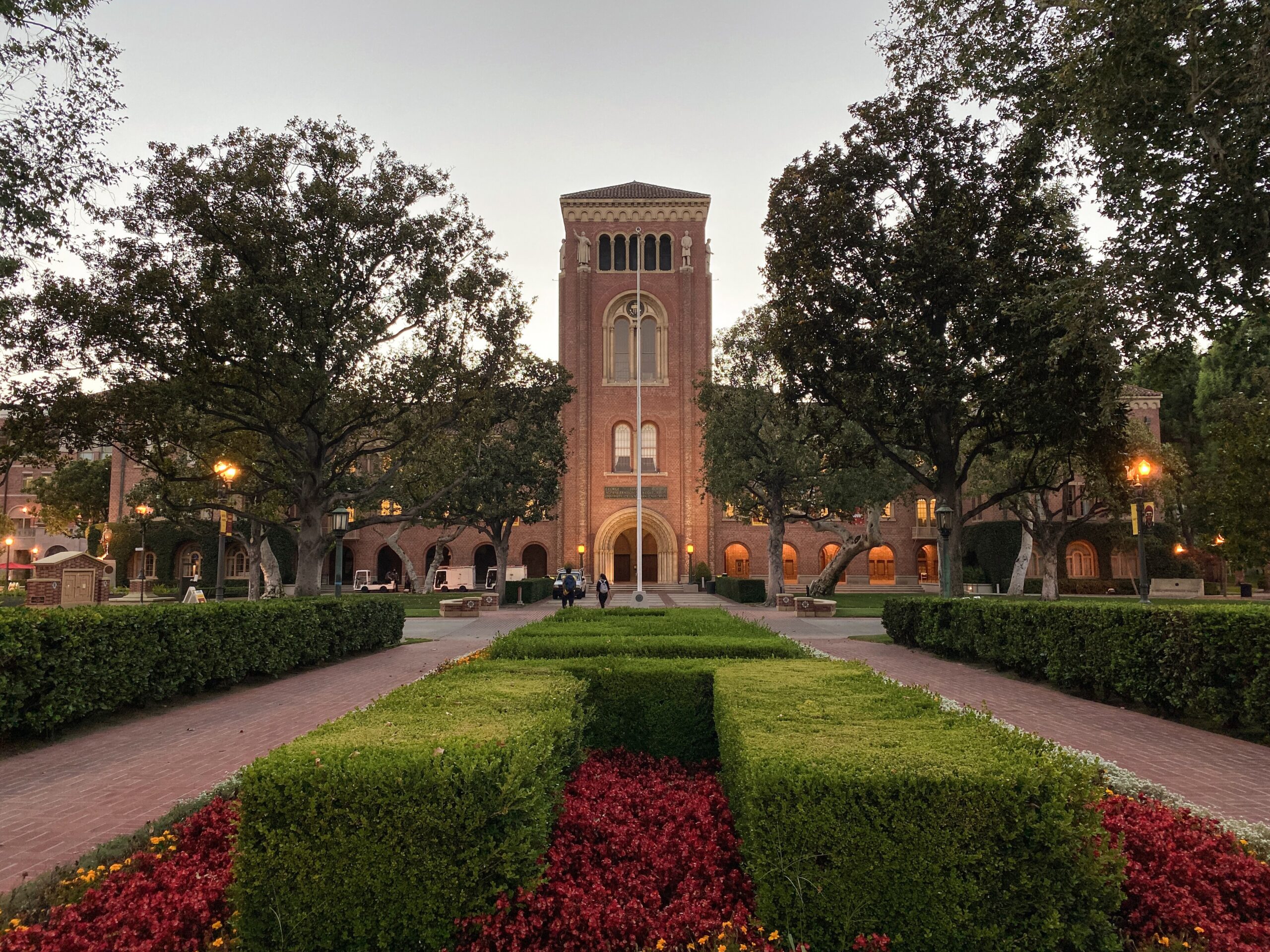
TL;DR: USC Merit Scholarships run from a few thousand dollars up to full tuition, topped by the Trustee (full tuition), Presidential (half tuition), and Deans (one-quarter tuition). Applicants are considered if they apply by November 1 through binding Early Decision or Early Action, or by December 1 to Dance, Dramatic Arts, or Music; Regular Decision applicants to other majors, due January 10, are not. In the 2024-25 cycle, over 40,000 students applied by the scholarship deadline and approximately 1,000 were invited in late January to interview for the Presidential and Trustee. Admitted National Merit Finalists who list USC as their first choice receive $20,000 a year. To build the candidacy, schedule a consultation with Oriel Admissions.
Does USC Give Merit Scholarships
| Award | Value | Notes |
|---|---|---|
| Trustee Scholarship | Full tuition | Interview stage for finalists; number of awards varies |
| Presidential Scholarship | Half tuition | Same interview funnel as the Trustee; number of awards varies |
| Deans Scholarship | One-quarter tuition | Awarded from the same scholarship-deadline pool; number of awards varies |
Yes. USC Merit Scholarships, administered through the Office of Admission, range from a few thousand dollars up to full tuition and are awarded on academic excellence, leadership, service, and talent; USC says that last year over 1,000 admitted students earned scholarships of $10,000 per year or more. The named tiers form a genuine ladder rather than a lottery: the Trustee at full tuition, the Presidential at half tuition, and the Deans at one-quarter tuition, all selected through competitive holistic review. Two honesty notes before the mechanics. First, USC publishes no GPA or test cutoffs for any tier, and it is test optional: its admission blog says applicants who applied without scores were not disadvantaged in scholarship selection. Second, full tuition is not a full ride: housing, food, and other costs remain on the family ledger, so even the Trustee is worth modeling as transformative money rather than a free education.
The Deadline That Decides Everything: November 1
Here is the mechanic that eliminates more families than the competition does: for most majors, the November 1 Early Decision and Early Action deadline is also the merit scholarship deadline. Apply Regular Decision by January 10 and the admission review proceeds normally, but USC lists merit consideration only for Early Decision, Early Action, and Regular Decision applicants to the performing arts. That carve-out belongs to the USC Kaufman School of Dance, the School of Dramatic Arts, and the Thornton School of Music, which do not participate in Early Decision or Early Action and use December 1 as their only deadline. The World Bachelor in Business program accepts applications only by November 1 and does not participate in Regular Decision. Binding Early Decision applicants are considered for merit scholarships too, and need-based aid is a separate process: USC says you do not need to submit a need-based financial aid application to be considered for a merit scholarship. The planning consequence is blunt: for a merit-serious family, USC is a fall-semester project, with essays finished in October.
The Selection Arc: 40,000 Applicants, 1,000 Interviews
USC publishes its own funnel, and the numbers deserve a slow read. In the 2024-25 cycle, according to the USC admission blog, more than 40,000 students applied by the scholarship deadline, and in late January approximately 1,000 were invited to interview for the Presidential and Trustee scholarships, roughly one in forty by an Oriel Admissions calculation. Most applicants received the quieter update: no longer in the running for merit-based scholarships, still being considered for admission, with scholarship decisions final and not open to appeal. Early Decision applicants hear about admission by mid-December, Early Action applicants in late January, and Regular Decision applicants by April 1. For finalists, Oriel Admissions advises preparation that looks like fellowship prep: a crisp account of the work behind the file, genuine questions about the programs, and a reason USC specifically.
What Does USC Give National Merit Finalists?
USC awards a National Merit Finalist Scholarship of $20,000 per year to students who are admitted to USC, named National Merit Finalists by the National Merit Scholarship Corporation, and list USC as their first-choice institution with NMSC. The USC admission blog adds that a National Merit Finalist who was not admitted in the scholarship round can still receive the award if admitted later. USC says the scholarship notification follows once the name is confirmed on the official NMSC roster in the spring. Budget from the figure on the USC scholarships page, and keep the award in proportion: it is meaningful money layered onto an admit, while the half-tuition Presidential and full-tuition Trustee are worth considerably more.
What Other USC Scholarships Should You Know About?
Beyond the named tiers, USC notes that some scholarships are administered outside the Office of Admission, by on-campus offices and alumni groups, with amounts from a few thousand dollars to upwards of $10,000. USC adds that the merit scholarships open to students who were not invited to interview typically carry smaller amounts. The outside awards generally require a separate application and carry their own deadlines and eligibility rules; most are listed on Scholarship Universe, and a few, such as some departmental awards and the Town and Gown Scholarship, are posted on their own websites. The practical read: let the main application carry the merit weight, then work through the side awards as a separate, smaller campaign.
Where USC Fits in the Merit Landscape
USC spreads its merit money widely: USC says over 1,000 admitted students last year earned scholarships of $10,000 per year or more, and the price of entry is an application by November 1 for most majors. For the squeezed-middle family, the expected value is real because the awards are broad, running from a few thousand dollars up to full tuition, so the realistic goal is a meaningful award rather than only the top prize. Compare the calendar with our WashU merit scholarships guide, ground the base rates in our USC acceptance rate analysis, build the file with our USC admissions guide, and place the November 1 gate inside the full calendar with the merit aid finder and the upper-middle-class financial aid strategy guide.
Frequently Asked Questions About USC Merit Scholarships
Yes. USC Merit Scholarships range from a few thousand dollars up to full tuition, led by the full-tuition Trustee, half-tuition Presidential, and quarter-tuition Deans Scholarships, and USC says over 1,000 admitted students last year earned scholarships of $10,000 per year or more.
November 1 for most majors, through binding Early Decision or Early Action. Applicants to the Kaufman School of Dance, the School of Dramatic Arts, and the Thornton School of Music are considered if they apply by December 1, and the World Bachelor in Business accepts applications only by November 1. Regular Decision applicants to other majors, due January 10, are not considered for USC Merit Scholarships.
In the 2024-25 cycle, USC notified scholarship-deadline applicants in late January, inviting approximately 1,000 to interview for the Presidential and Trustee scholarships. Early Decision admission decisions come by mid-December, Early Action decisions in late January, and Regular Decision decisions by April 1.
For the Trustee and Presidential, yes: finalists are invited to interview, approximately 1,000 in the 2024-25 cycle from more than 40,000 scholarship-deadline applicants. Scholarship decisions are final and cannot be appealed.
USC says that last year over 1,000 admitted students earned scholarships of $10,000 per year or more. It does not publish exact counts by tier, and its most recent published scholarship grid, for 2025-2026, lists the number of Trustee, Presidential, and Deans awards as varying.
Yes. USC awards $20,000 per year to students who are admitted, named National Merit Finalists, and list USC as their first-choice institution with the National Merit Scholarship Corporation, including finalists admitted after the scholarship round.
No. USC says merit scholarships and need-based financial aid have separate processes, and you do not need to submit a need-based financial aid application to be considered for a merit scholarship. File the FAFSA and CSS Profile on the financial aid calendar if you want need-based aid.
The published funnel says it plainly: in the 2024-25 cycle, over 40,000 scholarship-deadline applicants and about 1,000 interview invitations for the top two tiers, roughly one in forty by an Oriel Admissions calculation. The candidacy is the application itself: maximum rigor, externally validated achievement, and essays strong enough to be read twice.
Sources: USC Undergraduate Admission, First-Year Students: Dates and Deadlines, Deadline FAQs, and Scholarships; USC Undergraduate Admission Blog, February 18, 2025; USC Competitive Scholarship Grid, 2025-2026.
About Oriel Admissions
Oriel Admissions is a college admissions consulting firm advising families nationwide on elite university admissions strategy, with offices in Princeton, New Jersey and New York. Our team pairs deep admissions expertise with a distinctive 360 approach spanning academic planning, extracurricular strategy, essays and application execution. To discuss your strategy, schedule a consultation.