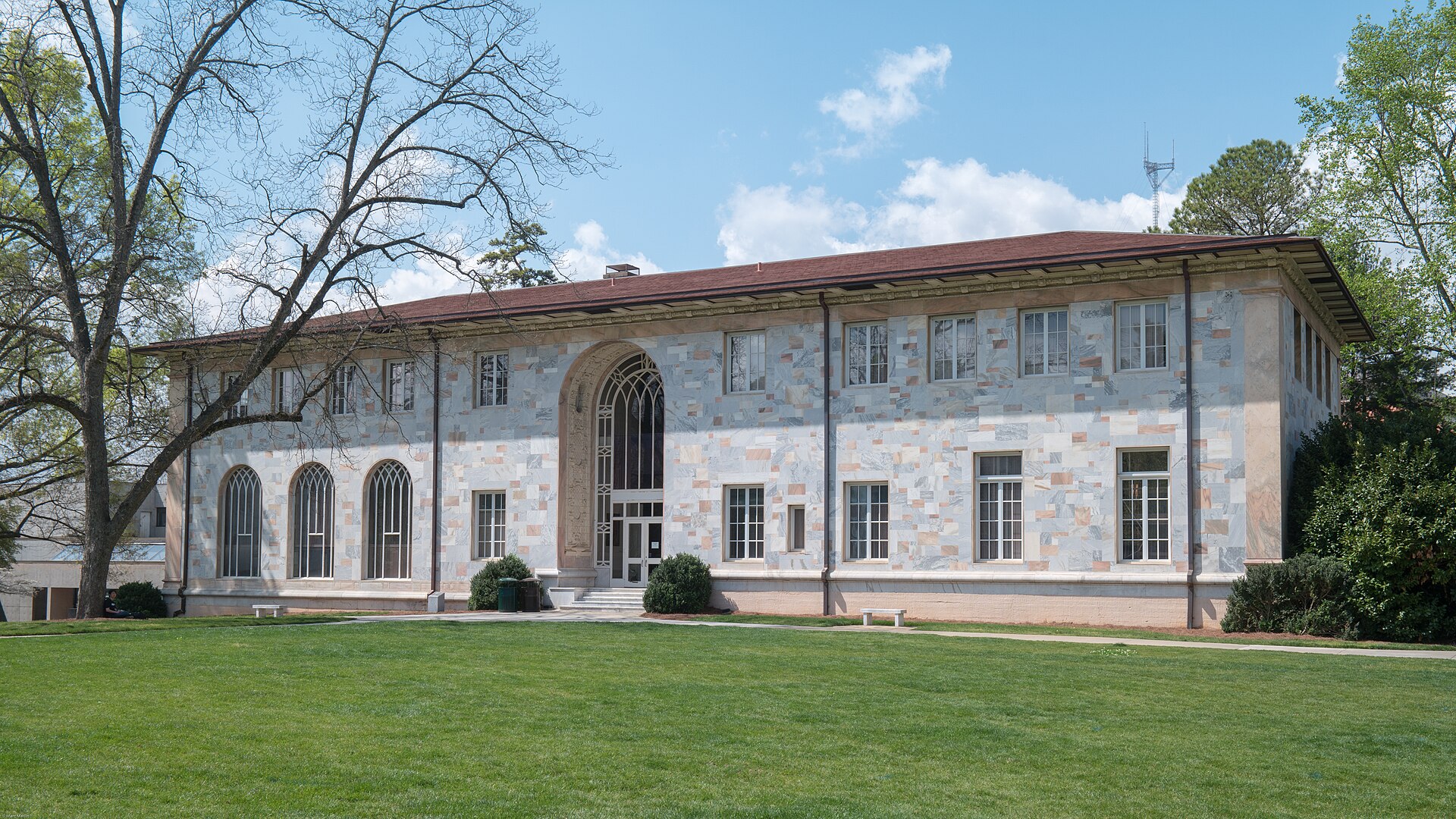
Emory University at a glance: Emory University is a private research university in Atlanta, Georgia, founded in 1836 in Oxford, Georgia, and chartered in Atlanta in 1915. It is best known for its strengths in business, the health sciences and pre-med preparation, nursing, and public health, and for its ties to Atlanta medical and public-health institutions, including the CDC across the street from its school of public health. Families weighing Emory against peer schools can schedule a consultation to build a targeted college list.
Source: Emory University (www.emory.edu).
What Is Emory University Known For?
Emory is known, above all, for its strength in the health sciences and its ties to the Atlanta medical community. Founded in 1836 in Oxford, Georgia, it was chartered in the Druid Hills neighborhood of Atlanta in 1915 (About Emory), and today it enrolls 8,341 undergraduates and 8,170 graduate and professional students, with three undergraduate programs in the liberal arts, business, and nursing (Emory Facts and Figures). It is especially known for the Goizueta Business School, pre-med preparation, and the Rollins School of Public Health, whose students routinely work at the Centers for Disease Control and Prevention across the street (Rollins Magazine: A Two-Way Street). For many families, Emory’s appeal lies in pairing a strong liberal-arts foundation with unusually deep resources in health and the sciences.
What sets Emory apart is the way it combines a traditional liberal-arts core with the reach of a major research and medical enterprise. The university is known for a collaborative academic culture, strong advising, and a location that gives students access to hospitals, research centers, and global health organizations; Emory reports more than $1 billion in research funding awarded annually and an Emory Healthcare system with more than 625 locations. Emory is also known for its emphasis on service and ethical leadership. In our experience, prospective students are drawn by the promise of rigorous academics, hands-on research and clinical opportunities, and a campus that blends Southern charm with the energy and diversity of a major American city.
Which Academic Programs Is Emory Best Known For?
Business (Goizueta Business School). Emory offers undergraduate and graduate business education, with strengths in finance, consulting, and marketing supported by Atlanta’s corporate community.
Medicine and Health Sciences. The School of Medicine and Emory Healthcare give Emory a large academic medical enterprise for medical education, research, and clinical training.
Nursing. The Nell Hodgson Woodruff School of Nursing offers one of the three undergraduate programs at Emory, alongside the liberal arts and business.
Public Health. The Rollins School of Public Health sits across the street from the CDC campus, and its students routinely work at the CDC.
Biology and Pre-Health. In our experience, life-science programs and pre-med advising make Emory a strong choice for students pursuing medical and health careers.
Liberal Arts. Emory College anchors the university’s liberal-arts identity, with programs in the humanities, social sciences, and interdisciplinary studies.
| Category | What Emory Is Known For |
|---|---|
| Type | Private research university |
| Location | Atlanta, Georgia |
| Founded | 1836 |
| Best known for | Business, medicine, nursing, and public health |
| Signature schools | Goizueta Business School, School of Medicine, Rollins School of Public Health |
| Notable ties | The CDC campus across the street from the Rollins School of Public Health |
| Campus life | Service-oriented and diverse, in a walkable Atlanta neighborhood |
What Is Emory Known For Beyond the Classroom?
Beyond the classroom, Emory is known for its integration with Atlanta and its strong culture of service and research. Students take advantage of internships and volunteer opportunities at nearby hospitals, nonprofits, and organizations such as the CDC, and many engage in community-based projects throughout the city. Campus life features cultural and service groups and NCAA Division III athletics: Emory fields 19 Division III teams and counts 34 national Division III championships, and it reports that 80% of students volunteer (Emory Facts and Figures). The combination of an engaged student body, a service-minded ethos, and access to a major metropolitan area gives student life a purposeful, outward-looking character.
What Is Emory’s Campus Culture Like?
Emory’s campus culture is known for being collaborative, diverse, and service-oriented. In our experience, students describe an environment that is academically serious yet supportive, with strong advising and a shared focus on making an impact. The university draws a national and international student body, and its emphasis on the health sciences attracts many pre-med and pre-health students, giving parts of campus a pre-professional feel. At the same time, the liberal-arts foundation encourages exploration across disciplines. The setting in a welcoming Atlanta neighborhood, combined with an active calendar of cultural, service, and social events, helps students build community and a strong sense of purpose.
What Career Outcomes Is Emory Known For?
Emory is known for strong outcomes in health, business, and the sciences. Pre-med students benefit from proximity to major hospitals and research centers, and in our experience many graduates go on to medical, nursing, and public-health programs. Goizueta Business School graduates move into consulting, finance, and corporate roles, supported by a strong Atlanta business community and active recruiting. The university’s research enterprise creates opportunities in the life sciences and beyond, and its alumni network spans healthcare, business, law, and public service. For families focused on careers in medicine, health, or business, Emory’s outcomes and location are particularly compelling.
What Type of Student Thrives at Emory?
The students who thrive at Emory tend to be intellectually curious, collaborative, and often drawn to careers in health, science, or business. They value close faculty relationships, hands-on research or clinical experience, and a campus culture that emphasizes service and ethical leadership. In our experience, strong candidates show excellence in rigorous coursework, genuine engagement outside the classroom, and clear interests that align with Emory’s strengths. The university looks for students who will contribute to its collaborative, purpose-driven community. Applicants who articulate a specific connection to Emory’s programs and its Atlanta setting tend to stand out in a selective applicant pool: for the Class of 2030, Emory College admitted 3,852 of 42,873 applicants, a 9% admit rate (Emory Admissions: Student Profile).
If Emory’s strengths line up with your goals, the next step is turning interest into a plan. Our college admissions timeline, along with Emory supplemental essays strategy and How to Ask for and Get a Strong Recommendation Letter for College, can help you map testing, activities, and essays around an Emory-level target.
How Does Emory Compare to Its Peers?
Compared to its peers, Emory holds a distinctive position among private research universities. In the experience of Oriel Admissions, families often weigh it against Vanderbilt, Washington University in St. Louis, and Georgetown, and it stands apart through its depth in the health sciences and its integration with Atlanta’s medical community. Where some peers emphasize engineering or a particular regional identity, Emory is known for medicine, nursing, public health, and business. Its access to the CDC and to Emory Healthcare is a notable strength. In our experience, for students weighing similar universities, the deciding factor is often whether Emory’s health-focused strengths and metropolitan setting fit their goals.
Related reading: As you weigh where Emory fits among your options, see our guide on how to build a college list and use the College List Builder to sort your targets into reach, match, and safety schools.
Frequently Asked Questions About Emory
Oriel Admissions says yes, particularly for students interested in health, science, or business. Emory pairs its outcomes in medicine, nursing, public health, and business with its Atlanta location and research access, and from fall 2026 domestic first-degree students with demonstrated need have no loans in their aid packages.
Emory is best known for its health-sciences programs, including medicine, nursing, and public health, along with the Goizueta Business School and pre-med preparation. Its liberal-arts core supports strong programs across disciplines.
Admission is highly competitive: for the Class of 2030, Emory College admitted 3,852 of 42,873 applicants, a 9% admit rate. In our experience, successful applicants present strong grades in demanding courses, meaningful involvement, and clear interests in health, science, or business.
In our experience, Emory is a strong pre-med choice. Proximity to Emory Healthcare, the CDC, and research programs gives students clinical and research exposure.
In our experience, Goizueta has strong recruiting in consulting, finance, and corporate roles, and its ties to the Atlanta business community give students internship and career opportunities.
All three are private research universities. In our experience, Emory distinguishes itself through its depth in the health sciences and its integration with the Atlanta medical community, while the others may appeal for different strengths or settings.
In our experience, Emory fits curious, collaborative students, often with interests in health, science, or business, who value research and service. The strongest candidates are academically excellent and drawn to a purpose-driven, metropolitan campus.
In the view of Oriel Admissions, a strong application shows academic excellence, authentic involvement, and a specific connection to the programs of Emory and its Atlanta setting. Demonstrating genuine interest in its health, science, or business strengths is more persuasive than generic praise.
Sources: About Emory, Emory Facts and Figures, Emory Admissions: Student Profile, Rollins Magazine: A Two-Way Street, Goizueta Business School, Emory School of Medicine.
About Oriel Admissions
Oriel Admissions is a college admissions consulting firm advising families nationwide on elite university admissions strategy, with offices in Princeton, New Jersey and New York. Our strength is a deeply experienced team and a distinctive 360 approach that treats every part of the application (academics, testing, activities, essays, and interviews) as one connected strategy. To discuss your strategy, schedule a consultation.