What is Johns Hopkins’s acceptance rate for the Class of 2029?
Johns Hopkins admitted 3,072 of 50,259 applicants for the Class of 2029, an overall rate of 6.1% (Johns Hopkins Common Data Set 2025-2026). Early Decision admitted 835 of 7,639 applicants combined across ED I and ED II, a rate of 10.9%. Applicants outside the binding rounds were admitted at 5.2% (2,237 of 42,620) – the most selective non-ED cycle in Hopkins’s history. Hopkins announced lower at-release figures for this cycle; the audited Common Data Set supersedes them. The Class of 2030 cycle continued the compression; Hopkins announced 813 early admits (553 ED I, 260 ED II) but has not released application totals, so the final rate awaits the next Common Data Set.
| Round | Applications | Admits | Acceptance Rate |
|---|---|---|---|
| Early Decision I (announced admits) | Not released | 551 | Not released |
| Early Decision II (announced admits) | Not released | 242 | Not released |
| ED Combined (CDS) | 7,639 | 835 | 10.9% |
| Outside binding rounds (CDS) | 42,620 | 2,237 | 5.2% |
| Overall Class of 2029 | 50,259 | 3,072 | 6.1% |
For broader admissions context, see our most competitive colleges in America overview.
Why does the Krieger vs. Whiting choice matter at Johns Hopkins?
Unlike most peer institutions where applicants apply broadly and choose a major later, Hopkins requires applicants to apply directly to one of two undergraduate schools at the time of application: the Krieger School of Arts and Sciences (humanities, social sciences, natural sciences, pre-med) or the Whiting School of Engineering. For the Class of 2029, 68% of admitted ED students chose Krieger and 32% chose Whiting. Each school’s admissions readers evaluate applications through that school’s specific lens, looking for evidence of fit with the school’s academic culture rather than general academic promise.
The practical implication is that Krieger applicants – which includes the majority of pre-med applicants – face a distinct evaluation process from Whiting applicants. Pre-med applicants in Krieger should demonstrate sustained engagement with biological or biomedical research, hospital or clinical exposure, and an authentic interest in academic disciplines beyond direct medical preparation. Whiting applicants need hands-on engineering or design experience, often documented through national or international competitions (FIRST Robotics, ISEF, MIT THINK), research at a faculty mentor’s lab, or a substantive engineering portfolio. Switching schools after enrollment requires a formal internal application that is competitive and not guaranteed.
What does Johns Hopkins actually look for in applicants?
Hopkins’s holistic review weights five factors as “very important” on its Common Data Set: rigor of secondary school record, GPA, application essays, recommendations, and character/personal qualities. The university values intellectual curiosity that translates into action, demonstrated fit with the chosen undergraduate school, and contributions to a residential undergraduate community of approximately 6,200 students.
For Class of 2029 admits, 100% placed in the top decile of their graduating class, with an average GPA of 3.93 (65% had 4.0, 27% had 3.75-3.99). Beyond academics, the admitted cohort showed clear extracurricular depth: 87-92% held part-time jobs, internships, or summer jobs; 45-53% were active in the arts; 51-61% were involved in athletics; and 43-48% were engaged in policy, civic engagement, or advocacy. Hopkins reports 20-21% first-generation college students and 61-63% from public high schools. The university also reported 13.5% international students from 31 countries.
What GPA and course rigor does Johns Hopkins expect?
Hopkins’s admitted-student academic profile maps to a 3.95+ unweighted GPA at a competitive high school, with at least 8-10 AP, IB Higher Level, or post-AP courses by senior year. The transcript narrative matters: admissions readers expect deliberate course selection that signals intellectual focus aligned with the chosen undergraduate school. A Krieger applicant interested in pre-med who has not taken AP Biology, AP Chemistry, and AP Physics raises questions; a Whiting applicant without calculus and physics by junior year is at a structural disadvantage.
For applicants from feeder schools (Stuyvesant, Bronx Science, Phillips Exeter, Andover, Trinity, Horace Mann, Sidwell Friends, Whitman), the bar effectively rises – the comparison set is the strongest students from those schools, not the national applicant pool. For more on academic positioning, see our Academic Index calculator for elite admissions.
What test scores does Johns Hopkins expect from applicants?
Hopkins requires SAT or ACT scores for the Krieger and Whiting schools, in force since fall 2026 entry, so every applicant needs a competitive score rather than a submit-or-withhold strategy. The mid-50% SAT range for admitted students sits at approximately 1530-1570, with ACT composite scores typically 34-36.
| Test | 25th Percentile | 75th Percentile | Recommended Target |
|---|---|---|---|
| SAT Composite | 1530 | 1570 | 1550+ |
| SAT EBRW | 750 | 790 | 770+ |
| SAT Math | 770 | 800 | 790+ |
| ACT Composite | 34 | 36 | 35+ |
For testing strategy details, see which colleges now require the SAT or ACT, our SAT vs ACT decision guide, our junior year testing strategy, and whether test-optional is really optional in elite admissions.
How do Johns Hopkins ED I and ED II work, and which should I apply to?
Hopkins offers two binding Early Decision rounds: ED I (deadline November 1, decisions mid-December) and ED II (deadline early January, decisions February 12). Both are binding – admitted applicants must withdraw all other applications and enroll. For the Class of 2029, Hopkins announced 551 ED I admits and 242 ED II admits at release, and the audited Common Data Set records combined ED admits of 835 from 7,639 applications (10.9%). Applicants outside the binding rounds were admitted at 5.2%, making the ED advantage significant on the surface.
The choice between ED I and ED II depends on application readiness. Apply ED I if (1) Hopkins is unambiguously the top choice, (2) the academic file is finalized at a competitive level by November 1, and (3) the family is comfortable with Hopkins’s Net Price Calculator estimate. Apply ED II if junior year senior fall transcript or fall test scores would meaningfully strengthen the file. Apply Regular Decision if the file will be substantially stronger by January or if the family needs to compare aid offers across schools. For broader ED strategy, see our Early Decision strategy guide.
What does Johns Hopkins cost, and what financial aid is available?
For 2025-26, Hopkins’s total cost of attendance (tuition, room, board, and fees) is approximately $90,000. Hopkins meets 100% of demonstrated financial need without loans for all admitted students, including international applicants. The Hopkins Connection initiative announced in 2018 (funded by a $1.8 billion gift from Michael Bloomberg) made Hopkins permanently need-blind for domestic applicants and need-blind plus loan-free for all admits.
| Family Income | Estimated Family Contribution | Notes |
|---|---|---|
| Under $80,000 | $0 parent contribution | Full ride for typical asset levels |
| Under $200,000 | $0 tuition (typical) | Need-based grants typical for this band |
| $200,000-$350,000 | Sliding scale | Need-based grants with multiple students in college |
| $350,000+ | Generally full pay | Aid possible with multiple students in college simultaneously |
For affluent families earning $350,000+ with significant assets, Hopkins typically expects full pay, though households with multiple students in college simultaneously sometimes qualify for need-based grants. Run the official Net Price Calculator before applying ED to confirm the estimate works.
How Should Applicants Approach Johns Hopkins Supplemental Essays?
Johns Hopkins’s supplemental essays carry significant weight in admissions decisions because they differentiate among academically qualified applicants. Strategy varies meaningfully by prompt, word limit, and the specific qualities Johns Hopkins looks for. For complete prompts, strategic approach for each prompt, common rejection patterns, and the timeline applicants should follow, see our deep-dive guide: Johns Hopkins Supplemental Essays Strategy.
What kind of extracurricular profile does Johns Hopkins admit?
Hopkins values depth over breadth and school-specific alignment. The strongest admitted profiles concentrate sustained, substantive engagement in 2-3 areas. Concrete examples from recent admitted students: a Krieger pre-med admit with a published research paper at a research lab plus sustained clinical exposure (300+ hours of hospital volunteering); a Whiting admit with a research project at a national engineering competition or research lab; a humanities-track Krieger admit with a sustained creative output (a published collection, a performance record, an original research project) or competition-level recognition (Intel/Regeneron STS, USAMO, national debate, Concord Review).
For applicants from competitive high schools, “club president” alone signals nothing distinctive in a pool where the median admit is in the top 1% of their class. The differentiating factor is what the applicant produced or built outside the institutional structures of the high school. For more on extracurricular positioning, see our summer planning guide for rising juniors and our analysis of why valedictorians get rejected from elite schools.
How does Johns Hopkins compare to other elite universities for similar applicants?
For students choosing between Hopkins and peer institutions, Hopkins’s distinctive value proposition is the medical-research integration (the only U.S. university where the medical school, hospital, and undergraduate research are co-located and historically integrated), the strongest pre-med pipeline in the country, and the depth of laboratory research opportunities at the undergraduate level. Compared to Duke and Penn, Hopkins is more research-intensive and less pre-professional. Compared to Northwestern, Hopkins lacks the journalism and communication programs but offers significantly stronger biomedical research opportunities. Compared to Cornell, Hopkins is smaller and more concentrated on biomedical disciplines.
For deeper school-specific guidance, see our complete guides: Duke, Northwestern, Rice, WashU, Cornell, Vanderbilt, and MIT.
What is the Johns Hopkins application timeline for Class of 2030 and 2031 applicants?
For students applying in the 2025-26 cycle (Class of 2030) or the 2026-27 cycle (Class of 2031), the operational timeline is consistent. ED I applications are due November 1 with decisions mid-December. ED II and Regular Decision applications are due January 3, with ED II decisions February 12 and Regular Decision notification by April 1 (Common Data Set 2025-2026). The financial aid CSS Profile and FAFSA must be submitted by mid-November for ED I applicants, by mid-January for ED II applicants, and by early February for RD applicants.
| Milestone | ED I | ED II | Regular Decision |
|---|---|---|---|
| Application deadline | November 1 | January 3 | January 3 |
| Financial aid forms due | November 15 | January 15 | February 1 |
| Decision release | Mid-December | February 12 | By April 1 |
| Reply deadline | Within ~2 weeks (binding) | Within ~2 weeks (binding) | May 1 |
For Class of 2030 applicants currently in junior year, the testing decision is critical: applicants submitting the SAT or ACT should plan to take the test by August or September of senior year so that scores can be reported in the ED file. Pre-med-track applicants should plan to identify research and clinical exposure opportunities by spring of junior year. For Class of 2031 applicants currently in sophomore year, the priority is course selection for junior year and identifying 2-3 extracurricular areas where sustained depth is achievable through senior year.
Frequently Asked Questions About Johns Hopkins Admissions
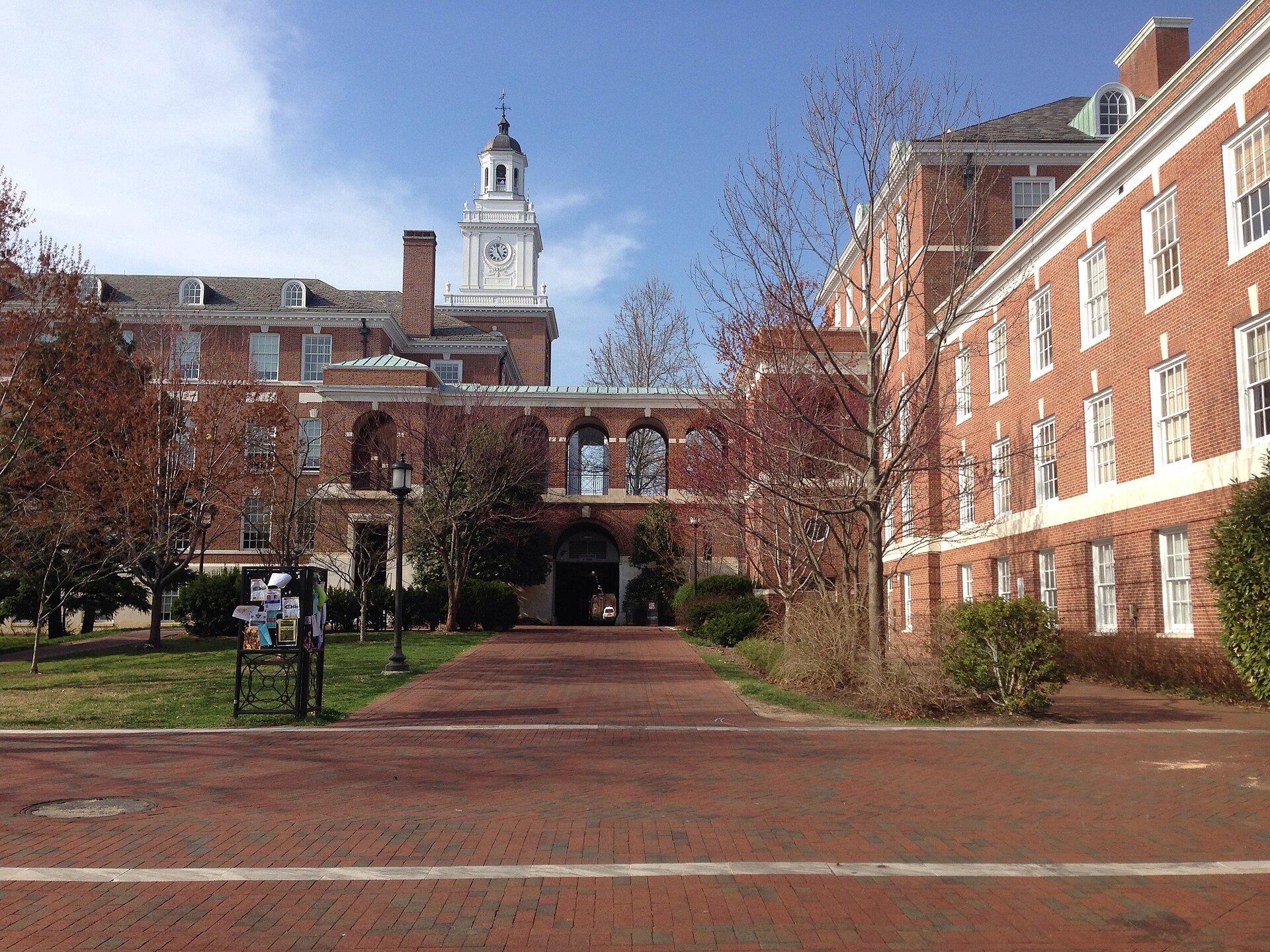
Johns Hopkins’s main undergraduate Homewood campus is in Baltimore, Maryland, in a residential neighborhood with a traditional, attractive campus, while its renowned medical institutions sit elsewhere in the city. Baltimore offers an urban setting with access to internships, research, and culture, and the city lies within easy reach of Washington, D.C. Students experience a defined campus community alongside the resources of a mid-Atlantic city and nearby capital.
Johns Hopkins is a private research university world-renowned for medicine, public health through the Bloomberg School, biomedical engineering, the sciences, international studies, and research, backed by one of the largest research enterprises in the country. It is also famed for its hospital and pre-med strength. Among top universities it stands out for research intensity and exceptional preparation in health, science, and engineering fields.
No; Johns Hopkins is not part of the Ivy League, a specific Northeastern athletic conference. It is a private research university widely regarded as comparably elite and highly selective, consistently ranked among the top national universities, but it is not an Ivy. It is frequently grouped with the Ivies and their peers for prestige and outcomes, yet it holds no Ivy League membership despite its strong reputation.
Yes; Johns Hopkins superscores, considering an applicant’s highest section results across multiple test dates to form the best composite, which rewards strategic retakes. The university accepts both the SAT and ACT and has shifted testing requirements in recent cycles, so applicants should confirm the current policy on its admissions site. Where scores are submitted, the superscoring practice benefits applicants who take a test more than once.
To a limited degree; Johns Hopkins primarily awards need-based financial aid and meets full demonstrated need, but it also offers a small number of highly competitive merit scholarships, such as named full-tuition awards, unlike the Ivy League, which gives need-based aid only. These merit awards are very selective. Most aid is need-based, so families should focus on that process while high achievers may research the few competitive merit programs available.
Johns Hopkins enrolls roughly 6,000 undergraduates on its Homewood campus and around 30,000 students total across all divisions, including its large medical, public health, and graduate programs. The undergraduate body is mid-sized, supporting program breadth and deep research access while remaining smaller than major public flagships. Students who want abundant research and pre-health resources within a focused undergraduate community often find Johns Hopkins’s scale appealing.
Johns Hopkins was the first research university in the United States, founded on the model of advancing knowledge through research and graduate education, a legacy that still shapes its intensely research-driven culture. It is consistently a national leader in research funding, with top-ranked biomedical engineering and public health programs. This pioneering research identity, paired with unmatched medical resources, gives Johns Hopkins a distinctive character among elite universities.
No. Johns Hopkins requires SAT or ACT scores for applicants to the Krieger School of Arts and Sciences and the Whiting School of Engineering, the two Homewood schools, a requirement in force since fall 2026 entry, with Peabody Conservatory the exception. The enrolled middle 50% runs 1530 to 1565 on the SAT and 35 on the ACT, and the university superscores.
About Oriel Admissions
Oriel Admissions is a Princeton-based college admissions consulting firm advising families nationwide on elite university admissions strategy. Our team includes former admissions officers from Harvard, Princeton, and Columbia. To discuss your family’s admissions strategy, schedule a consultation.