How Selective Is Cornell for the Class of 2030?
Cornell accepted 9.2% of applicants for the Class of 2030: 6,040 acceptances from 65,514 applicants for fall 2026, according to the first-year admissions profile in the Cornell University Factbook, updated September 1, 2026. Early Decision applicants were accepted at 20.9% (1,653 of 7,919) and everyone else at 7.6%. Since 2020 Cornell has not announced these figures on decision day; they appear in the factbook at the end of the summer and later in the Common Data Set. The year before, the Class of 2029 closed at 8.4% (6,077 admitted from 72,523 applicants). Our Cornell ED acceptance rate page has the full Early Decision trend.
| Class | Applications | Admitted | Admit Rate | ED Rate | RD Rate |
|---|---|---|---|---|---|
| Class of 2030 | 65,514 | 6,040 | 9.2% | 20.9% | 7.6% |
| Class of 2029 | 72,523 | 6,077 | 8.4% | 18.8% | 6.7% |
| Class of 2028 | 65,612 | 5,516 | 8.4% | 16.7% | 6.9% |
| Class of 2027 | 67,846 | 5,358 | 7.9% | 17.6% | 6.3% |
| Class of 2026 | 71,164 | 4,908 | 6.9% | n/a | n/a |
Cornell’s overall acceptance rate is the highest among the eight Ivy League schools, but that does not mean Cornell is meaningfully easier to enter. Three structural factors explain the higher published rate. First, Cornell admits to seven distinct undergraduate colleges, each with its own enrollment targets and yield projections, and several of those colleges (Agriculture and Life Sciences, Industrial and Labor Relations, Human Ecology) admit at higher rates than the most selective Cornell colleges (Engineering, Dyson). Second, Cornell’s yield rate is approximately 64%, lower than peer Ivies, which means Cornell admits more applicants to fill the same target enrollment. Third, application volume at Cornell is among the highest in the Ivy League, which puts pressure on the rate even as admit numbers grow. For broader context on how Cornell compares to peer schools, see our analysis of the most competitive colleges and Ivy Day 2026 results.
How Do Cornell’s Seven Undergraduate Colleges Differ in Admissions?
Cornell’s seven undergraduate colleges operate as semi-independent admissions offices, each with its own application criteria, supplemental essay, faculty, and yield management. The college choice is the single most important strategic decision in a Cornell application, because the admissions decision is made at the college level rather than at the university level. Applicants cannot apply to multiple Cornell colleges simultaneously, and switching colleges after enrollment requires an internal transfer process that is not guaranteed.
| College | Focus | Estimated Admit Rate | Application Emphasis |
|---|---|---|---|
| College of Engineering | Engineering, computer science, applied math | ~7-9% | Calculus through BC, physics, programming or research |
| SC Johnson Dyson School (in CALS) | Applied economics, business management | ~5-7% | Quantitative profile, business or finance leadership |
| College of Arts and Sciences | Liberal arts, humanities, sciences | ~8-10% | Intellectual breadth, writing strength |
| College of Agriculture and Life Sciences (CALS) | Life sciences, agriculture, environmental sciences | ~10-13% | Demonstrated interest in life sciences, sustainability, or food systems |
| College of Architecture, Art, and Planning (AAP) | Architecture, fine arts, urban planning | ~7-10% | Portfolio for art and architecture; sustained creative work |
| College of Human Ecology | Human development, design, policy analysis | ~12-15% | Interdisciplinary interests, applied policy or design |
| School of Industrial and Labor Relations (ILR) | Labor relations, public policy, organizational behavior | ~12-15% | Demonstrated interest in policy, labor, or social science research |
Three of Cornell’s colleges (CALS, Human Ecology, and ILR) are New York State contract colleges, which means they receive partial New York State funding and offer reduced tuition for New York residents. Cornell’s College of Arts and Sciences, Engineering, AAP, and the SC Johnson College of Business operate as private endowed colleges. The contract colleges have a slightly different admissions calibration that includes a meaningful preference for in-state applicants demonstrating commitment to the contract college mission. Out-of-state applicants to contract colleges are evaluated against the same academic baseline as private endowed college applicants but face higher selectivity within their applicant pool.
The strategic implication is that the college choice should reflect genuine academic interest and demonstrated preparation. Applicants who choose Human Ecology or ILR because they perceive these colleges as easier to enter consistently underperform applicants who chose those colleges with a documented record of interest in human development, public policy, or labor relations. Cornell admissions readers can detect strategic college selection within seconds, and a generic essay that does not engage with the specific college’s mission consistently underperforms.
What GPA and Test Scores Do You Need for Cornell?
The mid-50% SAT range for enrolled Cornell first-years is 1490 to 1550, with mid-50% ACT of 33 to 35 (Cornell Common Data Set, 2025-2026). Score ranges vary substantially by college: Engineering and Dyson applicants typically score higher (mid-50% closer to 1520-1570 SAT, 34-35 ACT), while CALS, Human Ecology, and ILR applicants typically span a wider range. Cornell does not publish a single GPA cutoff. The institutional norm is that admitted students rank at or near the top of their class with the most rigorous available coursework. Approximately 90% of admitted students are in the top 10% of their high school graduating class.
| Metric | 25th Percentile | 75th Percentile |
|---|---|---|
| SAT Composite | 1490 | 1550 |
| ACT Composite | 33 | 35 |
Course rigor matters more than raw GPA at Cornell. Admitted students typically take the most demanding curriculum their school offers, which usually means seven to twelve AP, IB, or post-AP courses by graduation. College-specific course requirements vary: Engineering applicants need calculus through BC level, physics, and chemistry through advanced level; Dyson applicants need calculus through BC level and strong quantitative reasoning; CALS applicants need biology and chemistry through advanced levels for life sciences pathways. For a tool that estimates how your child’s record stacks up against the Ivy League norm, see our Ivy League Academic Index Calculator.
Is Cornell Test-Required for 2026-2027?
Yes. Cornell reinstated the SAT or ACT requirement for first-year applicants starting with the Class of 2030 cycle (Fall 2026 entry). The Class of 2029 was Cornell’s final test-optional cycle. Cornell’s reinstatement aligns with Harvard, Yale, Dartmouth, Brown, Penn, Caltech, MIT, and Stanford, all of which now require testing. Princeton remains test-optional for one final year before reinstating in 2027-2028; Columbia is the only Ivy League school with a permanent test-optional policy.
The strategic implication for Cornell applicants is straightforward: scores must be submitted, and they need to be competitive within the chosen college’s range. For Engineering and Dyson applicants, the math expectation is particularly high (SAT Math typically 770 or above, ACT Math 34 or above). The reinstatement was paired with a meaningful drop in application volume Cornell-wide, consistent with the pattern at Penn, Brown, and other Ivies that reinstated testing. For students whose scores fall within or above their target college’s range, the test-required cycle is, on net, a slight relative advantage. For a deeper look at Cornell’s testing decision in the broader Ivy context, see our 2026-2027 testing policy guide.
Does Applying Early Decision to Cornell Give an Admissions Advantage?
Yes, and the advantage is among the most meaningful in the Ivy League. The Class of 2029 ED rate was 18.8% versus a Regular Decision rate of 6.7%, a roughly 2.8-times multiplier. Cornell typically fills approximately 40% of each incoming class through Early Decision. The most recent published data (Class of 2029) showed approximately 1,874 admits from 8,380 ED applicants. For the per-college numbers and the full picture of the Cornell acceptance rate and Early Decision odds by college, see our consolidated analysis. Cornell ED is binding: applicants commit to enroll if admitted, and they may apply to other schools through non-restrictive Early Action and Regular Decision but must withdraw all other applications if accepted to Cornell.
The strategic implication is that Cornell ED is the highest-probability pathway for genuinely interested applicants whose academic profile is fully built by November of senior year. The college-level decision is binding in the same way as the university-level decision: applicants commit to the specific Cornell college they applied to, not Cornell broadly. Cornell will release applicants from the binding commitment only when financial aid does not allow attendance, which is meaningful given Cornell’s loan-inclusive aid policy for families above $75,000 income. For families weighing ED across multiple schools, see our guide to choosing an ED school among the Ivies.
What Does Cornell Look for Beyond Grades and Scores?
Cornell’s Common Data Set lists rigor of secondary school record, GPA, application essays, recommendations, and character and personal qualities as factors rated “Very Important” in admissions decisions, with extracurricular activities and standardized test scores rated “Important” (Cornell Common Data Set, 2024-2025). The college-specific supplemental essay carries weight beyond a typical Ivy League supplement because it is the primary tool admissions readers use to assess fit with the specific Cornell college rather than the university broadly.
Cornell’s institutional ethos, captured in Ezra Cornell’s founding statement that the institution would educate “any person, any study,” is reflected in the admissions priorities. Successful applicants articulate specific, documentable interests that connect to specific Cornell programs, faculty, and resources. Generic answers about wanting to attend an Ivy League university or about loving Ithaca consistently underperform answers that name specific Cornell professors, research labs, or undergraduate research opportunities (Cornell Undergraduate Research Board, the Mario Einaudi Center for International Studies, the Atkinson Center for Sustainability) connected to the applicant’s documented academic record.
How Should Applicants Approach Cornell Supplemental Essays?
Cornell’s supplemental essays carry significant weight in admissions decisions because they differentiate among academically qualified applicants. Strategy varies meaningfully by prompt, word limit, and the specific qualities Cornell looks for. For complete prompts, strategic approach for each prompt, common rejection patterns, and the timeline applicants should follow, see our deep-dive guide: Cornell Supplemental Essays Strategy.
How Generous Is Cornell Financial Aid for High-Income Families?
Cornell meets 100% of demonstrated financial need with annual aid offers that include grants, scholarships, work-study, and (for families above $75,000) reasonable student loans. Cornell is one of two Ivy League schools (along with Dartmouth) that does include loans in financial aid offers. Families with annual income up to $75,000 receive aid offers with no loans (grants and work-study only). Families above $75,000 receive grant aid plus reasonable loan offers, with the loan component scaling with income. Cornell’s $400 million annual need-based grant aid budget supports more than 7,500 undergraduates (Cornell Office of Financial Aid, 2025).
| U.S. Family Income | Typical Aid Outcome |
|---|---|
| Under $75,000 | Grant aid plus work-study; no expected parent contribution; no student loans |
| $75,000 to $150,000 | Grant aid, work-study, and reasonable student loan offers; expected parent contribution scales with income |
| $150,000 to $250,000 | Some grant aid for many families; expected parent contribution closer to full cost |
| Above $250,000 | Grant aid possible based on assets, siblings in college, and special circumstances; many families pay full cost |
Three structural features distinguish Cornell’s aid policy from peer Ivies. First, Cornell’s $75,000 free-tuition threshold is the lowest in the Ivy League; Princeton (full cost up to $150,000), Harvard ($200,000 free tuition), Yale ($200,000 free tuition), Penn ($200,000 free tuition), and Brown and Dartmouth ($125,000 free tuition) all exceed it. Second, Cornell includes loans in aid offers for families above $75,000, while Princeton, Harvard, Yale, Brown, Columbia, and Penn have no-loan policies. Third, Cornell offers reduced tuition for New York State residents at the three contract colleges (CALS, Human Ecology, ILR), which is a state-funding feature unique among the Ivies.
For families targeting Cornell, the practical implication is that financial aid offers from peer Ivies are likely to be more generous in the upper-middle-income range. Cornell will match aid offers from peer schools when applicants present competing offers, but the initial Cornell offer for a family earning between $75,000 and $200,000 is likely to include loans where peer schools’ offers would not. For families weighing Cornell against peer Ivies on financial aid, this is a meaningful comparison point.
How Does Cornell’s Waitlist Work and What Are the Odds?
Cornell is unique among Ivy League schools in managing its waitlist by individual undergraduate college rather than as a single university-wide pool. Each of the seven colleges manages its own enrollment targets, yield projections, and waitlist independently. The practical implication is that waitlist movement varies significantly by college: in years when Engineering yield is unusually high, very few Engineering waitlist spots open; in years when Hotel Administration or Human Ecology yield drops, more spots open. Applicants cannot switch colleges on the waitlist; they are considered only for the college they originally applied to.
Cornell’s waitlist acceptance rate has averaged approximately 4.2% over the past 25 years, with substantial year-to-year variation, including high years (388 admits for the Class of 2028) and zero-admit years. For a complete analysis of Cornell waitlist strategy, including how to write a compelling Letter of Continued Interest, see our Cornell waitlist guide.
What Are the Most Common Mistakes in Cornell Applications?
Three patterns appear repeatedly in unsuccessful Cornell applications from otherwise highly qualified candidates. The first is choosing the wrong undergraduate college. Applicants who choose Human Ecology, ILR, or CALS without a documented record of interest in those fields, hoping that the higher acceptance rate will translate into easier admission, consistently underperform applicants who chose those colleges with substantive demonstrated interest. Cornell admissions readers can detect strategic college selection within seconds.
The second pattern is treating the college-specific supplemental essay as interchangeable across the Ivies. Cornell’s college-specific prompt is the most distinctive among Ivy supplements, and a generic “Why Cornell” essay that could plausibly have been written for any Ivy consistently underperforms a college-specific essay that names specific faculty, programs, and resources within the chosen college.
The third pattern is misunderstanding Cornell’s institutional identity. Cornell is the largest of the Ivies (approximately 16,000 undergraduates), the most professionally diverse (with seven undergraduate colleges spanning hospitality, agriculture, labor, design, and engineering), and the most heterogeneous in academic culture. Applicants who write about Cornell as a homogeneous Ivy League institution, without engaging with the specific intellectual, professional, or geographic identity of their chosen college, consistently underperform. For a deeper analysis of why otherwise excellent students get rejected from top schools, see our analysis of valedictorians who were denied from the Ivy League.
How Does Cornell Compare to Other Ivy League Schools?
Cornell differs from peer Ivies in three institutionally meaningful ways. First, Cornell admits to seven undergraduate colleges, each with its own admissions criteria and supplemental essay; Penn has four undergraduate schools, while Harvard, Yale, Princeton, and Brown admit to a single undergraduate college with later major declaration. Second, Cornell’s institutional culture spans the broadest range among the Ivies, with strong programs in hospitality, agriculture, architecture, labor relations, and design alongside the traditional liberal arts and engineering. Third, Cornell’s financial aid is the most loan-dependent in the Ivy League, with loans included in aid offers for families above $75,000.
| School | Class of 2029 Acceptance Rate | Early Plan | Free Tuition Income Threshold | Loans in Aid Offers |
|---|---|---|---|---|
| Cornell | 8.4% | ED (binding) | $75,000 | Yes (above $75,000) |
| Harvard | ~4.2% (Class of 2029) | REA (non-binding) | $200,000 | No |
| Yale | 4.6% | SCEA (non-binding) | $200,000 | No |
| Princeton | 4.4% | SCEA (non-binding) | $250,000 | No |
| Columbia | 4.3% (revised to 4.9%) | ED (binding) | $150,000 | No |
| Penn | 4.9% | ED (binding) | $200,000 | No |
| Brown | 5.7% | ED (binding) | $125,000 | No |
| Dartmouth | 6.0% | ED (binding) | $125,000 | Yes (above $125,000) |
How Should Your Family Approach a Cornell Application?
Cornell is one of the most selective universities in the world, but the path to a strong application is more concrete than the headline 8.4% acceptance rate suggests. Three commitments shape the high-probability path. First, choose the undergraduate college that matches the applicant’s documented academic and extracurricular profile, not the college with the highest perceived acceptance rate; a competitive Arts and Sciences applicant outperforms a marginal Engineering or Dyson applicant. Second, treat the college-specific supplemental essay as the highest-leverage portion of the application; allocate substantial time to research college-specific faculty, programs, and resources, and write a response that could not plausibly have been written for a peer Ivy or for a different Cornell college. Third, if Cornell is genuinely the family’s first choice and the family is prepared for an aid offer that may include loans for incomes above $75,000, apply Early Decision.
For families currently in the planning window, the most important variable is the quality of the academic and extracurricular profile that will exist by November of senior year. The window for substantive change closes earlier than most families realize. For broader strategy across the Ivy League, see our analysis of the most competitive colleges, our Junior Year SAT and ACT Strategy guide, and our summer before junior year planning guide.
Frequently Asked Questions About Cornell Admissions
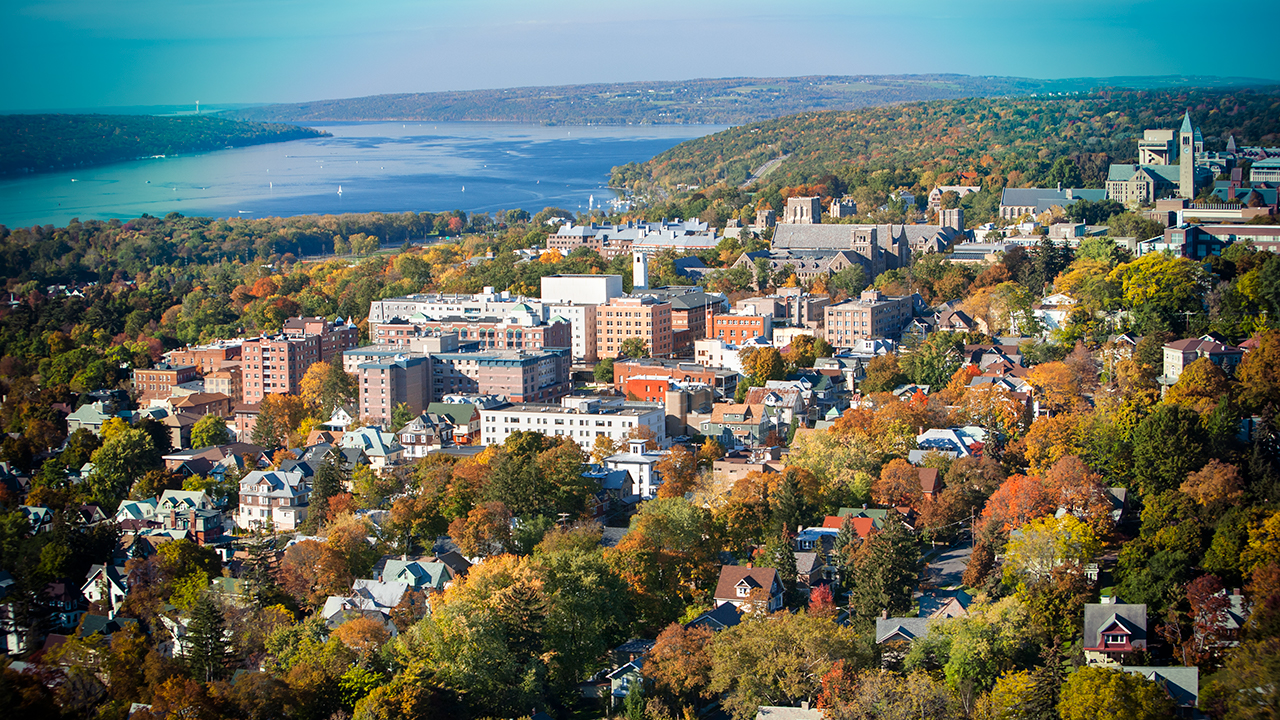
Cornell’s main campus is in Ithaca, New York, a small city in the Finger Lakes region of upstate New York, set on a hill above Cayuga Lake with dramatic gorges running through it. Ithaca is roughly four hours northwest of New York City. Cornell also operates campuses in New York City, including the Weill Cornell Medical College and the Cornell Tech campus on Roosevelt Island, but undergraduates are based in Ithaca.
Very hard; Cornell’s overall acceptance rate sits in the high single digits, the highest among the Ivies but still extremely competitive. Selectivity varies sharply by undergraduate college, with some programs far tougher than the headline rate. Admitted students typically present top grades and rigorous courses, so academics are the baseline, and the specific college and major you apply to materially affects your odds within the holistic review.
Cornell is known for its unusual breadth, combining Ivy League academics with strong professional and applied programs across seven undergraduate colleges. It is especially renowned for engineering, agriculture and life sciences, hotel administration, architecture, business, and computer science. As a land-grant institution it blends elite research with practical fields, giving it the largest and most varied range of undergraduate offerings of any Ivy.
Yes; Cornell is a full member of the Ivy League, the athletic conference of eight schools. It does have the highest acceptance rate among the Ivies, which leads some to call it the ‘easiest’ to enter, but that is misleading: it remains highly selective, several of its colleges are extremely competitive, and admission is never a safe bet. Treating any Ivy, including Cornell, as a backup is a mistake.
Cornell is private but unusual: it is a private Ivy League university that also serves as New York’s land-grant institution, so several of its colleges, the ‘statutory’ or contract colleges like Agriculture and Life Sciences, Human Ecology, and Industrial and Labor Relations, are state-supported. This hybrid structure means New York residents in those colleges pay lower tuition, while the endowed colleges charge standard private rates regardless of residency.
Yes when scores are considered; Cornell superscores, combining your highest section results across multiple test dates into the best composite. A stronger Math from one sitting and stronger Reading and Writing from another count together, rewarding focused retakes. Cornell’s testing requirements have varied by college and year, so confirm the current policy on its admissions site, but the superscoring practice benefits applicants who submit and test more than once.
No; like all Ivy League schools, Cornell awards only need-based financial aid and gives no merit, athletic, or academic scholarships. All aid follows demonstrated financial need, and Cornell meets full need for admitted students, with especially strong support for lower- and middle-income families. A high-achieving applicant cannot earn a discount for grades or scores, but families with financial need may find Cornell more affordable than the sticker price.
Yes; because Cornell mixes private endowed colleges with state-supported statutory colleges, costs differ. The endowed colleges charge the standard private tuition for all students, while the statutory colleges (such as Agriculture and Life Sciences or Industrial and Labor Relations) offer lower tuition to New York State residents. So which undergraduate college you enter, and your residency, can meaningfully change the price, an unusual feature among Ivy League universities.
About Oriel Admissions
Oriel Admissions is a Princeton-based college admissions consulting firm advising families nationwide on elite university admissions strategy. Our team brings deep expertise across every dimension of the application, and our distinctive 360 approach develops strategy, positioning, activities, essays, and interviews as one coherent whole. To discuss your family’s admissions strategy, schedule a consultation.