What Is Swarthmore’s Acceptance Rate for the Class of 2030?
Swarthmore College admitted 969 students from 13,029 applicants for the Class of 2030, producing a 7.44% acceptance rate (Swarthmore College Office of Admissions, March 2026). This was the second consecutive year at approximately 7.4%, following the Class of 2029 rate of 7.46%. The Class of 2030 acceptance rate represents Swarthmore’s continuing positioning at the most selective tier of US liberal arts colleges, with admit rates now comparable to Williams (7.4%) and slightly less competitive than Amherst (6.78%).
Swarthmore’s institutional target first-year class size is approximately 410 enrolled students, drawn from a national and international applicant pool. The yield rate has historically run at approximately 42% at Swarthmore, with the college expecting approximately 410 to 430 of the 969 admitted students to enroll. The full Common Data Set publication, including detailed Early Decision and Regular Decision breakdowns, is expected in fall 2026.
What Were Swarthmore’s Class of 2029 Admissions Numbers?
Swarthmore admitted approximately 980 students from approximately 13,100 applicants for the Class of 2029, producing a 7.46% acceptance rate (Swarthmore College Common Data Set 2024-2025). This was a slight increase from the Class of 2028 rate of 7.46% on a smaller applicant pool, reflecting relatively stable applicant demand at Swarthmore over recent cycles.
The Class of 2029 admitted student profile included a middle 50% SAT range of 1450 to 1560 and a middle 50% ACT range of 33 to 35. Swarthmore’s first-year class is approximately 410 enrolled students, drawn from a national applicant pool with strong representation from the Northeast, Mid-Atlantic, and international students (typically 11 to 13% of admitted students). The class also includes meaningful representation from QuestBridge match scholars and first-generation applicants.
How Has Swarthmore’s Acceptance Rate Changed Over Time?
Swarthmore’s acceptance rate has tightened substantially over the past 15 years, from approximately 16% for the Class of 2014 to 7.44% for the Class of 2030. The trajectory reflects rising applicant volume, with applications growing from approximately 6,500 to 13,029 over the same period. Swarthmore’s admit count has remained relatively stable at 950 to 1,000 per cycle, meaning increased applicant volume rather than reduced admit capacity has driven the tightening.
The Class of 2025 produced Swarthmore’s lowest historical rate at approximately 6.94%, an outlier driven by pandemic-era application surges across selective universities. Subsequent cycles have stabilized in the 7.4% range, suggesting that Swarthmore has reached an equilibrium admit rate where further tightening would require either substantial application surges or deliberate reduction in admit count.
How Does Swarthmore Early Decision Compare to Regular Decision?
Swarthmore released Class of 2030 ED results on February 12, 2026, admitting 231 students from 1,249 ED applications across both ED I and ED II rounds for an 18.49% ED acceptance rate (The Phoenix, February 26, 2026). This was a slight uptick from the Class of 2029 ED rate of 17.80% (228 admits from 1,281 ED applicants) and materially higher than the Class of 2028 ED rate of 15.91%. The Class of 2029 Regular Decision rate was 6.39% (749 admits from 11,714 applicants), making the ED-to-RD admit-rate ratio nearly 3:1. Vice President and Dean of Admissions Jim Bock ’90 noted that the ED applicant pool was “just 2% or 32 fewer than last year,” indicating stable elite-applicant ED interest in Swarthmore despite broader market shifts (The Phoenix, February 2026).
Swarthmore offers two binding Early Decision rounds. ED I (Fall ED): November 15 deadline, mid-December decisions. ED II (Winter ED): January 4 deadline, February decisions. ED admits typically fill approximately 50% of Swarthmore’s incoming class. The Swarthmore ED admit profile skews toward applicants who have visited campus, attended virtual sessions, or otherwise demonstrated specific engagement with Swarthmore beyond name recognition. Unlike some peer LACs, Swarthmore does not separately track demonstrated interest, but informed engagement appears in essays and recommendation letters in ways admissions readers notice.
Two unique Swarthmore ED considerations matter strategically. First, accredited engineering changes the ED calculus: Swarthmore offers an ABET-accredited engineering program, the only top-tier LAC that does. For prospective engineering applicants weighing Swarthmore versus Williams, Amherst, or Pomona, Swarthmore offers a structural option those peers cannot match. ED I commitment makes sense for genuine engineering-track applicants. Second, Quaker pedagogical culture differs from peer LACs: pass-fail first semester, smaller-than-peer enrollment, and explicit emphasis on intellectual community over competition. ED I to Swarthmore should reflect alignment with this culture, not just selectivity calculation. For broader context on ED versus RD strategy, see our Early Decision vs Regular Decision analysis.
Is Swarthmore Test-Optional for the Class of 2030?
Swarthmore is test-optional through the Class of 2030 cycle. The institutional rationale is that holistic application review can effectively evaluate applicants without requiring standardized test scores. Swarthmore has not announced plans to reinstate testing requirements, although the college continues to evaluate the policy on an ongoing basis (Swarthmore College Office of Admissions).
Despite the test-optional policy, approximately 60% of admitted Swarthmore students submit standardized test scores. The middle 50% range for submitted SAT scores is 1450 to 1560, with the 75th percentile at 1560. For applicants whose scores fall within or above the middle 50% range, submitting scores typically strengthens the application. For institutional score data, the NCES College Navigator publishes published score ranges.
How Does Swarthmore’s Financial Aid Compare to Peers?
Swarthmore’s financial aid profile is distinctive among elite LACs across four dimensions. No-loan since 2008: Swarthmore was one of the first US colleges to eliminate loans from initial financial aid offers, replacing all loan components with grants and scholarships effective the 2008-2009 academic year (Swarthmore College, 2008). Initial aid offers include grants plus a $2,500 campus employment expectation, but no loans. $65 million annual financial aid budget: in 2025-2026, Swarthmore’s institutional aid budget exceeded $65 million (Swarthmore College Financial Aid Office, 2025-2026), supporting 56% of the student body. Average aid award was $75,268 (Princeton Review, 2025-2026).
Need-blind for US students, need-aware for international applicants: Swarthmore practices need-blind admissions for US citizens, permanent residents, dual US citizens, and undocumented or DACA students graduating from US high schools. Admission for other international citizens is need-aware (Swarthmore College International Students Page, 2025). For admitted international students, however, Swarthmore meets 100% of demonstrated financial need without loans, a commitment shared by only a small group of US institutions. The average international aid decision for the Class of 2024 was $66,000+.
Hidden-fee elimination and textbook coverage: Swarthmore eliminates many “hidden fees” that complicate financial planning at peer schools. Movie nights, laundry, printing, athletic events, and free SEPTA train tickets to Philadelphia are all included in the standard activity fee. The Textbook Affordability Program provides every student with an $800 annual credit at the Swarthmore campus bookstore for required course materials (Swarthmore College, 2025-2026). These structural choices reflect Swarthmore’s Quaker tradition of access regardless of income. For families with incomes below approximately $100,000, Swarthmore’s net cost is typically zero or near-zero; for families between $100,000 and $200,000, aid brings net cost to a fraction of the approximately $85,800 published cost of attendance (Princeton Review 2024-25 charges). Twenty percent of students receive Pell Grants. For broader context on need-aware versus need-blind policies, see our need-blind vs need-aware admissions guide.
How Does Swarthmore’s Acceptance Rate Compare to Peer Schools?
Swarthmore’s Class of 2029 acceptance rate of 7.52% places it among the most selective liberal arts colleges nationally. Peer-school comparisons for the most recent published cycles. Williams: approximately 7% for the Class of 2029. Amherst: 7.72% for the Class of 2029 (6.78% for Class of 2030). Pomona: approximately 7.14% for the Class of 2029. Bowdoin: approximately 7-8%. Swarthmore’s admit rate sits within this tight peer cluster, but three structural differences distinguish Swarthmore among elite LACs.
ABET-accredited engineering program: Swarthmore is the only US LAC in this selectivity tier that offers ABET-accredited engineering. This makes Swarthmore uniquely positioned for engineering-track applicants who also value the liberal arts experience and would otherwise face a binary choice between MIT or Caltech versus a traditional LAC. Engineering is consistently the most popular intended major in Swarthmore’s admitted class (institutional admissions statistics). Geographic profile: located 11 miles southwest of Philadelphia, Swarthmore offers urban access without urban-campus drawbacks. The Class of 2029 came from 82 nations and all 50 states; 63% attended public high schools, 27% independent schools (institutional admissions statistics). Quaker pedagogical inheritance: Swarthmore’s first-semester pass-fail policy, intentionally small enrollment, and explicit valuing of intellectual community over competition produces a culture distinct from peer LACs. This shapes applicant fit dramatically – Swarthmore admits often differ in style from Williams or Amherst admits, even when overlapping in academic profile. Twenty-seven percent of admitted Class of 2028 students are first-generation, reflecting Swarthmore’s continued investment in access.
What These Numbers Mean for Your Family’s Swarthmore Application
A 7.52% admit rate produces three strategic implications specific to Swarthmore. Implication 1: ED I provides meaningful advantage but requires culture alignment. Swarthmore’s ED rate of 18.49% for the Class of 2030 is roughly 3x the RD rate of 6.39%. This advantage is real but binding, and Swarthmore’s distinctive Quaker culture means ED commitment should reflect more than selectivity calculation. Applicants who thrive at Swarthmore typically value intellectual community over competition, smaller-scale residential life, and the pass-fail-first-semester philosophy. Visiting campus or attending virtual admitted-student programming meaningfully informs the fit calculus.
Implication 2: Engineering applicants gain unique structural advantage. Swarthmore is the only US LAC of this selectivity tier with ABET-accredited engineering. For students considering Williams or Amherst alongside Swarthmore, the engineering option is a real differentiator. Strong engineering-track applicants applying ED I to Swarthmore signal commitment in ways the admissions office values, particularly if the application demonstrates substantive engineering-relevant work (research, projects, competitions). The recently-published Class of 2030 ED admits included strong representation in engineering-track interest.
Implication 3: International applicants face need-aware admission. Swarthmore’s need-blind policy applies to US citizens, permanent residents, dual citizens, and undocumented/DACA students graduating from US high schools, but admission for other international citizens is need-aware. International applicants applying for aid should ensure their academic profile is exceptionally strong; admitted international students do receive 100% of demonstrated need with no loans, including grants averaging $66,000+. Bock noted that “robust interest from international students” continued despite visa concerns, but the need-aware policy adds a strategic consideration. For broader context on Quaker and LAC distinctives, see our liberal arts colleges vs research universities comparison.
Frequently Asked Questions About Swarthmore Admissions
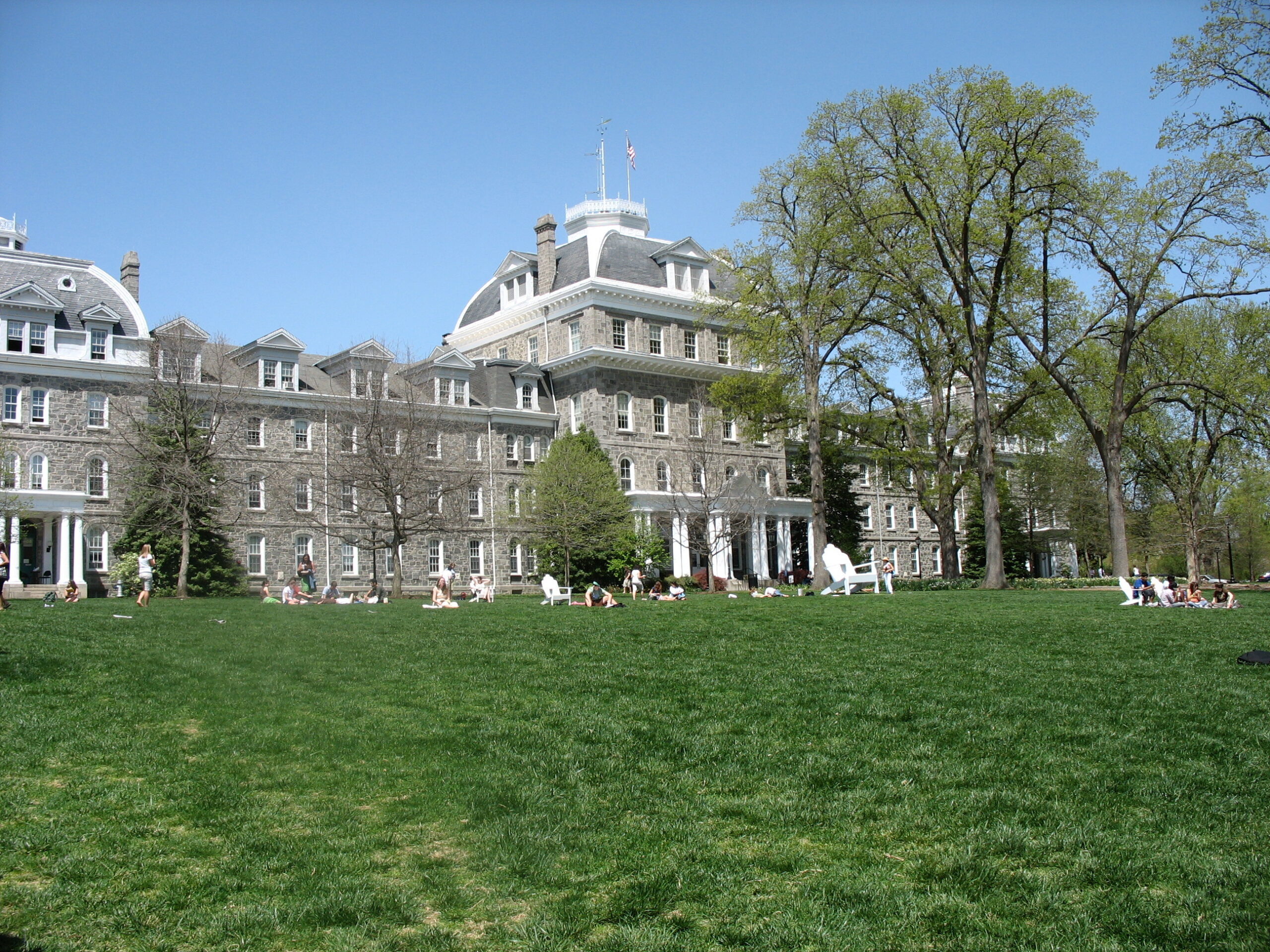
Swarthmore is in Swarthmore, Pennsylvania, a suburban borough just southwest of Philadelphia, roughly a dozen miles from the city center. Its campus is also a designated arboretum, known for gardens and wooded grounds, the Scott Arboretum. The location offers a quiet, green college-town setting while keeping students within easy reach of Philadelphia by regional rail. This proximity gives access to a major city’s cultural and professional resources alongside a tranquil residential campus.
Swarthmore is renowned as one of the most academically rigorous liberal arts colleges in the country, known for intellectual intensity, small classes, a distinctive Honors Program based on small seminars and external examiners, and notable strength across the humanities, sciences, and social sciences. It also offers an unusual ABET-accredited engineering program for a liberal arts college. Its Quaker heritage informs values of social responsibility, ethical reflection, and rigorous inquiry.
Yes; Swarthmore is commonly counted among the ‘Little Ivies,’ an informal group of highly selective Northeastern liberal arts colleges, and it is also part of the Seven Sisters-adjacent elite of top LACs. It is not an Ivy League member, since the Ivy League is a specific athletic conference of universities, but its selectivity, prestige, and academic reputation place it firmly among the most respected liberal arts colleges nationally.
Swarthmore has generally considered an applicant’s best section scores across test dates when reviewing submitted results, a superscoring-style approach, though it has also been test-optional in recent cycles. Because testing policies have shifted across selective colleges, applicants should confirm Swarthmore’s current policy on its admissions site. Where scores are submitted, presenting the strongest combination of sections is generally to an applicant’s advantage.
No; like the Ivy League and most elite liberal arts colleges, Swarthmore awards financial aid solely on the basis of demonstrated need and does not offer merit, athletic, or academic scholarships. It is known for a generous, loan-free need-based aid program that meets full demonstrated need. A high-achieving applicant cannot earn a tuition discount for grades, but families with financial need often find Swarthmore far more affordable than the sticker price.
Swarthmore is small, enrolling roughly 1,600 to 1,700 undergraduates, typical of an elite liberal arts college and far smaller than a research university. The intimate scale supports small classes, close faculty relationships, and a tight-knit residential community. Students who want personal attention, seminar-style learning, and direct access to professors, rather than the scale and resources of a large university, often find Swarthmore’s size a major draw.
Yes; Swarthmore is unusual among liberal arts colleges in offering its own ABET-accredited engineering degree, allowing students to study engineering within a broad liberal arts curriculum rather than at a separate technical institute. The program emphasizes a flexible, general engineering foundation alongside the humanities and sciences. This rare combination appeals to students who want rigorous engineering training without sacrificing the breadth and small-college experience of a liberal arts education.
The Tri-College Consortium links Swarthmore with Bryn Mawr and Haverford, two other nearby elite liberal arts colleges, allowing students to cross-register for courses, share certain library and academic resources, and access a broader range of offerings. A free shuttle connects the campuses. This partnership, sometimes extended to include the University of Pennsylvania for some courses, expands academic options well beyond what a single small college could provide on its own.
Sources: Swarthmore College Office of Admissions; Common Data Set; NCES College Navigator; IPEDS; NACAC.
About Oriel Admissions
Oriel Admissions is a Princeton-based college admissions consulting firm advising families nationwide on elite university admissions strategy, pairing each student with a dedicated team of counselors and coaches. To discuss your strategy, schedule a consultation.