How to Get Into Phillips Academy Andover: Acceptance Rate, College Matriculation, and Admission Strategy
By Rona Aydin
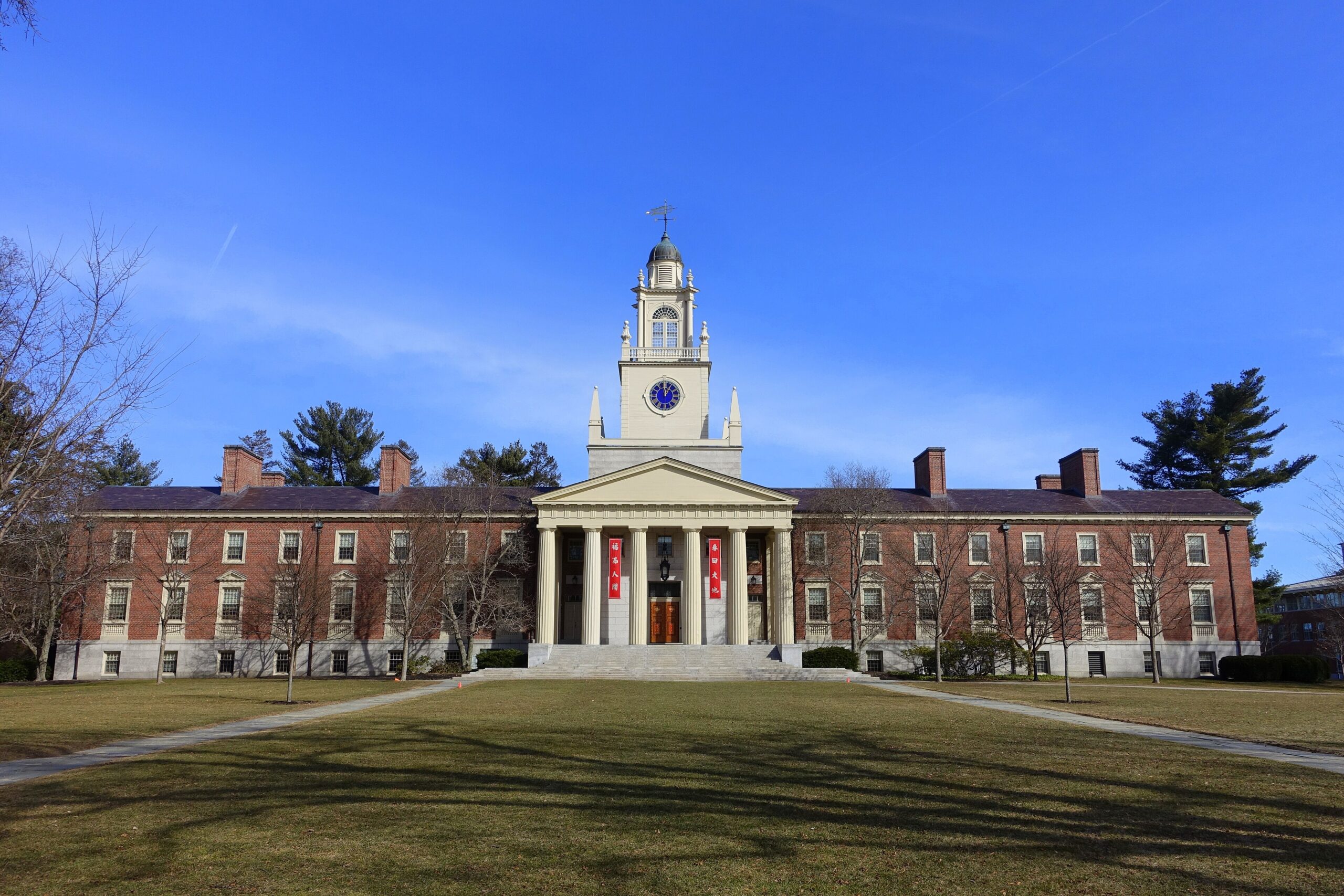
TL;DR: Phillips Academy Andover’s acceptance rate is approximately 13% (Phillips Academy Andover Office of Admission; institutional reporting 2024-25), making it one of the most selective independent boarding schools in the United States. Founded in 1778, Andover is the oldest incorporated boarding school in the country. Located in Andover, Massachusetts (21 miles from Boston), the academy enrolls approximately 1,150 students (850 boarding, 310 day) across grades 9-12 plus a postgraduate year. Boarding tuition for 2026-27 is $79,800 and day tuition is $63,840. Andover operates need-blind admissions and meets 100% of demonstrated financial need; 47% of students receive aid and 12-14% receive full scholarships. Approximately 27.51% of recent graduates matriculate to top-25 US universities and 14.79% to Harvard, Yale, Princeton, Stanford, and MIT combined. For families navigating Andover admission strategy or planning college applications during the Andover years, schedule a consultation with Oriel Admissions.
What is Phillips Academy Andover’s acceptance rate?
Phillips Academy Andover’s acceptance rate is approximately 13% in recent cycles (Phillips Academy Andover Office of Admission; institutional reporting via boarding school admissions aggregators 2024-25). This makes Andover one of the most selective independent secondary schools in the world, alongside Phillips Exeter Academy, Lawrenceville, Choate Rosemary Hall, Deerfield Academy, and Hotchkiss. The 13% acceptance rate translates to approximately 350-400 admitted students per cycle from an applicant pool that exceeds 2,500-3,000 candidates across all entry grades, with the heaviest competition at the grade-9 (“junior” in Andover jargon) entry point.
Andover’s applicant pool is structurally similar to Phillips Exeter Academy’s: feeder day schools across the United States, international families pursuing US boarding school strategies, and high-achieving public school students from major metropolitan areas. Strong applicants present academic profiles in the top 5-10% of their middle school class, standardized test scores at or above the 90th percentile on the SSAT or ISEE (Andover reinstated standardized testing requirements starting Fall 2025), two to three teacher recommendations, a graded writing sample, a student essay, a parent statement, and an admission interview. Andover’s need-blind admissions policy means financial need is not a factor in the admission decision.
Where do Phillips Academy Andover graduates matriculate to college?
Andover’s college matriculation outcomes are among the strongest at any secondary school in the world. Based on the most recent five-year matriculation data, approximately 27.51% of Andover graduates matriculate to top-25 US universities, 22.78% to top-50 US universities, and 14.79% to Harvard, Yale, Princeton, Stanford, or MIT combined. The Class of 2023 enrolled at 108 different colleges, with the largest cohorts attending the University of Chicago (21 students), Harvard (12), Yale (12), and Stanford (11). Over the past three years, 30+ Andover students have matriculated to Harvard, the University of Chicago, and Yale combined. The five-year matriculation list includes every Ivy League institution, the elite non-Ivies, top liberal arts colleges, and elite public flagships.
The historical Andover-Yale connection runs particularly deep, with origins in the school’s 18th-century Calvinist heritage that contrasted with Phillips Exeter Academy’s Unitarian openness. Andover steered its students toward Yale (more hospitable to Calvinists) while Exeter sent graduates to Unitarian Harvard. Today, both schools send graduates broadly across elite US universities, but the historical alumni networks remain influential. Andover’s notable alumni include Presidents George H.W. Bush and George W. Bush, Oliver Wendell Holmes Jr., Benjamin Spock, Jack Lemmon, and Frederick Law Olmsted. For broader context on elite US universities’ acceptance rates, see our Ivy League acceptance rates analysis.
| Matriculation Tier | Approx. Share of Class | Representative Schools (Class of 2023) |
|---|---|---|
| University of Chicago (largest single cohort) | ~21 students | University of Chicago |
| Harvard, Yale, Stanford (top Ivy+ cohorts) | 35 students combined | Harvard (12), Yale (12), Stanford (11) |
| Harvard, Yale, Princeton, Stanford, MIT (HYPSM) | ~14.79% | Harvard, Yale, Princeton, Stanford, MIT |
| Top-25 US Universities | ~27.51% | Penn, Brown, Cornell, Dartmouth, Columbia, Duke, Northwestern, Johns Hopkins, Caltech, UChicago |
| Top-50 US Universities | ~22.78% | Vanderbilt, Rice, Carnegie Mellon, WashU, Notre Dame, UVA, UCLA, UC Berkeley, Michigan |
Source: Phillips Academy Andover College Counseling Office published matriculation lists 2023-2025; institutional reporting via boarding school admissions aggregators. Ranking tier definitions based on 2024 U.S. News National Universities ranking; Class of 2023 enrolled at 108 colleges from 397 college applications across the class.
What does it cost to attend Phillips Academy Andover?
Phillips Academy Andover’s tuition for the 2026-27 academic year is $79,800 for boarding students and $63,840 for day students (Phillips Academy Andover Business Office published rates). These figures cover tuition, room and board for boarders, and standard student fees. Additional costs include textbooks, personal expenses, optional off-campus study programs through School Year Abroad or similar partnerships, and senior-year college application costs. Total cost of attendance for boarding students approaches $81,000-$83,000 per year before financial aid, and approximately $61,000-$63,000 for day students. Andover’s tuition is materially above Phillips Exeter Academy ($69,537 boarding) and is among the most expensive in the Ten Schools peer set.
Andover operates one of the most generous financial aid programs at any US secondary school. The academy admits students on a need-blind basis and commits to meeting 100% of demonstrated financial need with grants rather than loans. Forty-seven percent of Andover students receive financial aid, and 12-14% receive full scholarships covering the entirety of tuition, room, and board. Andover does not publish a specific zero-tuition income threshold the way Phillips Exeter Academy does (under $125,000 at Exeter as of 2024), but families with household income under approximately $100,000 typically receive full or near-full aid, and partial aid extends to families significantly above that threshold based on demonstrated need.
What makes Andover distinctive among elite boarding schools?
Three institutional features distinguish Phillips Academy Andover from peer boarding schools. First, the cluster system: Andover students are organized into five “clusters” of approximately 220 students and 40 faculty affiliates each, which structure dorm life, social events, athletics, orientation, and study breaks. The cluster system creates the intimate-community experience of a smaller school within Andover’s larger 1,150-student enrollment. Second, the institutional commitment to “Non Sibi” (“not for self”), the academy motto inscribed on the Paul Revere-designed school seal. The motto translates into substantive community service expectations and an institutional culture that admissions committees at elite universities recognize as distinctive.
Third, the academic depth and breadth: Andover offers more than 300 courses across 20 academic departments and divisions, including the only high school Russian language program in the United States with a four-year sequence, advanced mathematics through multivariable calculus and differential equations, and substantive lab science offerings. Andover’s 1,150-student enrollment supports academic specialization and elective depth that smaller peer schools cannot match. The school’s 2025 opening of the Falls Music Center (32,700 square feet) reinforces Andover’s arts commitment, complementing the two athletic centers (Snyder and Pan) and the Addison Gallery of American Art on campus. For families weighing the broader value of elite educational pathways, see our ROI analysis on elite education.
When and how should families apply to Phillips Academy Andover?
The Andover application timeline runs on a defined annual cycle. Applications open in late summer for the following academic year. The application deadline is February 1 for entry in September of that year – notably later than Phillips Exeter Academy’s January 15 deadline, providing families an additional two weeks. Andover accepts the Gateway to Prep School Application (recommended) or the Standard Application Online (SAO). Required materials include school transcripts from the current and prior two academic years, SSAT or ISEE standardized test scores (Andover reinstated test requirements for Fall 2025 applicants and beyond), two to three teacher recommendations, a graded writing sample, a student essay, a parent statement, and an admission interview.
For applicants in grades 11 or 12 (or postgraduate), Andover accepts PSAT, SAT, or ACT scores instead of SSAT or ISEE. Interviews can be conducted on campus, virtually, or with an Andover representative in major metropolitan areas; candidates may alternatively submit a personal video presentation. On-campus interviews are strongly preferred when possible because they pair with a campus tour and provide the strongest demonstrated-interest signal. Decisions are released on March 10 for fall entry that September. The Andover-Exeter-Lawrenceville-Choate application portfolio is the typical strategic baseline for families pursuing elite boarding schools; most boarding school applicants apply to 4-8 schools across selectivity tiers.
How does Andover compare to Phillips Exeter Academy?
The Andover-Exeter rivalry is the oldest in US prep school history, dating to 1781 when Samuel Phillips Jr.’s uncle John Phillips founded Exeter three years after Andover’s 1778 establishment. Today the two schools share comparable enrollment sizes (Andover 1,150; Exeter 1,106), nearly identical acceptance rates (Andover 13%; Exeter 13-18%), and overlapping institutional commitments to need-blind admissions and Harkness-influenced pedagogy. The schools differ meaningfully in tuition (Andover $79,800 boarding versus Exeter $69,537 boarding, a $7,000+ annual differential) and in financial aid structure (Exeter offers explicit free-tuition threshold under $125,000; Andover’s aid structure is need-based without a specific published threshold).
Geographic positioning differs significantly: Andover sits 21 miles north of Boston in Massachusetts (closer to the city, with a 30-45 minute drive depending on traffic), while Exeter is 50 minutes north in southern New Hampshire (a 50-minute train ride from North Station). Andover’s campus is the larger and more historically continuous of the two (Andover’s oldest building dates to 1789); Exeter’s campus features the world’s largest high school library and was designed for Harkness pedagogy. Cultural identity differs subtly: Andover’s “Non Sibi” service ethos and cluster system create a community feel; Exeter’s “non-Carthaginianism” and Harkness commitment create a more discussion-focused intellectual culture. Families typically apply to both and choose based on individual visit experiences and admitted-student programming.
How does Andover prepare students for elite college admissions?
Andover’s College Counseling Office is among the strongest in US secondary education. Each Upper (junior year) student is assigned a college counselor who works closely with the family through the application process. The office maintains direct relationships with admissions offices at virtually every selective US university and many international universities. Andover students benefit from intentional course rigor design that aligns with what selective universities expect: rigorous course load in core academic disciplines (Andover’s 500/600-level courses are among the most rigorous high school offerings in the country), substantive depth in chosen academic interest areas, AP-equivalent course depth across most disciplines, and strong arts or athletics commitments that round out the application file. Andover does not publish GPA or class rank to colleges, which means admissions officers estimate class standing through transcript trends and course selection.
Selective university admissions officers read Andover applications “in a school group,” meaning they sort all Andover applicants together and compare them against each other and against historical Andover cohorts. Students who do not take advanced 500/600-level coursework or who avoid the most rigorous independent study options tend to fall behind more ambitious Andover peers in committee review. For families seeking additional strategic support that complements Andover’s College Counseling Office – particularly around school list construction, essay strategy, and the broader competitive landscape – independent advising from Oriel Admissions can supplement what Andover provides. For school-list construction principles, see our reach, match, and safety school guide.
What does the day student experience at Andover look like?
Approximately 27% of Andover students are day students (310 of 1,150), primarily from the Andover, North Andover, Methuen, Lawrence, Haverhill, and broader Merrimack Valley region of Massachusetts, with some commuting from southern New Hampshire and northern Massachusetts. Day students participate fully in the academic and co-curricular life of the school, are assigned to one of the five clusters for community purposes, and have full access to athletics, arts, clubs, and the residential community’s programming. The day tuition of $63,840 is substantial but materially below boarding tuition; for families based within reasonable commuting distance, day enrollment can be a strategic choice that captures the academic and college-preparation benefits of Andover while reducing total cost by approximately $17,000 per year.
The trade-off for day students is reduced immersion in the residential community that defines much of the Andover experience. Dorm life, evening dining hall conversations, weekend campus activity, and informal cluster-based social programming are central to how Andover builds the close peer and faculty relationships that show up in college recommendation letters. Day students participate in these to varying degrees but inherently miss the always-on community experience. For families weighing the choice, the strongest day-student outcomes typically involve students who actively engage with weekend programming, athletic team participation, club leadership, and frequent presence on campus outside required class time. Andover’s 21-mile proximity to Boston makes weekend cultural and academic exposure highly accessible.
Frequently Asked Questions About Phillips Academy Andover
Historically yes; the two schools share a founding connection through the Phillips family, as Phillips Academy Andover was established by Samuel Phillips Jr. and Phillips Exeter Academy soon after by his uncle John Phillips. They are separate, independent schools today with no shared governance, but their common heritage and long rivalry link them. Families often consider both, so it helps to know they are distinct institutions despite the shared name and history.
Yes; Andover is coeducational, enrolling both young men and women, though it has a long history that included periods as a boys’ school before merging with a girls’ academy to become fully coed. Today it offers a coeducational boarding and day experience across academics, athletics, and residential life. Families should know the historic single-sex reputation no longer reflects the current student body, which includes students of all genders learning together.
No; Phillips Academy Andover is a nonsectarian, secular school with no required religious worship, welcoming students of all faiths and backgrounds. While it carries historic New England roots, it does not impose any particular religious practice on students. Families of any belief or none can attend comfortably, so the school’s traditions reflect its prep-school heritage and values rather than a doctrinal or denominational requirement for enrollment or daily life.
Andover, like its peer schools, emphasizes integrity, character, and community standards, typically expressed through stated expectations governing academic honesty and student conduct. The exact form and name of these standards can evolve. Families should ask the school about its specific code and disciplinary philosophy, since these values shape daily life and how the community responds to lapses, and they reflect the kind of principled environment Andover aims to cultivate among its students.
Like many elite boarding schools, Andover sets expectations around phone and device use to protect academic focus, community, and residential life, with specific rules that can change over time. Policies often limit devices during classes, study hours, or meals. Because these guidelines evolve and matter to families, parents should confirm the current technology and phone policy directly with the school, since boarding-school approaches to student device use continue to develop.
Yes; as a residential boarding school, many Andover faculty live on campus, often in or near the dormitories, serving as dorm parents, coaches, and mentors alongside their teaching. This immersive model means adults are closely involved in students’ daily lives beyond the classroom. Families considering boarding should understand this constant faculty presence is fundamental to the support and supervision that define the residential experience at schools like Andover.
Yes; like its peer schools, Andover includes world language study among its graduation expectations, offering several languages and encouraging sustained study toward proficiency. The exact number of years required and the languages available can change. Families should review the current curriculum and diploma requirements with the school, but students should expect meaningful language study to be a standard part of the rigorous college-preparatory program Andover offers.
Many elite boarding schools build athletics or physical activity into the program, and Andover emphasizes participation in sports, fitness, or movement as part of a well-rounded education, though specific requirements and options can vary. Students typically choose from competitive teams, instructional offerings, or other activities. Families interested in this should confirm current expectations with the school, since athletic participation is often a meaningful part of daily life at boarding schools.
Sources: Phillips Academy Andover Office of Admission; Phillips Academy Andover College Counseling Office matriculation list (Class of 2024 profile); Wikipedia institutional history and statistics; Boarding School Review institutional profile; National Center for Education Statistics; Gateway to Prep School Application.
About Oriel Admissions
Oriel Admissions is a Princeton-based college admissions consulting firm advising families nationwide on elite university admissions strategy. Our team brings deep expertise across every dimension of the application, and our distinctive 360 approach develops strategy, positioning, activities, essays, and interviews as one coherent whole. To discuss your family’s admissions strategy, schedule a consultation.