What Is Yale’s Acceptance Rate for the Class of 2030?
Yale has not yet released the overall Class of 2030 acceptance rate. SCEA results for the Class of 2030 were released in December 2025: Yale admitted 779 students from 7,140 SCEA applicants for an early action acceptance rate of 10.91% (Yale News, December 2025). Combined with 118 QuestBridge admits, Yale has admitted 897 students to the Class of 2030 ahead of Regular Decision. The most recent completed cycle is the Class of 2029, which closed with a 4.59% overall acceptance rate (2,308 admitted from 50,228 applicants).
| Class | Applications | Admitted | Acceptance Rate | SCEA Rate | RD Rate |
|---|---|---|---|---|---|
| Class of 2030 | Not released | SCEA: 779 + QB: 118 | Not released | 10.91% | Not released |
| Class of 2029 | 50,228 | 2,308 | 4.59% | 10.82% | 3.63% |
| Class of 2028 | 57,517 | 2,227 | 3.87% | 9.02% | 3.06% |
| Class of 2027 | 52,303 | 2,353 | 4.50% | 10.89% | 3.74% |
| Class of 2026 | 50,015 | 2,234 | 4.46% | 10.89% | 3.84% |
Two factors shaped the Class of 2029 numbers. First, Yale moved from test-optional to test-flexible (requiring SAT, ACT, AP, or IB scores), which contributed to a 12.6% drop in total applications. Second, Yale expanded its target class size by 100 students per year starting with the Class of 2029, bringing class size to 1,650. The combination produced a slightly higher acceptance rate than the all-time low of 3.87% in the Class of 2028. For broader context on how Yale’s selectivity compares across the Ivies, see our analysis of the most competitive colleges and Ivy Day 2026 results.
What GPA and Test Scores Do You Need for Yale?
The mid-50% SAT range for enrolled Yale first-years is 1480 to 1560, with section ranges of 730 to 780 in Evidence-Based Reading and Writing and 750 to 800 in Math (Yale Common Data Set, 2024-2025). The mid-50% ACT composite is 33 to 35. Yale superscores both the SAT and the ACT, considering the highest section scores across multiple test dates. Yale does not publish a single GPA cutoff, but the most recent Common Data Set reports that 96% of enrolled first-year students were in the top 10% of their high school class, which means admitted students typically rank at or near the top of their graduating class with the most rigorous available coursework.
| Metric | 25th Percentile | 75th Percentile |
|---|---|---|
| SAT Composite | 1480 | 1560 |
| SAT EBRW | 730 | 780 |
| SAT Math | 750 | 800 |
| ACT Composite | 33 | 35 |
Course rigor matters more than raw GPA. Admitted Yale students typically take the most demanding curriculum their school offers, which usually means seven to twelve AP, IB, or post-AP courses by graduation. Depth across all five core academic areas (English, math, science with at least three lab sciences, foreign language through level four or five, and social studies) is the institutional norm. For students at high schools that do not offer AP or IB, admissions officers calibrate against the school profile that counselors submit. For a tool that estimates how your child’s record stacks up against the Ivy League norm, see our Ivy League Academic Index Calculator.
What Is Yale’s Test-Flexible Policy and How Does It Work?
Yale was the first Ivy League school to adopt a test-flexible policy, requiring all applicants for Fall 2025 entry and beyond to submit at least one of four test types: SAT, ACT, AP, or IB scores. This is distinct from the test-required policies at Harvard, Dartmouth, Brown, and Cornell, which require only SAT or ACT. Under Yale’s policy, students submitting AP or IB scores must submit all of their scores from those programs, not a subset.
The strategic implication for most applicants is that the SAT or ACT remains the most familiar and predictable testing pathway, since the score distribution is well known and superscoring is allowed. AP and IB scores can supplement an SAT or ACT submission rather than replace it; for students whose AP or IB profile is unusually strong (multiple 5s on AP exams or 7s on IB Higher Level subjects in core academic disciplines), an AP/IB-only submission can be competitive. For students whose AP or IB performance is more mixed, the SAT or ACT path is generally the safer signal. For a deeper comparison of testing strategy across the Ivies, see our analysis of SAT versus ACT for Ivy League admissions and our 2026-2027 testing policy guide.
Does Applying Single-Choice Early Action to Yale Give an Admissions Advantage?
The advantage is real but smaller than the headline numbers suggest. For the Class of 2029, Yale’s SCEA acceptance rate was 10.82% versus a Regular Decision rate of 3.63%, a roughly 3x multiplier. SCEA applicants who are not admitted in December are deferred to Regular Decision in increasing numbers; for the Class of 2030, 18% of SCEA applicants were deferred, 70% were denied, and 1% withdrew (Yale News, December 2025). The deferral pool is read alongside the broader Regular Decision pool, where the rate falls to 3.63%.
Single-Choice Early Action is non-binding but restrictive: applicants may not apply early to other private universities under any early plan (binding ED, restrictive EA, or non-restrictive EA). They may apply to public universities, foreign universities, and international universities with early deadlines. SCEA decisions are released in mid-December. For families targeting Yale, the strategic question is not whether SCEA helps (it does), but whether the academic and extracurricular profile is fully built by November of senior year. Applicants whose strongest senior year coursework or accomplishments will not be visible until first-semester grades are released may benefit from waiting for Regular Decision rather than applying early with an incomplete profile. For a comparison of how early plans work across Ivies, see our guide to choosing an ED school among the Ivies.
What Does Yale Look for Beyond Grades and Scores?
Yale’s Common Data Set lists rigor of secondary school record, class rank, GPA, application essays, recommendations, character and personal qualities, and extracurricular activities as the seven factors rated “Very Important” in admissions decisions (Yale Common Data Set, 2024-2025). Standardized test scores are listed as “Considered” rather than “Very Important,” reflecting the test-flexible posture, though the practical weight of strong scores in a competitive pool remains substantial.
Yale’s admissions office consistently describes the strongest applicants as students who combine intellectual range with depth in a primary area. The cultural distinction Yale makes is between students who collect achievements (long lists of activities, awards, leadership titles) and students who pursue ideas. Successful Yale applicants typically have one or two activities or projects that demonstrate sustained intellectual or creative engagement, plus a documented record of academic curiosity that extends beyond what was required for grades. The “Why Yale” supplement and the short-answer responses are read as evidence of this curiosity; applications that read as generic Ivy League submissions, or that name Yale’s traditions and residential colleges without specific reference to academic programs or faculty, consistently underperform.
How Should Applicants Approach Yale Supplemental Essays?
Yale’s supplemental essays carry significant weight in admissions decisions because they differentiate among academically qualified applicants. Strategy varies meaningfully by prompt, word limit, and the specific qualities Yale looks for. For complete prompts, strategic approach for each prompt, common rejection patterns, and the timeline applicants should follow, see our deep-dive guide: Yale Supplemental Essays Strategy.
How Generous Is Yale Financial Aid for High-Income Families?
Yale announced a major financial aid expansion in January 2026, effective for new students entering in the 2026-2027 academic year. Most U.S. families earning under $200,000 will receive scholarships that meet or exceed the cost of tuition. Most families earning under $100,000 will receive zero parent share awards covering the full cost of attendance, including tuition, housing, meals, travel, hospitalization insurance, and a $2,000 startup grant (Yale News, January 2026). The 2025-2026 term bill is $90,550 (tuition $69,900 plus housing and meals $20,650).
| U.S. Family Income | Typical Aid Outcome (2026-27 onward) |
|---|---|
| Under $100,000 | Zero parent share: full cost of attendance covered (tuition, housing, meals, travel, hospitalization, $2,000 startup grant) |
| $100,000 to $200,000 | Need-based scholarships meeting or exceeding the cost of tuition |
| $200,000 to $300,000 | Significant grant aid for many families, especially with multiple children in college |
| Above $300,000 | Grant aid possible based on assets, siblings in college, and special circumstances; no income cutoff for eligibility |
Three structural features distinguish Yale’s aid policy. First, Yale eliminated loans from financial aid offers in 2008, replacing them with grants that students do not repay. Second, Yale is need-blind for U.S. and international applicants, so applying for aid does not affect the admissions decision. Third, Yale’s average grant of approximately $68,000 already exceeds the cost of tuition. Yale’s expanded thresholds bring it close to Princeton’s policy, which covers full cost of attendance up to $150,000 and zeros tuition up to $250,000.
How Does Yale’s Residential College System Shape the Application?
Yale’s fourteen residential colleges are the structural foundation of undergraduate life. Every Yale undergraduate is assigned to one of the colleges before arrival and remains affiliated with it for four years. Each college has its own dining hall, library, courtyard, gym, common rooms, and faculty associates. The college affiliation is randomized; applicants do not choose, and no college carries a reputation that would make admission to one materially different from another.
For the application, the residential college system matters as cultural context rather than as a strategic choice point. Yale admissions officers are reading for fit with the residential college experience: small intimate communities, intellectual conversation across disciplines, and the rhythm of shared meals and common rooms. Applicants who write about Yale as a research institution exclusively, without engaging with the residential college dimension, often miss what admissions officers are looking for. The most successful applications signal an applicant who would actively contribute to the residential college experience and not merely use it as housing.
What Are the Most Common Mistakes in Yale Applications?
Three patterns appear repeatedly in unsuccessful Yale applications from otherwise highly qualified candidates. The first is treating the supplemental essays as interchangeable across the Ivies. Yale’s supplement is the most extensive among peer schools, and applicants who recycle generic “Why Ivy” content for the Yale prompts consistently underperform. The “Why Yale” 200-word response in particular is read carefully; admissions officers can identify generic responses immediately, and a vague answer reads as a signal that Yale is not the applicant’s actual first choice.
The second pattern is misjudging the test-flexible policy. Some applicants interpret test-flexible as license to submit weak SAT or ACT scores plus AP or IB scores, hoping the latter will compensate. The strongest applications submit a competitive SAT or ACT and supplement it with AP scores when those are unusually strong. Submitting only AP or IB scores when the SAT or ACT was attempted but not submitted is read as withholding, and admissions officers can usually infer the missing score from the high school profile.
The third pattern is over-padding the activities list with unconnected items. Yale’s Common Application allows ten activities; strong Yale applicants typically list six to eight, with two or three carrying significant depth. Filling all ten slots with shallow participation is consistently associated with weaker outcomes than listing fewer activities with greater intellectual or creative depth. For a deeper analysis of why otherwise excellent students get rejected from top schools, see our analysis of valedictorians who were denied from the Ivy League.
How Does Yale Compare to Other Ivy League Schools?
Yale differs from peer Ivies in three institutionally meaningful ways. First, Yale is the only Ivy with a test-flexible policy that accepts AP or IB in lieu of SAT or ACT. Second, Yale uses Single-Choice Early Action, the same model as Princeton, while Brown, the University of Pennsylvania, Dartmouth, Cornell, and Columbia all use binding Early Decision. Third, Yale’s residential college system is the most institutionally embedded among the Ivies; Harvard has houses but they are assigned in sophomore year rather than before arrival.
| School | Class of 2029 Acceptance Rate | Early Plan | Free Tuition Income Threshold (2026-27) |
|---|---|---|---|
| Yale | 4.59% | SCEA (non-binding) | $200,000 |
| Harvard | ~4.2% (Class of 2029) | REA (non-binding) | $200,000 |
| Princeton | 4.4% | SCEA (non-binding) | $250,000 |
| Columbia | 4.29% | ED (binding) | $150,000 |
| Penn | 4.9% | ED (binding) | $200,000 |
| Brown | 5.65% | ED (binding) | $125,000 |
| Dartmouth | 6.0% | ED (binding) | $125,000 |
| Cornell | Not published | ED (binding) | $75,000 |
How Should Your Family Approach a Yale Application?
Yale is one of the most selective universities in the world, but the path to a strong application is more concrete than the headline 4.59% acceptance rate suggests. Three commitments shape the high-probability path. First, build a clearly differentiated academic and intellectual profile by the end of junior year, with documentable depth in two or three primary areas rather than scattered participation across many. Second, treat Yale’s supplement as the highest-leverage portion of the application; allocate substantial time to research specific faculty, seminars, and programs, and write responses that could not plausibly have been written for another Ivy. Third, if Yale is genuinely the family’s first choice and the academic profile is fully built by November, apply Single-Choice Early Action.
For families currently in the planning window, the most important variable is the quality of the academic and extracurricular profile that will exist by November of senior year. The window for substantive change closes earlier than most families realize. For broader strategy across the Ivy League, see our analysis of the most competitive colleges, our Junior Year SAT and ACT Strategy guide, and our 2026-2027 testing policy guide.
Frequently Asked Questions About Yale Admissions
Yale has historically counted a close family tie to the university as one factor among many in its holistic review, though the role of legacy in selective admissions has been widely debated and policies continue to evolve. It is never decisive on its own. Applicants with a Yale family connection should treat it as a minor potential consideration rather than a substitute for a genuinely outstanding overall application, since the bar for admission remains extremely high regardless.
No; Yale does not use rolling admissions. It reviews applications in defined rounds, Single-Choice Early Action and Regular Decision, each with a fixed deadline and a common notification date, rather than evaluating files continuously as they arrive. This means there is no advantage to submitting weeks early within a round, though applicants must still meet each deadline. Choosing the right round matters far more than the exact day a complete application is submitted.
Yale releases decisions on set dates tied to each round rather than on a rolling basis. Single-Choice Early Action results typically arrive in mid-December, and Regular Decision results come out in late March or early April, with exact dates shifting slightly each year. Applicants should confirm the current notification dates on Yale’s admissions website, since the early and regular timelines differ and the specific release days change from one cycle to the next.
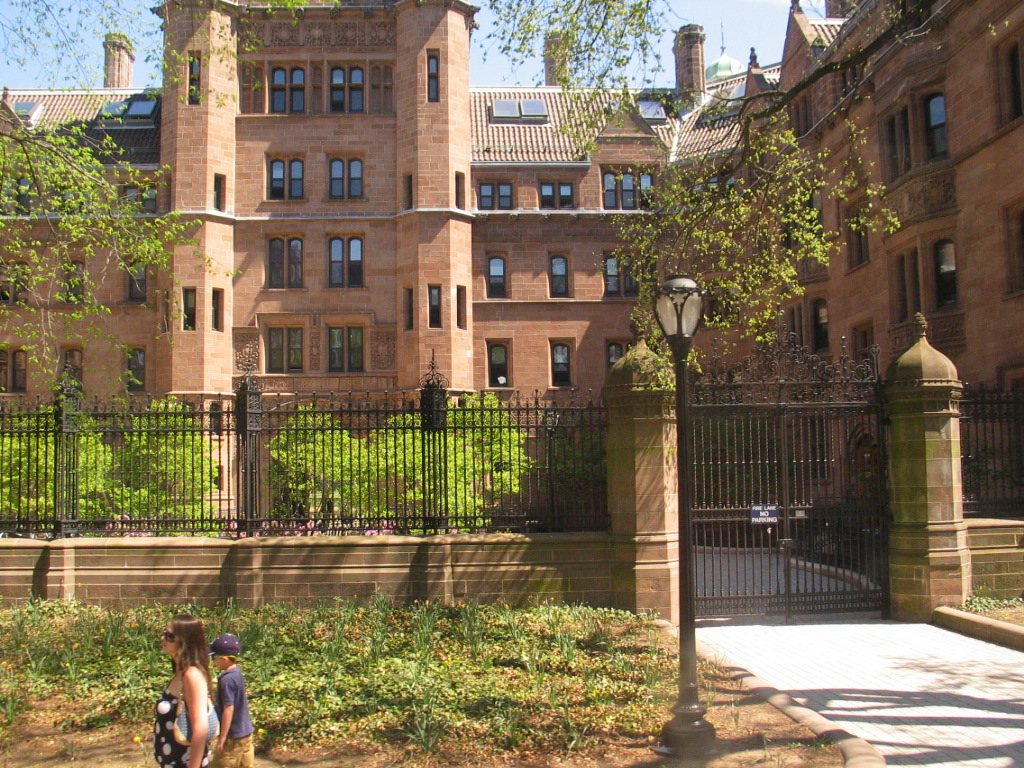
Yale University sits in New Haven, Connecticut, on a historic campus known for its Gothic architecture and residential colleges. An Ivy League research university, it is renowned for the humanities, law, drama and the arts, and the sciences, along with its world-class libraries and a strong tradition of undergraduate teaching. Yale combines elite scholarship with a close-knit residential culture, drawing accomplished students from across the country and around the world.
No; like all Ivy League schools, Yale awards financial aid based solely on demonstrated need and gives no merit, athletic, or academic scholarships. It meets full demonstrated need with a generous, often loan-free program. A high-achieving applicant cannot earn a tuition discount for grades, but families with financial need frequently find Yale far more affordable than its published price, since aid depends entirely on financial circumstances rather than achievement.
When scores are part of the review, Yale has generally considered an applicant’s highest section results across multiple test dates, a superscoring-style approach, letting applicants present their strongest combined result. Because Yale’s testing policy has shifted in recent cycles, applicants should confirm both the current requirement and the superscoring practice on Yale’s admissions website before deciding which scores to send, since how an applicant submits results can affect how they are read.
Yale enrolls roughly 6,500 undergraduates and around 15,000 students total including its graduate and professional schools, making it mid-sized among elite universities and notably undergraduate-focused for a major research institution. The residential college system divides undergraduates into smaller communities, fostering a tight-knit feel. Students who want major research-university resources combined with an intimate, community-centered experience often find Yale’s size and structure especially appealing.
Yale assigns admissions officers to geographic regions, so an applicant’s reader is typically the officer responsible for their area. The admissions office website lists regional staff and provides contact channels for legitimate questions. Applicants should reach out professionally and only with substantive questions, since officers handle large volumes of applications. Building a respectful, appropriate point of contact can help, but it does not substitute for the strength of the application itself.
About Oriel Admissions
Oriel Admissions is a Princeton-based college admissions consulting firm advising families nationwide on elite university admissions strategy. Our team includes former admissions officers from Harvard, Princeton, and Columbia. To discuss your family’s admissions strategy, schedule a consultation.