What is the Cambridge Judge EMBA program?
The Cambridge Judge Executive MBA is a 20-month part-time MBA program designed for senior professionals who want to continue working full-time while completing the degree. The program runs through 16 modular weekends and one 2-week residential block at the Cambridge Judge Business School campus, with all coursework concentrated into intensive in-person sessions plus pre-reading and post-session deliverables. The cohort enrolls approximately 70-90 candidates per year, with the average candidate having 10-15 years of professional experience and 5+ years of management responsibility. The Class of 2026 had a median age of approximately 38, average work experience of 14 years, and approximately 90% international representation across approximately 35-40 nationalities. The program awards the same MBA degree as the full-time Cambridge MBA, with the same University of Cambridge degree credentials and college affiliations. The 2026 tuition is approximately £81,000, plus additional travel and accommodation costs that vary based on candidate location (typically £15,000-£25,000 across the program for non-UK residents).
Who is the Cambridge Judge EMBA for?
The Cambridge Judge EMBA is designed for senior professionals at three distinct career inflection points. Profile 1 – Senior managers preparing for executive roles: Vice presidents, senior directors, or general managers at established companies who are 2-5 years from C-suite or board-level positions. The EMBA provides strategic frameworks and credentials to support that transition while maintaining current employment. Profile 2 – Founder-CEOs scaling growth-stage businesses: Founders of established companies (typically Series B+ or equivalent revenue scale) who need senior leadership development without leaving their operating role. The Cambridge Cluster ecosystem and Cambridge Network are particularly valuable for tech and biotech founders. Profile 3 – Senior career transitioners: Professionals making major industry, sector, or domain transitions while maintaining current responsibilities – public sector to private sector, technical leadership to general management, regional to global roles. The EMBA provides the credential and network for senior pivots without the full-time program's opportunity cost. The Cambridge Judge EMBA is NOT for candidates with less than 8 years of experience (full-time MBA fits), candidates seeking 1-year intensive immersion (Stanford MSx or MIT Sloan Fellows fit), or candidates whose primary goal is post-MBA recruiting at firms like McKinsey or Goldman Sachs (full-time programs dominate that recruiting).
What are the Cambridge Judge EMBA application essay prompts?
The Cambridge Judge EMBA application requires three essays. Essay 1 – Personal Statement (500 words): This is the foundation of your application and addresses three sub-questions: (a) What are your short and long-term career objectives? (b) What skills and characteristics do you already have that will help you achieve them? (c) What do you hope to gain from the EMBA and how will it help you achieve your career objectives? Essay 2 – Leadership Reflection (typically 500 words): Reflect on a specific leadership challenge you have faced, what you did, and what you learned. The prompt may vary slightly year to year but consistently tests your senior-level leadership reflection. Essay 3 – Cambridge Fit (typically 250-300 words): Why Cambridge Judge specifically, and what will you contribute to the cohort? Standard application materials: CV, two recommendation letters (one current supervisor strongly preferred for non-sponsored candidates; for sponsored candidates, the sponsor relationship informs which recommenders are appropriate), GMAT/GRE/Executive Assessment scores (waiver available for senior candidates with substantial professional accomplishments), undergraduate transcripts, and an interview for shortlisted candidates.
How do you write the Cambridge Judge EMBA personal statement (500 words)?
The personal statement asks three sub-questions in 500 words, requiring you to allocate roughly equal space to each component (~150-180 words per question). Sub-question 1 – Career objectives (150-180 words): At the EMBA level, career objectives focus on the next executive transition rather than dramatic pivots. Strong examples: “Short-term, advance from VP of Operations to COO within my current company over the next 2-3 years; long-term, become CEO of a similar-scale operations-intensive business within 7-10 years”; “Short-term, transition from technical engineering leadership to general management within my current company; long-term, found or join an early-stage technology venture as CEO”; “Short-term, expand my regional general management role to global responsibility; long-term, return to the public sector at senior policy or advisory levels.” Avoid dramatic post-EMBA career switches that contradict your current senior trajectory. Sub-question 2 – Existing skills and characteristics (150-180 words): List 3-4 specific capabilities or qualities you bring, with brief examples. Strong examples: P&L management experience at scale; cross-cultural leadership across multiple geographies; technical depth in a specific domain; track record of building and leading senior teams. The list should reflect genuine self-awareness, not generic claims. Sub-question 3 – What you will gain from the EMBA (150-180 words): Reference 3-5 specific Cambridge Judge resources by name: the Cambridge Venture Project (where EMBA teams consult with Cambridge Cluster startups), the Cambridge Centre for Alternative Finance (for FinTech-focused candidates), the Centre for Strategic Philanthropy, named electives, the Cambridge Network alumni access, and the collegiate experience. Connect each resource to specific elements of your career objectives.
How do you approach the Cambridge Judge EMBA leadership essay?
The leadership essay tests how you reflect on your senior leadership experience – the depth of your self-awareness, your ability to identify pivotal moments, and your willingness to be honest about challenges and growth. The strongest essays describe a specific, recent leadership challenge (within the last 3-5 years) where the outcome was not entirely positive or where you learned something significant about your own limitations. Structure the 500 words across four parts. Situation (approximately 100 words): The specific leadership challenge with enough detail about the organization, team, and stakes to be credible. Include the constraints you faced and the alternatives you considered. Your decisions and actions (approximately 150 words): What you did, with first-person specifics. Acknowledge tradeoffs and describe what you decided not to do as much as what you did. The outcome and what went well or didn't (approximately 150 words): Honest reflection on what happened. The strongest essays acknowledge mixed outcomes – what worked, what didn't, what surprised you. Avoid framing the situation as a unalloyed success. What you learned and how it changed you (approximately 100 words): The specific leadership lesson and how it has informed your subsequent decisions. Avoid platitudes (“I learned the importance of communication”); favor specific changes you have made in your leadership approach. Cambridge values self-aware leaders who can describe their own limitations and growth.
How does employer sponsorship work for the Cambridge Judge EMBA?
Approximately 60-70% of Cambridge Judge EMBA candidates are sponsored by their employers, with sponsorship typically covering 50-100% of tuition plus some travel and accommodation costs. Employer sponsorship typically involves three components. Tuition coverage: Full or partial tuition payment, with the candidate often responsible for travel, accommodation, and personal expenses. Time release: The employer commits to releasing the candidate for the modular weekends and the 2-week residential block. Some sponsors also support pre-reading and post-session deliverable time. Return-to-firm commitment: Most sponsorships include a 2-3 year post-EMBA service commitment, where the candidate agrees to remain with the employer for a specified period after graduation. Breaking the commitment typically requires reimbursement of sponsored tuition. Sponsorship strategy: For candidates who plan to remain with their current employer post-EMBA, sponsorship is the optimal financial path. For candidates who plan dramatic post-EMBA transitions, self-funding may be more appropriate to avoid the return-to-firm commitment. The application essays should reflect the sponsorship reality – sponsored candidates should describe how the EMBA serves their continued contribution to the sponsor; self-funded candidates have more flexibility to describe career transitions. The Cambridge Judge admissions team accepts both sponsored and self-funded candidates without preference, but the essay framing should match your sponsorship situation.
What are the Cambridge Judge EMBA application deadlines?
The Cambridge Judge EMBA operates a multi-stage rolling admissions process for the September intake (the program does not have a January or other off-cycle intake). Stage deadlines typically run from October through May, with most candidates applying in Stages 1-3 (October through February). Each stage's decisions are typically issued within 6-8 weeks. The earlier stages have higher admit rates and more scholarship availability; later stages compete for remaining seats. The strategic recommendation is to apply in Stage 1 or 2 if your application is fully prepared, particularly if you are seeking scholarship support or if your sponsor needs to plan for the September matriculation. For senior candidates with employer sponsorship, the application timing often aligns with the sponsor's budget and HR cycles – clarify with your sponsor when the EMBA expense and time release will be approved. The interview is typically conducted virtually for international candidates and in-person at the Cambridge Judge campus when geographically convenient. Interviews typically last 60-75 minutes and are conducted by an Admissions Committee member or Cambridge Judge faculty.
How does the Cambridge Judge EMBA differ from peer EMBAs?
The Cambridge Judge EMBA competes with several peer programs, with distinctive strengths and differences. Versus Oxford EMBA: Both Oxford and Cambridge run modular EMBAs of similar length (Cambridge 20 months, Oxford 22 months) and similar tuition. Cambridge Judge is stronger in deep tech, biotech, and quantitative finance through the Cambridge Cluster; Oxford is stronger in social entrepreneurship through the Skoll Centre and policy work through the Blavatnik School of Government. Versus Wharton EMBA: Wharton EMBA (Philadelphia and San Francisco campuses) is the largest top-tier US EMBA, with strong placement at US firms and broader US alumni networks. Cambridge Judge has stronger international and European positioning. Versus Columbia EMBA: Columbia EMBA is NYC-anchored with strong finance focus and US recruiting. Cambridge Judge has stronger European and global mobility. Versus Booth EMBA: Booth EMBA (Chicago, London, Hong Kong campuses) provides global flexibility. Cambridge Judge offers a single Cambridge-based experience with the collegiate system. Versus MIT Sloan Fellows: MIT Sloan Fellows is full-time (1 year), distinct from a part-time EMBA. Different program type. Strategic implication: Cambridge Judge EMBA is the right choice for candidates targeting European or global executive roles, deep-tech or biotech leadership, or who value the unique Cambridge collegiate experience. The decision should weigh program format (modular weekends in Cambridge vs. distributed campuses), geographic preference, alumni network priorities, and tuition.
Frequently Asked Questions About the Cambridge Judge EMBA Application
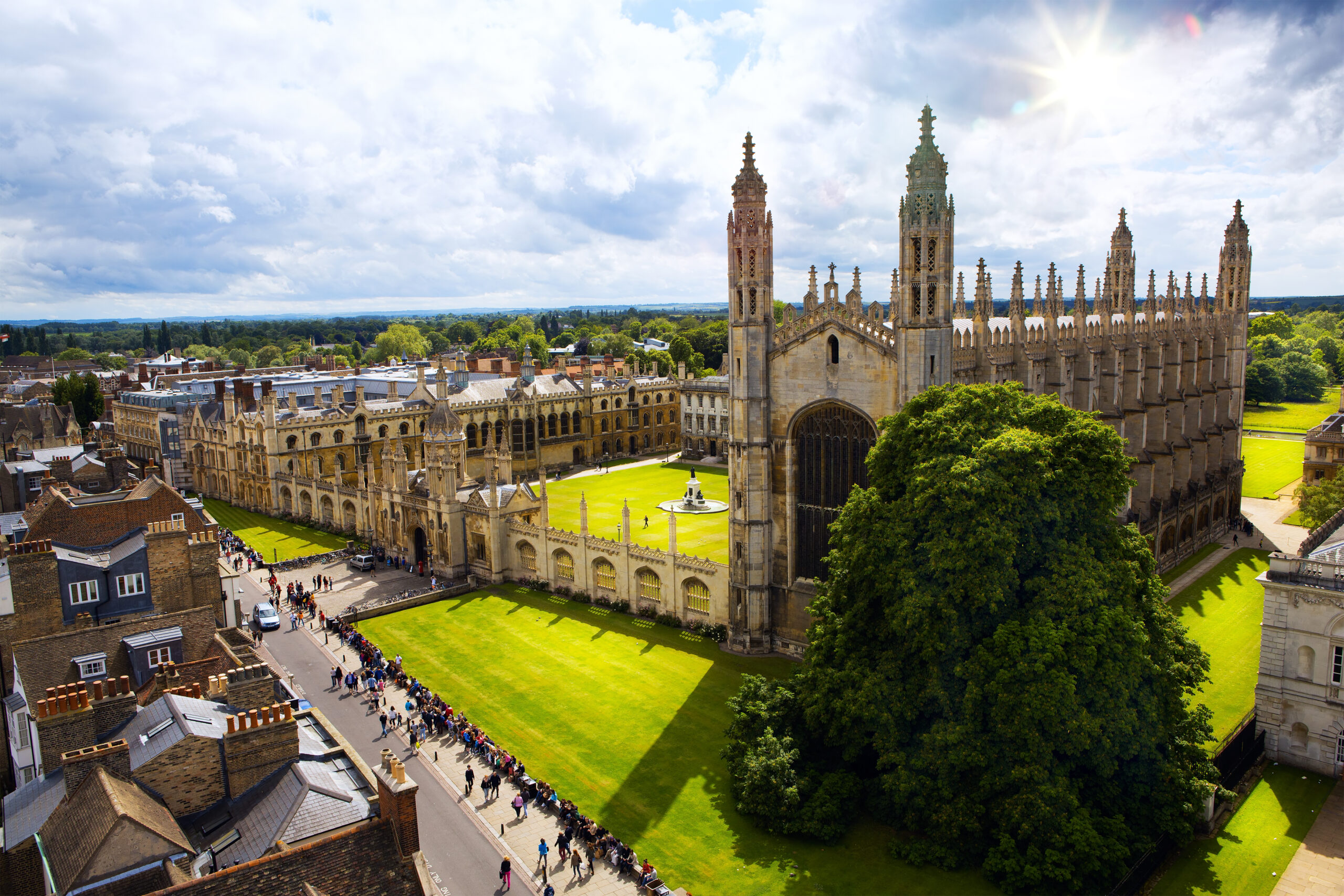
The Executive MBA is run by Cambridge Judge Business School, the business school of the University of Cambridge, located in the city of Cambridge, England, about an hour north of London. Teaching takes place largely on Cambridge’s historic grounds, immersing participants in the university’s environment during residential sessions. The setting gives executives access to Cambridge’s wider academic community and network while studying within one of the world’s most renowned universities.
An Executive MBA is designed for experienced professionals who continue working while they study, delivered through periodic intensive sessions rather than full-time daily attendance. A full-time MBA usually requires stepping away from work for the program’s duration and often targets earlier-career professionals seeking a career pivot. The EMBA suits established managers who want to keep their roles and apply learning immediately, while a full-time MBA suits those able to study without working.
The program is delivered part-time through a modular structure, with concentrated blocks of teaching, often spanning long weekends, spread across the program so participants can keep working between sessions. This design lets professionals study without resigning from their jobs. You should confirm the current schedule and residential requirements with the school, since the exact pattern of weekends and modules can change between intakes, but the model is built around working executives.
Executive MBA participants are generally more experienced than full-time MBA students, often in their mid-thirties to mid-forties with a decade or more of professional experience and frequently in management or leadership roles. The cohort tends to be senior and diverse across industries. You should expect peers who bring substantial real-world experience to discussions, which is a defining feature of the EMBA learning environment compared with younger full-time programs.
Admissions requirements for executive programs often differ from full-time MBAs, and some EMBAs place less emphasis on standardized tests, sometimes waiving the GMAT or GRE for candidates with strong professional track records, though requirements vary and can change. You should verify the current testing policy directly with Cambridge Judge, since whether a test is required, optional, or waivable depends on the program’s rules for your specific application cycle.
Cambridge Judge Business School is a globally respected institution, and its programs regularly appear among leading rankings, benefiting from the University of Cambridge’s worldwide prestige. An EMBA from Cambridge Judge carries strong international recognition among employers and peers. You should review current ranking tables for the latest standing, but the school’s reputation and the Cambridge name give the degree considerable weight in global business circles.
An Executive MBA is typically pursued to accelerate advancement within a career rather than to switch fields entirely, helping experienced professionals move into more senior leadership, broaden their strategic skills, and expand their networks. Many participants advance with their current employer. Outcomes depend on your goals and effort, so you should weigh the EMBA as an investment in leadership growth and networks rather than expecting a guaranteed promotion or salary jump.
Yes; the Executive MBA is specifically structured so participants remain employed throughout, attending concentrated sessions while continuing their professional roles, which is central to the program’s purpose. It does demand significant time and energy alongside a full workload, so you should secure employer support where possible and prepare for a heavy commitment. The format exists precisely to let working professionals earn the degree without leaving their careers.
Sources: Cambridge Judge EMBA; Cambridge Judge EMBA Admissions; Financial Times EMBA Ranking; Cambridge Network; GMAC.
About Oriel Admissions
Oriel Admissions is a Princeton-based admissions consulting firm advising candidates on elite MBA and graduate program admissions strategy worldwide. Our team brings deep expertise across every stage of the application, from target school selection and positioning through essays, recommendations, and interviews. To discuss your Cambridge Judge EMBA application strategy, schedule a complimentary 30-minute discovery call. Schedule your discovery call →