TL;DR: Columbia and Princeton admit at nearly the same rate: 4.2% for Columbia’s Class of 2030 and 4.4% for Princeton’s Class of 2029 (Princeton withheld 2030). The decisive differences are setting and money. Columbia is an urban Ivy in New York with a binding Early Decision round; Princeton is an undergraduate-focused university in suburban New Jersey with non-binding early action and the most generous aid in the Ivy League, free tuition up to $250,000 (Columbia Spectator, 2026; Princeton University, 2025).
Is Columbia or Princeton harder to get into?
By the numbers, the two are nearly identical. Columbia admitted 4.2% of applicants to the Class of 2030, and Princeton’s most recent official rate was 4.4% for the Class of 2029; Princeton withheld official Class of 2030 figures, as it has for several cycles (Columbia Spectator, 2026; Princeton University, 2024). The difference is negligible, and for an unhooked applicant the bar is effectively the same at both.
The more meaningful difference is in how each runs its early round, which shapes strategy more than the headline rate. Columbia uses binding Early Decision; Princeton reinstated non-binding Single-Choice Early Action. That distinction, covered below, determines whether applying early commits a student or simply gives them an earlier, higher-odds read.
| Dimension | Columbia | Princeton |
|---|---|---|
| Acceptance rate | 4.2% (Class of 2030) | 4.4% (Class of 2029; 2030 withheld) |
| Early-round policy | Early Decision (binding) | Single-Choice Early Action (non-binding) |
| Undergraduate enrollment | ~8,900 | ~5,700 |
| Setting | New York City (Morningside Heights) | Princeton, NJ (suburban town) |
| Academic identity | Core Curriculum, urban research university | Undergraduate-focused; no business or medical school |
| Signature strengths | Humanities, journalism, business, international affairs | Math, physics, economics, public and international affairs, engineering |
| Free tuition threshold | Up to ~$150,000 | Up to $250,000 (full ride to $150,000) |
Columbia vs Princeton: how do academics and programs compare?
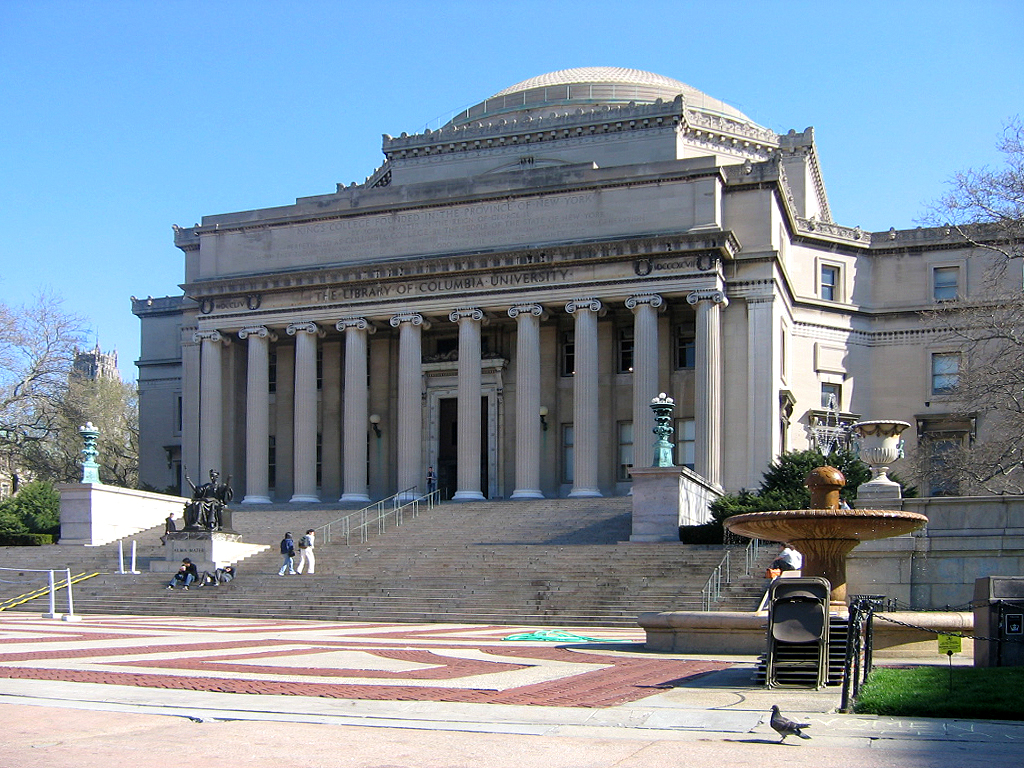
Columbia’s defining feature is the Core Curriculum, a rigorous shared sequence that every undergraduate completes, paired with a large research university and a New York City location that connects students to media, finance, and the arts. Its signature strengths run through the humanities, journalism, business, and international affairs, and the city itself functions as a second classroom.
Princeton is the most undergraduate-focused of the major research universities. It has no business school or medical school competing for institutional attention, which concentrates resources on undergraduates, and it is exceptionally strong in mathematics, physics, economics, public and international affairs through its SPIA program, and engineering. The senior thesis is a defining rite, and the faculty-to-undergraduate ratio is among the best in the country. The contrast is structural: Columbia offers a prescribed intellectual core inside a big urban university, while Princeton offers a research university reorganized around the undergraduate. For program detail, see our guides to getting into Columbia and getting into Princeton.
Does Columbia or Princeton give better financial aid for high-income families?
This is where the two separate most sharply, and for affluent families it can be decisive. Princeton offers the most generous aid in the Ivy League: beginning in 2025-26, families earning up to $250,000 receive free tuition, and families earning up to $150,000 pay nothing at all, with the full cost of attendance covered (Princeton University, 2025). Columbia meets 100% of demonstrated need with no loans, but its free-tuition threshold sits well below Princeton’s, in the range of $150,000, so families above that generally face a tuition contribution.
For a household earning between $150,000 and $250,000, the gap is concrete and large. At Princeton, that family may pay no tuition; at Columbia, the same family would likely owe a meaningful share of a roughly $90,000 cost of attendance. Above $250,000, both schools assess individually and both eventually reach full-pay, but across the upper-middle and high-income range Princeton’s aid is materially more generous. Families weighing real net cost should run both calculators, though Princeton’s published thresholds are the most favorable in the league. For the broader high-earner framework, see our analysis of financial aid for high-earning families.
| Family income (typical assets) | Columbia | Princeton |
|---|---|---|
| Under $150,000 | Need-based aid; often low net cost | $0 (full cost of attendance covered) |
| $150,000-$250,000 | Tuition contribution likely | Free tuition |
| $250,000-$400,000 | Contribution expected; assessed individually | Assessed individually; partial aid possible |
| Above $400,000 | Typically full-pay (~$90,000+/yr) | Typically full-pay (~$90,000+/yr) |
Columbia vs Princeton: campus culture and student experience
The settings produce very different daily lives. Columbia is embedded in Manhattan, and the city is inseparable from the experience: internships, culture, and an independent, fast-moving social scene define it, and students tend to be self-directed and outward-facing. Campus is a relatively compact enclave within a vast city.
Princeton offers a more classic, contained collegiate environment in a small, affluent New Jersey town. Social life centers on the residential colleges and the eating clubs, school traditions run deep, and the pace is more inward and campus-focused. The honest question is whether the student wants a major city as their backdrop or a self-contained campus where the university is the center of gravity.
Columbia vs Princeton: outcomes, graduate school, and ROI
Both sit at the very top of outcomes, and both feed elite graduate schools, finance, consulting, technology, and public service. Columbia’s New York location gives it especially direct access to finance, media, and the arts, while Princeton’s concentrated undergraduate focus and powerful alumni network produce outsized placement into graduate study, research, finance, and public affairs.
For a high-income family, the ROI calculus is unusual here because of the aid gap: across much of the income range, Princeton may simply cost less while delivering comparable outcomes, which tilts the pure financial return in its favor. Beyond cost, the decision rests on environment and field, with Columbia favoring students drawn to the city and its industries and Princeton favoring those who want an undergraduate-centered research university.
Should you apply early to Columbia or Princeton?
The early rounds differ in kind, not just degree. Columbia uses binding Early Decision: a strong statistical advantage in exchange for a commitment to enroll if admitted, before seeing the aid package. Princeton uses Single-Choice Early Action, which is non-binding but restrictive, offering an early, higher-odds read without requiring a commitment, though it bars early applications to other private universities. A student cannot apply early to both.
For families focused on aid, Princeton’s non-binding early action is especially friendly: a student can apply early, receive a decision, and still compare offers in the spring. Columbia’s binding Early Decision demands more certainty up front, which suits a family confident in both the fit and the cost. The early choice should follow genuine first preference and the family’s comfort with commitment.
Which should you choose: Columbia or Princeton?
Choose Columbia if the student wants New York City as a campus, the structure of the Core Curriculum, and the energy of a large urban research university, and if the family is comfortable with binding Early Decision. Choose Princeton if the student wants an undergraduate-focused university with elite strength in math, science, economics, and public affairs, a more traditional campus, non-binding early action, and the most generous financial aid in the Ivy League.
For high-income families specifically, Princeton’s aid advantage is the single most concrete differentiator: its free-tuition threshold of $250,000 reaches deep into high-earner territory that Columbia’s aid does not. Where the student is genuinely torn on fit, that cost difference often becomes the deciding factor.
Related Ivy League Comparisons
For more side-by-side comparisons, see Columbia vs Dartmouth, Harvard vs Columbia, Harvard vs Princeton, and Princeton vs Cornell. If you are deciding when to apply, our guide to Early Action vs Early Decision breaks down the early-round options.
Frequently Asked Questions About Columbia vs Princeton
They are nearly identical: Columbia admitted 4.2% for the Class of 2030, and Princeton 4.4% for the Class of 2029 (Princeton withheld 2030). For an unhooked applicant the difficulty is effectively the same at both.
Princeton, clearly. It offers free tuition up to $250,000 and the full cost of attendance covered up to $150,000, the most generous in the Ivy League. Columbia meets full need but its free-tuition threshold is around $150,000, so high earners generally pay more there.
Princeton covers full tuition for families earning up to $250,000 with typical assets, and the full cost of attendance for families up to $150,000. Income above $250,000 is assessed individually based on assets and circumstances.
You cannot do both. Columbia uses binding Early Decision; Princeton uses non-binding Single-Choice Early Action. Choose based on genuine first preference and whether you want to compare aid offers in the spring.
Princeton is exceptionally strong in economics and in public and international affairs through SPIA, with a deep undergraduate focus. Columbia is also strong and adds New York access. For pure undergraduate depth in those fields, Princeton leads.
Two things: setting and aid. Columbia is urban and in New York; Princeton is a suburban, undergraduate-focused campus. And Princeton’s financial aid is materially more generous for high-income families.
Columbia, decisively. It sits in Manhattan with the city as an extension of campus. Princeton offers a contained campus in a small town, which is the opposite experience.
Both are top-tier Ivies with elite reputations. Princeton consistently ranks at or near the top for undergraduate education; Columbia carries a strong global and urban profile. The difference is minor and field-dependent.
Sources: Columbia Undergraduate Admissions, Princeton Undergraduate Admission, NCES College Navigator, Columbia Common Data Set, Princeton Common Data Set, NACAC.
About Oriel Admissions
Oriel Admissions is a Princeton-based college admissions consulting firm advising families nationwide on elite university admissions strategy, pairing each student with a dedicated team of counselors and coaches. To discuss your strategy, schedule a consultation.