What Is Columbia’s Acceptance Rate for the Class of 2030?
Columbia has not yet released Class of 2030 admissions statistics. Early Decision data is partially available: Columbia received 5,497 ED applications for the Class of 2030, a 6.4% decrease from the 5,872 ED applications for the Class of 2029 (Columbia Undergraduate Admissions). The most recent completed cycle is the Class of 2029, which closed at 4.29% on Ivy Day with 2,557 admits, then was revised to 4.9% (2,946 admits) after Columbia made adjustments to accommodate a larger incoming class. The Class of 2028 closed at 3.86%, the Class of 2027 at 4.00%, and the Class of 2026 at 3.73% (Columbia Common Data Set filings, 2021-2024).
| Class | Applications | Admitted | Acceptance Rate | ED Applications |
|---|---|---|---|---|
| Class of 2030 | Not released | Not released | Not released | 5,497 |
| Class of 2029 | 59,616 | 2,946 (revised) | 4.9% | 5,872 |
| Class of 2028 | 60,248 | 2,327 | 3.86% | 6,007 |
| Class of 2027 | 57,126 | 2,285 | 4.00% | 5,733 |
| Class of 2026 | 60,377 | 2,253 | 3.73% | 6,305 |
Two factors shaped the Class of 2029 numbers. First, Columbia increased its target class size, with revised admit numbers reflecting accommodations for a larger incoming class. Second, the Class of 2029 was the second cohort admitted after the Supreme Court ruling ending race-conscious admissions, and Columbia’s response included an Admissions Working Group focused on access for students from public high schools and community colleges. For broader context on how Columbia’s selectivity compares across the Ivies, see our analysis of the most competitive colleges and Ivy Day 2026 results.
What GPA and Test Scores Do You Need for Columbia?
The mid-50% SAT range for enrolled Columbia first-years who submitted scores is 1510 to 1560, with an average composite of 1540 (Columbia Common Data Set, 2024-2025). The mid-50% ACT range is 34 to 35, with an average composite of 35. Columbia does not publish a single GPA cutoff. The most recent published Class Profile reports that 95.7% of accepted students were in the top 10% of their high school graduating class, and the institutional norm is that admitted students rank at or near the top of their class with the most rigorous available coursework.
| Metric | 25th Percentile | 75th Percentile |
|---|---|---|
| SAT Composite | 1510 | 1560 |
| ACT Composite | 34 | 35 |
Course rigor matters more than raw GPA at Columbia. Admitted students typically take the most demanding curriculum their school offers, which usually means seven to twelve AP, IB, or post-AP courses by graduation. Depth across all five core academic areas (English, math, science with at least three lab sciences, foreign language through level four or five, and social studies) is the institutional norm. Students applying to Columbia Engineering should add demonstrated strength in calculus and physics through the most advanced level available. For students at high schools that do not offer AP or IB, admissions officers calibrate against the school profile that counselors submit (NACAC publishes best-practice guidance for school profiles). For a tool that estimates how your child’s record stacks up against the Ivy League norm, see our Ivy League Academic Index Calculator.
Is Columbia Test-Optional or Test-Required for 2026-2027?
Columbia is the only Ivy League school with a permanent test-optional policy. The university announced the permanent policy in March 2023, citing internal research showing that test-optional admissions did not diminish the academic performance of admitted classes or the academic success of enrolled students. Harvard, Yale, Dartmouth, Brown, Cornell, and Penn have all reinstated testing requirements for the 2026-2027 cycle, and Princeton will reinstate testing for the 2027-2028 cycle, leaving Columbia as the lone permanent test-optional Ivy.
The strategic implication is that test-optional at a highly selective school is not the same as test-blind. The mid-50% range of 1510 to 1560 reflects students who chose to submit scores; admissions officers see scores when they are submitted, and the absence of scores from a strong applicant pool can raise questions when most peers are submitting. Most Columbia admits have scores on file, even though scores are not required. Submitting a score within or above the 1510 to 1560 range strengthens an application; withholding a strong score is generally not advisable. For a deeper look at the submit-or-withhold decision, see our analysis of whether test-optional is really optional and our 2026-2027 testing policy guide.
Does Applying Early Decision to Columbia Give an Admissions Advantage?
Yes, and the advantage is among the more meaningful in the Ivy League. Columbia uses binding Early Decision: applicants commit to enroll if admitted, and they may apply to other schools through non-restrictive Early Action and Regular Decision but must withdraw all other applications if accepted to Columbia. The most recent fully published Early Decision rate (Class of 2028) was 13.2% (795 admitted from 6,007 applicants), compared to a Regular Decision rate of approximately 2.8% (Columbia Common Data Set, 2023-2024). The roughly four-to-five-times multiplier has held in recent cycles.
The strategic implication: ED is the highest-probability pathway for genuinely interested students who have completed their academic profile by November of senior year and whose families do not need to compare financial aid offers across schools before committing. The binding nature is the cost; applicants who are admitted are committed to enroll, regardless of aid offers from other schools (Columbia will release applicants from the binding commitment only when financial aid does not allow attendance). For families weighing ED across multiple schools, see our guide to choosing an ED school among the Ivies.
How Does Columbia College Differ from Columbia Engineering in Admissions?
Columbia maintains two separate undergraduate schools with distinct admissions paths: Columbia College (the liberal arts college) and the Fu Foundation School of Engineering and Applied Science (Columbia Engineering, or SEAS). Applicants choose one school on the application, and the admissions decision is school-specific. Columbia College and Columbia Engineering report combined admissions statistics, but each operates with its own applicant pool, faculty, and curricular requirements. Both schools share the Core Curriculum at varying levels of depth.
The strategic implication is that the choice between Columbia College and Columbia Engineering should reflect genuine academic interest rather than perceived admissions advantage. Engineering applicants need to demonstrate sustained engagement with quantitative reasoning, including calculus through BC level (or equivalent), physics, and ideally exposure to programming, engineering design, or applied research. Columbia College applicants have a wider range of acceptable academic profiles but are evaluated against the school’s distinctive emphasis on intellectual breadth and the Core Curriculum. Switching between Columbia College and Columbia Engineering after enrollment is institutionally complex and not guaranteed; applicants should choose the school that fits the academic plan they intend to follow.
What Does Columbia Look for Beyond Grades and Scores?
Columbia’s Common Data Set lists rigor of secondary school record, class rank, GPA, application essays, recommendations, character and personal qualities, and extracurricular activities as the seven factors rated “Very Important” in admissions decisions (Columbia Common Data Set, 2024-2025). Standardized test scores are listed as “Considered” rather than “Very Important,” consistent with the permanent test-optional policy. Columbia is the only Ivy that lists “Interview” as “Not Considered,” because Columbia does not offer admissions interviews.
The factor that most distinguishes admitted Columbia students from the broader pool of high-stat applicants is fit with the Core Curriculum and Columbia’s distinctive intellectual culture. The Core Curriculum is the institutional centerpiece: every Columbia College student takes Literature Humanities, Contemporary Civilization, University Writing, Art Humanities, Music Humanities, plus a science requirement and global core requirement. Columbia Engineering students take a parallel but lighter Core. Successful applicants articulate genuine engagement with the Core texts and demonstrate the kind of intellectual range the Core demands. Applications that read as generic Ivy submissions, with essays that could plausibly have been written for any top school, consistently underperform.
How Should Applicants Approach Columbia Supplemental Essays?
Columbia’s supplemental essays carry significant weight in admissions decisions because they differentiate among academically qualified applicants. Strategy varies meaningfully by prompt, word limit, and the specific qualities Columbia looks for. For complete prompts, strategic approach for each prompt, common rejection patterns, and the timeline applicants should follow, see our deep-dive guide: Columbia Supplemental Essays Strategy.
How Generous Is Columbia Financial Aid for High-Income Families?
Columbia meets 100% of demonstrated financial need without loans for all admitted students, including international applicants. Columbia is need-blind for U.S. applicants. Columbia announced in 2024 that families with annual incomes below $150,000 with typical assets are not asked to contribute to tuition, room, or board, and the policy was expanded in 2025 to include broader eligibility through the upper-middle-income range. Approximately half of admitted students receive need-based financial aid, and the average aid recipient receives a Columbia Grant covering more than the cost of tuition.
| U.S. Family Income | Typical Aid Outcome |
|---|---|
| Under $66,000 | Full cost of attendance covered (tuition, room, board, fees, books, personal expenses) |
| $66,000 to $150,000 | No expected parental contribution to tuition, room, or board (with typical assets) |
| $150,000 to $250,000 | Significant grant aid for many families, especially with multiple children in college |
| Above $250,000 | Grant aid possible based on assets, siblings in college, and special circumstances; no income cutoff for eligibility |
Three structural features distinguish Columbia’s aid policy. First, Columbia replaced loans with grants for all aid recipients in 2008, meaning aid awards are need-based grants that students do not repay. Second, Columbia is need-blind for U.S. applicants and need-aware for international applicants, but it still meets 100% of demonstrated need for admitted international students. Third, Columbia’s $150,000 free tuition threshold trails Yale ($200,000), Harvard ($200,000), and Princeton ($250,000) at the high-income end, which families targeting Columbia should weigh in their financial aid comparisons across Ivies.
How Does Columbia’s Core Curriculum Shape the Application?
Columbia’s Core Curriculum is the single feature that most distinguishes Columbia from peer Ivies. Every Columbia College student takes a sequence of small seminar courses anchored by Literature Humanities (a year-long study of foundational Western texts), Contemporary Civilization (a year-long study of Western political and ethical thought), University Writing, Art Humanities, Music Humanities, plus science and global core requirements. Columbia Engineering students take a parallel but lighter Core that includes Literature Humanities, University Writing, and additional humanities requirements alongside the engineering curriculum.
For the application, the Core matters as evidence of fit rather than as a checkbox. Columbia admissions officers are reading for applicants who would actively engage with the Core experience and contribute to its small-seminar discussions. The Core is small (most sections cap at 22 students) and discussion-driven, so applicants who demonstrate intellectual range and the willingness to engage with disagreement perform consistently better than applicants whose academic profile suggests narrower specialization without the breadth the Core demands. Applicants who treat the Core as an obstacle to specialization, or who write about Columbia as a research university exclusively without engaging with the Core dimension, often miss what admissions officers are looking for.
What Are the Most Common Mistakes in Columbia Applications?
Three patterns appear repeatedly in unsuccessful Columbia applications from otherwise highly qualified candidates. The first is treating the supplemental essays as interchangeable across the Ivies. Columbia’s supplement is among the most demanding, and the list responses in particular reward specificity that cannot be repurposed from another application. Generic “Why Ivy” content for the Columbia prompts consistently underperforms.
The second pattern is misjudging the test-optional policy. The mid-50% range of 1510 to 1560 reflects students who chose to submit, and most admits have scores on file. Submitting only when scores fall above the 75th percentile (above 1560) is appropriate; withholding scores in the 1510 to 1560 band when the rest of the application is competitive sends a signal that does not exist. For students whose scores fall below 1510, the decision to withhold is generally correct, but the rest of the application must be unusually strong to compensate.
The third pattern is over-padding the activities list. Columbia’s Common Application allows ten activities; strong Columbia applicants typically list six to eight, with two or three carrying significant intellectual or community depth. Filling all ten slots with shallow participation is consistently associated with weaker outcomes than listing fewer activities with greater depth. For a deeper analysis of why otherwise excellent students get rejected from top schools, see our analysis of valedictorians who were denied from the Ivy League.
How Does Columbia Compare to Other Ivy League Schools?
Columbia differs from peer Ivies in three institutionally meaningful ways. First, Columbia is the only permanent test-optional Ivy. Second, Columbia uses binding Early Decision; Yale and Princeton use non-binding Single-Choice Early Action, while Brown, the University of Pennsylvania, Dartmouth, and Cornell use binding ED. Third, Columbia’s Core Curriculum is the most institutionally embedded among the Ivies; Harvard and Yale have general education requirements but no equivalent of Columbia’s required Literature Humanities and Contemporary Civilization sequence.
| School | Class of 2029 Acceptance Rate | Early Plan | Free Tuition Income Threshold |
|---|---|---|---|
| Columbia | 4.29% (revised to 4.9%) | ED (binding) | $150,000 |
| Harvard | ~4.2% (Class of 2029) | REA (non-binding) | $200,000 |
| Yale | 4.59% | SCEA (non-binding) | $200,000 |
| Princeton | 4.4% | SCEA (non-binding) | $250,000 |
| Penn | 4.9% | ED (binding) | $200,000 |
| Brown | 5.65% | ED (binding) | $125,000 |
| Dartmouth | 6.0% | ED (binding) | $125,000 |
| Cornell | Not published | ED (binding) | $75,000 |
How Should Your Family Approach a Columbia Application?
Columbia is one of the most selective universities in the world, but the path to a strong application is more concrete than the headline 4.29% acceptance rate suggests. Three commitments shape the high-probability path. First, build a clearly differentiated academic and intellectual profile by the end of junior year, with documentable depth in two or three primary areas plus the breadth that the Core demands. Second, treat Columbia’s supplement as the highest-leverage portion of the application; allocate substantial time to research specific Core texts, faculty, and Columbia-specific programs, and write responses that could not plausibly have been written for another Ivy. Third, if Columbia is genuinely the family’s first choice and the family does not need to compare financial aid offers across schools, apply Early Decision.
For families currently in the planning window, the most important variable is the quality of the academic and extracurricular profile that will exist by November of senior year. The window for substantive change closes earlier than most families realize. For broader strategy across the Ivy League, see our analysis of the most competitive colleges, our Junior Year SAT and ACT Strategy guide, and our summer before junior year planning guide.
Frequently Asked Questions About Columbia Admissions
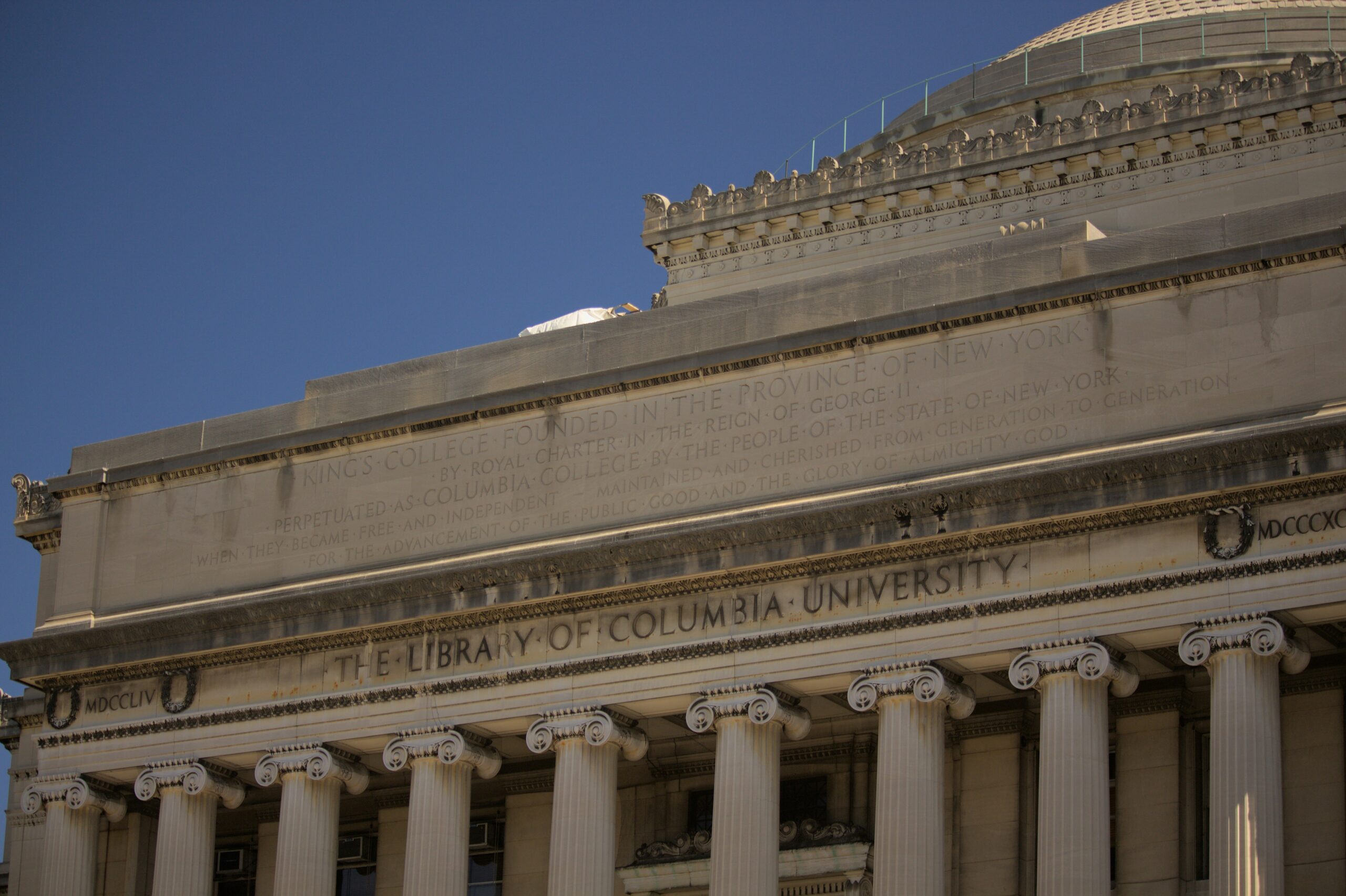
Columbia is in New York City, in the Morningside Heights neighborhood of Upper Manhattan, along the west side of the island near the Hudson River. Its classic urban campus is anchored by Low Library and a central quad, set within one of the world’s great cities. The Manhattan location is central to Columbia’s identity, giving students access to New York’s culture, internships, and professional opportunities right outside the gates.
Yes; Columbia is a member of the Ivy League, the athletic conference of eight historic Northeastern universities that also includes Harvard, Yale, Princeton, Penn, Brown, Dartmouth, and Cornell. One of the oldest universities in the country, it is consistently among the most selective. Columbia’s Ivy status is well established, and its New York City location and renowned Core Curriculum further distinguish it among its Ivy peers.
Columbia is known for its renowned undergraduate Core Curriculum, strength in the humanities, journalism (home of the Pulitzer Prizes), business, law, international affairs, and the sciences, and its prime New York City location. It is also famous for a globally diverse student body. Among the Ivies it stands out for combining a rigorous shared intellectual foundation with the resources and energy of a major world city.
Yes; Columbia considers an applicant’s highest section scores across multiple test dates, forming the best composite. A stronger Math from one sitting and stronger Reading and Writing from another count together, rewarding strategic retakes. Columbia’s testing requirements have shifted in recent cycles, so confirm the current policy on its admissions site, but the superscoring practice benefits applicants who take the test more than once.
No; like all Ivy League schools, Columbia awards aid solely on demonstrated need and gives no merit, athletic, or academic scholarships. It meets full need for admitted students, often with generous, loan-free packages, and has strong policies for lower- and middle-income families. A high-achieving applicant cannot earn a discount for grades or scores, but families with financial need may find Columbia far more affordable than its sticker price.
Extremely hard; Columbia’s acceptance rate is in the low single digits, among the lowest of the Ivies, and it draws an enormous pool of exceptional applicants worldwide. Nearly all admitted students have top grades and rigorous courses, so academics alone do not set a candidate apart. Columbia weighs intellectual fit with its Core, authentic engagement with New York and ideas, and a distinctive voice in deciding among many qualified applicants.
Barnard is an independent women’s college affiliated with Columbia through a long-standing partnership; Barnard students earn a Barnard degree but can cross-register for Columbia courses, use many shared resources, and receive a diploma bearing Columbia’s name. They are separate institutions with their own admissions, faculty, and campuses across the street from each other. Applicants choose Barnard or Columbia College separately, since each admits its own students.
Columbia is set apart by its mandatory Core Curriculum, a shared sequence of courses in literature, philosophy, history, science, and the arts that every undergraduate completes, and by its New York City location, which integrates the city into academic and student life. Compared with Ivies offering more open curricula or set in college towns, Columbia emphasizes a common intellectual foundation combined with the opportunities of living in Manhattan.
About Oriel Admissions
Oriel Admissions is a Princeton-based college admissions consulting firm advising families nationwide on elite university admissions strategy. Our team brings deep expertise across every dimension of the application, and our distinctive 360 approach develops strategy, positioning, activities, essays, and interviews as one coherent whole. To discuss your family’s admissions strategy, schedule a consultation.