What Is Congressional Debate?
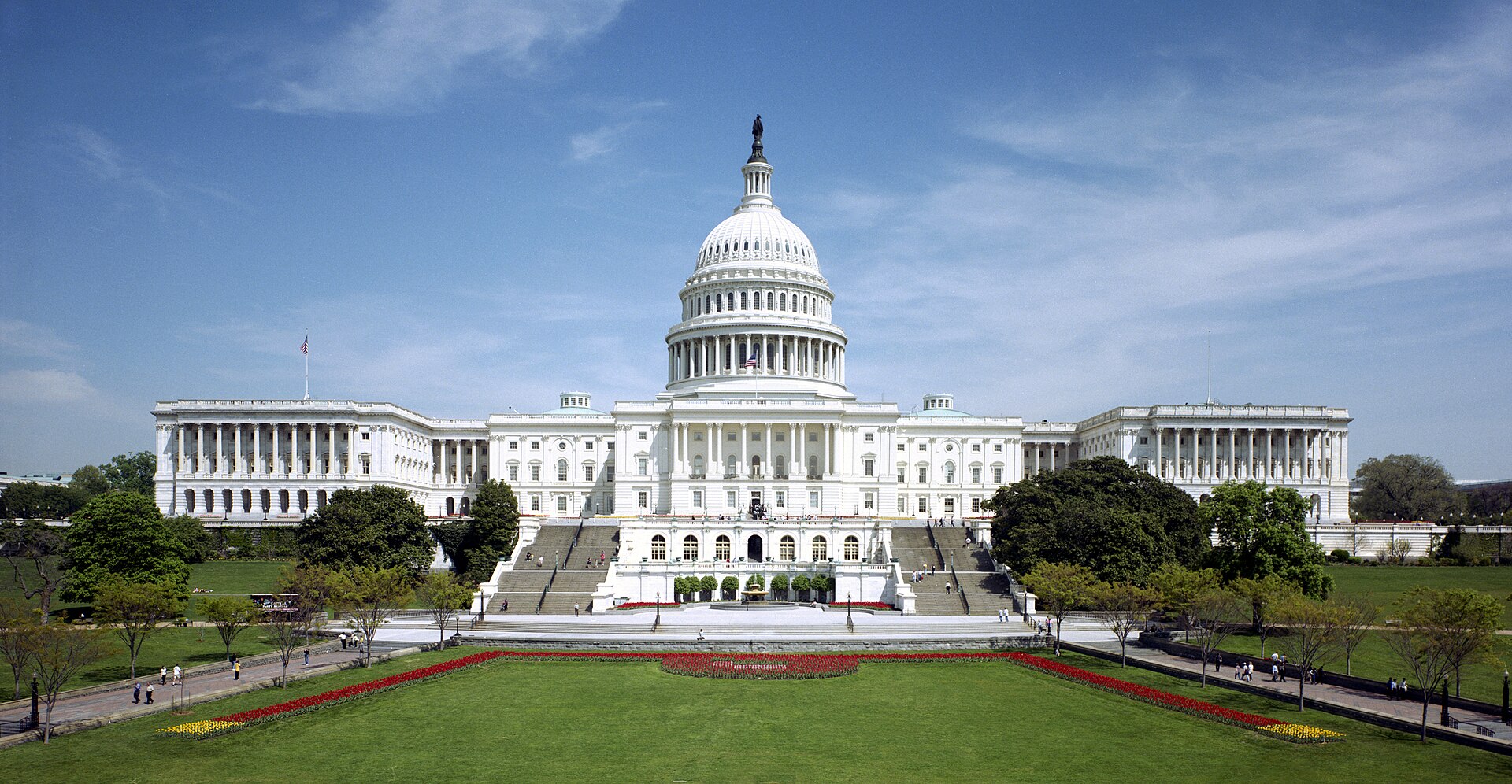
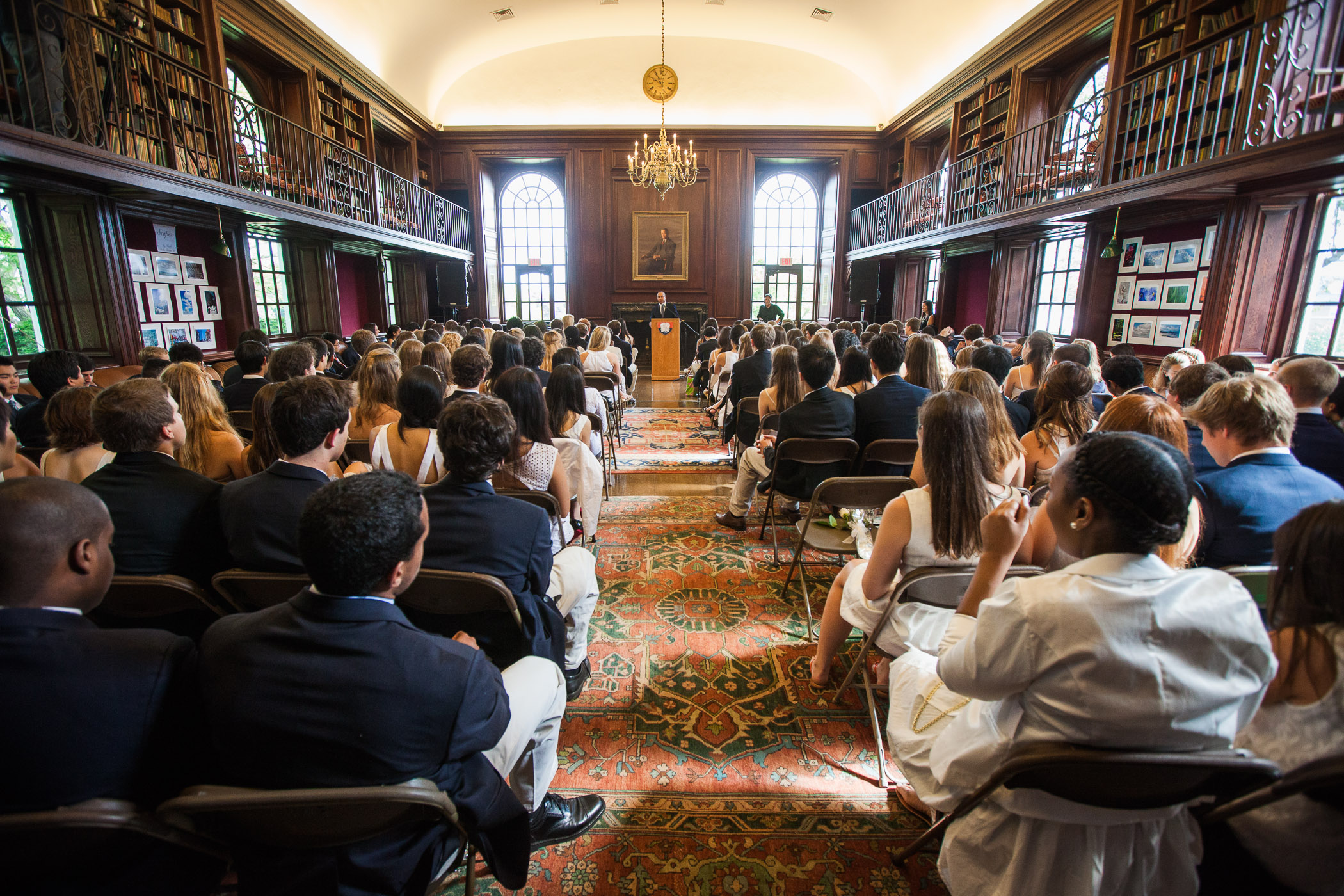
Congressional debate, often called Congress, is described by the NSDA as “a group debate event simulating the U.S. legislative process”. Students sit in a chamber as members of a House or Senate, debate bills and resolutions under parliamentary procedure, and are scored as individuals. It is a main event for high school and middle school students, and at the National Tournament the House and the Senate are separate events with separate champions.
It differs from the other NSDA debate events in two ways. There are no teams and no single opponent, so a student competes against everyone in the room. And a student must be ready to speak on several pieces of legislation in one session, on either side.
How Does a Congressional Debate Session Work?
The NSDA event page describes a chamber of about 10 to 25 students and a session of two to three hours. The rule book, the High School Unified Manual, is more exact: a session lasts at least three hours, 18 to 20 students is the best size for that length, and a chamber holds no more than 30. The table gives the rules that shape a session.
| Element | Rule |
|---|---|
| Speech length | Up to three minutes |
| Questions after the speech that introduces a bill and after the first negative speech | Two minutes |
| Questions after every later speech | One minute |
| Direct questioning | Each questioner has a block of up to 30 seconds; required at district tournaments and at Nationals |
| Order of sides | After the first two speeches, speakers alternate affirmative and negative |
| Who speaks next | Precedence and recency: students who have not spoken go first, then those who have spoken fewer times, then those who spoke least recently |
| Presiding officer | A student elected by the chamber by majority vote on a secret ballot |
| Parliamentarian | An adult official who supervises the chamber |
The presiding officer runs the debate with parliamentary procedure, recognizes speakers and questioners, and keeps time. Each new session brings a new election for presiding officer, a new seating chart and new legislation. At district tournaments and at Nationals the order used to break ties in recency is set in advance and randomized.
How Is Congressional Debate Scored?
Scoring happens on two tracks. Scorers give points for each speech, and they also rank the students in the chamber. At a district tournament each session has at least two scorers and a parliamentarian.
| Level | Points for a speech | Ranking |
|---|---|---|
| District tournament | 1 to 8 points, with answers to questions counted; 4 to 8 points for each full hour of presiding | Each scorer ranks eight legislators, who may include the presiding officer; the parliamentarian ranks the whole chamber |
| National Tournament | 3 to 9 points | Parliamentarians rank all students |
Advancement at districts runs on the cumulative ranks from the scorers and the parliamentarian, and a district may choose to let the students’ own ranking of the top eight decide who qualifies. Separately, speeches earn merit points in the NSDA Honor Society: 1 to 6 points for a speech or for a full hour of presiding, up to 36 points in a day. Merit points add up to degrees, from Merit at 25 points to Premier Distinction at 1,500.
What Legislation Do Students Debate?
Legislation comes in two forms. A bill sets out how a law would work, and a resolution states a position without the force of law. The NSDA says most items should have a national focus that falls within the jurisdiction of the United States Congress, and it publishes templates for both.
For the National Tournament, any high school or middle school member student may submit legislation, and more than one item is allowed. Submissions are due February 5 and are reviewed without the names of their authors. Students who qualify in Congress rank the legislation from April 28 to May 1, and the national docket is published by May 15. At Nationals an item is not tied to its author and no authorship speeches are given. The NSDA also posts a sample docket for members on the first of each month.
How Does a Student Qualify for the National Tournament?
NSDA membership belongs to the school, not the student. A school pays $349 a year, and students join through a member school; the NSDA says students cannot join without one. To enter the district tournament a student needs the Merit degree, which takes 25 merit points. A school may enter up to ten students in the House and two in the Senate.
| Chamber | Students taking part at districts | Qualifiers for Nationals |
|---|---|---|
| Senate | 10 or more, from six or more schools | 2 |
| House | 16 to 29 | 2 |
| House | 30 to 58 | 4 |
| House | 59 to 87 | 6 |
| House | 88 to 116 | 7 |
| House | 117 to 145 | 8 |
| House | 146 or more | 9 |
Members who do not qualify at districts can try the online Last-Chance Qualifier, held April 29 to May 1, 2027, which includes both Senate and House. It has no entry fee, but the school must have entered its district tournament and must supply or pay for judges, and registration closes on April 16, 2027. The National Tournament is in Phoenix, Arizona in June 2027; the NSDA Nationals page gives June 13 to 18 and its qualifier page gives June 14 to 18. A student may compete in only one main event at Nationals. The 2026 champions were Anadita Upadhyaya of Monte Vista High School in California in the House and Akram Younis of Suncoast Community High School in Florida in the Senate.
How Do Colleges Read Congressional Debate on an Application?
The one college page cited in this guide, from MIT, does not name debate. MIT tells applicants that it does not expect them to do a million things, to choose quality over quantity, and to put their heart into a few things they care about, adding that it is not particularly picky as to what. In our view, the level reached matters more than the membership. In the extracurricular activity tiers we use for planning, which are our framework and not a scale any college publishes, membership on a debate team sits in the lowest tier, a team captaincy or regular election as presiding officer sits higher, a state title or a district qualification higher again, and a final session at the National Tournament is a national-level result.
The NSDA describes its Honor Society as “one of the oldest and most respected honor societies known to college admissions offices”. That is the organization speaking about itself, and we would not lean on a degree alone. What an application can show is the record behind it: the tournaments entered, the ranks earned, any legislation the student wrote, and whether the student qualified for Nationals.
When Should a Student Start Congressional Debate?
Because membership is school based, the first question is whether the school has an NSDA program; the NSDA says that only 4,000 of 25,000 high schools in the United States have speech and debate programs. Where a program exists, 9th grade is the natural start, since a student needs 25 merit points before the district tournament. Congress suits a student who would rather speak several times for three minutes than carry a full case alone, and who is interested in how laws are made. Students who want a single opponent can look at Lincoln-Douglas debate, and those drawn to courtroom argument at mock trial.
How Should Congressional Debate Be Listed on the Common App?
Congressional debate belongs in the activities list, with the role on the team, the number of tournaments, and the highest level reached. Our guide to the Common App activities list shows how to write the entry. A state championship, a qualification for the National Tournament or an Academic All American award can also go in the honors section, covered in our guide to the Common App honors section.
For other activities, see our guides to HOSA, Model UN, ISEF, mock trial, student council, Lincoln-Douglas debate, USABO, Academic Decathlon, the Wharton investment competition, quiz bowl, USNCO and USAPhO.
More guides in this series cover Public Forum debate, Policy debate, Science Olympiad, Destination Imagination, the National Science Bowl, DECA, FBLA, Beta Club, Key Club, Eagle Scout and the President’s Volunteer Service Award.
Frequently Asked Questions About Congressional Debate
It is an individual debate event of the National Speech and Debate Association in which students act as legislators in a chamber, debate bills and resolutions under parliamentary procedure, and are scored and ranked individually.
Up to three minutes. The speech that introduces a bill and the first negative speech are each followed by two minutes of questions, and every later speech by one minute.
The presiding officer is a student elected by the chamber on a secret ballot. The officer runs the session with parliamentary procedure, recognizes speakers and questioners, and keeps time, and can be ranked by the scorers like any other legislator.
At district tournaments scorers give 1 to 8 points for each speech and rank their top eight legislators, and the parliamentarian ranks the whole chamber. Cumulative ranks decide who advances. At the National Tournament speeches are scored from 3 to 9.
A bill sets out how a law would work. A resolution states a position without the force of law. Most legislation should have a national focus within the powers of the United States Congress.
Each district with enough participation sends two senators and from two to nine House members, depending on how many students take part in the House at the district tournament.
Yes. Any member student may submit legislation for the national docket by February 5. Qualifiers rank the submissions in late April and the docket is published by May 15.
It can show sustained commitment and results. At Oriel Admissions we advise students to stay with one event long enough to reach district or national rounds, since the level reached says more than membership.
Sources: NSDA, Congressional Debate, NSDA, High School Unified Manual, NSDA, Topics, NSDA, Membership, NSDA, Honor Society, NSDA, District Tournaments, NSDA, National Tournament, NSDA, Last-Chance Qualifier, NSDA, 2026 National Champions, NSDA, home page, NSDA, Frequently Asked Questions, MIT Admissions, What We Look For
About Oriel Admissions
Oriel Admissions is a college admissions consulting firm advising families nationwide on elite university admissions strategy, with offices in Princeton, New Jersey and New York. Our team brings deep expertise across every dimension of the application, and our distinctive 360 approach develops strategy, positioning, activities, essays, and interviews as one coherent whole. To discuss your family’s admissions strategy, schedule a consultation.