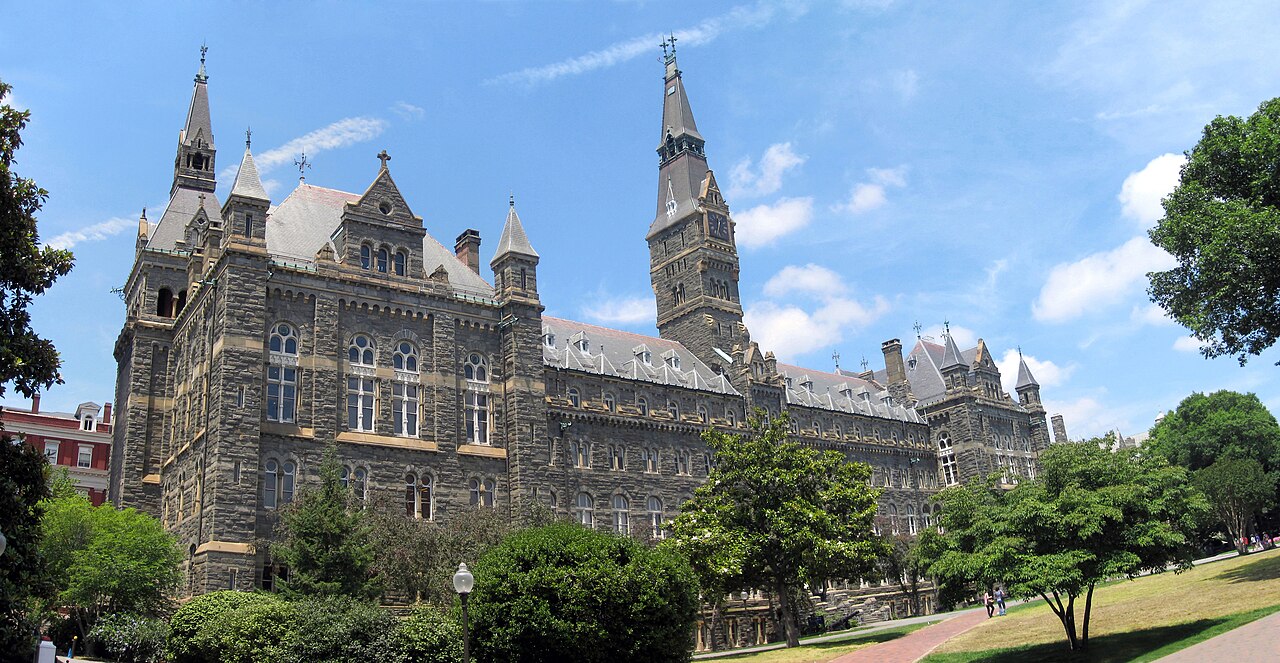
TL;DR: The Georgetown interview is required for all first-year applicants – Georgetown is one of the very few highly selective universities that still mandates an admissions interview (Georgetown Office of Undergraduate Admissions, 2026). It is conducted by the Alumni Admissions Program, a network of more than 7,800 alumni across 200+ regional committees, in person or virtually, and assignments run from September through February. The critical difference from peer schools: once Georgetown sends you your interviewer’s contact information, scheduling the conversation is your responsibility. If no interviewer exists in your region, the requirement is waived without penalty. To fold the Georgetown interview into a coherent application strategy, schedule a consultation with Oriel Admissions.
How does the Georgetown interview work?
| Question | Answer |
|---|---|
| Is it required | Yes. All first-year applicants must interview with an alumnus unless no interviewers are available in their geographic region – in which case it is waived with no penalty |
| Who conducts it | The Alumni Admissions Program (AAP): more than 7,800 alumni volunteers organized into 200+ regional committees worldwide |
| Who schedules it | You do. Georgetown sends you the contact information for your interviewer, and you are expected to reach out and arrange the meeting |
| Format | In person or virtual, typically at least 30 minutes |
| When | Contact information arrives roughly September through January; early applicants are prioritized through the end of October |
| What the interviewer sees | Not your application. They submit a detailed written report to the admissions committee afterward |
Source: Georgetown Office of Undergraduate Admissions, Alumni Interviews; Georgetown Alumni Admissions Program (2026).
Submitting your application is what initiates the process. Sometime between September and January, the admissions office emails you the name and contact information of an alumni interviewer in your area – and from that moment, the initiative is yours. Students who apply over the summer typically hear about their assignment by early October; early applicants are prioritized through the end of October, so Regular Decision candidates may not receive an interviewer until November or later regardless of when they submitted. Interviews are never held on campus, and Georgetown does not expect anyone to travel: if your region has no available interviewer, the requirement is simply waived, and the university is explicit that a waived interview does not hurt your decision.
What makes this interview different from peer schools?
Two things. First, it is required – which changes the psychology of the exercise. At most peer schools, an interview is a bonus data point; at Georgetown, completing it is part of a finished application, and the admissions committee reads a detailed written report from your interviewer alongside everything else in your file. Georgetown’s own guidance keeps the stakes honest: the report rarely makes or breaks an application, and more often than not it works in the applicant’s favor. Second, the scheduling burden is reversed. Harvard-style programs reach out to you and arrange the logistics; Georgetown hands you a name and expects a prompt, professional email and a confirmed meeting. For a seventeen-year-old, that first outreach message is quietly part of the test.
What questions come up in the conversation?
Georgetown tells its interviewers to have a general conversation about your thoughts and interests rather than to extract specific information, and the admissions office publishes the topics that commonly surface: academic interests, extracurricular activities, summer experiences, family background, future plans, and your exposure to Georgetown. Your interviewer has not seen your transcript, your scores, or your essays – by design – so the conversation is your chance to narrate yourself from scratch. Expect the meeting to run thirty minutes at minimum, often closer to an hour, and expect follow-up questions that reward genuine reflection over rehearsed lines. A thoughtful answer to why Georgetown specifically – the Jesuit intellectual tradition, the Washington location, the school within Georgetown you applied to – separates prepared candidates from generic ones.
How should you prepare for a Georgetown interview?
Start before the interview exists: watch your inbox from September onward, and when the assignment email arrives, reply to your interviewer within a day or two with a short, professional note offering several concrete times. That promptness is the first impression. Then prepare the substance the way you would for any evaluative conversation: a two-to-three-minute answer to why Georgetown that names your intended school and program, two or three stories that carry your activities beyond their titles, a current intellectual interest you can discuss in real depth, and a handful of genuine questions for someone who actually attended. Practice out loud with an adult who will not coach you mid-answer. On the day, arrive early or test your link, dress as you would for a school presentation, and leave your parents out of both the room and the email thread.
Common Georgetown interview mistakes
The most damaging mistake is unique to Georgetown: sitting on the interviewer’s contact email. A slow reply – or none – fails the one step the school explicitly put in your hands. The rest are familiar but worth naming: treating a required interview as optional in effort, arriving without a real answer to why Georgetown, reciting a resume instead of telling stories, bringing no questions of your own, and letting a parent manage the scheduling correspondence. One more: assuming the interview can be outsourced to charm. Interviewers file detailed reports, and a conversation that contradicts the seriousness of your written application – like a candidacy that later lands on the Georgetown waitlist – is a self-inflicted wound. Solid general technique is covered in our college interview preparation guide; Georgetown simply raises the floor on how much it matters.
Frequently Asked Questions About the Georgetown Interview
Yes. All first-year applicants are required to interview with an alumnus unless no interviewers are available in their geographic region, in which case the requirement is waived without penalty.
You do. Georgetown emails you the contact information for your assigned alumni interviewer, and you are expected to reach out promptly and arrange the meeting yourself.
Both formats are used. Interviews take place in person or in a virtual setting, but never on campus, and Georgetown does not expect applicants to travel for them.
Interviewers are asked to conduct conversations of at least thirty minutes, and many run closer to an hour. The format is conversational rather than an interrogation.
Contact information typically arrives between September and January. Summer applicants usually hear by early October, early applicants are prioritized through the end of October, and Regular Decision candidates may wait until November or later.
No. Interviewers do not have access to your transcript, scores, or essays. After the conversation they submit a detailed written report to the admissions committee.
Georgetown notes the report rarely makes or breaks an application and more often than not works in the applicant favor. Completing it, however, is a required part of a finished application.
The requirement is waived and Georgetown states this does not negatively affect your decision. Interviews cannot be reassigned outside your geographic region.
Sources: Georgetown Office of Undergraduate Admissions – Alumni Interviews, Georgetown Alumni Admissions Program, NCES College Navigator, NACAC, Common App
About Oriel Admissions
Oriel Admissions is a Princeton-based college admissions consulting firm advising families nationwide on elite university admissions strategy. Our team brings deep expertise across every dimension of the application, and our distinctive 360 approach develops strategy, positioning, activities, essays, and interviews as one coherent whole. To make the required Georgetown interview an asset rather than a formality, schedule a consultation.