How to Get Into Phillips Exeter Academy: Acceptance Rate, College Matriculation, and Admission Strategy
By Rona Aydin
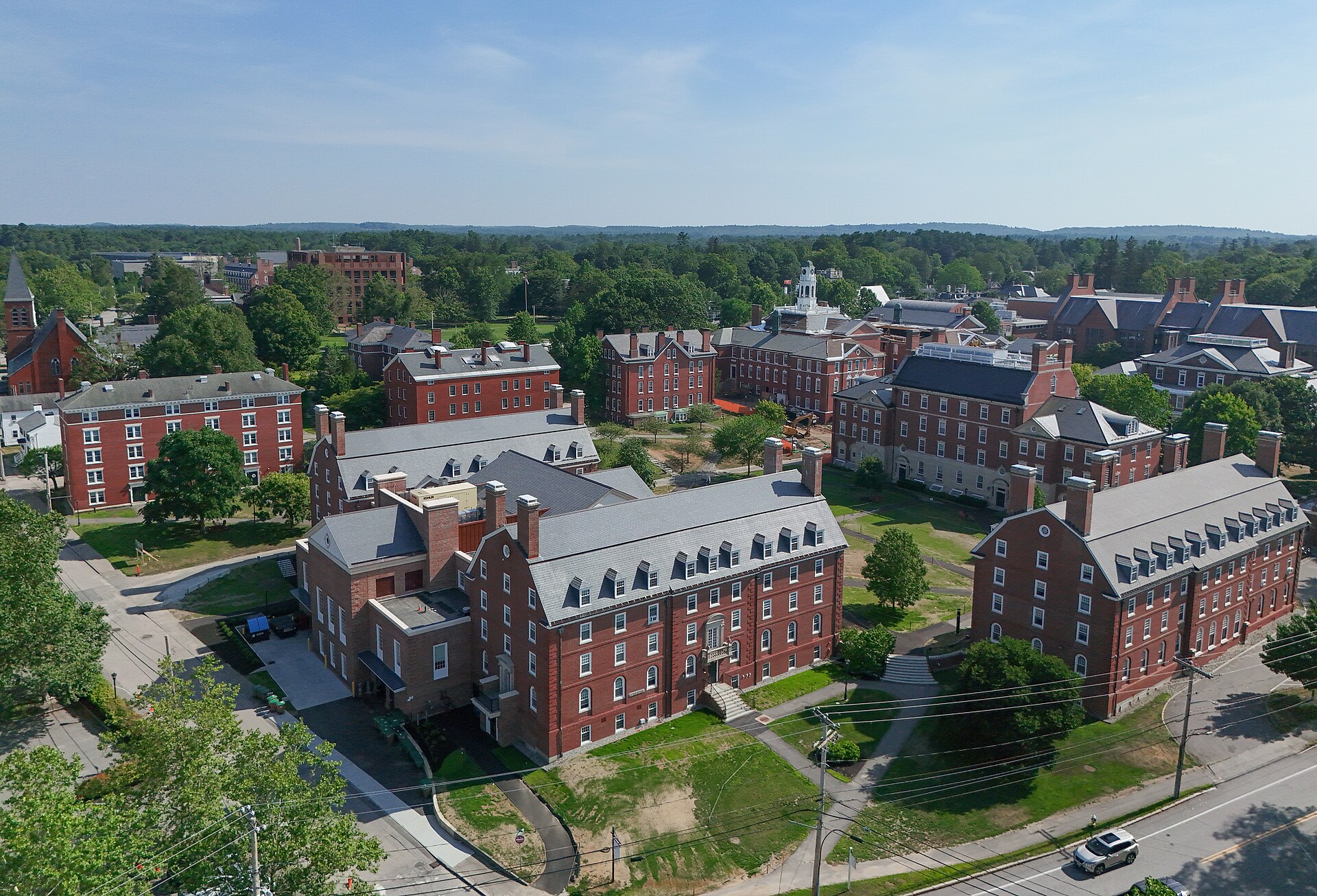
TL;DR: Phillips Exeter Academy’s acceptance rate is approximately 13-18% (Phillips Exeter Academy Office of Admissions; institutional reporting 2024-25), placing it among the most selective independent boarding schools in the world. Located in Exeter, New Hampshire (50 minutes from Boston), Exeter enrolls 1,106 students across grades 9-12 plus a postgraduate year, with a 5:1 student-teacher ratio and the world’s largest high school library. Boarding tuition for 2024-25 was $69,537 and day tuition was $54,312. Exeter operates need-blind admissions and provides free tuition for families with household income under $125,000. Approximately 19.09% of recent graduates matriculate to Harvard, Yale, Princeton, Stanford, and MIT combined. For families navigating Exeter admission strategy or planning college applications during the Exeter years, schedule a consultation with Oriel Admissions.
What is Phillips Exeter Academy’s acceptance rate?
Phillips Exeter Academy’s acceptance rate is approximately 13-18% in recent cycles (Phillips Exeter Academy Office of Admissions; institutional reporting via boarding school admissions aggregators 2024-25). Most aggregators report Exeter at 13% acceptance, though the rate has historically ranged between 13% and 18% depending on cycle and grade-level entry point. The selectivity places Exeter among the most competitive independent secondary schools in the world, alongside Phillips Academy Andover, Lawrenceville, Choate Rosemary Hall, Deerfield Academy, and Hotchkiss. Exeter’s applicant pool is concentrated: most applicants come from feeder day schools across the United States, international families pursuing US boarding school strategies, and high-achieving public school students from major metropolitan areas worldwide.
The school admits approximately 225 new freshmen (“preps” in Exeter jargon) per year, plus smaller cohorts in grades 10 and 11, with the heaviest competition at the prep-year entry point. Strong applicants present academic profiles in the top 5-10% of their middle school class, standardized test scores at or above the 90th percentile on the SSAT or ISEE, two to three teacher recommendations (typically English, math, and current school counselor), a graded writing sample, a student essay, a parent statement, and an admission interview. Need-blind admissions means Exeter does not consider financial need when making admission decisions, which removes one filter that exists at most peer schools.
Where do Phillips Exeter Academy graduates matriculate to college?
Exeter’s college matriculation outcomes rank among the strongest at any secondary school in the world. Based on the most recent five-year matriculation data, approximately 19.09% of Exeter graduates matriculate to Harvard, Yale, Princeton, Stanford, or MIT combined, 17.13% to top-25 US universities, and 19.2% to top-50 US universities (Phillips Exeter Academy College Counseling Office; aggregator analysis 2024-25). The five-year matriculation list includes every Ivy League institution, the elite non-Ivies (Stanford, MIT, Caltech, Duke, Northwestern, Johns Hopkins, Vanderbilt, Rice, Carnegie Mellon, WashU, Notre Dame), top liberal arts colleges (Williams, Amherst, Pomona, Swarthmore, Bowdoin, Middlebury, Wesleyan), and elite public flagships (UVA, UC Berkeley, University of Michigan, UT Austin, UNC Chapel Hill).
The historical Exeter-Harvard connection runs particularly deep. Founded in 1781, Exeter was originally welcoming to Unitarians at a time when Phillips Academy Andover was more strictly Calvinist; Exeter consequently sent graduates disproportionately to Unitarian Harvard while Andover sent students to Yale. The Exeter-Harvard pipeline produced President Franklin Pierce, Senator Daniel Webster, novelist John Irving, and Facebook founder Mark Zuckerberg. Today, 10 or more Exeter graduates typically enroll at Harvard, Yale, Princeton, Penn, Columbia, MIT, and Brown each year. For broader context on top US universities’ acceptance rates, see our Ivy League acceptance rates analysis.
| Matriculation Tier | Approx. Share of Class | Representative Schools |
|---|---|---|
| Harvard, Yale, Princeton, Stanford, MIT (HYPSM) | ~19.09% | Harvard, Yale, Princeton, Stanford, MIT |
| Top-25 US Universities | ~17.13% | Penn, Brown, Cornell, Dartmouth, Columbia, Duke, Northwestern, Johns Hopkins, Caltech |
| Top-50 US Universities | ~19.2% | Vanderbilt, Rice, Carnegie Mellon, WashU, Notre Dame, UVA, UCLA, UC Berkeley, Michigan, UNC |
| Elite Liberal Arts Colleges | Substantial | Williams, Amherst, Pomona, Swarthmore, Bowdoin, Middlebury, Wesleyan, Wellesley |
Source: Phillips Exeter Academy College Counseling Office published matriculation lists 2023-2025; institutional reporting via boarding school admissions aggregators. Ranking tier definitions based on 2024 U.S. News National Universities ranking; matriculation shares reflect graduating classes 2023-2025.
What does it cost to attend Phillips Exeter Academy?
Phillips Exeter Academy’s tuition for the 2024-25 academic year was $69,537 for boarding students and $54,312 for day students (Phillips Exeter Academy Business Office published rates). These figures cover tuition, room and board for boarders, and standard student fees. Additional costs include textbooks, personal expenses, optional off-campus study programs through Exeter’s partnership with School Year Abroad, and senior-year college application costs. Total cost of attendance for boarding students approaches $73,000-$75,000 per year before financial aid, and approximately $56,000-$58,000 for day students. Exeter’s tuition is materially below Phillips Academy Andover ($76,731 boarding) and competitive with Choate Rosemary Hall and Deerfield Academy.
Exeter operates one of the most generous financial aid programs at any US secondary school. The academy admits students on a need-blind basis and commits to meeting 100% of demonstrated financial need. Forty-five percent of Exeter students receive financial aid, with average grants of $56,315 for boarding students and $37,770 for day students. In 2024, Exeter raised its free-tuition income threshold from $75,000 to $125,000, meaning any admitted student whose family earns less than $125,000 per year pays zero tuition. The $1.65 billion endowment (as of February 2026) funds this aid program along with the academy’s instructional and operational expenses. For families earning above $125,000, partial need-based aid is available on a sliding scale based on demonstrated financial need.
What is the Harkness method at Phillips Exeter Academy?
The Harkness method is Exeter’s defining pedagogical commitment. Developed at Exeter approximately 80 years ago following a transformative gift from oil executive Edward Harkness, the method structures most academic classes around oval tables where 12-15 students lead discussions with the teacher serving as facilitator. The pedagogy emerged from Harkness’s observation that traditional lecture-based teaching failed to develop the discussion-based reasoning skills he viewed as essential to leadership. Exeter rebuilt its entire curriculum around the Harkness table, and the academy has since trained thousands of teachers from peer schools (including Lawrenceville, which adopted Harkness in 1936) in the methodology.
For college admissions purposes, Harkness produces graduates with measurable competitive advantages: discussion-based reasoning skills that elite university admissions committees explicitly value, the ability to engage with multiple perspectives in real time, strong oral and written argumentation, and the kind of substantive teacher relationships that produce strong recommendation letters. Exeter teachers see students in Harkness contexts for years and can write letters that go far beyond “the student was an active class participant” – they can describe specific Harkness moments, intellectual development trajectories, and the quality of a student’s engagement with classmates over multi-year arcs.
When and how should families apply to Phillips Exeter Academy?
The Exeter application timeline runs on a defined annual cycle. Applications open in late summer for the following academic year. The application deadline is January 15 for entry that September. Exeter accepts the Gateway to Prep School Application (recommended) or the Standard Application Online (SAO). Required materials include school transcripts from the current and prior two academic years, SSAT or ISEE standardized test scores (the SSAT is more common at Exeter, but ISEE is accepted), two to three teacher recommendations (typically English, math, and current school counselor or principal), a graded writing sample, a student essay, a parent statement, and an admission interview.
Interviews can be conducted on campus, virtually, or with an Exeter representative in major metropolitan areas. On-campus interviews are strongly preferred when possible because they pair with a campus tour and provide the strongest demonstrated-interest signal. Decisions are released on March 10 for fall entry that September. Most boarding school applicants apply to a portfolio of 4-8 schools, balanced across selectivity tiers, and submit applications to multiple Ten Schools members. The standardized testing window for SSAT or ISEE typically runs from October to December of the eighth-grade year, with January 15 application submission. Strong applicants typically take the standardized test once with thorough preparation rather than multiple times.
How does Exeter compare to Phillips Academy Andover and other Ten Schools peers?
The Phillips Exeter-Phillips Andover rivalry is the oldest in US prep school history, dating to 1781 when Samuel Phillips Jr.’s uncle, John Phillips, founded Exeter three years after Andover’s 1778 establishment. Today the two schools share nearly identical enrollment sizes (Exeter 1,106; Andover 1,106-1,165), comparable acceptance rates (Exeter 13-18%; Andover 13%), comparable financial aid generosity (both need-blind with extensive aid programs), and overlapping Harkness pedagogy. Tuition differs meaningfully: Andover at $76,731 boarding sits noticeably above Exeter at $69,537 boarding. Geographic positioning differs as well: Exeter in southern New Hampshire (50 minutes from Boston), Andover in northeastern Massachusetts (21 miles from Boston). Both are within easy reach of Boston and the Atlantic coast.
The “Ten Schools” – Phillips Exeter, Phillips Andover, Lawrenceville, Choate Rosemary Hall, Deerfield Academy, Hotchkiss, Hill, Loomis Chaffee, St. Paul’s, and Taft – represent the historic peer set of elite Northeast boarding schools. Among these, Exeter is distinguished by its size (largest enrollment among Ten Schools peers), its founding role in Harkness pedagogy, the world’s largest high school library, and the depth of its STEM and humanities offerings (450+ courses across 18 subject areas). Strategic differentiators between Exeter and peer schools tend to be cultural rather than academic at the application stage; families typically apply to multiple Ten Schools members and choose based on fit, financial aid offers, and individual interactions during admitted-student visits.
How does Exeter prepare students for elite college admissions?
Exeter’s College Counseling Office is among the strongest in US secondary education. Each Upper (junior year) student is assigned a college counselor who works closely with the family through the application process. The office maintains direct relationships with admissions offices at virtually every selective US university and major international universities (UK, Canada, Australia, Pacific Rim). Exeter students benefit from intentional course rigor design that aligns with what selective universities expect: rigorous course load in core academic disciplines (Exeter’s 600/700-level courses are recognized as among the most rigorous high school offerings in the country), substantive depth in chosen academic interest areas, and strong arts or athletics commitments that round out the application file.
Selective university admissions officers read Exeter applications “in a school group,” meaning they sort all Exeter applicants together and compare them against each other and against historical Exeter cohorts. This is structurally different from how applications from less established schools are evaluated. Students who do not take advanced 600/700-level coursework or who avoid Senior Research Projects (SRPs) tend to fall behind more ambitious Exeter peers in committee review. For families seeking additional strategic support that complements Exeter’s College Counseling Office – particularly around school list construction, essay strategy, and the broader competitive landscape – independent advising from Oriel Admissions can supplement what Exeter provides. For school-list construction principles, see our reach, match, and safety school guide.
What does the day student experience at Exeter look like?
Approximately 19% of Exeter students are day students, primarily from the Exeter, Hampton, Stratham, Newmarket, Portsmouth, and broader seacoast New Hampshire region, with some commuting from southern Maine and northern Massachusetts. Day students participate fully in the academic and co-curricular life of the school, are assigned to one of Exeter’s dormitory communities for advising and social purposes, and have full access to athletics, arts, clubs, and Harkness-based programming. The day tuition of $54,312 is substantial but materially below boarding tuition; for families based within reasonable commuting distance, day enrollment can be a strategic choice that captures the academic and college-preparation benefits of Exeter while reducing total cost by approximately $15,000 per year.
The trade-off for day students is reduced immersion in the residential community that defines much of the Exeter experience. Dorm life, evening dining hall conversations, weekend campus activity, and informal Harkness discussions outside class are central to how Exeter builds the close peer and faculty relationships that show up in college recommendation letters. Day students participate in these to varying degrees but inherently miss the always-on community experience. For families weighing the choice, the strongest day-student outcomes typically involve students who actively engage with weekend programming, athletic team participation, club leadership, and frequent presence on campus outside required class time. Exeter is a 50-minute train ride from Boston, which makes weekend cultural and academic exposure highly accessible.
Frequently Asked Questions About Phillips Exeter Academy
Phillips Exeter Academy is in Exeter, New Hampshire, a historic town in the southeastern part of the state, roughly an hour north of Boston and near the New England coast. Founded in 1781, it occupies a large, traditional campus known for its libraries and academic buildings. The New Hampshire setting places it among the cluster of historic Northeastern boarding schools, offering a self-contained residential environment within reach of Boston.
Exeter is a coeducational boarding and day school serving grades 9 through 12, plus a postgraduate (PG) year. It became coed in 1970 after a long history as a boys’ school. Most students enter in 9th or 10th grade and continue through graduation, living on campus as boarders or attending as day students from the surrounding area, blending residential and local enrollment within a single community.
It is an informal admissions association of ten historic, highly regarded Northeastern boarding schools that collaborate on outreach, including Phillips Exeter, Phillips Andover, Hill, Lawrenceville, Choate, Deerfield, Hotchkiss, Loomis Chaffee, Taft, and St. Paul’s. Membership signals a school’s standing among the elite boarding institutions. Families often compare these peers when weighing options, since they share rigorous academics and strong college placement records.
Boarding students live on campus full-time in dormitories and are immersed in the residential community around the clock, while day students attend classes and many activities but live at home in the surrounding area. Exeter enrolls primarily boarders, with a smaller day-student population. The boarding experience is central to its identity, offering structured study, advising, and community life, though day enrollment can suit local families seeking the academics without residence.
Yes; Exeter is known for an especially generous need-based financial aid program, meeting full demonstrated need and offering free tuition to families below a certain income threshold, with substantial aid for many others. It does not award merit scholarships; aid follows financial circumstances. Because of this strong commitment to access, families with financial need should always apply for aid alongside admission, since Exeter’s program can make attendance far more affordable than the sticker price.
Exeter, like most boarding schools, has typically used the SSAT (Secondary School Admission Test) as its standardized testing component, though it has adopted test-flexible or test-optional policies in recent years and some schools accept the ISEE. Applicants also complete interviews, essays, and recommendations. Because testing requirements change between cycles, families should confirm the current policy on the school’s admissions site for their application year.
No; while Exeter sends many graduates to selective colleges through rigorous academics and dedicated college counseling, attendance guarantees nothing, and admission to top universities has grown intensely competitive even for its students. The school helps by preparing students academically and supporting their applications, but each student must still excel and present a compelling case. Treating any elite school as an automatic path to a top college is a costly misconception.
Residential life centers on dormitories where students live with housemates and faculty advisors nearby, structured around academics, supervised study hours, athletics, arts, and weekend activities. The all-in community fosters close friendships, independence, and mentorship from faculty who often live on campus. Days are full and scheduled, blending classes, sports, and dorm life, so students gain maturity and time-management skills while being supported within a close-knit boarding environment.
Sources: Phillips Exeter Academy Office of Admissions; Phillips Exeter Academy College Counseling Office matriculation list; Wikipedia institutional history and statistics; Boarding School Review institutional profile; National Center for Education Statistics; Gateway to Prep School Application.
About Oriel Admissions
Oriel Admissions is a Princeton-based college admissions consulting firm advising families nationwide on elite university admissions strategy. Our team brings deep expertise across every dimension of the application, and our distinctive 360 approach develops strategy, positioning, activities, essays, and interviews as one coherent whole. To discuss your family’s admissions strategy, schedule a consultation.