How to Get Into Trinity School NYC: Acceptance Rate, ISEE Strategy, and Application Guide
By Rona Aydin
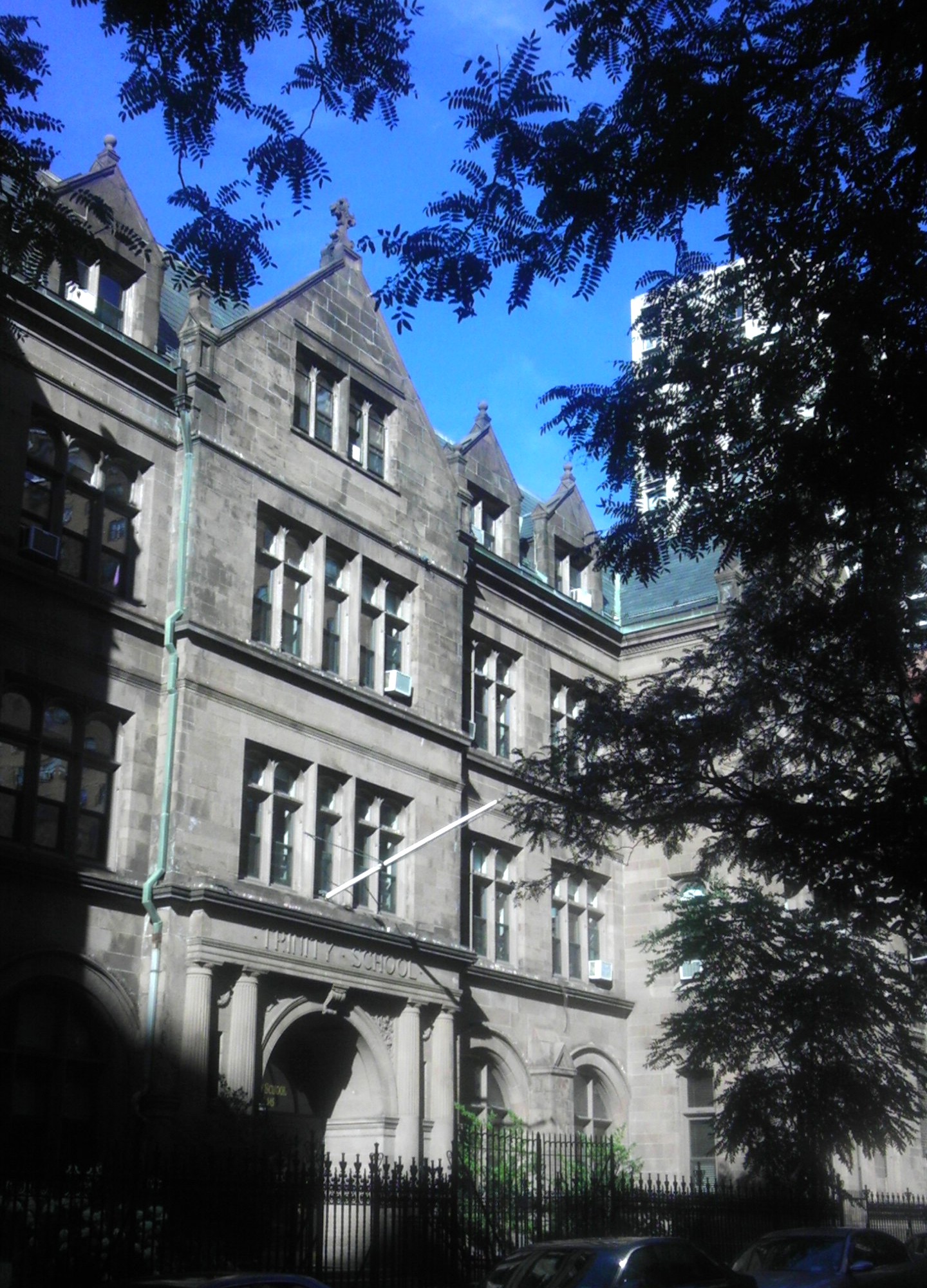
What is Trinity School and why is it NYC’s top coed day school?
Trinity School is a college-preparatory coeducational independent K-12 day school located on the Upper West Side of Manhattan. Founded in 1709, Trinity is one of the oldest continuously operating schools in the United States. The school enrolls approximately 1,001 students with a 6:1 student-teacher ratio and is consistently ranked Niche’s #1 K-12 day school in NYC and among the top private K-12 schools nationally. Trinity’s Lower School covers Kindergarten through Grade 4; the Middle and Upper Schools serve Grades 5-12.
| Trinity School at a Glance | Detail |
|---|---|
| Type | Coed K-12 Episcopal-affiliated independent day school |
| Founded | 1709 (one of oldest US schools) |
| Location | Manhattan, Upper West Side |
| Enrollment | ~1,001 students |
| Student-faculty ratio | 6:1 |
| Acceptance rate (estimate) | ~12-15% at Kindergarten and Grade 9 entry points |
| Primary entry points | Kindergarten and Grade 9 |
| Tuition (2025-2026) | ~$58,495 (highest grade) |
| Financial aid | 20% of students receive aid (avg grant ~$53,227, 2023-2024) |
| Affiliations | NY Interschool, Ivy Preparatory School League, Episcopal Church |
| Recognition | Niche #1 K-12 day school in NYC |
Trinity’s defining characteristics are its traditional liberal arts curriculum, the centrality of discussion-based classroom pedagogy, and the broad academic offerings supported by a large faculty. The school maintains affiliation with the Episcopal Church and incorporates a Chapel program, though it serves families of all religious and non-religious backgrounds. Trinity is a member of both the New York Interschool and the Ivy Preparatory School League.
What is Trinity School’s acceptance rate?
Trinity does not publish an official acceptance rate. Based on consultations with admissions advisors and patterns observed at peer schools of similar size, Trinity’s acceptance rate at Kindergarten and Grade 9 entry points is generally estimated at approximately 12-15%. Trinity’s Kindergarten cohort is the largest entry point, with most students entering Trinity at this grade. Grade 9 admits a smaller incoming class through attrition and intentional expansion of the high school cohort.
Non-entry grades (Grades 1-4, 5-7 outside of Middle School entry, 10-11) admit only when current students leave the school, which is uncommon. Trinity advises that “since most children come to Trinity in Kindergarten and Grade 9, spaces for Grades 5-7, 10, and 11 are available only through attrition” (Trinity School Office of Admission).
How does Trinity’s admissions process work?
Trinity uses the Finalsite Admissions Portal for all applications. The application opens in early September and closes in early January, following the ISAAGNY coordinated calendar. A complete Trinity application includes the online application form, parent/guardian statement, student essay (Grade 5 and up), teacher recommendations (current English and Math teachers plus counselor or principal for Grade 9; current teacher for Grades 5-7), transcripts for the current year and the previous two years, ISEE or SSAT scores (Grade 5 and up), and the required in-person interview and tour. Financial aid applicants additionally complete the Clarity Financial Aid application by January 9.
Trinity offers an in-person interview and tour to all applicants. Limited remote interview options are available; in-person is preferred. The interview is conversational rather than test-like, evaluating intellectual curiosity, self-awareness, and engagement with ideas. Trinity’s Open House events (held in the fall) precede the application cycle and are an important touchpoint for Grade 9 applicants.
What does Trinity cost in 2025-26 and what financial aid is available?
Trinity’s tuition for the 2025-2026 academic year is approximately $58,495 for the highest grade offered (Niche-reported figure). Trinity’s tuition is largely all-inclusive: families do not pay additional fees for textbooks, lunch, technology, or most extracurricular activities. Parents’ Association dues and a small registration fee apply.
Trinity’s financial aid program supports approximately 20% of the student body. In 2023-2024, the average financial aid grant was $53,227 (Test Innovators citing Trinity admissions data). Aid is determined through the Clarity Financial Aid application. The financial aid application deadline is January 9 for the upcoming academic year. Trinity does not offer merit-based aid; all assistance is need-based. Trinity’s endowment funds support the financial aid program along with general operations.
What ISEE or SSAT scores does Trinity expect?
Trinity accepts both the ISEE and SSAT for Grade 5-12 applicants. The school code for the ISEE is 334090; the school code for the SSAT is 7769. Trinity does not publish a required cutoff score, but competitive applicants typically present ISEE stanines in the 7-9 range across the four sections (Verbal, Quantitative, Reading, Math) or SSAT percentile scores at the 90th percentile or above. Strong scores do not guarantee admission; weak scores are rarely decisive on their own when other application elements are exceptional.
For Kindergarten applicants, Trinity does not require outside testing. For Grade 1 applicants, no outside testing is required. For Grade 2-4 applicants, Trinity asks for ERB Primary testing (a developmentally appropriate assessment scheduled through the Educational Records Bureau).
How does Trinity compare to Dalton, Collegiate, and Horace Mann?
Trinity, Dalton, Collegiate, and Horace Mann are the four most prestigious coed (Trinity, Dalton, Horace Mann) and all-boys (Collegiate) K-12 day schools in NYC. Trinity is the most traditional in pedagogical structure, emphasizing humanities, classics, and small discussion-based classes. Dalton operates under the progressive Dalton Plan with greater individual student autonomy. Collegiate (all-boys, smaller at 670 students) offers a tight-knit environment with strong tradition. Horace Mann (in Riverdale, with 1,800 students) offers the broadest curricular menu including over 180 courses and 20+ AP options.
All four schools produce comparable elite college matriculation outcomes. The right choice depends on culture, size, and specific child fit. Trinity’s reputation among admissions consultants emphasizes traditional academic rigor and the strength of teacher-student relationships in small classes. Families should attend each school’s Open House before applying.
What college outcomes do Trinity graduates achieve?
Trinity School produces among the strongest college matriculation outcomes of any coed K-12 day school in the United States. The school regularly sends graduates to Harvard, Yale, Princeton, Columbia, Penn, Brown, Cornell, Stanford, MIT, Duke, and the University of Chicago. Trinity’s college counseling office is among the most experienced in NYC, supporting students through individualized college lists across reach, target, and likely categories. Approximately 100% of Trinity graduates enroll at four-year colleges.
Trinity’s reputation among elite university admissions offices is established; admissions officers know the school’s grading rigor and curriculum depth. This reputation does not translate into automatic admission. Ivy League acceptance rates have reached historic lows, and even Trinity graduates face rejection at the most selective programs. Trinity families benefit from strong school-based college counseling and the school’s established relationships, but applicants must still build distinctive applications.
How should families maximize their Trinity School chances?
For Kindergarten applicants, the strongest determinants of admission are the child visit (which the admissions office may extend to a full day in a classroom), nursery school recommendation, parent statement, and sibling/legacy status. Strong nursery-school relationships matter; Trinity reviewers value substantive recommendations that speak to the child’s curiosity, peer interactions, and academic readiness. Attend Trinity’s Open House events held in the fall and submit applications early in the cycle to secure interview slots.
For Grade 5-12 applicants, the interview, student essay, and teacher recommendations dominate the file alongside strong ISEE or SSAT scores. Trinity’s admissions office explicitly notes that “we may be unable to accommodate requests made after the deadline, which may result in an incomplete application.” Schedule the interview promptly upon application receipt. Apply to peer schools (Dalton, Collegiate for boys, Horace Mann, Spence and Brearley for girls) as a parallel strategy; the ISAAGNY decision day in mid-March will concentrate the outcome.
Frequently Asked Questions About Trinity School Admissions
Trinity School sits in Manhattan’s Upper West Side, on West 91st Street between Columbus and Amsterdam Avenues. Founded in 1709, it ranks among the oldest schools in the United States and occupies an urban campus typical of the city’s independent schools. Its location places it near other prominent private schools and gives students ready access to New York City’s cultural resources.
Trinity is a coeducational school serving Kindergarten through 12th grade, organized into a Lower, Middle, and Upper School. The main entry points are Kindergarten and 9th grade, with smaller numbers admitted at other transition grades. Because many students enter early and continue through graduation, the largest number of openings is at Kindergarten, and admission to upper grades is more competitive given how few seats become available.
Yes; Trinity is fully coeducational, enrolling boys and girls together from Kindergarten through 12th grade. This distinguishes it from several historic NYC independent schools that are single-sex, and it competes directly with other top coed schools such as Dalton and Horace Mann. The coed structure is part of its identity as a comprehensive, academically rigorous school serving a balanced student body across all grade levels.
The two primary entry points are Kindergarten, which has the most available seats, and 9th grade, the start of the Upper School. Some students also enter at other transition grades, but openings outside the main entry points are limited. Families should target Trinity’s principal entry grades, since applying for a year with few or no openings significantly reduces the chances of admission to such a selective school.
Trinity is known as one of New York City’s most academically rigorous coeducational day schools, with a long history dating to 1709, strong college placement, and excellence across academics, arts, and athletics. It is recognized for its demanding curriculum and intellectual seriousness. Among NYC independent schools it stands out for combining a centuries-old tradition with a comprehensive, high-achieving program that consistently sends graduates to highly selective colleges.
Yes; Trinity provides need-based financial aid and is committed to socioeconomic access, awarding assistance to qualifying families based on demonstrated financial need through a separate aid application submitted during admissions. The school does not offer merit scholarships; aid is determined entirely by financial circumstances. Because aid decisions accompany admission, families seeking support should apply for it alongside the admission application rather than waiting until after a decision.
No; while Trinity sends many graduates to highly selective colleges, attendance guarantees nothing, and Ivy admission has grown intensely competitive even for its students. Trinity helps through rigorous academics, experienced college counseling, and a strong record, but each student must still excel and present a compelling individual application. Treating any top private school as an automatic path to the Ivy League is a costly misconception.
Like many independent schools, Trinity considers sibling and legacy connections as one factor among many, since enrolling families and alumni ties matter to school community, but such connections are not decisive and do not guarantee admission. A strong applicant profile and good fit remain essential. Families with a sibling or alumni relationship should still prepare a competitive application, since preference is modest and never a substitute for genuine qualifications.
Sources: Trinity School official site, New York State Association of Independent Schools (NYSAIS), National Association of Independent Schools (NAIS), NCES Private School Universe Survey, Parents League of New York, ERB (Educational Records Bureau), and independent NYC private school admissions analyses.
About Oriel Admissions
Oriel Admissions is a Princeton-based college admissions consulting firm advising families nationwide on elite university admissions strategy. Our team brings deep expertise across every dimension of the application, and our distinctive 360 approach develops strategy, positioning, activities, essays, and interviews as one coherent whole. To discuss your family’s admissions strategy including NYC private school admissions, schedule a consultation.