Princeton Area Private Schools and College Admissions: What Families at Lawrenceville, Peddie, Princeton Day School, Hun, and Pennington Need to Know
By Rona Aydin
What are the five elite Princeton-area private schools?
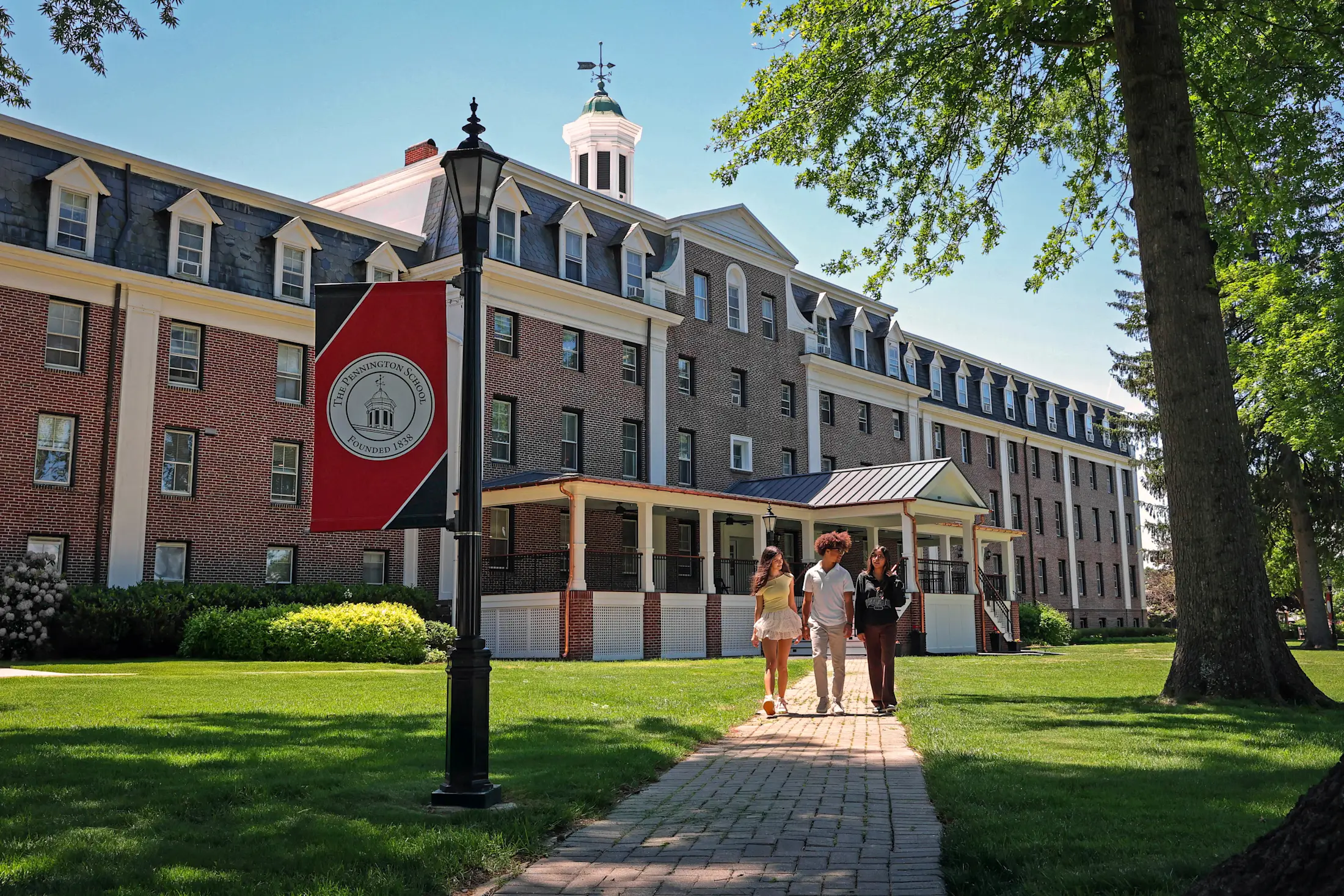
The five most selective independent schools in the Princeton area, ranked by historical Ivy matriculation density, are The Lawrenceville School (Lawrence Township, ~802 students, boarding+day), The Peddie School (Hightstown, ~539 students, boarding+day), Princeton Day School (Princeton, ~989 students, day only), The Hun School of Princeton (Princeton, ~640 students, day+boarding), and The Pennington School (Pennington, ~549 students, day+boarding). All five send graduates to top-30 universities annually, but the placement densities, college counseling models, and admissions dynamics differ meaningfully.
| School | Enrollment | Type | 2026-27 Tuition (Day/Boarding) | Acceptance Rate |
|---|---|---|---|---|
| Lawrenceville | 802 | Boarding+Day | $68,060 / $82,710 | ~18-19% |
| Peddie | 539 | Boarding+Day | $58,000 / $76,000 | ~25% |
| Princeton Day School | 989 | Day only | $48,000 | ~30% |
| Hun School | 640 | Day+Boarding | $50,000 / $76,000 | ~35% |
| Pennington | 549 | Day+Boarding | $48,000 / $74,000 | ~40% |
What does each school’s college matriculation actually look like?
Lawrenceville‘s published matriculation pattern (institutions where 5+ Lawrentians have matriculated in the last 5 years) shows roughly 15% of each graduating class to HYPSM, 19% to top-25 universities, and 22% to top-50. Peddie‘s matriculation tends to favor highly selective liberal arts colleges (Williams, Amherst, Bowdoin) alongside Ivies. Princeton Day School‘s matriculation list shows steady placement at Princeton, Yale, Penn, and the broader top-30 set, with stronger representation at Brown and Columbia. Hun School and Pennington send students primarily to top-50 and competitive flagship state universities, with smaller but real Ivy and top-20 representation each year.
What these numbers do not show is the within-school competitive density. At Lawrenceville, ~30-50 students per graduating class apply to HYPS or Stanford each year, and the school’s college office actively manages how many ED applications go to each Ivy. The same Ivy will not take 8 Lawrenceville students even when 8 are qualified, which means the question for each family is not “is my child qualified?” but “where does my child rank within the Lawrenceville pool applying to this specific school?”
For the verified national comparison across every elite boarding and day school, including tiered HYPSM data for all five Princeton-area schools, see our guide to the best feeder schools to the Ivy League.
How do these schools’ college counseling models differ?
Lawrenceville and Peddie operate full-service in-house college counseling that begins formally in junior year (with informal advising as early as sophomore year). Counselors at these schools have decades of relationships with admissions officers at top universities and can advocate directly for individual students – this is the principal value of the boarding-school college counseling model. Princeton Day School operates a similar model with strong Princeton-area network density. Hun and Pennington offer in-house counseling but with less institutional admissions-office relationship depth than the elite boarding schools.
For affluent families, the strategic question is whether in-house counseling alone is sufficient – or whether an outside consultant who advocates solely for one student adds value beyond what the school can provide. The honest answer: at Lawrenceville and Peddie, in-house counseling is excellent but the counselor manages 30-50 students simultaneously and must balance institutional priorities (e.g., not over-allocating Ivy ED slots to one student’s first choice when other students need that runway). An outside consultant has only one client. For more on this trade-off, see our guide to choosing a college counselor in New Jersey.
How does the Lawrenceville advantage actually work in admissions?
Lawrenceville’s College Counseling Office maintains direct relationships with Princeton (15 minutes away), Penn, Yale, Brown, Cornell, Columbia, and Stanford regional reps. Admissions officers visit campus annually for in-person student meetings during fall recruiting season. The college office formally allocates ED applications across the Ivy League to maximize the school’s overall placement results, which means students typically discuss ED choices with their counselor by mid-summer before senior year and may be advised toward a specific Ivy that better aligns with the school’s portfolio strategy.
This portfolio approach has consequences. A Lawrenceville student determined to ED to Princeton may be discouraged if 4-5 stronger Lawrenceville applicants are also targeting Princeton ED. The strongest Lawrenceville candidates use this dynamic as additional information rather than constraint – working with their counselor to identify the Ivy where their specific profile has the highest committee-level support. Outside consultants help families navigate this conversation with the in-house office.
How is Peddie different from Lawrenceville for college admissions?
Peddie’s smaller class size (~140 graduates per year vs. Lawrenceville’s ~211) means less internal competition for Ivy ED slots, but also fewer historical relationships with each Ivy admissions office. Peddie graduates have particular strength in highly selective liberal arts colleges (Williams, Amherst, Bowdoin, Pomona) and in Brown, Penn, Cornell, and Princeton placements. The school’s smaller scale allows more individual counselor attention but means the Lawrenceville-style portfolio management is less formalized.
For families weighing Lawrenceville vs. Peddie purely for college admissions: Lawrenceville offers higher absolute Ivy placement numbers and stronger portfolio management; Peddie offers comparable individual outcomes for top-quartile students with potentially less internal competition. The fit decision should be made on educational and residential grounds, not strictly on college outcome statistics.
Is Princeton Day School at a disadvantage as a day school compared to the boarding schools?
No. PDS is the largest of the five (~989 students) and as a Princeton-based day school benefits from physical proximity to Princeton University faculty, programs, and admissions office. PDS graduates matriculate to Princeton, Yale, Penn, Brown, Columbia, MIT, Cornell, and Stanford each year. The college counseling office is well-staffed and maintains active relationships with admissions offices in the Princeton ecosystem. The principal trade-off is that day-school students have less of the immersive academic intensity of boarding life, which some admissions readers interpret (rightly or wrongly) as a less rigorous environment.
For Princeton-area families specifically, PDS often offers the strongest day-school option for top-30 university preparation while preserving family residential continuity. The strongest PDS applicants supplement school counseling with substantive engagement with Princeton University programs, which is uniquely accessible from PDS due to geographic proximity.
How do Hun School and Pennington compare for selective admissions?
Hun School and Pennington occupy the next tier of Princeton-area private schools – both excellent academic environments with established college counseling, both placing students at top-50 universities and selective liberal arts colleges, but both with thinner historical Ivy and top-20 placement records than Lawrenceville, Peddie, or PDS. Hun’s location adjacent to Princeton University creates real proximity advantages similar to PDS. Pennington’s Cervone Center for Learning provides structured academic support that helps students maximize their academic profiles, particularly useful for students with learning differences.
For families considering Hun or Pennington with elite college admissions in mind, the strategic implication is that the school provides excellent baseline preparation but the heavy lift of building distinctive depth and identifying competitive Ivy fit falls more on the family. Outside admissions consulting tends to add the most marginal value in this tier. For school-specific Hun guidance, see our Hun School admissions guide.
When does college counseling start at each school?
Formal college counseling typically begins in winter or spring of junior year at all five schools, with informal advising and course-planning conversations starting earlier. Lawrenceville and Peddie students typically meet their college counselor in late sophomore year (April or May) for an introductory conversation, with formal junior-year programming including school list development, essay planning, and ED strategy beginning in the fall of junior year through the summer.
For families considering whether to engage outside admissions consulting alongside the school office, the natural starting point is sophomore year – early enough to influence junior-year course selection, summer planning, and spike development. Engaging an outside consultant in senior fall is generally too late to reshape the application strategy materially. For year-by-year planning, see our summer planning guide for rising juniors.
What should freshman and sophomore families be doing right now?
For freshman and sophomore families at any of the five schools, the priorities are: (1) Lock in the most rigorous available academic track – Honors-level coursework freshman year, AP and post-AP coursework starting sophomore year where possible. (2) Identify 2-3 substantive activity commitments that can run for all four years, with at least one offering a clear potential for leadership or measurable output. (3) Begin the academic spike conversation early – what is the student genuinely interested in, and what could they build over four years that does not exist as a school-sanctioned activity? (4) Engage with Princeton University programs (lectures, summer courses, research) given the geographic proximity all five schools share.
The strongest applications we see from these schools are not built in junior year – they are built across all four years, with the senior application simply documenting what was already accomplished. For the universal year-by-year framework that applies across NJ private and public schools, see our NJ elite high school admissions strategy.
What are the most expensive mistakes Princeton-area private school families make?
Five mistakes appear repeatedly. First, assuming the school’s college counseling alone is sufficient at the most competitive end of the admissions process – it is excellent but inherently has institutional priorities that may not align with a single family’s priority. Second, deferring ED decisions until the school counselor’s recommended timeline (often August before senior year) when serious strategic conversations should have happened in junior spring. Third, manufactured spikes: starting a research project or nonprofit in summer before senior year that has no organic connection to the student’s interests. Fourth, treating the school’s brand as the differentiator rather than the student’s specific profile – admissions officers know Lawrenceville produces strong students; the question is what makes this specific Lawrenceville student distinctive. Fifth, overlooking the financial aid runway – even families paying full tuition should run the Net Price Calculator at every Ivy before committing to a binding ED decision.
For families ready to think through the ED decision specifically, see our Early Decision strategy guide. For broader analysis of why high-stat applicants get rejected, see why valedictorians get rejected from Ivies.
What test scores and GPA should students at these schools target?
Within the elite Princeton-area private school cohort, the competitive academic floor is higher than at typical NJ public schools. Successful Ivy applicants typically present a 3.85+ unweighted GPA on the school’s grade scale (recognizing that grade scales differ – a 3.7 at Lawrenceville may translate stronger than a 3.9 at a less rigorous school), with 1530+ SAT or 34+ ACT. The strongest applicants run 3.95+ unweighted with 1560+ SAT. AP scores of 5 in 6-10 subjects substantially strengthen the application, particularly when concentrated in the academic area aligned with the student’s intended concentration.
| Profile Metric | Competitive Floor | Strong Ivy Likely |
|---|---|---|
| Unweighted GPA | 3.85 | 3.95+ |
| SAT Composite | 1530 | 1560-1590 |
| ACT Composite | 34 | 35-36 |
| AP Scores of 5 | 4-5 | 6-10 |
| Academic Spike | Optional | Required for HYPS |
Frequently Asked Questions About Princeton-Area Private School Admissions
No; while strong private and boarding schools send many graduates to highly selective colleges through rigorous academics and dedicated counseling, none guarantees admission, and top-college admission has grown intensely competitive even for their students. These schools help by preparing students and supporting applications, but each student must still excel and stand out. Treating any prestigious school as an automatic path to the Ivy League is a costly misconception.
Yes; admissions officers at selective colleges are familiar with established private and boarding schools and understand they are academically demanding, using each school’s profile to interpret grades and course rigor in context. This recognition means strong performance is valued, but it also raises expectations. A student at a known feeder school is read against that school’s high standard, so the school’s reputation supports rather than substitutes for individual achievement.
Neither is inherently better; colleges evaluate applicants on their record, rigor, and fit rather than on whether they boarded or commuted. Boarding schools offer immersive residential life and often extensive counseling, while strong day schools provide rigorous academics with students living at home. What matters is how well a school prepares a student and how that student performs, not the residential model itself, so families should choose based on fit.
Yes; most established private and boarding schools provide need-based financial aid and award assistance to qualifying families through a separate aid application during admissions. Many are committed to access and offer substantial support, though tuition remains high. They generally do not offer merit scholarships in the way colleges do; aid is tied to demonstrated need. Families seeking support should apply for aid alongside the admission application rather than after a decision.
It depends, but colleges read each applicant in the context of their school, so excelling anywhere is valued. A standout student at a modest school who pursued the most rigorous options available can be very compelling, while a middling record at an elite school may not impress despite the name. Genuine rigor, strong performance, and distinctiveness matter more than the prestige of the institution attended.
With attention to context and to standing within a strong cohort; admissions officers use the school profile to understand the rigor and resources available, then look for students who distinguished themselves among capable peers. Coming from a feeder school does not guarantee an edge, since many strong applicants apply from the same place. Officers value those who pursued depth and excelled, rather than relying on the school’s reputation alone.
To some degree, yes; selective colleges rarely admit large numbers from any one high school in a single year, so students at a feeder school can effectively compete with classmates for limited spots at the same institutions. This makes differentiation important. Pursuing distinct interests, rigor, and authentic strengths helps a student stand apart from peers applying to the same colleges, rather than blending into a similar applicant profile.
Through genuine engagement: attending information sessions and college fairs, connecting with regional admissions representatives, taking optional interviews, and writing specific, well-researched ‘why us’ essays. Campus visits help where feasible but are not required, and colleges that track interest understand scheduling constraints. Authentic, informed engagement signals seriousness, which can matter at schools that consider demonstrated interest, regardless of how strong the applicant’s high school may be.
About Oriel Admissions
Oriel Admissions is a Princeton-based college admissions consulting firm advising families nationwide on elite university admissions strategy. Our team includes former admissions officers from Harvard, Princeton, and Columbia. To discuss your family’s admissions strategy, schedule a consultation.