The Hun School of Princeton: A Comprehensive Admissions Guide for Families in Mercer County and Beyond
By Rona Aydin
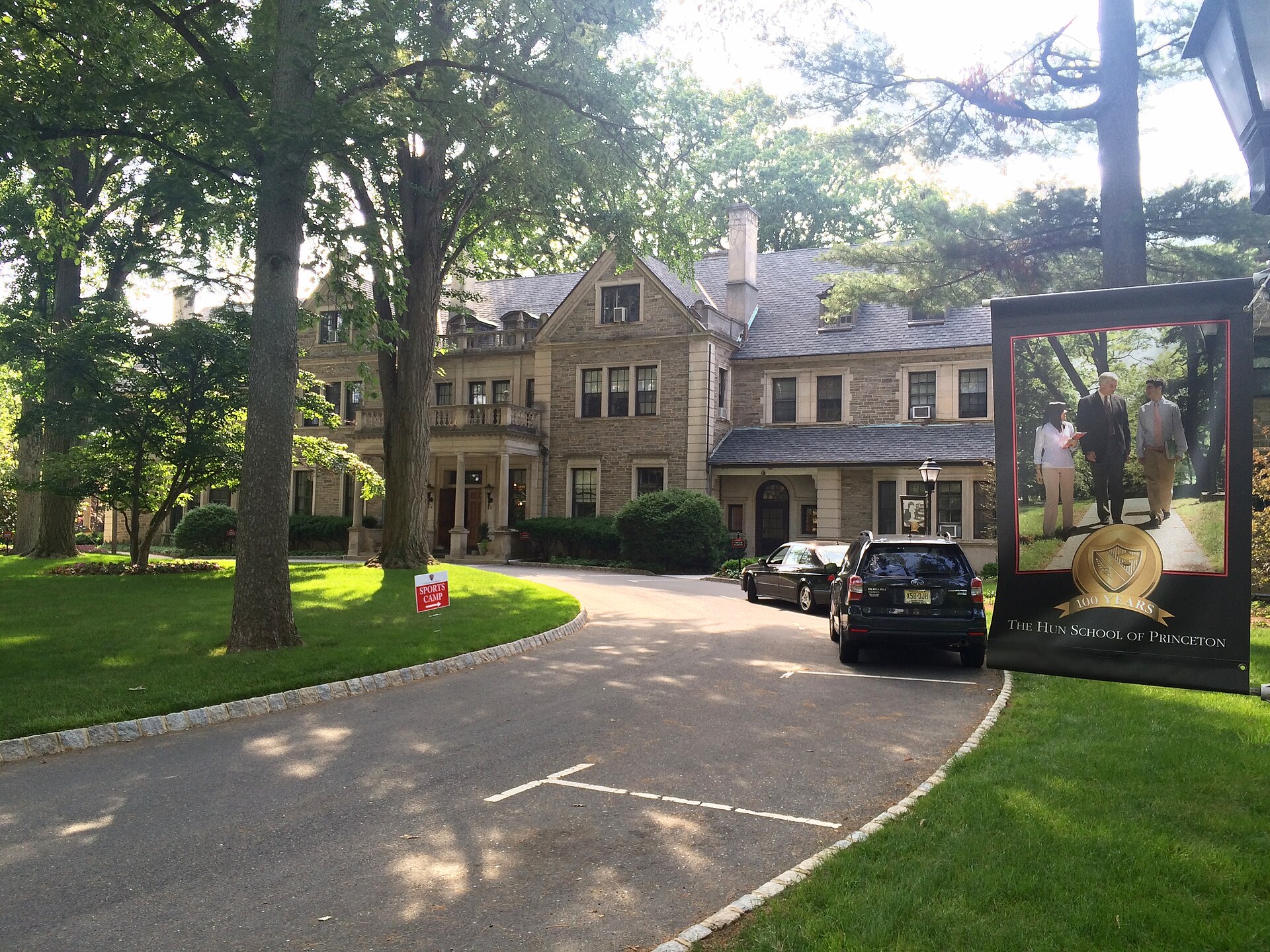
What does The Hun School of Princeton offer that distinguishes it from other NJ private schools?
| Feature | The Hun School of Princeton (2025-26) |
|---|---|
| Location | 176 Edgerstoune Road, Princeton, NJ (45-acre campus, 1.5 miles from downtown Princeton) |
| Founded | 1914 |
| Grades | 6-12 plus Postgraduate Program (PG year) |
| Enrollment | ~630-665 students total |
| Type | Coeducational, day and boarding |
| 2025-26 Tuition | Day ~$53,200; Boarding ~$77,200; International program ~$83,200 |
| Student-Teacher Ratio | 5:1 to 6:1 |
| Average Class Size | 11 |
| Acceptance Rate | Approximately 35% |
| Geographic Diversity | 22-26 countries, 15-23 states |
| Average SAT / ACT | 1360 SAT / 30 ACT |
| Graduation Rate | 100% |
| Top Matriculation | ~5% HYPSM, ~7.5% top-25 universities, ~16% top-50 universities |
| Head of School | Bart Bronk (since July 2023, 11th in school history) |
| Application Deadline | January 15 via Standard Application Online (SAO) |
| Memberships | NAIS, NJAIS, TABS, Middle States Association |
Hun’s strategic position in the NJ private school landscape sits between the most selective national boarding schools (Lawrenceville at $51,440 base, Peddie in Hightstown) and the strong NJ day schools (Pingry, Newark Academy, Dwight-Englewood, Morristown-Beard). The school offers boarding option and Princeton location with intimate scale and balanced curriculum. For broader Princeton-area private school analysis, see our Princeton private school guide. For NJ private school context overall, see our NJ private school playbook.
How does Hun School matriculation actually compare to elite NJ private peers?
Hun School’s reported matriculation outcomes (approximately 5% HYPSM, 7.5% top-25 universities, 16% top-50 universities) place the school in the second tier of NJ private schools by Ivy+ matriculation rate, below Lawrenceville and Peddie but comparable to Pingry, Newark Academy, and Dwight-Englewood. For a graduating class of approximately 110-130 students, this translates to roughly 5-7 HYPSM admits, 8-10 additional top-25 admits, and 18-21 top-50 admits per year, with the remainder matriculating across the broader top-100 university and liberal arts college landscape.
The strategic context for Hun matriculation: the school’s 35% acceptance rate is significantly less selective than Lawrenceville (under 10%) or Peddie. The Hun applicant pool combines top-decile applicants who pursue Hun for the Princeton location and intimate scale alongside applicants whose academic profile is less competitive than Lawrenceville’s typical admit. The implication for admissions readers is that Hun is recognized as a substantively rigorous independent school but does not carry the rarefied institutional name weight at top-30 admissions offices that Lawrenceville produces.
What is the Hun School academic experience that drives college outcomes?
The Hun School operates a balanced college-preparatory curriculum across English, mathematics, sciences, history and social sciences, world languages, and visual and performing arts. The school does not offer the International Baccalaureate (IB) Diploma Programme; the curriculum centers on AP and Honors courses with a substantive senior-year capstone experience. The 5:1 to 6:1 student-teacher ratio and 11-student average class size produce intimate classroom environments comparable to the strongest national independent schools.
The Postgraduate (PG) program is a distinctive Hun feature – a one-year program for students who have completed high school but seek an additional year for academic acceleration, athletic recruitment, or personal development before entering college. The PG program is particularly competitive in athletics-track applications, with strong matriculation at top-50 universities for academically and athletically aligned students. For families considering the PG year specifically, the strategic question is whether the additional year produces meaningfully better college outcomes than direct application; for most students, this depends on individual academic and athletic profile.
How does Hun’s Princeton location actually affect college admissions?
One of the most counterintuitive admissions dynamics for Hun families is that the school’s Princeton location does not meaningfully improve Princeton University admissions odds. Princeton admits approximately 4-5% of applicants annually, and the local admissions weight Princeton applies to the immediate corridor is similar to the weight applied to other Mid-Atlantic regions. Hun’s matriculation list reflects this: approximately 5% of Hun graduates matriculate to HYPSM combined, not to Princeton specifically.
What does help meaningfully: the institutional admissions-office relationships that Hun has built over decades through consistent placement of academically capable applicants. Mid-Atlantic admissions officers at Princeton, Penn, Yale, Cornell, Columbia, and other top-30 universities know Hun, recognize its curriculum, and read Hun applications with substantial implicit context – a pattern of school-specific institutional recognition documented annually in the National Association for College Admission Counseling State of College Admission report. The relationship matters at the margin (converting borderline qualified applicants into likely admits) but does not lower the academic floor required for serious consideration. For deeper Princeton-specific guidance, see our Princeton HTGI guide.
How does Hun’s college counseling office actually work?
The Hun School maintains a sophisticated college counseling office for its small graduating class size. Each Hun college counselor manages roughly 30-40 senior families with active engagement starting in 11th grade. The counselors know the Mid-Atlantic admissions officers personally and bring institutional credibility that significantly accelerates the application process compared to most NJ public school counseling offices. The trade-off is that the counseling office allocates institutional credibility strategically across the senior class – not every strong applicant receives equal advocacy from the office.
The strategic implication for Hun families: the school college counselor is essential but not always sufficient for top-30 outcomes. Strong Hun families often supplement the school counselor with outside admissions consulting starting sophomore year, particularly for students whose profile is competitive but not the school’s automatic pick for institutional advocacy. The outside consultant complements rather than replaces the school office, focusing on spike development, application strategy, and essay craft.
What is The Hun School admissions process like?
Hun admissions are managed through the Standard Application Online (SAO), a common application supported by The Enrollment Management Association. The application requires academic transcripts (at least two full school years plus current-year grades), teacher and counselor recommendations, an application essay, and an interview (often optional but highly recommended). The application fee is $50 for domestic applicants and $250 for international applicants. The application deadline is January 15 for fall entry.
The acceptance rate is approximately 35%, with a yield rate that brings the actual entering class size to approximately 110-130 students per grade. Strong candidates demonstrate sustained academic performance, strong recommendations, distinctive interests outside the classroom, and clear motivation for boarding (for boarding applicants) or commitment to the Princeton-area day community (for day applicants). For families considering Hun specifically as part of a private school search, the interview is the most important differentiator after academic record – Hun’s intimate culture rewards genuine fit assessment.
What test scores should Hun School applicants target for college?
| School Tier Target | Competitive Floor | Strong Likely Admit |
|---|---|---|
| HYPSM (Princeton, Yale, Harvard, Stanford, MIT) | 1530 SAT / 34 ACT / 3.95 GPA | 1560+ / 35-36 / 4.00 + spike |
| Other Ivies + Top 15 (Penn, Cornell, Duke, JHU, Columbia) | 1500 SAT / 33 ACT / 3.90 GPA | 1530+ / 34-35 / 3.95+ |
| Top 16-30 (NYU, Vanderbilt, WashU, Emory, Michigan) | 1450 SAT / 32 ACT / 3.85 GPA | 1500+ / 33-34 / 3.90+ |
| Top 31-50 (Boston University, Tulane, Northeastern, GWU) | 1400 SAT / 31 ACT / 3.80 GPA | 1450+ / 32-33 / 3.85+ |
The Hun School graduating average SAT of 1360 places the school’s median applicant in the top-30 to top-50 university competitive range. Top-decile Hun students who reach 1500+ SAT compete credibly for top-15 universities, and 1530+ SAT students compete for HYPSM. For benchmarking, see our Ivy League Academic Index calculator.
What are the most common Hun School application mistakes?
Five mistakes recur. First, treating Princeton as an automatic safety because of geographic proximity – Princeton admits at low single-digit rates and Hun’s matriculation outcomes (approximately 5% to all of HYPSM combined) reflect this. Second, generic essays that recycle prose any Hun student could have written. Third, manufactured spikes invented in summer before senior year that admissions officers see through immediately. Fourth, score-chasing past the point of marginal return. Fifth, deferring outside admissions consulting until junior year when meaningful spike development requires sophomore-year start.
For deeper analysis of why high-stat applicants get rejected, see why valedictorians get rejected from Ivies. For ED decision frameworks, see our Early Decision strategy guide. For school-specific guidance, see our HTGI cluster: Princeton, Yale, Cornell, Penn, Columbia, and Johns Hopkins.
Frequently Asked Questions About The Hun School of Princeton Admissions
The Hun School is in Princeton, New Jersey, on a wooded campus of more than 40 acres in the central part of the state, near Princeton University. Founded in 1914, it sits within a town known for its academic environment, roughly equidistant from New York City and Philadelphia. The suburban Princeton setting gives students a green, self-contained campus with easy access to the cultural and educational resources of the surrounding area.
Hun is a coeducational school serving grades 6 through 12, plus a postgraduate (PG) year. It enrolls both boarding and day students, with boarding generally available in the upper grades and day students drawn from the surrounding region. As a coed school, it educates boys and girls together across its middle and upper school divisions, distinguishing it from single-sex independent schools.
Both; Hun is a boarding and day school, enrolling day students from the surrounding area alongside boarders who live on campus, typically in the upper grades. This hybrid model lets local families choose day enrollment while offering a residential experience to those who want it or come from farther away. The mix of boarding and day students shapes a community that blends a residential feel with strong local roots.
Hun is known as a well-regarded independent college-preparatory school offering rigorous academics, including signature programs in areas like engineering and entrepreneurship, strong arts and athletics, and a notable postgraduate year. Founded in 1914, it emphasizes individualized attention and character development. Among New Jersey independent schools it stands out for combining a supportive, personalized environment with solid college preparation and a distinctive PG program for students seeking an extra year.
Yes; Hun provides need-based financial aid and is committed to access, awarding assistance to qualifying families based on demonstrated financial need through a separate aid application during admissions. Like most independent schools, it does not generally offer merit scholarships; aid is determined by financial circumstances. Because tuition, especially for boarding, is substantial, families seeking support should apply for aid alongside the admission application rather than waiting until after a decision.
No; while Hun sends graduates to a range of selective colleges through rigorous academics and dedicated college counseling, attendance guarantees nothing, and admission to top universities has grown intensely competitive even for its students. Hun helps by preparing students academically and supporting their applications, but each student must still excel and present a compelling case. Treating any private school as an automatic path to a top college is a costly misconception.
Hun, like many independent schools, has typically used the SSAT (Secondary School Admission Test) as its standardized testing component, though some schools accept the ISEE or have adopted test-flexible policies in recent years. Applicants also complete interviews, essays, and recommendations. Because testing requirements can change between cycles, families should confirm the current policy on Hun’s admissions site and prepare for whichever assessment is required for their application year.
Like many independent schools, Hun considers sibling and legacy connections as one factor among many, since enrolling families and alumni ties matter to the school community, but such connections are not decisive and do not guarantee admission. A strong applicant profile and good fit remain essential. Families with a sibling or alumni relationship should still prepare a competitive application, since any preference is modest and never a substitute for genuine qualifications.
About Oriel Admissions
Oriel Admissions is a Princeton-based college admissions consulting firm advising families nationwide on elite university admissions strategy. Our team includes former admissions officers from Harvard, Princeton, and Columbia. To discuss your family’s admissions strategy, schedule a consultation.