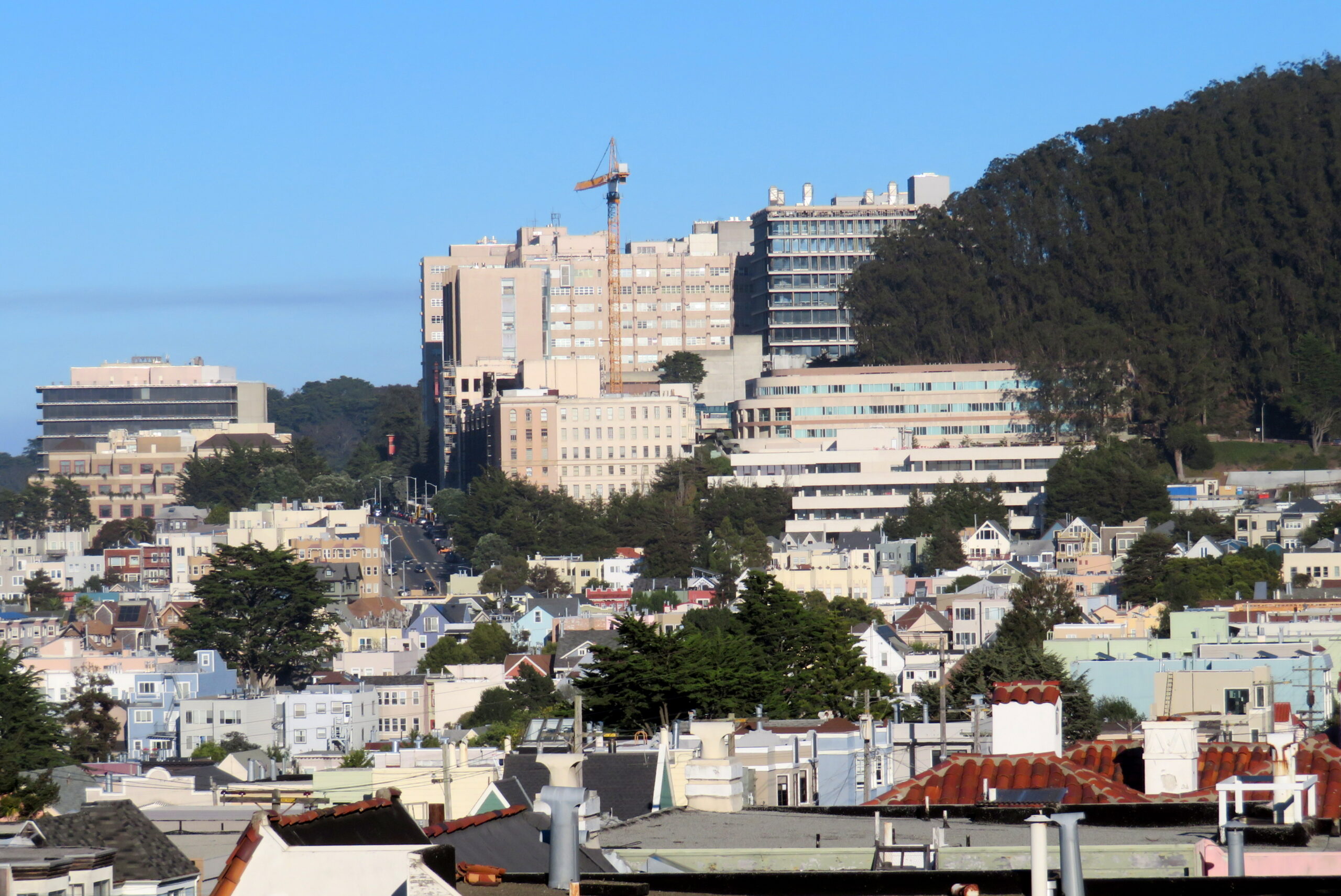
TL;DR: The UCSF medical school acceptance rate is 1.6% for fall 2025: 10,300 applications, 584 interviews, and 161 matriculants, per official UCSF admissions data. The 5.7% interview rate is the tightest first screen among elite medical schools – roughly half the rate at Harvard or NYU Grossman – and 71% of matriculants are California residents. Eligibility is limited to US citizens, permanent residents, and DACA recipients. To discuss your UCSF strategy, schedule a consultation with Oriel Admissions.
What Is the UCSF Medical School Acceptance Rate?
The UCSF medical school acceptance rate is 1.6% for fall 2025. UCSF is unusually transparent: its Medical Education office publishes the full funnel, showing 10,300 applications, 584 candidates interviewed, and 161 matriculants, with an average age of 23 at matriculation. The published 1.6% figure is a matriculant share, so the number of offers extended runs somewhat higher, but the scale of the pool – one of the largest applicant pools among the hyper selective programs – keeps UCSF among the hardest admits in American medicine.
| Stage | Candidates | Share of applicants |
|---|---|---|
| Applications | 10,300 | 100% |
| Interviewed | 584 | 5.7% |
| Matriculated | 161 | 1.6% |
Source: UCSF Medical Education, Admissions Data, fall 2025.
Why Is the UCSF Interview Rate So Low?
At 5.7%, the UCSF interview rate is roughly half the 10.0% rate at Harvard Medical School and the 9.9% rate at NYU Grossman. UCSF runs its selectivity at the paper screen rather than the interview stage: once invited, 161 of 584 interviewed candidates matriculate, a 27.6% interviewed to matriculant ratio that is far more generous than at most peers. The practical read for candidates is direct – at UCSF, the secondary application and the written file do most of the deciding, and an interview invitation is a genuinely strong signal.
Does UCSF Prefer California Residents?
Yes, meaningfully. 71% of fall 2025 matriculants are California residents, consistent with the public mission of the University of California. Out of state candidates are admitted every year, but the bar is steeper, and the strongest out of state files tend to show concrete alignment with the UCSF mission – health equity, care for underserved populations, and public health impact – rather than prestige seeking.
Who Is Eligible to Apply to UCSF?
Eligibility for the UCSF MD program is limited to US citizens, permanent residents, and DACA recipients – international candidates are not eligible, which distinguishes UCSF from private peers like Harvard and Weill Cornell. Applicants must hold a bachelor degree from a four year US or Canadian institution, and online undergraduate degrees are not accepted. UCSF has moved to competency based admissions rather than a rigid prerequisite checklist, expecting demonstrated competency across biology, chemistry, and related sciences. The school also runs PRIME-US, a dual degree track that pairs the MD with a master degree for candidates committed to serving urban underserved communities.
How Selective Is the UCSF MD-PhD Program?
The Medical Scientist Training Program publishes its own funnel: 840 AMCAS applications, 702 completed secondaries, 57 interviews, and 11 matriculants in the most recent reported cycle (UCSF MSTP statistics). That is a 1.3% matriculant ratio on a far smaller and self selected pool, which makes the MSTP one of the narrowest doors in the UC system.
How Do You Strengthen a UCSF Application?
Because UCSF screens hardest on paper, the written file is the contest. Reported matriculant MCAT averages sit near 517 – a notch below some private peers – which reflects mission driven, competency based review rather than a lower bar: the committee trades a few points of test score for demonstrated service depth. The files that clear the 5.7% screen tend to pair strong academics with sustained work in underserved settings, community impact with continuity, and, where genuine, a California narrative. Interviewed candidates should prepare for closed file conversations in which interviewers meet you without your scores or essays, so the story has to stand on its own.
For peer benchmarks, see the Harvard Medical School acceptance rate, the NYU medical school acceptance rate, and the Yale medical school acceptance rate. Earlier in the pipeline, start with the BS/MD versus traditional pre med comparison and the best colleges for pre med. For the full twelve school selectivity table, see our medical school acceptance rates overview.
Frequently Asked Questions About the UCSF Medical School Acceptance Rate
1.6 percent for fall 2025: 10,300 applications and 161 matriculants, per official UCSF Medical Education data.
5.7 percent – 584 of 10,300 – roughly half the interview rate at Harvard Medical School or NYU Grossman. UCSF runs its hardest screen on the written file.
Yes, but 71 percent of fall 2025 matriculants are California residents, and out of state candidates face a meaningfully steeper bar.
No. Eligibility is limited to US citizens, permanent residents, and DACA recipients.
Reported matriculant averages sit near 517. UCSF publishes no minimum and uses competency based, mission driven review.
Official MSTP statistics show 840 applications, 57 interviews, and 11 matriculants in the most recent reported cycle.
By interview rate, yes: 5.7 percent versus 10.0 percent. By matriculant ratio the two are close, at 1.6 percent and 2.3 percent respectively.
A dual degree track pairing the MD with a master degree for candidates committed to caring for urban underserved communities, with coursework focused on health equity.
Sources: UCSF Medical Education Admissions Data, UCSF MSTP Student Statistics, UCSF Office of Institutional Research Student Admissions, AAMC.
About Oriel Admissions
Oriel Admissions is a Princeton-based college admissions consulting firm advising families and candidates nationwide on elite university admissions strategy, from undergraduate through MBA and graduate programs. Our team pairs deep admissions expertise with a distinctive 360 approach spanning positioning, testing strategy, essays and application execution. To discuss your UCSF strategy, schedule a consultation.