USAAIO: How the USA AI Olympiad Works, Key Dates, and What It Means for College Admissions
By Rona Aydin
What Is USAAIO?
USAAIO stands for USA Artificial Intelligence Olympiad. The organization runs the USA-North America AI Olympiad, abbreviated USA-NA-AIO, for K-12 students in the United States and Canada, and it uses that competition to select the students who represent the United States at international AI olympiads. Its stated mandate also includes encouraging and educating K-12 students to develop knowledge of AI and to build skills in using and advancing it.
It is an individual competition, not a team one, and it is young. The organization’s own question and answer page calls it a relatively new competition, which matters for how a family should read its weight in an application. The format follows the older science olympiads: an open first round, a selective second round, and a training camp where the national team is chosen.
Who Can Compete in USAAIO?
Round 1 is open to everyone who meets three conditions. A contestant must be a US or Canadian citizen or permanent resident, or a full-time middle or high school student studying in the United States or Canada. The contestant must be under 20 years old by August 30 of the competition year. And the contestant cannot be a full-time university student during that year. A US or Canadian citizen who attends school abroad is eligible.
The later stages are narrower. Only US citizens, US permanent residents, and international students attending secondary schools in the United States are eligible for the camp and for Team USA, in line with the rules of the international olympiad.
What Are the Key Dates for the 2027 Cycle?
| Stage | Date | Detail |
|---|---|---|
| Registration | Closes January 31, 2027 at 11:59 p.m. EST | Contestants register themselves and arrange a proctor |
| Round 1 | Friday, February 19, 2027, 12:00 to 3:00 p.m. Eastern | Taken on site at the student’s school or an authorized test site such as a university, library, or testing center |
| Supplementary documents | By 11:59 p.m. Eastern on Saturday, February 20, 2027 | Links to the required recording of the contestant’s screen and face |
| Round 2 | March or April 2027 | For contestants who qualify through Round 1 |
| Camp | June 2027 | For contestants who qualify through Round 2; Team USA is selected here |
| International Olympiad in AI | July 4 to 10, 2027, Singapore | Fourth edition of the international competition |
The 2026 cycle shows what the later rounds look like. Round 2 was held at Harvard and MIT on April 4 to 6, 2026, and the camp ran at Harvard from June 8 to 12, 2026, with team selection tests on three of its days.
How Does USAAIO Round 1 Work?
Round 1 has two parts on the same afternoon, and every contestant takes it at the same time.
| Requirement | Part 1 | Part 2 |
|---|---|---|
| Content | Non-coding: multiple choice and fill in the blank | Coding tasks written and run in Google Colab |
| Required start window | 12:00 to 12:15 p.m. Eastern | 1:30 to 1:45 p.m. Eastern |
| Duration | 60 minutes | 75 minutes |
| System closes | 1:15 p.m. | 3:00 p.m. |
| Controls | App lockdown; leaving the contest app can lock the exam | Lockdown off so Colab can be used; monitoring software stays on |
| Hardware | Single monitor | Single monitor; all code must run on CPUs |
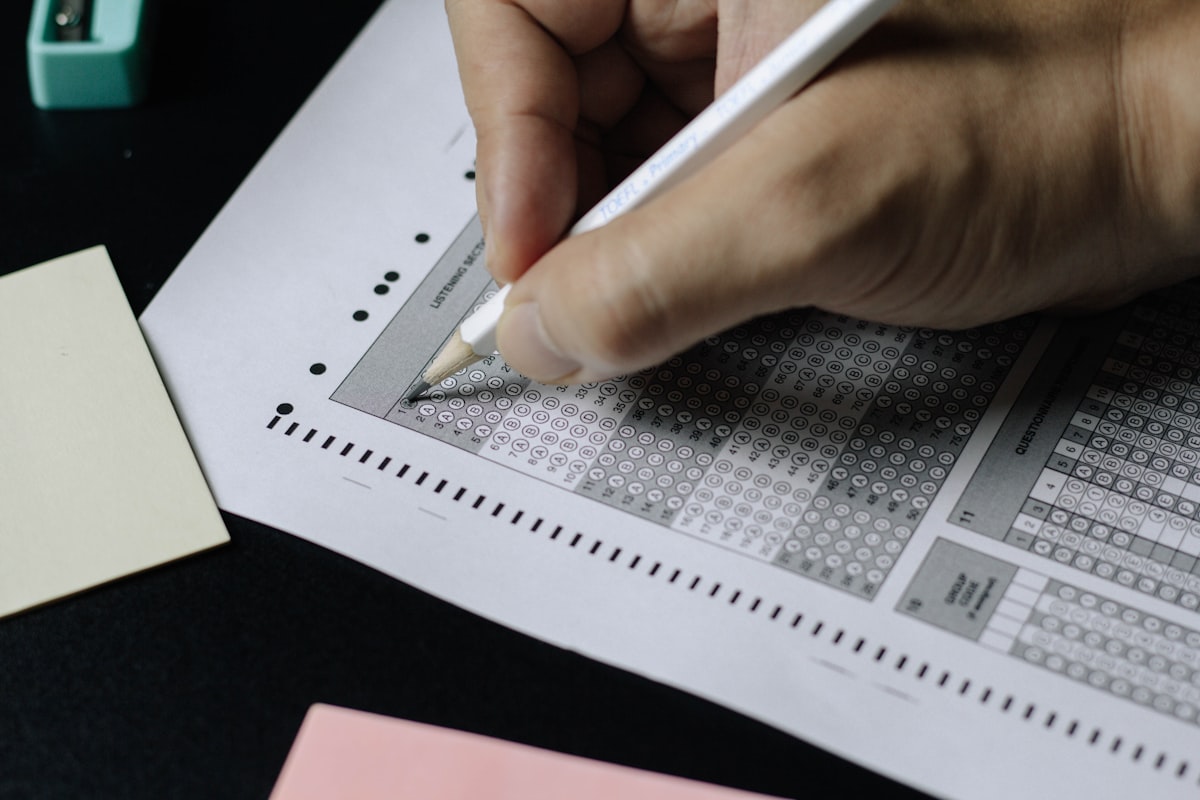
The rules on integrity are strict. Every round must be proctored on site, and an unproctored score will not be certified. Contestants install monitoring software and use OBS Studio to record the entire screen and their face for the whole exam, then submit the recording afterward. Phones, smartwatches, and earbuds are not allowed, and there are no restroom breaks during either part. A single cheating incident brings a permanent ban, and the organization states that it will disclose the disqualification to a college, summer program, or scholarship that asks about the student’s history.
What Topics Does the Olympiad Cover?
Round 1 covers seven areas from the published syllabus: Markdown in Google Colab, mathematical foundations for AI, basic coding, machine learning, advanced coding for deep learning in PyTorch, deep learning foundations, and the basics of convolutional neural networks. Round 2 covers the full syllabus, which adds transformers, natural language processing, and computer vision and generative AI, including diffusion models. Some Round 2 problems may require a GPU.
The mathematics is at the level of early university courses: linear algebra including eigenvalues and matrix decompositions, probability and statistics, derivatives in multivariable calculus, and convex optimization. The coding is in Python with NumPy, pandas, and scikit-learn, and deep learning problems must be written in PyTorch. The syllabus is explicit that both halves are needed. It describes the olympiad as neither a pure math olympiad nor a pure coding olympiad, and it gives the example that a contestant should be able to build principal component analysis from scratch in NumPy and also derive the eigenvalue problem behind it.
How Do Students Advance to Round 2, the Camp, and Team USA?
Round 1 results are recognized in three tiers: Distinguished Honor Roll, High Honor Roll, and Honor Roll. Contestants who qualify move to Round 2, which uses the same format and awards gold, silver, and bronze medals and honorable mentions, and names the students invited to the camp. Team USA is selected at the camp through a series of team selection tests.
The team then competes abroad. At the 2026 International Olympiad in AI, held in Astana, Kazakhstan from August 2 to 8, Team USA won two gold medals, three silver medals, and three bronze medals. The organization states that its competition is the only pathway for students to qualify for the team.
What Are the International AI Olympiads?
The International Olympiad in Artificial Intelligence, or IOAI, describes itself as the international science olympiad in AI for high school students. Its third edition took place in Astana in August 2026 under the patronage of UNESCO, and its fourth is scheduled for Singapore from July 4 to 10, 2027. A second competition, the International AI Olympiad or IAIO, holds its 2027 edition in Vietnam from February 25 to March 2, 2027, and the United States sends a team to that as well.
How Much Does USAAIO Matter for College Admissions?
Less than the older olympiads for now, in the assessment of Oriel Admissions. The competition does not yet have the name recognition of the mathematics, physics, or informatics olympiads, and a family should not treat a Round 1 honor roll as equivalent to a national result in one of those. What an admissions reader can interpret is selection. A Round 2 medal, an invitation to the camp, or a place on Team USA shows that a student was chosen from a national field on a difficult technical exam.
The organization is close to the universities that AI applicants care about. Its 2026 Round 2 schedule included an MIT Admissions information session, and its 2026 camp at Harvard included a Harvard Admissions information session. Those are sessions for contestants, not endorsements of the competition.
The result is most useful when it supports the rest of the file. Carnegie Mellon’s AI program tells applicants to describe their experience in AI in the personal essay, and a competition result is one form of evidence. A project or research in high school is another. Our guide to academic competitions for advanced students compares the main contests, and established ones such as the AMC 12 and the Regeneron Science Talent Search still carry more weight with most readers.
How Should a Student Prepare for USAAIO?
Work from the syllabus. A student who has finished precalculus can start on linear algebra and probability, then learn Python and the scientific libraries, then move to machine learning and PyTorch. The organization posts past problems and sample problems for both parts of Round 1, and the Round 1 rules list the software to install and test in advance. A student should make a trial recording before the exam, because the recording is part of the submission.
Timing matters this year. Registration for the 2027 cycle closes on January 31, 2027, and a proctor has to be arranged for February 19. Oriel Admissions estimates that a sophomore or junior who registers in the fall has about four months to prepare, and a freshman can treat this cycle as practice for the next. Students with a wider interest in computing can also look at the Congressional App Challenge, which rewards a finished product instead of an exam score.
Frequently Asked Questions
USAAIO is the USA Artificial Intelligence Olympiad. It runs the USA North America AI Olympiad for students from kindergarten through grade 12 in the United States and Canada and selects Team USA for the international AI olympiads.
Round 1 is on Friday, February 19, 2027, from 12:00 to 3:00 p.m. Eastern Time. Registration closes on January 31, 2027.
A contestant must be a US or Canadian citizen or permanent resident, or a full time middle or high school student in the US or Canada. The contestant must be under 20 by August 30 of the competition year and cannot be a full time university student.
It is an individual competition. Every round must be taken on site with a proctor.
Round 1 covers mathematical foundations for AI, basic coding in Python, machine learning, PyTorch, deep learning foundations and the basics of convolutional neural networks. It has a 60 minute part without coding and a 75 minute coding part.
Through three stages: Round 1, Round 2 and a camp in June. Team USA is selected at the camp, and the olympiad is the only pathway to the team.
It is a new competition and does not yet have the recognition of the older olympiads. Oriel Admissions advises families that a Round 2 medal, a camp invitation or a place on Team USA shows national selection, and that a Round 1 honor roll alone carries less weight.
Team USA won two gold medals, three silver medals and three bronze medals in Astana, Kazakhstan, where the olympiad was held from August 2 to 8, 2026.
Sources: USA Artificial Intelligence Olympiad, 2027 USA-NA-AIO key dates, Round 1 rules, and awards, About the USA-North America AI Olympiad: eligibility questions and answers, USA-NA-AIO syllabus, About USAAIO: mandate, International Olympiad in Artificial Intelligence
About Oriel Admissions
Oriel Admissions is a Princeton-based college admissions consulting firm advising families nationwide on elite university admissions strategy. Our team brings deep expertise across every dimension of the application, and our distinctive 360 approach develops strategy, positioning, activities, essays, and interviews as one coherent whole. To discuss your family’s admissions strategy, schedule a consultation.