Skip to content
Back

The Westchester County College Admissions Landscape: What Families at Scarsdale, Bronxville, Rye, and Edgemont Need to Know

By Rona Aydin
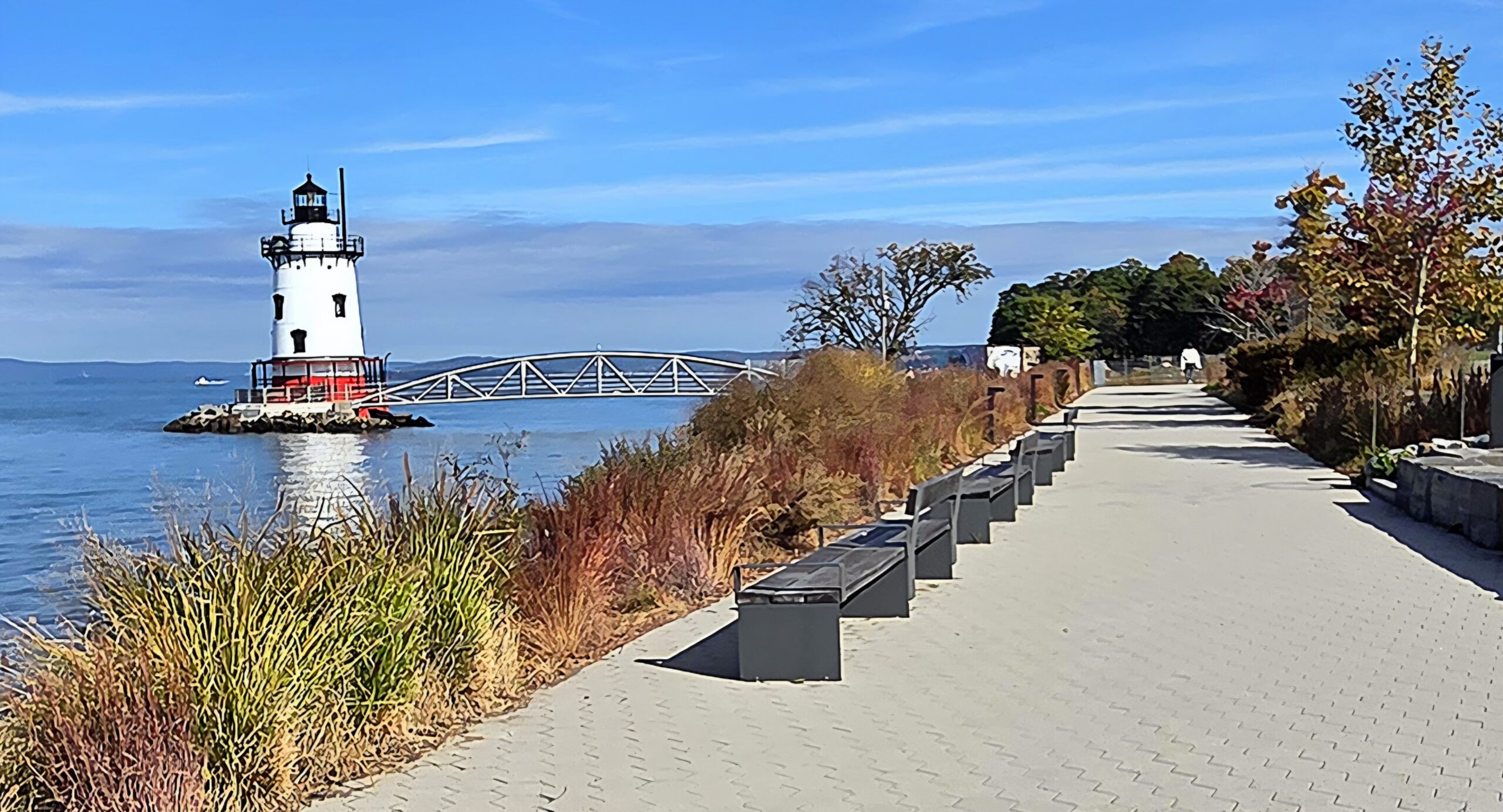
The Westchester County college admissions landscape is among the most competitive in the entire United States. Southern Westchester is home to a remarkable concentration of elite public and private high schools, and the families who live here have made education a central priority. Scarsdale High School, Bronxville School, Rye High School, and Edgemont Junior-Senior High School consistently rank among the top schools in New York State, producing graduates who target the most selective colleges and universities in the country. (For a similar look at the Princeton, NJ corridor, see our Princeton area guide. Bergen County families can find their guide here.)

The competitive intensity in these communities is shaped by several overlapping forces. Westchester County sits just north of New York City, and many families here are led by professionals in finance, law, medicine, and media who bring the same achievement orientation to their children’s education that defines their own careers. Property values in these towns are among the highest in the nation, driven in large part by the school districts. Families pay premium prices to live in Scarsdale, Bronxville, Rye, and Edgemont precisely because of the schools, and that investment creates enormous pressure around college outcomes.

This guide provides a detailed breakdown of the admissions landscape at each of these four schools. It explains the competitive dynamics that Westchester County families face, offers a strategic framework for differentiation, and addresses the most common mistakes families in these communities make.

Why Southern Westchester Is a Unique Admissions Environment

The southern Westchester corridor presents a set of admissions challenges that are distinct from other affluent suburbs around the country. Understanding these dynamics is essential for any family navigating the process.

How Admissions Officers View Westchester County Applications

Admissions officers at selective universities read applications by region, and they know these Westchester schools intimately. A reader at Columbia, for example, will review applications from Scarsdale, Bronxville, Rye, and Edgemont within the same cycle and often during the same reading session. They understand the rigor of each school’s curriculum, the grading standards, the extracurricular offerings, and the general profile of students who apply. This institutional knowledge means that a strong GPA from Scarsdale or Bronxville is taken seriously, but it also means that admissions officers can spot a generic, undifferentiated applicant from these schools immediately.

The volume problem is acute. Scarsdale High School alone has roughly 1,400 students, and the overwhelming majority are college-bound, with most targeting selective institutions. When a university receives 40 or 50 applications from a single school, and the vast majority present similar academic profiles, the admissions office is essentially making micro-comparisons between students who have had access to the same teachers, the same AP courses, and the same extracurricular infrastructure. The students who stand out are the ones who have built genuinely distinctive profiles, not the ones who have simply checked every available box.

The proximity to New York City amplifies this dynamic. Westchester students compete not only against each other but also against students from Manhattan’s elite private schools, Brooklyn’s specialized high schools, and the broader tri-state area. The New York metro region produces one of the largest and most qualified applicant pools for selective colleges anywhere in the world. Being excellent in this context is not enough; being distinctively excellent is what matters.

The Affluence Factor

Westchester County is one of the wealthiest counties in the United States. Scarsdale’s median household income exceeds $250,000, and Bronxville, Rye, and Edgemont are similarly affluent. This wealth translates into extensive educational investment: private tutoring, test prep, college consulting, summer enrichment programs, research opportunities, and curated extracurricular experiences. The result is a student body where the baseline level of preparation is extraordinarily high.

This creates a paradox that many families do not fully appreciate until application season. When every student has had access to the same advantages, those advantages cease to function as differentiators. A perfect SAT score, five AP courses, varsity athletics, and a leadership position in student government describe hundreds of applicants from Westchester County alone. Admissions officers are not looking for students who have taken advantage of their opportunities in predictable ways. They are looking for students who have used those opportunities to develop something genuinely individual.

School-by-School Profiles

Scarsdale High School

Location: Scarsdale, NY | Students: ~1,400 | Niche Ranking: Top 5 in Westchester County | Average SAT: 1410 | AP Courses Offered: 25+ | Student-Teacher Ratio: 12:1

Scarsdale High School is the flagship of Westchester public education and one of the most recognized public high schools in the United States. The school’s reputation precedes it, and for decades, Scarsdale has been synonymous with academic excellence and college placement. The community takes enormous pride in this identity, and families move to Scarsdale specifically for the school district, paying some of the highest property taxes in the country to do so.

The academic environment is intensely rigorous. Scarsdale offers more than 25 AP courses across every discipline, and the school’s average SAT score of approximately 1410 reflects a student body operating at an exceptionally high level. The school has moved toward a mastery-based approach in recent years and uses a unique grading system that de-emphasizes traditional letter grades in favor of competency descriptors, which can create both opportunities and challenges in the admissions process. Students and counselors must be thoughtful about how academic performance is communicated to colleges, particularly schools that rely on traditional GPA calculations for initial screening.

Extracurricular life at Scarsdale is robust and wide-ranging. The school has strong programs in debate, Model United Nations, STEM research through programs like the Westchester Science and Engineering Fair, performing arts, journalism, and athletics. However, the breadth of offerings creates a trap that many Scarsdale students fall into: spreading themselves across too many activities in an effort to appear well-rounded, rather than developing deep expertise in one or two areas. Admissions officers reviewing Scarsdale applications have seen this pattern thousands of times. The student with 12 clubs and no clear area of impact is far less compelling than the student with two deep commitments and a visible track record of achievement.

College interest from Scarsdale skews heavily toward the most selective universities in the country. The Ivy League, Stanford, MIT, NYU, University of Michigan, and other brand-name institutions dominate the aspirational landscape. This creates fierce internal competition: when 30 or more Scarsdale students apply to Columbia or NYU in a given year, the acceptance rate for Scarsdale applicants at those schools can be well below the institutional average. Families who understand this dynamic early are the ones who build strategic college lists that include excellent schools beyond the usual targets.

Strategic Positioning for Scarsdale Students: Scarsdale students need to resist the temptation to be everything. The most successful applicants from this school are the ones who have identified a specific intellectual passion, pursued it with depth and rigor, and can articulate how that passion connects to their broader goals. Leveraging Scarsdale’s proximity to New York City for internships, research, arts engagement, or community impact work can provide powerful differentiators that go beyond the typical Scarsdale profile.

Bronxville School

Location: Bronxville, NY | Students: ~400 (high school) | Niche Ranking: Top 3 in Westchester County | Average SAT: 1370 | AP Courses Offered: 18+ | Student-Teacher Ratio: 10:1

Bronxville School is a K-12 institution serving one of the smallest and most affluent villages in the New York metro area. With only about 400 students in the high school, Bronxville offers an intimate educational experience that stands in sharp contrast to the larger Westchester schools. The village itself is just 1 square mile, and the school functions as the social and cultural center of the community. Median household income in Bronxville exceeds $200,000, and the community’s investment in education is reflected in per-pupil spending that ranks among the highest in the state.

The small size of Bronxville School creates distinct advantages and challenges in the college admissions context. On the advantage side, students benefit from close relationships with teachers and counselors, a 10:1 student-teacher ratio that enables personalized attention, and a tight-knit community where students can take on meaningful leadership roles relatively easily. A student who might be one of 50 aspiring student leaders at Scarsdale can be the clear standout at Bronxville simply because there are fewer students competing for those positions.

On the challenge side, Bronxville’s small size limits the breadth of course offerings and extracurricular options. While the school offers 18+ AP courses, which is impressive for its size, it cannot match the sheer variety available at larger schools. Students with niche academic interests may need to look outside the school for enrichment, whether through online courses, local college programs, or independent study. Additionally, the small graduating class means that admissions officers may expect a higher level of involvement and visibility from each student. Being a passive participant in a club at Bronxville is more noticeable than at a school of 1,400.

Bronxville students tend to target a mix of Ivy League schools, top liberal arts colleges, and selective universities. The school has historically placed well at schools like Middlebury, Colgate, Georgetown, Dartmouth, and the University of Virginia. Given the school’s small size, there is less internal competition at any single university compared to Scarsdale or even Rye. However, Bronxville students are competing within the broader Westchester and New York City applicant pool, and admissions officers evaluate them in that context.

Strategic Positioning for Bronxville Students: Bronxville students should lean into the school’s greatest asset: its small, community-oriented environment. Deep relationships with teachers translate into powerful recommendation letters. Visible leadership within the school community, whether in athletics, arts, student government, or community service, carries real weight because admissions officers understand what leadership looks like at a small school. Students should also actively seek opportunities beyond Bronxville’s borders, using New York City and the broader Westchester community to build the kind of differentiated experiences that the school’s small size may not provide on its own.

Rye High School

Location: Rye, NY | Students: ~800 | Niche Ranking: Top 10 in Westchester County | Average SAT: 1360 | AP Courses Offered: 20+ | Student-Teacher Ratio: 11:1

Rye High School serves the City of Rye, one of Westchester’s most desirable communities. The school enrolls approximately 800 students in grades 9 through 12, placing it in a middle ground between Scarsdale’s scale and Bronxville’s intimacy. Rye is known for its strong academic program, excellent athletics, and a community culture that values both achievement and balance. The city’s location along the Long Island Sound gives it a distinct character, and the community identity is closely tied to its coastal New England feel.

Academically, Rye offers more than 20 AP courses and maintains a rigorous college preparatory curriculum. The school’s average SAT of approximately 1360 is strong, though slightly below Scarsdale’s average. The school earns high marks for teaching quality, and the 11:1 student-teacher ratio allows for meaningful student-faculty interaction. Rye’s math and science programs are particularly well-regarded, and the school has a growing emphasis on STEM that has produced strong results in regional science competitions.

Rye has an outsized athletics culture relative to its size. The school’s varsity programs in lacrosse, field hockey, soccer, ice hockey, and sailing are consistently competitive at the sectional and state levels. For student-athletes, this creates meaningful opportunities to build leadership narratives and demonstrate commitment, discipline, and teamwork, qualities that admissions officers value highly. However, the athletics culture can also create a blind spot: some Rye families invest so heavily in sports that academic positioning and intellectual narrative development receive less attention than they should.

College interest from Rye spans a broad range, with strong representation at schools like NYU, Boston College, Villanova, University of Michigan, Colgate, Bucknell, and the Ivies. Rye sends students to an impressive variety of institutions, and the school’s college counseling office has strong relationships with admissions offices across the country. The school’s mid-size student body means internal competition is meaningful but less intense than at Scarsdale.

Strategic Positioning for Rye Students: Rye students benefit from a school culture that values well-roundedness, but in the current admissions landscape, well-roundedness alone is not a differentiator. The strongest Rye applicants are those who take the school’s emphasis on balance and combine it with genuine depth in one area. A Rye student-athlete who also conducts independent research, or a Rye performing artist who leads a community initiative, presents a more compelling profile than a student who simply excels across multiple domains without distinction in any one.

Edgemont Junior-Senior High School

Location: Greenburgh (Edgemont), NY | Students: ~700 | Niche Ranking: Top 5 in Westchester County | Average SAT: 1400 | AP Courses Offered: 20+ | Student-Teacher Ratio: 11:1

Edgemont is one of the best-kept secrets in Westchester County college admissions. Located in the Greenburgh section of unincorporated Westchester, Edgemont serves a compact, affluent community that is laser-focused on education. The school enrolls roughly 700 students in grades 7 through 12 and consistently ranks among the top public schools in New York State. Despite its relatively small size and lower public profile compared to Scarsdale, Edgemont’s academic outcomes are remarkable, with an average SAT of approximately 1400 that rivals or exceeds many better-known schools.

The Edgemont community has a significant concentration of families in professional fields, and the school benefits from a parent body that is deeply engaged in education. Per-pupil spending is high, and the school offers more than 20 AP courses despite its smaller size. The academic culture is intense, and students frequently describe the environment as highly competitive. Edgemont has a particularly strong math and science program, and students regularly perform well in regional and national STEM competitions.

Edgemont’s position in the admissions landscape is unique and strategically advantageous. Because the school is less well-known nationally than Scarsdale or Bronxville, Edgemont students sometimes benefit from a perception advantage: admissions officers who know the school recognize its rigor, while those less familiar with it may view an Edgemont applicant as a discovery rather than another student from an over-represented feeder school. This dynamic can work in Edgemont students’ favor, particularly at universities outside the Northeast that receive fewer applications from Westchester County.

However, Edgemont families should not assume that relative anonymity is a substitute for strategic positioning. The school’s proximity to Scarsdale and its similar demographic profile mean that admissions officers reviewing applications from the southern Westchester region will still evaluate Edgemont students against the broader local talent pool. The internal competition dynamics, while less severe than at Scarsdale, still require thoughtful differentiation.

Strategic Positioning for Edgemont Students: Edgemont students should capitalize on the school’s strong academics and slightly lower public profile. A well-prepared Edgemont applicant with a distinctive narrative and genuine depth of interest can be extremely compelling, particularly at schools that value intellectual curiosity and community engagement. Edgemont’s smaller size allows for more visible leadership, and students should take advantage of opportunities to shape the school community in ways that translate into powerful application narratives.

Westchester County College Admissions: Schools at a Glance

SchoolStudentsAvg SATAP CoursesStudent-Teacher RatioKey Strength
Scarsdale High School~1,400141025+12:1Breadth of AP offerings, national reputation
Bronxville School~400137018+10:1Small class size, personalized attention
Rye High School~800136020+11:1Athletics culture, balanced community
Edgemont Jr-Sr HS~700140020+11:1Strong STEM, strategic positioning advantage
FactorScarsdaleBronxvilleRyeEdgemont
Internal Competition LevelVery HighModerateModerate-HighModerate
Course BreadthExceptionalGood (limited by size)Very GoodVery Good
Name Recognition with AOsVery HighHighHighModerate-High
NYC Access AdvantageStrong (30 min train)Very Strong (20 min train)ModerateStrong (25 min drive)
Student-Athlete OpportunitiesStrongModerateVery StrongGood
Median Household Income$250,000+$200,000+$200,000+$200,000+

The Westchester Paradox: When Every Advantage Becomes the Baseline

There is a recurring pattern across all four of these Westchester schools that defines the college admissions experience for families in this region. Parents invest heavily in their children’s education, choosing to live in communities with top-ranked schools and supplementing that education with private tutoring, test preparation, enrichment programs, and curated extracurricular experiences. Their children respond by excelling academically, earning top grades, achieving strong standardized test scores, and accumulating long lists of activities and honors. Then application results arrive, and families are stunned to find that these accomplishments were not enough.

The explanation is not that these students are inadequate. It is that the standard they have met is the standard that every competitive applicant from their region has also met. When admissions officers review applications from Scarsdale, Bronxville, Rye, and Edgemont, they are seeing dozens of students who have done essentially the same things. The 1450 SAT, the five AP courses, the varsity sport, the student government position, the volunteer hours: this is the default Westchester profile. It is table stakes. And at universities with single-digit acceptance rates, table stakes do not earn admission.

The families who achieve the best outcomes in Westchester County college admissions are the ones who understand this dynamic early and plan accordingly. They do not try to build a more impressive version of the default profile. Instead, they help their children develop a genuinely distinctive identity, one that reflects authentic intellectual curiosity, personal values, and a vision for how they want to engage with the world. That kind of profile cannot be manufactured in the summer before senior year. It must be built over time, beginning no later than freshman year and ideally earlier.

A Strategic Framework for Westchester College Admissions Success

Freshman and Sophomore Year: Laying the Groundwork

The most important college admissions decisions are made long before a student writes a single essay or fills out a single application. In Westchester County, where the baseline level of achievement is already so high, the strategic work that happens in ninth and tenth grade determines whether a student will have a differentiated profile when application season arrives.

Course selection should be ambitious but purposeful. At schools like Scarsdale and Edgemont, where AP offerings are extensive, students should resist the temptation to take every available AP. Instead, they should build a course sequence that reflects genuine intellectual interests and tells a coherent story. A student fascinated by political theory might prioritize AP U.S. History, AP Government, AP Comparative Government, and AP English Language, supplemented by honors-level science and math courses that demonstrate breadth without sacrificing the narrative thread. The goal is a transcript that reads as intentional rather than one that simply maximizes the AP count.

Extracurricular exploration should be broad in freshman year, with purposeful narrowing by the end of sophomore year. Students should try multiple activities to discover where their genuine interests lie, then commit deeply to the one or two areas that resonate most strongly. The key question to ask at the end of sophomore year is: if an admissions officer looked at your extracurricular profile, would they be able to identify what you care about? If the answer is no, the student has spread too thin.

This is also the time to begin building the foundation for differentiation opportunities that will matter later. Students interested in research should start exploring mentorship programs and local research opportunities. (Our Ignite Research Mentorship Program pairs students with PhD mentors for college-level research.) Those interested in arts should be developing portfolios. Those interested in community engagement should be identifying causes they genuinely care about and beginning to build track records of involvement.

Junior Year: Crystallizing the Narrative

Junior year is when the application narrative must take shape. For Westchester students, this means answering the fundamental question that admissions officers are asking: what makes this student different from the other 40 applicants from their school who have the same GPA and test scores?

The answer must be specific, personal, and grounded in evidence. It is not enough to say you are passionate about environmental science. You need to show what you have done with that passion: the research you conducted, the project you launched, the community you impacted, the questions you are still pursuing. Admissions officers at selective universities are expert at distinguishing between genuine passion and resume padding. Westchester students, who often have access to impressive-sounding but ultimately superficial enrichment experiences, need to be especially thoughtful about demonstrating authentic engagement.

Standardized testing should be completed by the end of junior year. At these Westchester schools, a competitive SAT score is at or above the school average: roughly 1370-1410 depending on the school. Students targeting the most selective universities should aim for 1500 or above. However, it is important to keep test scores in perspective. At schools like Scarsdale and Edgemont, where average scores are already high, a strong SAT confirms academic capability but does not differentiate an applicant. The student with a 1520 SAT and no clear personal narrative will lose out to the student with a 1460 and a compelling, distinctive story.

Junior year is also when students should begin building their college lists with strategic intentionality. Westchester families tend to gravitate toward the same set of 15 to 20 schools: the Ivies, Stanford, MIT, NYU, University of Michigan, Georgetown, and a handful of others. This clustering creates unnecessary competition. A thoughtful college list should include some of these aspirational targets but should also feature excellent universities that are underrepresented in the typical Westchester application pattern, schools like Vanderbilt, Rice, Emory, Washington University in St. Louis, University of Virginia, and Wake Forest. These institutions offer world-class educational experiences and may present more favorable odds for Westchester applicants simply because fewer local students apply.

Senior Year: Executing with Precision

By senior fall, the strategic groundwork should be complete. The focus shifts to execution: writing essays that bring the personal narrative to life, securing recommendation letters from teachers who can speak with specificity and warmth, and managing the application timeline with discipline.

Essay writing is where Westchester students often underperform relative to their capabilities. The most common mistake is writing what the student thinks admissions officers want to hear rather than writing something genuinely personal and revealing. Admissions officers from selective universities have read thousands of essays about community service trips, academic epiphanies, and overcoming the pressure of high-achieving environments. The essays that stand out are the ones that reveal something unexpected, show genuine self-awareness, and demonstrate the capacity for reflection and growth.

Recommendation letters from Westchester schools carry real weight because admissions officers trust these teachers and counselors. Students should cultivate relationships with recommenders who can speak to specific qualities, contributions, and moments of growth, not just academic performance. A teacher who can describe the way a student thinks, asks questions, contributes to discussions, or supports classmates provides far more value than one who can only confirm that the student earned an A.

The New York City Advantage: Leveraging Proximity

One of the most powerful but underutilized advantages available to Westchester families is the proximity to New York City. Bronxville is a 20-minute train ride from Grand Central. Scarsdale is about 30 minutes. Rye and Edgemont are similarly accessible. This proximity provides access to opportunities that are simply not available to students in most other parts of the country: internships at world-class institutions, cultural organizations, research hospitals, nonprofits, media companies, financial firms, museums, galleries, and community organizations spanning every imaginable field.

Yet many Westchester students fail to take advantage of this resource in meaningful ways. They may attend a summer program at Columbia or NYU, which is fine but unremarkable since thousands of other students do the same thing. The students who truly benefit from New York City access are the ones who engage with the city in a sustained, purposeful way that connects to their broader narrative. A student interested in public health who volunteers at a Bronx community clinic throughout junior year, or a student passionate about documentary film who interns at a Manhattan production company, or a student fascinated by urban planning who works with a Brooklyn nonprofit on housing policy: these are the kinds of New York City experiences that create genuinely differentiated application profiles.

Common Westchester College Admissions Mistakes

Assuming the school name does the work. Scarsdale, Bronxville, Rye, and Edgemont are all well-known to admissions officers, and that recognition validates the rigor of a student’s academic record. But school reputation does not substitute for individual distinction. A compelling applicant from a lesser-known school will be admitted over a generic applicant from Scarsdale every time.

Building the default Westchester profile. High GPA, strong test scores, multiple APs, varsity sport, community service, student government. This profile describes hundreds of Westchester applicants each year. When every applicant looks the same, none of them stand out. The goal is not to be the best version of the default but to be something different entirely.

Clustering around the same college list. When every family in Scarsdale and Edgemont is targeting Columbia, NYU, Penn, and Cornell, acceptance rates for applicants from these schools drop well below institutional averages. Diversifying the college list to include excellent schools that receive fewer Westchester applications can dramatically improve outcomes without sacrificing educational quality.

Confusing activity quantity with quality. Ten extracurricular activities with moderate involvement in each is less compelling than two activities with deep commitment, visible leadership, and measurable impact. Admissions officers are looking for evidence of what a student genuinely cares about, not evidence that they can manage a busy schedule.

Underestimating demonstrated interest. Many selective universities outside the Ivy League track demonstrated interest as a factor in admissions decisions. Students who visit campus, attend information sessions, engage with admissions representatives, and write thoughtful supplemental essays gain a real advantage over students who simply submit an application. Westchester families, who have the financial resources and geographic access to visit schools easily, should make this a priority.

Waiting too long to start planning. The families who achieve the best college admissions outcomes in Westchester County begin strategic planning in eighth or ninth grade. By junior year, the academic record, extracurricular trajectory, and personal narrative are largely set. Starting late means working with a fixed profile rather than building an optimal one.

Common MistakeWhy It HurtsWhat to Do Instead
Relying on school reputationAOs evaluate individuals, not schoolsBuild a distinctive personal narrative
Default Westchester profileHundreds of identical applicantsDevelop deep expertise in 1-2 areas
Same college list as peersDepresses acceptance rates from your schoolResearch schools outside the usual Westchester targets
Too many extracurricularsNo clear area of passion or impactChoose depth over breadth by end of sophomore year
Ignoring demonstrated interestLost advantage at non-Ivy schoolsVisit campuses, attend sessions, engage with AOs
Starting junior yearProfile is already fixedBegin strategic planning in 8th-9th grade

Frequently Asked Questions About Westchester County College Admissions

Does attending Scarsdale or Bronxville give my child an admissions advantage?

Attending a well-known, rigorous school ensures that admissions officers take the student’s academic record seriously. A strong GPA from Scarsdale or Bronxville carries more weight than the same GPA from a school with less rigorous standards. However, this recognition cuts both ways. Admissions officers also know that these schools produce large numbers of highly qualified applicants, which makes differentiation more important, not less. The school’s reputation validates academic preparation but does not replace the need for a distinctive personal profile.

How should Scarsdale students differentiate themselves given the volume of applicants?

Scarsdale students face the highest internal competition of any school in this group due to the size of the student body and the concentration of high-achieving students. Differentiation requires genuine depth in one or two areas of interest, pursued with enough commitment to produce visible results. Research mentorships, entrepreneurial projects, creative portfolios, sustained community engagement, or leadership in niche organizations can all serve this purpose, but only if they reflect authentic interest rather than strategic calculation. The personal essay and recommendation letters are also critical differentiators since they reveal the person behind the credentials.

Is Edgemont’s lower name recognition a disadvantage?

In most cases, no, and in some cases it can actually be an advantage. Admissions officers who know Edgemont recognize it as an excellent school with rigorous academics. At universities that receive fewer applications from the broader Westchester area, an Edgemont student may be seen as a fresh profile rather than another applicant from an over-represented region. The key is ensuring that the student’s application clearly communicates the rigor of the school and the quality of the academic preparation.

When should Westchester families begin college admissions planning?

Strategic planning should begin in eighth grade or early ninth grade. This allows time for intentional course selection, purposeful extracurricular development, and the gradual construction of a personal narrative. Families who wait until junior year are limited to optimizing a profile that is already largely established. The earlier the planning begins, the more flexibility the family has to shape a genuinely compelling application.

How important are standardized test scores for Westchester students?

Standardized test scores remain an important component of the application at most selective universities. For Westchester students, the goal is to score at or above the school average as a minimum, with 1500+ being the target for the most selective institutions. However, at schools where the average SAT is already 1370 to 1410, test scores alone will not differentiate an applicant. They confirm academic capability but do not tell admissions officers anything about who the student is as a person. The students who earn admission to the most selective schools are the ones who combine strong numbers with a distinctive and authentic personal narrative.

Should my child apply to colleges where fewer Westchester students apply?

Yes, this should be a significant part of the college list strategy. When large numbers of students from Scarsdale, Bronxville, Rye, and Edgemont apply to the same set of 15 to 20 schools, the effective acceptance rate for students from these communities can be significantly lower than the published institutional rate. Including excellent universities that are less commonly targeted by Westchester families, such as Vanderbilt, Rice, Emory, Washington University in St. Louis, or the University of Virginia, can improve the probability of admission without compromising educational quality.

How Oriel Admissions Helps Westchester County Families

Oriel Admissions works with families across Westchester County, including those at Scarsdale High School, Bronxville School, Rye High School, Edgemont Junior-Senior High School, and schools throughout the region. With offices in Princeton, NJ, and New York City, we understand the specific dynamics of the Westchester admissions landscape because we have helped families in these communities navigate it for years.

With a 93% success rate placing students in their top-choice schools, we help students at elite public high schools build the kind of distinctive, authentic profiles that stand out in the most competitive applicant pools in the country. Our approach is personalized, data-informed, and grounded in deep experience with the admissions processes at the most selective universities.

If your family is ready to move beyond the default strategy and build a college admissions plan that reflects your child’s unique strengths, interests, and aspirations, schedule a consultation with Oriel Admissions today.


Latest Posts

Show all

How to Get Into Vanderbilt University: The Complete Admissions Guide

Vanderbilt University is one of the most selective and academically distinguished research universities in the United States. Located on a 340-acre campus in the heart of Nashville, Tennessee, Vanderbilt combines the intellectual rigor of a top-tier research institution with a teaching-focused liberal arts curriculum, a vibrant residential college system, and a campus culture that is … Continued

Passaic County College Admissions Guide: What Families at Wayne Valley, Wayne Hills, Passaic Valley, and West Milford Need to Know

Passaic County Is Not Bergen County. That Can Be an Advantage. Passaic County college admissions operate in a fundamentally different context than the counties that dominate New Jersey’s college conversation. This is not Bergen County, where multiple schools rank in the state’s top 20. It is not Essex County, where Millburn’s average SAT of 1420 … Continued

Moorestown, Lenape, and Cherokee, A Deep Dive into Burlington County College Admissions

Burlington County Doesn’t Get Talked About Enough in the College Admissions Conversation. That’s Starting to Change. When families in New Jersey think about competitive college admissions, the conversation tends to orbit around the same handful of counties: Bergen, Essex, Morris, maybe Westchester across the border. Burlington County rarely enters the discussion. And that’s a genuine … Continued

Sign up for our newsletter