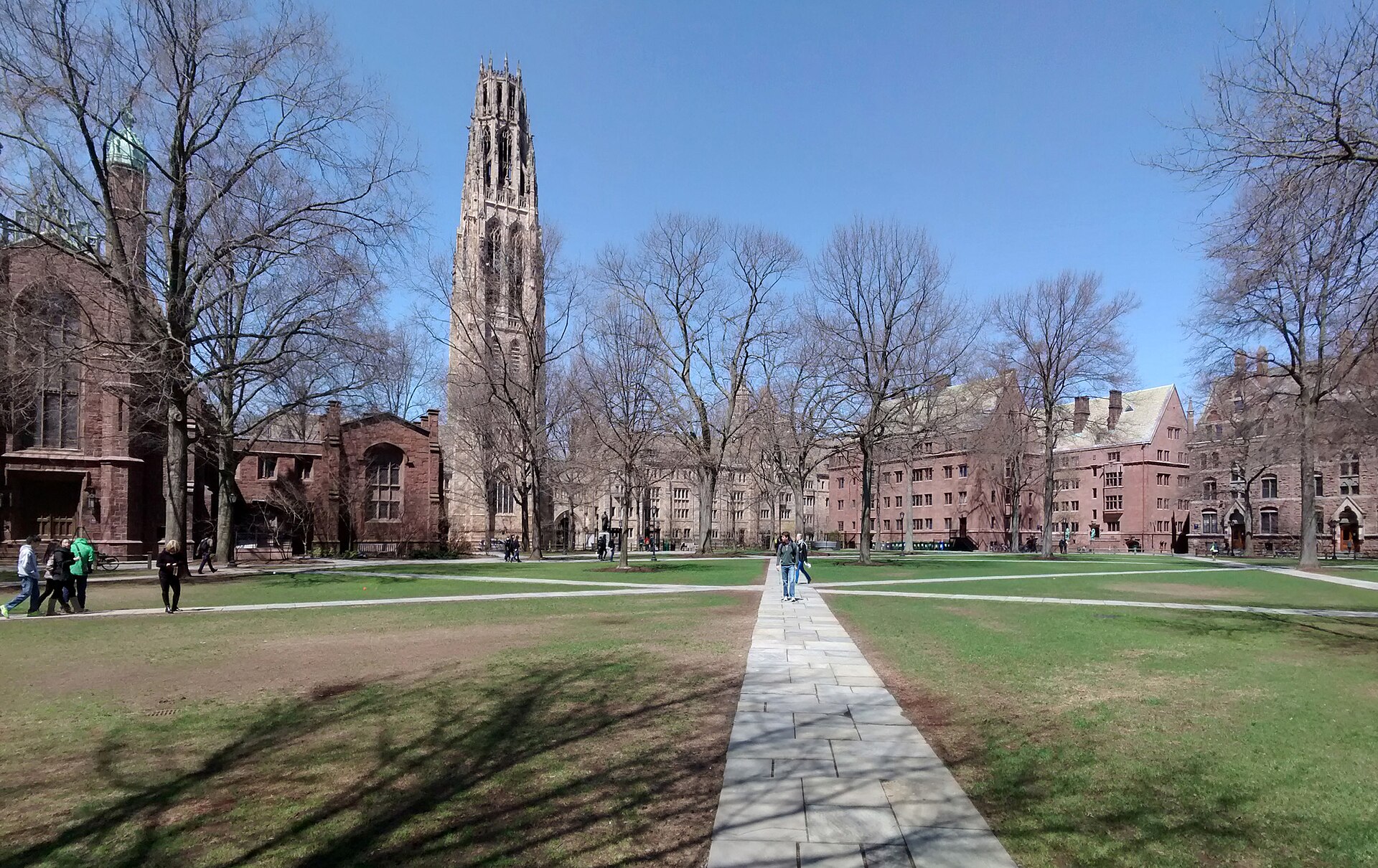
TL;DR: Yale is the more selective, admitting 4.2% for the Class of 2030 versus Dartmouth’s 5.8%. Both prize undergraduate teaching and residential community in non-urban settings, so the choice often turns on scale and aid: Yale is a mid-sized research university with elite humanities and full tuition free under $200,000, while Dartmouth is the smallest, most undergraduate-focused Ivy and meets full need but has not matched that threshold (Yale Daily News, 2026; The Dartmouth, 2026).
Is Yale or Dartmouth harder to get into?
Yale is the more selective of the two. It admitted 4.2% of applicants to the Class of 2030, against Dartmouth’s 5.8%, and both rates fell from the prior year (Yale Daily News, 2026; The Dartmouth, 2026). The gap is real but modest; both sit firmly in single-digit territory, where the strength of the application, not the difference of a percentage point, decides the result.
The early rounds differ in commitment. Yale uses non-binding Single-Choice Early Action; Dartmouth uses binding Early Decision. Both carry an early-round advantage, but only Dartmouth’s requires enrolling if admitted. Because Yale’s policy bars early applications to other private universities, and Dartmouth’s ED bars applying ED elsewhere, a student cannot pursue the early advantage at both, so the early slot goes to one school.
| Dimension | Yale | Dartmouth |
|---|---|---|
| Acceptance rate | 4.2% (Class of 2030) | 5.8% (Class of 2030) |
| Early-round policy | Single-Choice Early Action (non-binding) | Early Decision (binding) |
| Undergraduate enrollment | ~6,800 | ~4,500 (smallest Ivy) |
| Setting | New Haven, CT (small city) | Hanover, NH (rural) |
| Academic identity | Residential colleges, humanities and arts | Undergraduate-focused college, the D-Plan |
| Signature strengths | Drama, music, humanities, undergraduate teaching | Government, economics, AB engineering, the outdoors |
| Aid for families under $200K | Free tuition (2026-27) | Meets full need; not free tuition |
Yale vs Dartmouth: how do academics and programs compare?
Yale is a mid-sized research university organized around its residential-college system, with world-class strength in the humanities, the arts, drama, and music, and a long tradition of excellent undergraduate teaching. It offers the intimacy of seminars and close faculty contact alongside the resources of a major research institution, appealing to students who want a humanistic, discussion-driven education without giving up research-university scale.
Dartmouth is the smallest and most undergraduate-centered Ivy, built around small classes, close faculty relationships, and the D-Plan, its flexible year-round calendar. It is strong in government, economics, and undergraduate engineering through its AB program, and the culture is communal and tied to the outdoors. The academic contrast is one of degree and emphasis: both prioritize undergraduate teaching, but Yale adds greater humanities depth and research scale, while Dartmouth is more singularly focused on the undergraduate college experience. For program detail, see our guides to getting into Yale and getting into Dartmouth.
Does Yale or Dartmouth give better financial aid for high-income families?
Yale holds the edge for affluent families. It matched the leading tier of Ivy aid, covering full tuition for families earning under $200,000 with typical assets and the full cost of attendance under $100,000 (Yale News, 2026). Dartmouth meets 100% of demonstrated need with no-loan packages, but it has not announced a $200,000 free-tuition threshold, so its free-tuition line sits below Yale’s.
For a family earning around $200,000, that difference is concrete: the same student might pay little or no tuition at Yale while facing a meaningful contribution at Dartmouth, depending on assets and circumstances. Above $200,000, both assess individually and both reach full-pay at a cost of attendance near $90,000. Because two need-meeting schools can still produce different bills, running each net price calculator is essential, but the structural edge at the top of the income scale belongs to Yale. For how high-earner aid works in detail, see our analysis of financial aid for high-earning families.
| Family income (typical assets) | Yale | Dartmouth |
|---|---|---|
| Under $100,000 | $0 (full cost of attendance covered) | Typically $0 to low net cost (full need met) |
| $100,000-$200,000 | Free tuition (2026-27) | Need-based aid, partial to substantial |
| $200,000-$400,000 | Individually assessed; partial aid possible | Contribution expected; assessed individually |
| Above $400,000 | Typically full-pay (~$90,000+/yr) | Typically full-pay (~$90,000+/yr) |
Yale vs Dartmouth: campus culture and student experience
Both are residential and community-driven, but the setting and scale differ. Yale’s New Haven is a small city, and its residential-college system gives every undergraduate a built-in community of a few hundred peers for all four years, producing a cohesive, traditions-rich culture with urban amenities close at hand.
Dartmouth’s Hanover is a small, rural town, and with only about 4,500 undergraduates the community is even more tightly knit. The Greek system, the outdoors, and the rhythm of the D-Plan shape social life, and school spirit is intense. The honest question is whether the student wants Yale’s residential-college structure in a small city or Dartmouth’s even more intimate, outdoorsy college in a rural setting.
Yale vs Dartmouth: outcomes, graduate school, and ROI
Both are elite-outcome schools that feed top graduate and professional programs. Yale feeds the top of law, finance, consulting, academia, public service, and the arts, with a broad and influential network and a powerful global brand. Dartmouth punches above its size in finance and consulting recruiting in particular, with an exceptionally loyal alumni network that opens doors disproportionate to its small enrollment.
For a high-income family, the ROI question resolves to fit and aid rather than raw earnings, since both sit near the top of outcome rankings. Yale’s stronger aid for high earners can tilt the financial calculus, while Dartmouth’s appeal is its tight, high-trust network and undergraduate focus. The decision is best framed around the student rather than a salary figure.
Should you apply early to Yale or Dartmouth?
The early rounds differ in commitment. Yale’s Single-Choice Early Action is non-binding: a student can apply early, receive a decision, and still compare offers, including aid, in the spring, though they may not apply early to other private universities. Dartmouth’s Early Decision is binding: admitted students commit to enroll, in exchange for the strongest early-round advantage. A student cannot pursue the early round at both.
For families focused on comparing aid, Yale’s non-binding early action is the friendlier option, since it preserves flexibility. Dartmouth’s binding Early Decision suits a family confident in both the fit and the cost, and it can be a powerful lever for a student certain Dartmouth is the first choice. The early decision should follow genuine preference and the family’s comfort with commitment.
Which should you choose: Yale or Dartmouth?
Choose Yale if the student wants elite strength in the humanities and arts, the residential-college experience in a small city, greater research scale, and the most generous aid of the two through its $200,000 free-tuition threshold. Choose Dartmouth if the student wants the smallest, most undergraduate-focused Ivy, the flexibility of the D-Plan, an outdoorsy and intensely communal culture, and a famously loyal alumni network.
For high-income families, Yale’s aid advantage is the clearest differentiator, so where fit is close, cost can tip the decision toward Yale. Where the student specifically wants Dartmouth’s intimacy, outdoor culture, or network, that distinct identity can outweigh the aid difference. Both deliver a residential, teaching-centered experience at the top of the league.
Related Ivy League Comparisons
For more side-by-side comparisons, see Harvard vs Yale, Cornell vs Yale, Cornell vs Dartmouth, and Harvard vs Dartmouth. If you are deciding when to apply, our guide to Early Action vs Early Decision breaks down the early-round options.
Frequently Asked Questions About Yale vs Dartmouth
Yale is more selective, admitting 4.2% for the Class of 2030 versus Dartmouth’s 5.8%. Both are single-digit reaches where the strength of the application matters more than the percentage-point gap.
Yale. It covers full tuition for families earning under $200,000, a threshold Dartmouth has not matched. Dartmouth meets full need with no loans but generally expects a contribution at $200,000.
You cannot do both in the binding sense. Yale uses non-binding Single-Choice Early Action; Dartmouth uses binding Early Decision. Apply early to your genuine first choice, and use Dartmouth’s ED only if ready to commit.
Both prioritize it. Yale’s residential colleges and seminars and Dartmouth’s small classes and D-Plan both deliver close faculty contact. Dartmouth is slightly more undergraduate-singular; Yale adds greater research scale.
Scale and aid. Yale is a mid-sized research university with elite humanities and the most generous aid of the two; Dartmouth is a smaller, more outdoorsy undergraduate college. Both are residential and community-driven.
Yale is among the strongest in the world for the humanities and the arts. Dartmouth is strong in the liberal arts and especially government and economics. For humanities depth specifically, Yale leads.
Both feed finance and consulting well. Dartmouth’s loyal alumni network drives outsized placement for its size; Yale’s broader brand and network are equally strong. Both are reliable launchpads.
Both are Ivy League with strong reputations. Yale carries a higher overall selectivity profile and global humanities renown; Dartmouth is elite and especially respected for undergraduate focus. The difference is modest.
Sources: Yale Undergraduate Admissions, Dartmouth Admissions, NCES College Navigator, Yale Common Data Set, Dartmouth Common Data Set, NACAC.
About Oriel Admissions
Oriel Admissions is a Princeton-based college admissions consulting firm advising families nationwide on elite university admissions strategy, pairing each student with a dedicated team of counselors and coaches. To discuss your strategy, schedule a consultation.