The best colleges for business are not one list. A program that admits students to the business school as high school seniors is a different application from one that admits them after a year or two of college, and the outcomes data each school publishes is measured differently. This guide compares 19 undergraduate business programs on the degree they award, how first-year students are admitted and one verifiable feature of each curriculum, and lists starting salaries for 15 of them from each school’s own employment report.
What Makes a College One of the Best Colleges for Business?
- Admission route. Direct admission from high school, admission after enrolling, or a mix. This decides whether the business school reads the student’s application at all.
- Curriculum structure. A broad degree such as Wharton’s BS in Economics with four-course concentrations differs from a program with a fixed core and a single major.
- Breadth outside business. Olin requires at least 40% of classes outside business, and MIT’s Course 15 majors sit inside a science and engineering institute.
- Outcomes. Placement rates and starting salaries from the school’s own employment report, read with attention to whether each figure is a median, an average, or includes bonuses.
- Selectivity. How hard the university is to get into overall, which sets the floor for the business school.
Which Colleges Are Best for Business?
The table lists the best colleges for business with the degree each one awards, how first-year students are admitted, and one concrete feature from the school’s own pages.
| University (school) | Undergraduate degree | How first-year students are admitted | What stands out |
|---|---|---|---|
| University of Pennsylvania (Wharton) | BS in Economics | Direct, through Penn admissions | Over 19 concentrations, each just four courses (Wharton) |
| NYU (Stern) | BS in Business; BS in Business and Political Economy; BS in Business, Technology and Entrepreneurship | Direct, through NYU admissions | 13 business concentrations; Business and Political Economy requires two semesters of study away (Stern) |
| MIT (Sloan) | BS in Management (15-1), Business Analytics (15-2), Finance (15-3) | No separate admission; students choose the major after enrolling | Management majors take at least two communication-intensive subjects in the major (MIT catalog) |
| Washington University in St. Louis (Olin) | BS in Business Administration | Direct as a first-year student | Eight majors, with at least 40% of classes outside business (Olin) |
| Cornell (Dyson and Nolan, SC Johnson College of Business) | BS in Applied Economics and Management (Dyson); BS in Hotel Administration (Nolan) | Direct, through the Common App | Dyson’s AEM degree is AACSB-accredited (Cornell); Nolan runs four signature experiential programs (Cornell) |
| USC (Marshall) | BS in Business Administration, BS in Accounting, World Bachelor in Business and five other degrees | Direct as first choice major, plus internal admission | 588 first-year students entered in fall 2025 (Marshall); LInC is a global program for first-year business students (Marshall) |
| University of Michigan (Ross) | Bachelor of Business Administration | About 80% through Preferred Admission from high school; about 100 per class transfer in | 924 admitted from 13,019 first-year applicants for fall 2025; four essays (Ross) |
| UC Berkeley (Haas) | BS in Business Administration | Mostly direct through the four-year Spieker program; current Berkeley students and transfer students can still apply to the two-year program | 205 Spieker students in the class entering fall 2026, plus 52 continuing and 96 transfer students (Haas) |
| University of Virginia (McIntire) | BS in Commerce (three years) | Internal only: apply in the spring of first year | “Direct entry or preferred admission for incoming first-year students is not offered” (McIntire) |
| UT Austin (McCombs) | Bachelor of Business Administration | Direct, by listing business as the first-choice major | 9% BBA acceptance rate in 2025 (McCombs); 10 majors (McCombs) |
| UNC Chapel Hill (Kenan-Flagler) | BS in Business Administration | About 70% from high school through Assured Enrollment, including Future Business Admits; the rest by transfer | Future Business Admits admitted 200 students in 2025, with a planned increase to 400 in 2026 (UNC) |
| Carnegie Mellon (Tepper) | BS in Business Administration | Direct, through CMU admissions; internal transfer limited by space | 236 students in the 2025 incoming class (Tepper) |
| Notre Dame (Mendoza) | Bachelor of Business Administration | Preapproval to major in business given at admission; limited entry after first year | Six undergraduate business majors (Mendoza) |
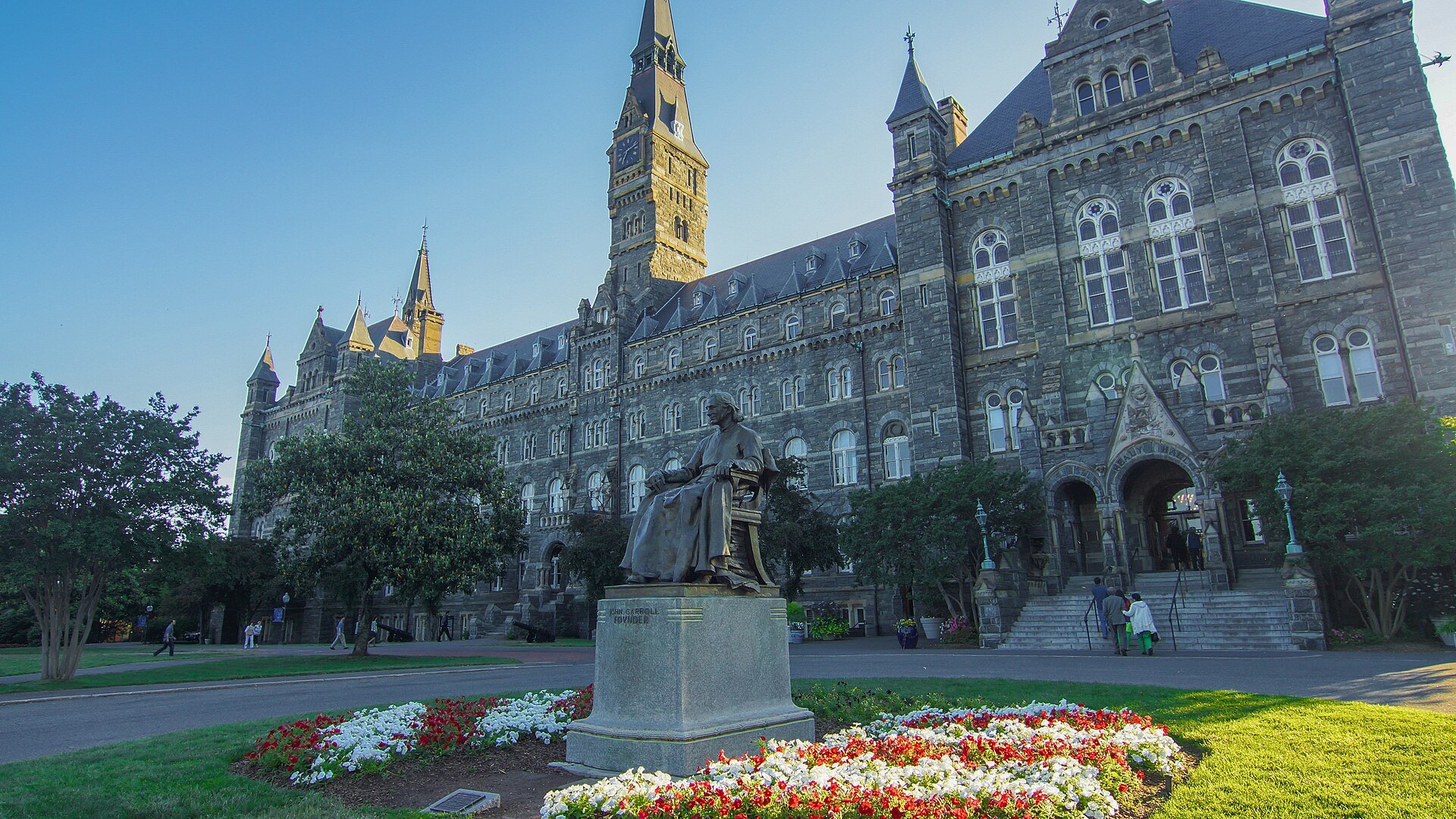
| Georgetown (McDonough) | BS in Business Administration | First-year enrollment in McDonough; internal transfer possible | Seven majors; the core includes Ethical Values of Business (McDonough) |
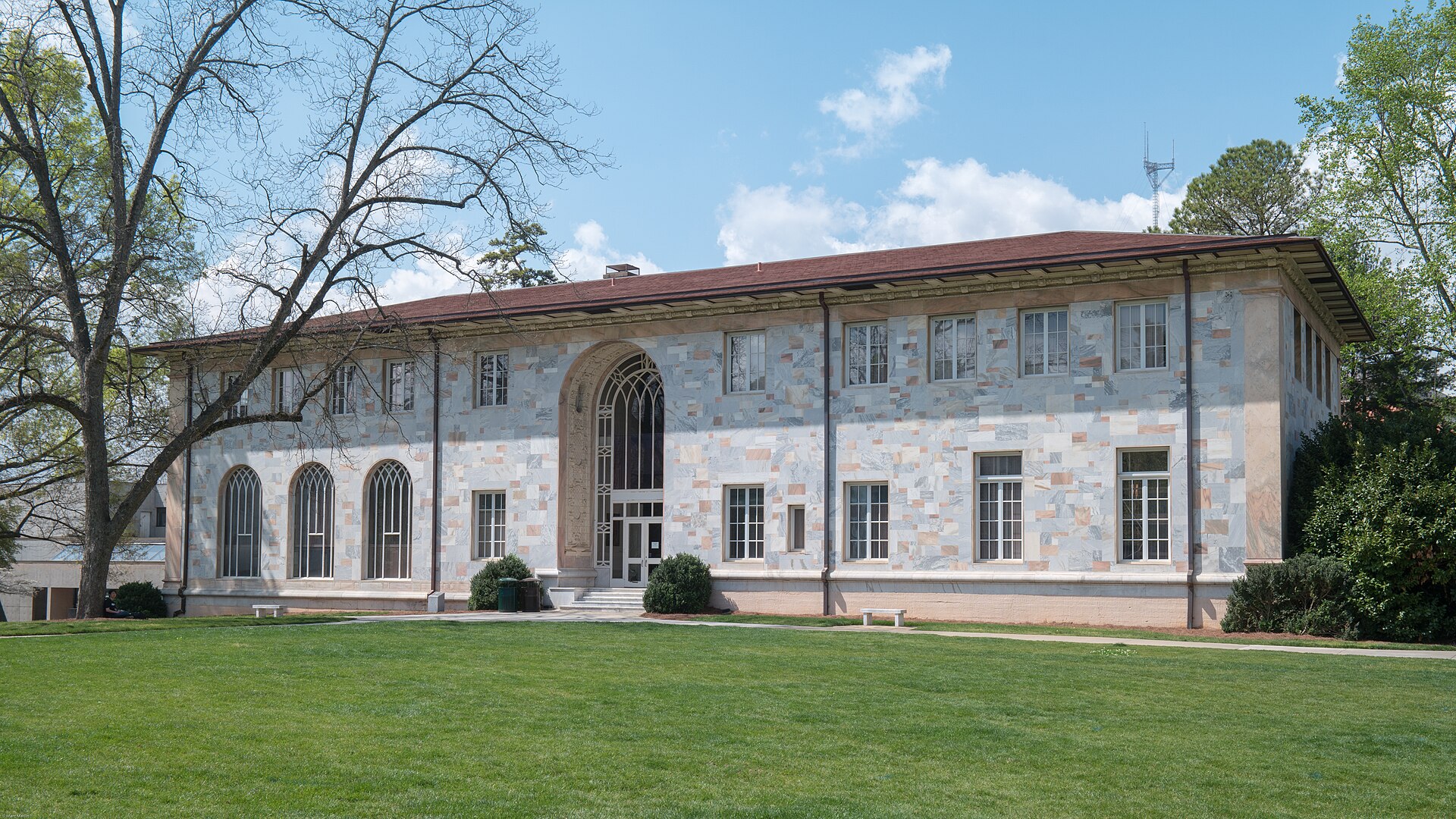
| Emory (Goizueta) | Bachelor of Business Administration | Internal: from Emory or Oxford College in sophomore or junior year | Goizueta Scholars have guaranteed admission (Goizueta) |
| Boston College (Carroll) | Bachelor’s degree with one or two concentrations | Direct as a first-year; no more than 10 internal transfers per class, by lottery | Portico, a three-credit course for all first-year Carroll students (Carroll) |
| University of Illinois (Gies) | BS in the chosen business major | Direct into Business Undeclared; major declared by end of sophomore year | A required four-year cohort sequence, BUS 101 to BUS 401 (Illinois catalog) |
| University of Wisconsin-Madison | Bachelor of Business Administration | Direct as first-choice major, or later as pre-business | Nearly half of students are admitted through the pre-business process (Wisconsin School of Business) |
| Indiana University (Kelley) | BS in Business | Direct admission through a comprehensive academic review since fall 2026 | 20 majors and co-majors (Kelley) |
Which Business Schools Admit Students Directly From High School?
Wharton, NYU Stern, WashU Olin, Cornell’s Dyson and Nolan schools, USC Marshall, Carnegie Mellon Tepper, UT Austin McCombs, Boston College’s Carroll School, Illinois Gies and Indiana Kelley admit first-year students straight into business. At these schools the business school reads the application from the start, and moving in later is hard: Boston College accepts no more than 10 internal transfers into Carroll in any class year, chosen by lottery (Carroll School FAQ).
Michigan Ross enrolls about 80% of its BBA class through Preferred Admission as high school seniors and adds about 100 students per class who transfer in from elsewhere at Michigan (Ross). UNC Kenan-Flagler admits about 70% of its business majors from high school through Assured Enrollment, which includes the Future Business Admits program (Kenan-Flagler; Kenan-Flagler), and planned to double that program from 200 students in 2025 to 400 in 2026 (UNC). Berkeley now admits most of its Haas class directly into the four-year Spieker program, 205 of 353 entering students in fall 2026 (Haas), while current Berkeley students can still apply in their sophomore year (Haas) and transfer students can apply to the two-year program (Haas). Wisconsin admits some first-year students directly and nearly half through the pre-business process, and Notre Dame tells admitted students at the time of admission whether they are preapproved to major in business at the end of their first year, with limited entry later (Notre Dame).
Two well-known programs admit only students already enrolled. Virginia McIntire’s BS in Commerce is a three-year program (McIntire) that students apply to in the spring of their first year (McIntire), and Emory’s Goizueta BBA admits students from Emory and Oxford colleges in sophomore or junior year, apart from Goizueta Scholars (Goizueta). At MIT there is no business admission at all; students admitted to MIT choose a Course 15 major after enrolling.
How Do the Top Private Business Programs Differ?
Wharton awards every undergraduate a BS in Economics and lets students choose from over 19 concentrations of four courses each (Wharton), which makes it easy to add a second concentration. NYU Stern offers 13 concentrations and two specialized degrees, one in Business and Political Economy with two semesters of study away and one in Business, Technology and Entrepreneurship (Stern). WashU Olin builds breadth into the degree, requiring at least 40% of classes outside business across eight majors (Olin).
Carnegie Mellon Tepper is small and quantitative: 236 students entered in 2025, and its concentrations now include AI and Business (Tepper). Georgetown McDonough offers seven majors with a core that includes Ethical Values of Business (McDonough), and USC Marshall enrolled 588 first-year students in fall 2025 (Marshall). At Cornell, students choose between two business schools on the Common App: Dyson for applied economics and management, and Nolan for hotel administration.
Which Public Universities Have the Best Business Programs?
Michigan Ross admitted 924 of 13,019 first-year applicants for fall 2025, about 7.1%, and its application asks for four essays (Ross). UT Austin McCombs reported a 9% acceptance rate into its BBA for 2025 (McCombs), and Berkeley Haas enrolled 205 four-year Spieker students in its fall 2026 class (Haas).
Indiana Kelley changed its process for students entering in fall 2026: all applicants are now considered for direct admission through a comprehensive academic review (Kelley), and there are no criteria for automatic direct admission (Kelley). Illinois Gies admits students directly into Business Undeclared and runs a required cohort sequence from BUS 101 to BUS 401 (Gies; Illinois catalog), while Virginia McIntire and the Wisconsin School of Business let students in during college.
Can You Study Business at an Ivy League School?
Yes, but only Penn and Cornell have undergraduate business schools: Wharton at Penn, and the Dyson and Nolan schools of Cornell’s SC Johnson College of Business. Brown offers a concentration in Business, Entrepreneurship and Organizations (Brown), and students at the other Ivy League universities who are interested in business usually major in economics; our guide to the best colleges for economics compares those programs, and Wharton vs Dyson vs Stern vs Ross compares the four best-known direct-admit programs.
What Do Graduates of Top Undergraduate Business Programs Earn?
Each school reports outcomes its own way. Some publish a median, some an average, and Stern reports total compensation including signing bonuses, so the figures below are not a ranking.
| Program | Class | Starting pay as reported | Source |
|---|---|---|---|
| Wharton (Penn) | Class of 2025 | $110,000 median starting salary | Penn Career Services |
| Georgetown McDonough | Class of 2025 | $102,780 average full-time salary | McDonough |
| Michigan Ross | Class of 2025 | $100,000 median base salary | Ross |
| Cornell Dyson | 2025 | $100,000 median base salary | Cornell |
| Berkeley Haas | Class of 2025 | $100,000 average starting salary | Haas |
| NYU Stern | Class of 2025 | $107,420 average total compensation, base plus signing bonus | Stern |
| Virginia McIntire | Class of 2025 | $94,747 average starting base salary | McIntire |
| Carnegie Mellon Tepper | Class of 2025 | $92,993 average salary | Carnegie Mellon |
| WashU Olin | Class of 2023 | $90,000 median base salary | Olin |
| Emory Goizueta | Class of 2025 | $85,000 median base salary | Goizueta |
| UNC Kenan-Flagler | Class of 2025 | $85,000 median base salary | Kenan-Flagler |
| UT Austin McCombs | Class of 2024 | $85,000 median base salary | McCombs |
| Illinois Gies | Class of 2025 | $81,000 median starting salary | Gies |
| Wisconsin | Class of 2025 | $74,689 average base salary | Wisconsin School of Business |
For context, the Bureau of Labor Statistics reported a May 2025 median of $103,570 for financial analysts and $101,860 for management analysts, two common destinations for business graduates (BLS; BLS).
Should a Student Study Business or Economics?
Business is the most common bachelor’s degree in the United States: 375,418 of the 2,015,035 bachelor’s degrees awarded in 2021-22 were in business, about 19%, in a category that NCES counts together with culinary, entertainment and personal services (NCES Digest, Table 322.10). A business degree teaches accounting, finance, marketing and management directly, and at direct-admit programs students start business courses in their first year. Economics is a social science with more theory and statistics, and it is the path at universities without a business school. Our comparison of undergraduate business vs economics covers the trade-offs, and the best colleges by major hub lists guides for related fields.
What Do Admissions Officers Look for in a Business Applicant?
Business programs read the same transcript as the rest of the university, then look for evidence of interest that goes beyond a stated goal:
- Coursework. Calculus by senior year, statistics, and economics where offered; Wharton, Stern, Tepper and Ross are quantitative programs.
- Initiative with results. A business, a nonprofit, a club or a project that the student built or grew, with numbers to show for it.
- A specific answer to why business. Ross asks four essays, and most direct-admit schools ask why the student wants that particular program.
Oriel Admissions works with students interested in business from 9th or 10th grade on a math sequence that reaches calculus, one sustained project with measurable results, and a list that balances direct-admit programs with universities where business can be entered later. For the early round at these schools, see Early Decision vs Regular Decision acceptance rates.
Frequently Asked Questions About the Best Colleges for Business
There is no single best program. Wharton, NYU Stern, MIT Sloan, Michigan Ross, Berkeley Haas, WashU Olin and Cornell are among the strongest, and the right choice depends on the admission route, the curriculum and the career goal.
Wharton, NYU Stern, WashU Olin, Cornell Dyson and Nolan, USC Marshall, Carnegie Mellon Tepper, UT Austin McCombs, Boston College Carroll, Illinois Gies and Indiana Kelley admit first-year students directly. Michigan Ross enrolls about 80% of its class from high school through Preferred Admission.
Virginia McIntire admits students in the spring of their first year for a three-year program, and Emory Goizueta admits students from Emory or Oxford College in sophomore or junior year, apart from Goizueta Scholars.
Yes. Penn (Wharton) and Cornell (Dyson and Nolan) are the only Ivy League universities with undergraduate business schools, and Brown offers a concentration in Business, Entrepreneurship and Organizations. Students at the other Ivies usually major in economics.
Wharton reported a $110,000 median starting salary for the Class of 2025, Michigan Ross a $100,000 median base salary, and Georgetown McDonough a $102,780 average. Each school measures pay differently.
Ross admitted 924 of 13,019 first-year applicants for fall 2025, and McCombs reported a 9% acceptance rate into its BBA for 2025.
It depends on the student and the university. Business teaches the functions of a company directly, while economics is the usual route at universities without a business school.
Reach calculus by senior year, take statistics and economics if offered, and build one project with measurable results. Oriel Admissions also advises balancing direct-admit programs with universities where business can be entered later.
Sources: Wharton concentrations, Penn Career Services, Wharton Class of 2025, Michigan Ross admissions, Michigan Ross employment data, NYU Stern undergraduate programs, NYU Stern Class of 2025 outcomes, Berkeley Haas class profile, Berkeley Haas career resources, Berkeley Haas continuing students, Berkeley Haas transfer students, Brown Business, Entrepreneurship and Organizations, Michigan Ross 2025 employment news, McCombs BBA program, Illinois catalog, Business Undeclared, Kelley first-year admissions, McIntire first-year applicants, Kenan-Flagler Future Business Admits, MIT catalog, Course 15-1, McIntire BS in Commerce, Kelley direct admission announcement, Kelley salary statistics, McCombs BBA admissions and cost, McCombs BBA employment report, UNC news on Kenan-Flagler admissions, Kenan-Flagler Class of 2025 guide, Tepper fact sheet, Olin BSBA curriculum, Olin BSBA employment report, Cornell Dyson, Cornell Nolan, Mendoza undergraduate, Notre Dame business major policy, McDonough curriculum, McDonough salaries, USC Marshall school profile, USC Marshall global opportunities, Goizueta eligibility, Goizueta employment report, Carroll School FAQ, Gies admissions FAQ, Gies outcomes, Wisconsin School of Business FAQ, Wisconsin School of Business careers, NCES Digest Table 322.10, BLS, financial analysts, BLS, management analysts
About Oriel Admissions
Oriel Admissions is a Princeton-based college admissions consulting firm advising families nationwide on elite university admissions strategy. Our team brings deep expertise across every dimension of the application, and our distinctive 360 approach develops strategy, positioning, activities, essays, and interviews as one coherent whole. To discuss your family’s admissions strategy, schedule a consultation.