What is Carleton College’s overall acceptance rate, and how selective is it?
Carleton College’s overall acceptance rate for the Class of 2029 was 20%, with 1,451 students admitted from 7,449 applications and 518 enrolling, per Carleton’s official Class of 2029 Profile. The 35% yield rate is a meaningful indicator: yield reflects the percentage of admitted students who choose to enroll, and 35% places Carleton in the strong tier among elite LACs (comparable to Pomona, Bowdoin, Wesleyan), reflecting the college’s strong appeal to admitted students who genuinely prioritize the Carleton experience over peer offerings.
The strategic implication for affluent families is that Carleton sits at the top of the second-tier LAC selectivity range, meaningfully more accessible than Williams (8.5%), Amherst (7.4%), or Pomona (~7.2%) but comparable to Wellesley (13.7%) and Bowdoin (~7%) on yield strength. Families who underestimate Carleton based on the 20% acceptance rate often underestimate the academic rigor; admitted Carleton students consistently present academic profiles comparable to admitted students at the most selective East Coast LACs. For comparison, see our Williams vs. Amherst vs. Swarthmore guide.
What is Carleton’s trimester calendar, and how does it shape the academic experience?
Carleton operates on a trimester (technically “quarter,” 10-week-term) academic calendar rather than the standard semester system used at most LACs. The trimester structure produces three terms per academic year (fall, winter, spring) plus a summer break. Each term, students typically take three courses, each meeting more intensively than they would on a semester schedule. The structure has two consequential effects: students take more discrete courses across four years (typically 36 courses for graduation, versus 32 at a semester-system LAC), and each course covers material at greater intensity within a shorter window.
The strategic implication for applicants is that Carleton genuinely selects for intellectual seriousness and the ability to thrive in compressed-but-deep academic engagement. Students drawn to slower-paced semester structures or who prefer shallower coverage across more topics often struggle with the trimester intensity. Carleton’s admissions readers screen for fit with this academic culture: applicants who present as casual academic engagers without demonstrated capacity for deep focus often face deferral or denial regardless of GPA or test scores.
What does the Class of 2029 student profile look like?
| Metric | Carleton Class of 2029 |
|---|---|
| Total applications received | 7,449 |
| Total admits | 1,451 |
| Total enrolled | 518 |
| Overall acceptance rate | 20% |
| Yield rate | 35% |
| U.S. states represented | 44 |
| U.S. high schools represented | 422 |
| International countries represented | 17 |
| BIPOC representation | 32% |
| Total undergraduate enrollment | ~2,100 |
| Setting | Northfield, Minnesota |
| Defining academic features | Trimester calendar; top-10 STEM PhD placement; 87% law school acceptance |
| Athletics conference | MIAC (Division III) |
What are Carleton’s STEM PhD and graduate school placement strengths?
Carleton consistently ranks in the top 10 nationally for the percentage of graduates who go on to earn STEM PhDs, a metric that reflects both the strength of the undergraduate science curriculum and the depth of faculty mentorship at the undergraduate level. The college’s small size (~2,100 undergraduates) combined with serious research infrastructure produces a faculty-to-student dynamic that closely resembles graduate school: undergraduates work directly with faculty on research, often as co-authors on publications, and develop the methodological grounding that PhD programs explicitly select for. The 87% law school acceptance rate similarly reflects Carleton’s pre-law preparation and the alumni network’s continued strength in elite legal markets.
The strategic implication for affluent families is that Carleton is a meaningfully better fit than peer LACs for students with serious graduate school aspirations, particularly in STEM fields. Carleton’s 87% law school acceptance and top-10 STEM PhD placement are documented strengths that do not appear at the same level even at the most selective East Coast LACs. For broader analysis of LAC versus research university trade-offs, see our Liberal Arts Colleges vs. Research Universities guide.
What is Northfield, Minnesota like as a setting?
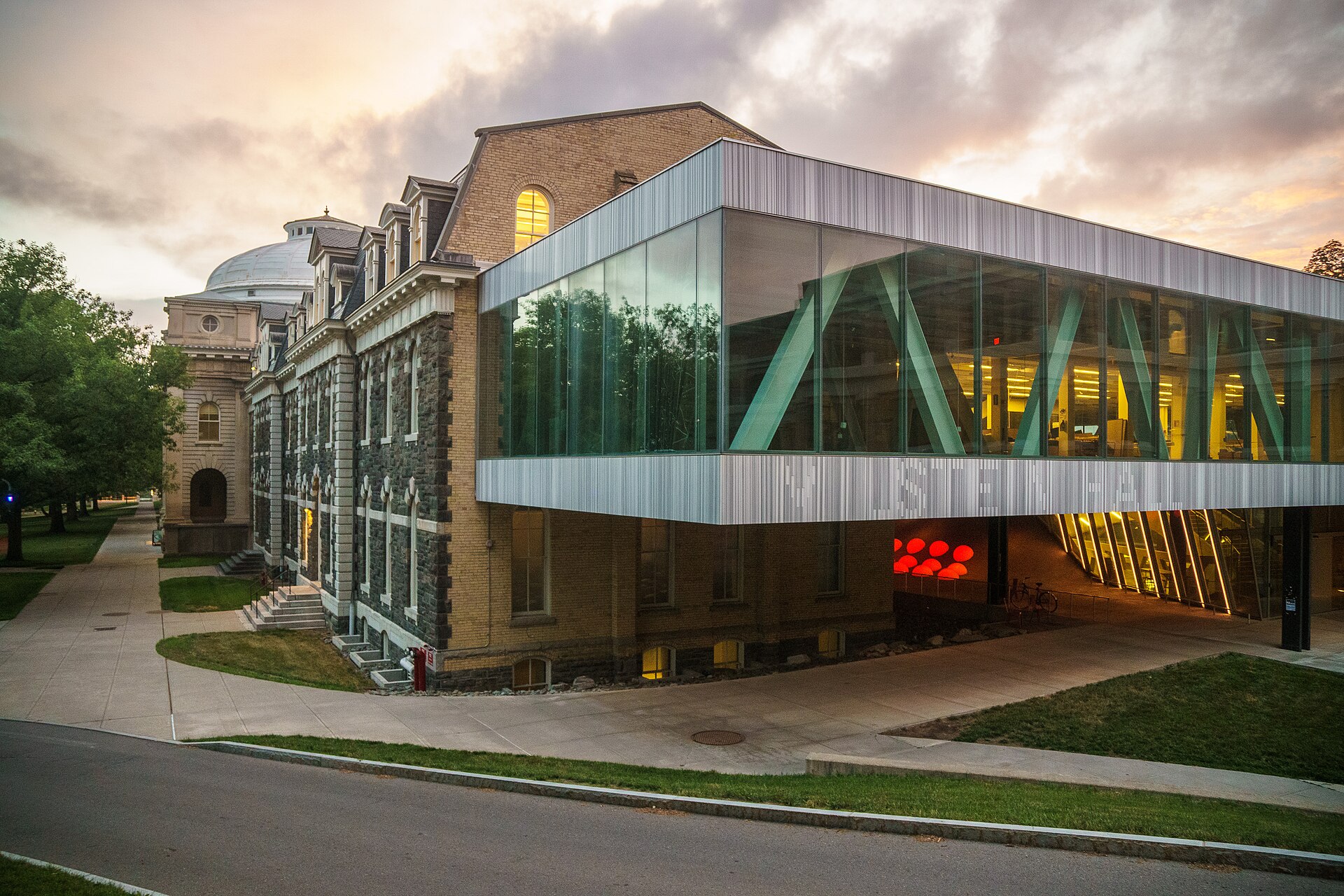
Carleton occupies a contiguous campus in Northfield, Minnesota, a small college town of approximately 20,000 residents about 45 minutes south of the Twin Cities (Minneapolis-Saint Paul). The town is unusual in that it hosts two liberal arts colleges in close proximity: Carleton and St. Olaf College. Northfield itself is a quiet, walkable college town with the Cannon River running through it, a small downtown, and a strong sense of place. The campus is contained, residential, and surrounded by Minnesota’s distinctive prairie-and-woodland landscape.
For affluent families weighing Carleton against East Coast peers, the geographic isolation is a real factor. Minnesota winters are genuinely cold (sustained sub-zero temperatures from December through February), the nearest major airport (MSP) is 45 minutes by car, and the East Coast professional networks that anchor Williams, Amherst, and Wellesley are less geographically immediate. The trade-off: Carleton’s culture is meaningfully different from East Coast peers – more genuinely intellectually serious, less prestige-obsessed, and more focused on the academic experience itself rather than its credential value.
What kind of applicant does Carleton actually admit?
Carleton admissions readers are looking for genuine intellectual seriousness, demonstrated capacity for sustained academic engagement, and authentic fit with the college’s distinctive culture. Carleton’s institutional identity is more academically intense and less prestige-driven than peer East Coast LACs, and admissions readers screen for fit with that culture. Applicants who present themselves primarily through prestige metrics (Ivy-comparable test scores, status-oriented activities, elite-school resume building) without demonstrating intellectual depth often face deferral or denial.
The strongest Carleton applications demonstrate three things. First, intellectual depth in at least one substantive area, demonstrated through coursework, independent reading, original work, or research. Second, capacity for sustained academic intensity, demonstrated through challenging course loads completed with strong grades, original projects sustained over multiple years, or research with measurable depth. Third, genuine fit with Carleton’s culture, demonstrated through specific knowledge of the trimester structure, named faculty whose work the applicant has engaged with, or the college’s distinctive Midwestern-progressive intellectual tradition. Generic applications that emphasize standardized achievement without these elements consistently underperform.
What is Carleton’s supplemental essay strategy?
Carleton’s supplemental essays are designed to surface intellectual personality and authentic fit with the college’s distinctive culture. The “why Carleton” essay rewards applicants who demonstrate concrete engagement with the trimester structure, named faculty research, the Carleton intellectual tradition, or specific programs (the Cognitive Science department, the Statistics and Data Science programs, the Carleton-in-context programs in Asia). Generic answers about “small classes” or “supportive community” without engagement with Carleton’s specific identity fail.
The strategic implication is that families should approach Carleton’s supplements as opportunities to demonstrate intellectual seriousness and authentic engagement with the college’s specific academic culture, not as opportunities to repeat resume content. Applicants who can name specific Carleton courses they want to take, faculty whose research they have read, or distinctive programs they want to engage with are the applicants who succeed.
How does Carleton compare on cost and financial aid for high-income families?
Carleton’s 2025-26 total cost of attendance is approximately $90,000-$92,000, including tuition, housing, food, and fees, comparable to peer LACs at the same selectivity tier. Carleton is need-blind for U.S. applicants and meets demonstrated financial need for admitted students. The college’s institutional aid is meaningful but more limited than the wealthiest peers (Williams, Amherst, Pomona, Swarthmore), reflecting Carleton’s smaller per-student endowment.
Affluent families above standard need-based thresholds should evaluate the actual aid package after applying rather than assume aid generosity comparable to the wealthiest peer LACs. For broader analysis of how high-income families fare under elite financial aid policies, see our Harvard financial aid expansion guide.
What is the right academic profile for a Carleton applicant?
Carleton’s admitted student profile is comparable to other top-tier LACs at the upper end of the academic profile. Successful applicants typically present unweighted GPAs in the 3.85-4.0 range with rigorous course loads (multiple AP, IB, or college-level courses, particularly in their area of intellectual focus). Standardized testing is currently optional at Carleton, but admitted students who submitted scores typically reported SAT scores in the 1450-1550 range or ACT scores of 32-34.
Beyond grades and scores, the academic profile that succeeds at Carleton demonstrates capacity for the trimester intensity. Successful applicants often show evidence of independent reading beyond the curriculum, sustained engagement with research, original work in mathematics or science, or substantive intellectual projects sustained over multiple years. The “spike plus academic seriousness” profile that succeeds at Williams, Amherst, and Pomona also succeeds at Carleton; applicants who present as well-rounded but without a clear intellectual identity often face deferral or denial.
What is Carleton’s Early Decision strategy?
Carleton offers both Early Decision I (binding, November 15 deadline) and Early Decision II (binding, January 15 deadline). The college admits a meaningful portion of its class through binding ED, though Carleton does not publicly disclose precise ED-specific acceptance rates for the Class of 2029. Historical patterns suggest ED rates in the 30-35% range, meaningfully higher than the 20% overall rate.
The strategic implication is that ED applicants face a higher admit probability than RD applicants, but the choice should be driven by genuine first-choice fit. Carleton’s admissions readers are skilled at identifying strategic ED applications without authentic engagement with the trimester structure, the Northfield setting, and the academically serious culture. For broader analysis of ED versus RD strategy, see our ED vs. RD Advantage Calculator.
What are Carleton’s distinctive programs and post-graduation outcomes?
Carleton’s signature distinctive programs include the Carleton-in-context global programs (with sites in Asia, Europe, Latin America, and Africa), the Cognitive Science department (one of the strongest at any LAC), and the Statistics and Data Science programs that anchor Carleton’s STEM strength. The college’s research infrastructure produces undergraduate co-authorship on faculty publications at rates comparable to substantially larger research universities. The 87% law school acceptance rate and top-10-nationally STEM PhD placement rate are documented indicators of post-graduation strength.
Carleton’s medical school placement is competitive, supported by the college’s strong pre-med curriculum and the science research infrastructure. The Carleton alumni community is strongly Midwestern-concentrated but increasingly national, with strong representation in tech (the Twin Cities and Chicago corridors), academia, and the legal profession. Notable Carleton alumni include former U.S. Vice President Hubert Humphrey, the historian and former U.S. Supreme Court clerk Garry Wills, and the geneticist Ann Marie Pendergast.
Why is Carleton’s culture genuinely different from East Coast peer LACs?
Three structural differences set Carleton apart from East Coast LACs in ways that admissions readers actively select for. First, the academic culture is more genuinely intellectually serious and less prestige-obsessed. Carleton students who go on to Harvard PhD programs or McKinsey consulting roles typically frame those outcomes as natural extensions of academic seriousness rather than as status accomplishments to be optimized for. Applicants who present themselves through status-oriented activities (resume-building extracurriculars, prestige-school competitions, recognized award accumulation) without underlying intellectual depth read as poor cultural fit.
Second, the geographic isolation produces a different campus dynamic. Without easy access to a major city or East Coast professional networks, Carleton students engage more deeply with one another and with faculty during the academic year. The intellectual community is genuinely tight-knit in ways that East Coast peers, with their easier urban access, often are not. Faculty office hours, late-night dorm conversations about ideas, and student-led intellectual seminars are core Carleton experiences, not peripheral ones.
Third, the Midwestern progressive intellectual tradition – distinct from both Northeastern liberal-establishment and Southern conservative cultures – produces a campus political culture that genuinely engages with diverse viewpoints rather than performing them. Carleton’s student body skews academically serious and politically thoughtful in ways that affluent families looking for substantive intellectual environment (rather than ideological monoculture in either direction) often find appealing.
What are the most common mistakes applicants make when applying to Carleton?
Five mistakes recur. First, treating Carleton as a “safety” relative to top-10 East Coast LACs. The 20% acceptance rate masks academic standards comparable to substantially more selective peers. Second, ignoring the trimester structure in supplements. The 10-week-term cadence is Carleton’s defining academic feature, and applications that ignore it signal poor fit.
Third, generic “why Carleton” essays. Strong essays demonstrate specific engagement with named faculty, named programs, the Carleton-in-context global programs, or the trimester calendar. Fourth, presenting through prestige metrics without intellectual depth. Carleton’s culture rewards genuine intellectual seriousness over status-oriented activities. Fifth, underestimating Northfield as a real consideration. Students who cannot authentically thrive in a small Minnesota college town for four years often face deferral if the application reads as Carleton-as-second-choice.
For deeper analysis of why high-stat applicants get rejected from elite institutions, see why valedictorians get rejected from Ivies. For broader application strategy, see our college application spike strategy guide. Carleton’s pattern of admissions reader recognition is broadly consistent with NACAC-documented norms (see the National Association for College Admission Counseling State of College Admission report).
Best for which student?
Best for intellectually serious students who prioritize academic intensity over prestige optics: Carleton’s trimester structure rewards deep engagement. Best for students with serious graduate school aspirations, particularly in STEM fields: Carleton’s top-10 STEM PhD placement and 87% law school acceptance are documented strengths. Best for students drawn to a quiet residential college experience in a Midwestern setting rather than an urban or suburban East Coast campus: Carleton’s Northfield setting is genuinely distinctive. Best for students who can articulate specific intellectual fit with the trimester structure, named faculty, and the Carleton-in-context global programs.
Frequently Asked Questions About Getting Into Carleton College
Carleton is in Northfield, a small town in Minnesota roughly 40 miles south of Minneapolis and St. Paul. The setting is a classic Midwestern college town, with Carleton sharing Northfield with St. Olaf College nearby. Its location offers a quiet, residential campus and a strong sense of community, with the Twin Cities accessible for internships and city life, distinguishing it from the East Coast liberal arts colleges it often competes with.
Hard; Carleton’s acceptance rate sits in the high teens to around 20 percent, making it highly selective though more accessible than the very lowest-admit liberal arts colleges. Admitted students typically present strong grades and demanding courses. Because Carleton uses holistic review and values intellectual curiosity and fit, essays and demonstrated interest carry real weight alongside academics in choosing among a deep pool of qualified applicants for limited seats.
Carleton is known as one of the top liberal arts colleges in the country, with particular strength in the sciences and mathematics and an outstanding record of sending graduates on to PhD programs. It is also recognized for a collaborative, quirky, intellectually serious yet low-ego campus culture. Among elite liberal arts colleges it stands out for academic rigor paired with an unpretentious, community-minded Midwestern character.
Yes; Carleton consistently ranks among the very top national liberal arts colleges, frequently in the top ten, and is regarded as a peer of elite Eastern colleges like Williams, Amherst, and Swarthmore despite its Midwestern location. It is sometimes grouped with the informal elite of small colleges. Rankings shift yearly and vary by methodology, but Carleton’s standing at or near the top of liberal arts rankings is well established.
Carleton has used a test-optional policy in recent admissions cycles, allowing applicants to choose whether to submit SAT or ACT scores, with non-submitters not disadvantaged in review. Testing policies among selective colleges shift frequently, so confirm the current requirement on Carleton’s admissions site for your application year. Under a test-optional policy, strong scores can still strengthen a file, but the review remains holistic whether or not you submit.
Yes, for applicants who choose to submit scores; Carleton considers the highest section results across multiple test dates, combining them into the best composite. A stronger Math from one sitting paired with stronger Reading and Writing from another counts together, rewarding focused retakes. Because Carleton has been test-optional, sending scores is optional, but those who do benefit from the superscoring approach when their sections peaked on different dates.
Yes, in a limited way; unlike many of the most elite liberal arts colleges that give need-based aid only, Carleton offers some competitive merit scholarships alongside generous need-based aid that meets full demonstrated need. Merit awards are limited and competitive, often favoring very strong academic profiles. Most aid still flows through need-based programs, but the availability of some merit aid distinguishes Carleton from peers that offer none.
Carleton competes in NCAA Division III as part of the Minnesota Intercollegiate Athletic Conference (MIAC), so it offers no athletic scholarships and frames sports around the academic-first balance typical of elite liberal arts colleges. Recruited athletes still meet Carleton’s rigorous admissions standards. Athletics are competitive but not the campus’s central focus, suiting students who want to keep playing a sport while prioritizing a demanding academic program.
About Oriel Admissions
Oriel Admissions is a Princeton-based college admissions consulting firm advising families nationwide on elite university admissions strategy. Our team brings deep expertise across every dimension of the application, and our distinctive 360 approach develops strategy, positioning, activities, essays, and interviews as one coherent whole. To discuss your family’s admissions strategy, schedule a consultation.