What Makes a College One of the Best Colleges for Marine Biology?
Marine biology is a field science. The best colleges for marine biology are not the ones with the most famous name but the ones where undergraduates reach the water early and often, under faculty who study it. Five things separate the strong programs from the rest.
- A marine lab or field station the undergraduates actually use. Many universities own a coastal station that serves graduate students and visiting researchers only. The question is whether undergraduates take courses there, for how long, and starting in which year.
- A real marine biology degree, or a biology degree with a marine concentration. Both can work, but the standalone major usually comes with more required field courses, boat time, and a department that is built around the ocean.
- An immersion semester or quarter. A full term spent living and studying at a coastal station is the single experience that separates serious programs from a biology department with one marine elective.
- Research vessels, seawater systems, and dive training. Scientific diving certification, a seawater laboratory on campus, and access to a research vessel are concrete signs that the program is equipped for undergraduate research.
- Honesty about outcomes. Marine biology is a graduate-school field for most research careers. A strong program says so and prepares students for it with statistics, chemistry, and a thesis, rather than selling the major as a direct route to a dolphin.
Which Colleges Are Best for Marine Biology?
The table below lists the best colleges for marine biology in order of acceptance rate, because a student needs reach, target, and likely schools. The rates are for the university as a whole, not the major, and run from 3.8 percent at Stanford to 98 percent at Cal Poly Humboldt, with Alaska Fairbanks open to all qualified applicants. Each entry names the degree as the university itself names it and the field facility undergraduates use.
| University | Undergraduate degree | Field station and what undergraduates do there | Acceptance rate (latest cycle) |
|---|---|---|---|
| Stanford University | Biology BS (no marine major); full spring quarter in residence at Hopkins Marine Station | Hopkins Marine Station in Pacific Grove, 90 miles from campus; spring residence open to all majors by application | 3.8% (fall 2025) |
| Duke University | Marine Science and Conservation BS or AB | Duke Marine Lab in Beaufort, NC; any Duke undergraduate can spend a fall, spring, or summer there; R/V Shearwater | 4.7% (fall 2026) |
| Northeastern University | Marine Biology BS; separate Three Seas track | Three Seas: fall at the Nahant Marine Science Center, then Panama and Friday Harbor; 20 students a year, scientific diving certification | 5.6% (fall 2025) |
| UCLA | Marine Biology BS (Ecology and Evolutionary Biology) | Required field quarter, normally the Marine Biology Quarter, recently run at the Gump Station in Moorea by competitive application; declare with a C- or better in introductory life sciences | 9.4% (fall 2025) |
| Boston University | BA in Marine Science (BU Marine Program) | Required fall Marine Semester of four short courses; fieldwork in New England and on the Belize Barrier Reef | 12.8% (fall 2025) |
| UNC Chapel Hill | Earth and Marine Sciences BS, Marine Biology and Ecology concentration | Fall in-residence semester at the Institute of Marine Sciences in Morehead City; 48-foot R/V Capricorn and running seawater | 16.7% (fall 2025) |
| University of Miami | Marine Biology and Ecology BSMAS (Rosenstiel School) | Research campus on Virginia Key with a research catamaran; the school calls admission selective and requires a 2.5 GPA to stay | 19% (fall 2024) |
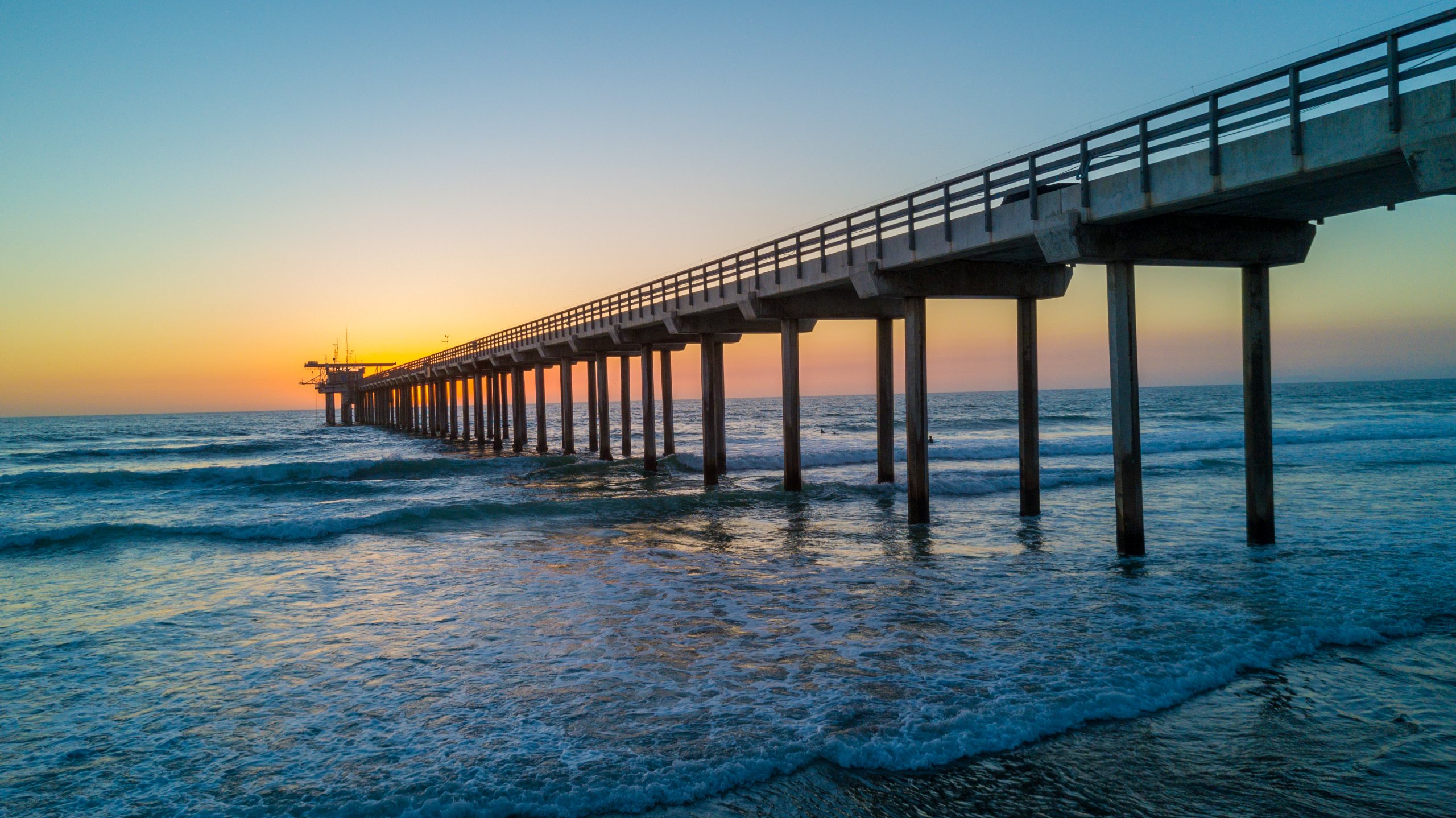
| UC San Diego | Marine Biology BS (Scripps Institution of Oceanography) | Taught by Scripps; course field trips aboard R/V Robert Gordon Sproul; honors program at 3.3 overall and 3.5 major GPA | 27.2% (fall 2026) |
| William and Mary | Coastal and Marine Sciences BS (new in fall 2025) | Full immersion semester at VIMS in Gloucester Point; competitive admission to the major by spring of sophomore year; tuition scholarship for admitted majors | 37.0% (fall 2025) |
| University of Washington | Marine Biology BS | Open major, declared any time in good standing; a quarter at Friday Harbor Laboratories on San Juan Island | 41.7% (fall 2025) |
| University of South Florida | Marine Biology BS | St. Petersburg campus sits next to the USF College of Marine Science; internships with NOAA, USGS, and the state fisheries institute | 43% (fall 2024) |
| UC Santa Barbara | Aquatic Biology BS (no major named marine biology) | Students enter as pre-biology and petition to declare; four UC reserves and the Marine Science Institute; student-run REEF seawater aquarium | 44.0% (fall 2026) |
| Rollins College | Marine Biology BA | No more than 12 students in any upper-level marine biology class; two-week field course in the Bahamas or Maine; Duke Marine Lab semester available | 48% (fall 2024) |
| Stony Brook University | Marine Vertebrate Biology BS and Marine Sciences BS | Semester by the Sea at the Southampton campus on Shinnecock Bay, fall and spring | 49% (fall 2024) |
| Florida Institute of Technology | Marine Biology BS | Campus minutes from the Indian River Lagoon; summer field courses in Puerto Rico, the Galapagos, and the Pacific Northwest | 57.7% (fall 2024) |
| College of Charleston | Marine Biology BS; accelerated BS to MS | Grice Marine Laboratory at Fort Johnson on James Island, shared with NOAA and the state natural resources agency | 60% (fall 2024) |
| UNC Wilmington | Marine Biology BS | Center for Marine Science with waterside sites at Myrtle Grove and Wrightsville Beach, a vessel fleet, and a shellfish hatchery | 64.7% (fall 2025) |
| Florida Atlantic University | Marine Biology concentration (Wilkes Honors College, joint with Harbor Branch) | Spring Semester by the Sea at the Harbor Branch Oceanographic Institute in Fort Pierce, a 12-credit core open to undergraduates from any institution | 66% (fall 2024) |
| University of South Alabama | Marine Sciences BS (Stokes School of Marine and Environmental Sciences) | Spring semester of junior or senior year at the Dauphin Island Sea Lab, 35 miles south of campus; the Sea Lab also serves 21 other Alabama colleges | 71% (fall 2024) |
| University of Rhode Island | Marine Biology BS | Over 200 students in the major; access to the Graduate School of Oceanography Bay Campus and the Inner Space Center | 72% (fall 2024) |
| UC Santa Cruz | Marine Biology BS | Department sits on the Coastal Science Campus next to Long Marine Laboratory; Marine Ecology Field Quarter; C or better in qualification courses | 72.7% (fall 2025) |
| Nova Southeastern University | Marine Biology BS | Oceanographic Campus in Dania Beach with the 86,000-square-foot Guy Harvey Oceanographic Research Center within 100 meters of the Atlantic | 73% (fall 2024) |
| Eckerd College | Marine Science BS, Marine Biology track | Galbraith Marine Science Laboratory with flow-through seawater from Tampa Bay; offshore powerboats and a student dolphin project | 76% (fall 2024) |
| Oregon State University | Biology BS, Marine Biology and Ecology option | At least one term in residence at Hatfield Marine Science Center in Newport is required; 15-credit spring block by application | 78.9% (fall 2025) |
| San Jose State University | Marine Biology BS | Specialized coursework at Moss Landing Marine Laboratories on Monterey Bay; R/V Point Sur and R/V John Martin | 85% (fall 2024) |
| Hawaii Pacific University | Marine Biology BS | Labs at the Hawaii Loa campus and the 56-acre Oceanic Institute at Makapuu Point; 42-foot research vessel Kaholo | 86% (fall 2024) |
| University of Hawaii at Manoa | Marine Biology BA and BS | Four-week field course living on Coconut Island at the Hawaii Institute of Marine Biology; OPIHI intertidal monitoring | 87% (fall 2024) |
| Roger Williams University | Marine Biology BS and BA | Wet lab and shellfish hatchery; a learning platform extending 200 feet into Mount Hope Bay; over 80 students a year in faculty research | 88% (fall 2024) |
| University of Oregon | Marine Biology BA or BS | Three terms in residence required at the Oregon Institute of Marine Biology in Charleston on Coos Bay, a full academic year at the station; research vessel Megalopa | 88% (fall 2024) |
| University of New England | Marine Sciences BS, Marine Biology track | Girard Marine Science Center on the Biddeford campus where the Saco River meets the Atlantic; Galapagos course and a semester in Iceland | 92% (fall 2024) |
| University of Maine | Marine Sciences BS, Marine Biology concentration | Semester by the Sea in residence at the Darling Marine Center on the Damariscotta River, juniors and seniors | 97% (fall 2024) |
| Cal Poly Humboldt | Marine Biology BS | Telonicher Marine Laboratory in Trinidad, 14 miles from campus; R/V Coral Sea, one of the largest research vessels dedicated to undergraduates | 98% (fall 2024) |
| Texas A&M University at Galveston | Marine Biology BS, Marine Fisheries BS, Marine Biology License Option | Entire campus on Galveston Bay; students intern at the Sea Life Facility | Reported with Texas A&M main campus |
| University of Alaska Fairbanks | Fisheries and Marine Sciences BS, Marine Biology concentration | Field courses at Kasitsna Bay Laboratory near Homer; the college operates the ice-capable R/V Sikuliaq | Open admission |
Which Selective Universities Have the Strongest Marine Biology Programs?
Stanford does not offer a marine biology major. Biology majors choose a subplan such as Ecology, Evolution and Environment, and any student can apply to spend a full spring quarter in residence at Hopkins Marine Station in Pacific Grove, 90 miles from campus. That quarter is the marine biology program, and it is one of the best in the country because of the faculty and the location on Monterey Bay. Admission to Stanford is the hard part; see our Stanford acceptance rate analysis.
Duke replaced its old concentration with full Marine Science and Conservation majors in fall 2021, offered as a BS or an AB through the Nicholas School. The Duke Marine Lab in Beaufort, North Carolina, takes any Duke undergraduate for a fall, spring, or summer term, and runs its own research vessels including the R/V Shearwater. Our Duke acceptance rate post covers the admissions picture.
Northeastern offers a Marine Biology BS and, for its own students, the Three Seas Program: a fall at the Marine Science Center in Nahant, Massachusetts, then about nine weeks at the Smithsonian station in Bocas del Toro, Panama, and eight weeks at Friday Harbor Laboratories in Washington. Twenty students join each fall cohort, a 3.0 GPA is required, and graduates leave certified in scientific diving. Boston University’s BA in Marine Science requires a fall Marine Semester of four short courses with fieldwork in New England and on the Belize Barrier Reef. See our Northeastern and Boston University acceptance rate posts.
The University of Miami’s Rosenstiel School awards a Marine Biology and Ecology BS, with classes on the Coral Gables campus and research on Virginia Key. The school describes admission to its undergraduate program as selective and requires students to maintain a 2.5 GPA. UC San Diego’s Marine Biology BS is taught by Scripps Institution of Oceanography, with course field trips aboard the research vessel Robert Gordon Sproul and a collaboration with the Birch Aquarium. UNC Chapel Hill teaches marine biology as a concentration in its Earth and Marine Sciences BS, with a fall semester in residence at the Institute of Marine Sciences in Morehead City. Our guides to the University of Miami, UC San Diego for out-of-state students, and UNC Chapel Hill for out-of-state students cover admission to each.
Which Public Universities Are Best for Marine Biology?
The University of Washington’s Marine Biology BS is an open major that any enrolled student in good standing can declare, which is unusual at a large public university where many science majors are capacity-constrained. Students can spend a quarter at Friday Harbor Laboratories on San Juan Island. Our University of Washington acceptance rate post explains the admissions picture for residents and non-residents.
UC Santa Cruz is the other West Coast public standout. Its Marine Biology BS lives on the Coastal Science Campus next to Long Marine Laboratory, which provides diving, boating, and seawater facilities, and students can take the multi-course Marine Ecology Field Quarter. UC Santa Barbara does not have a major named marine biology; its Aquatic Biology BS runs through four UC natural reserves and the Marine Science Institute, and students enter as pre-biology majors and petition to declare. See our guide to UC Santa Barbara for out-of-state students.
UCLA’s Marine Biology BS requires a field quarter, normally the Marine Biology Quarter, which has recently run at the Gump Station in Moorea, French Polynesia, by competitive application; the major is declared with a C- or better in the introductory life sciences course. See our UCLA acceptance rate analysis. The University of Oregon goes further than anyone: marine biology majors must spend three terms in residence at the Oregon Institute of Marine Biology in Charleston on Coos Bay, a full academic year living and studying at the station. Oregon State teaches marine biology as an option inside the Biology BS and requires at least one term in residence at the Hatfield Marine Science Center in Newport, through a 15-credit spring block or a summer track. Those residence requirements are rare and valuable: every graduate has lived at a working marine station. William and Mary launched a Coastal and Marine Sciences BS in fall 2025, the first such major at a Virginia public university, with a full immersion semester at the Virginia Institute of Marine Science in Gloucester Point, competitive admission to the major by spring of sophomore year, and a tuition scholarship for admitted majors.
Among the remaining public programs, the University of Rhode Island enrolls over 200 students in its Marine Biology BS and gives them access to the Graduate School of Oceanography’s Bay Campus. San Jose State’s Marine Biology BS sends undergraduates to Moss Landing Marine Laboratories on Monterey Bay for specialized coursework. Florida Atlantic teaches marine biology as an honors college concentration run jointly with the Harbor Branch Oceanographic Institute, and its spring Semester by the Sea in Fort Pierce is open to undergraduates from any institution. The University of South Alabama’s Marine Sciences BS sends students to the Dauphin Island Sea Lab for a spring semester of junior or senior year, and the Sea Lab also serves 21 other Alabama colleges in the summer. UNC Wilmington, the University of South Florida, Stony Brook, Texas A&M Galveston, the University of Hawaii at Manoa, the University of Maine, Cal Poly Humboldt, and the University of Alaska Fairbanks each pair the degree with a coastal facility, as the table shows. Cal Poly Humboldt deserves a particular mention: its R/V Coral Sea is described by the university as one of the largest research vessels in the country dedicated to undergraduate education.
Which Smaller Colleges Are Best for Marine Biology?
Six smaller institutions compete with the universities on access rather than scale. Eckerd College in St. Petersburg runs the Galbraith Marine Science Laboratory with seawater pumped directly from Tampa Bay, a fleet of offshore powerboats, and a long-running student dolphin project; its degree is a Marine Science BS with a marine biology track. The College of Charleston’s Marine Biology BS uses the Grice Marine Laboratory at Fort Johnson, a campus shared with federal and state marine agencies, and offers an accelerated BS to MS path.
Roger Williams University in Rhode Island offers both a BS and a BA in Marine Biology, with a wet lab, a shellfish hatchery, and a learning platform that extends 200 feet into Mount Hope Bay; the university says over 80 students a year work in faculty research or animal care. The University of New England in Maine teaches marine biology as a track in its Marine Sciences BS from a campus where the Saco River meets the Atlantic, with a Galapagos field course and a semester in Iceland. Florida Institute of Technology’s Marine Biology BS sits minutes from the Indian River Lagoon and sends students to summer field courses in Puerto Rico, the Galapagos, and the Pacific Northwest. Nova Southeastern’s Marine Biology BS is based around an Oceanographic Campus in Dania Beach whose 86,000-square-foot Guy Harvey Oceanographic Research Center sits within 100 meters of the Atlantic. Hawaii Pacific pairs its Marine Biology BS with the 56-acre Oceanic Institute at Makapuu Point and a 42-foot research vessel. Rollins College in Florida caps every upper-level marine biology class at 12 students and sends majors to a two-week field course in the Bahamas or Maine, or to a semester at the Duke Marine Lab.
Oriel Admissions often places one or two of these schools on a marine biology list as likely admits, because a student who wants to be in the water by sophomore year may get there faster at a small coastal college than at a famous university where the station is reserved for juniors.
Should You Major in Marine Biology or in Biology?
Thirteen of the 34 programs above do not have a major called marine biology. Stanford, Duke, Boston University, UNC Chapel Hill, Oregon State, Maine, Eckerd, the University of New England, Alaska Fairbanks, William and Mary, UC Santa Barbara, Florida Atlantic, and South Alabama teach the subject as a track, option, concentration, or related degree. That is not a weakness. A biology degree with a marine concentration can be the stronger preparation, because it keeps the full biology core of genetics, cell biology, and biochemistry that graduate programs expect.
The practical difference is flexibility. A student who discovers in sophomore year that the interest was really ecology, veterinary medicine, or environmental policy can pivot inside a biology major without changing degrees. A standalone marine biology major commits earlier and usually requires more field courses, which is exactly what a student who is certain wants.
The question to ask a department is simple: how many required courses meet at the water, and in which year do students first get there. By that test, the best colleges for marine biology are not always the ones with the major in the name: a standalone marine biology major that answers two and senior year is weaker than a biology concentration that answers five and freshman spring.
How Do You Judge a Marine Biology Program Beyond the Rankings?
- Count the field courses. Read the major requirements and count the courses that meet at the shore, on a boat, or at the station. One is an elective. Five is a program.
- Ask when undergraduates first reach the station. Some programs send first-year students to the coast in their first spring. Others reserve the station for seniors.
- Look for scientific diving. A university that trains and certifies undergraduate scientific divers under American Academy of Underwater Sciences standards is set up for underwater research.
- Check the chemistry and math requirements. Graduate programs in marine science expect a year of chemistry, calculus, and statistics. A marine biology major that skips them is a liability later.
- Read the senior thesis list. Departments that publish past undergraduate thesis titles show what students actually did with the station.
What Do Admissions Officers Look for in a Marine Biology Applicant?
At most universities marine biology sits inside a college of arts and sciences or a school of natural sciences, and the application is read for the sciences generally rather than for the ocean specifically. A few programs admit directly to the major or to a marine science school, and those read for fit. In either case the strongest applicants show that the interest survived contact with real work.
- Coursework. AP Biology, AP Chemistry, and AP Statistics or calculus. Marine biology programs are chemistry-heavy, and a student who avoided chemistry in high school sends the wrong signal.
- Time in the field. A summer research program at a marine station, a volunteer season with an aquarium or a coastal monitoring group, a sea turtle or oyster restoration project, or a scientific diving course. Length and responsibility matter more than exotic locations.
- A finished project. A science fair project with real water samples, a dataset the student collected and analyzed, or a long-term tide pool survey with a written result.
- Specific knowledge. Supplemental essays that name a research question, an organism, or a faculty member’s work read very differently from essays about loving the ocean since a childhood trip.
A family that starts in 9th or 10th grade can build this record without strain: chemistry early, one summer at a coastal program, one multi-year local commitment, and a project with a result the student can explain in an interview. Our guide to intended major strategy covers how the declared major affects admissions odds at different kinds of schools.
What Can You Do With a Marine Biology Degree?
The Bureau of Labor Statistics groups most marine biologists under zoologists and wildlife biologists, with median pay of $76,780 a year in 2025, a bachelor’s degree as the typical entry-level education, and employment projected to grow 4 percent from 2025 to 2035, about as fast as the average for all occupations. The occupation is small, with about 19,500 jobs nationally.
In practice, independent research positions at universities, federal agencies, and aquaria require a master’s degree or a PhD, which is why the strongest undergraduate programs push statistics, chemistry, scientific diving, and a thesis. Graduates who stop at the bachelor’s degree work in aquaculture, fisheries management, environmental consulting, aquarium husbandry and education, marine policy, and increasingly in data analysis for ocean monitoring. A student who wants a research career should treat the undergraduate choice as the first step toward a graduate application, and choose the program whose field station and faculty will produce a research record by senior year.
Frequently Asked Questions About the Best Colleges for Marine Biology
There is no single answer. The best colleges for marine biology are the ones where undergraduates spend a full term at a coastal station, such as Stanford at Hopkins Marine Station, Duke at its Marine Lab in Beaufort, Northeastern through Three Seas, UC San Diego through Scripps, and the University of Washington at Friday Harbor Laboratories. The right choice depends on the academic profile of the student and how early they want to be in the field.
Biology is often enough. Thirteen of the 34 programs compared here teach the subject through a related degree, track, or concentration rather than a major named marine biology, and graduate programs value the full biology core. A standalone major makes sense for a student who is certain and wants more required field courses.
Among the most selective universities, Duke offers Marine Science and Conservation majors through its Marine Lab, Stanford offers a full quarter at Hopkins Marine Station for biology majors, Northeastern offers a Marine Biology BS with the Three Seas Program, and Boston University offers a BA in Marine Science with a required Marine Semester. The Ivy League schools generally teach marine topics inside biology or earth science rather than as a separate major.
AP Biology, AP Chemistry, and either AP Statistics or calculus. Marine biology programs are chemistry heavy and graduate programs expect a year of chemistry and strong quantitative skills, so a student who avoids chemistry in high school is at a disadvantage.
At most universities the student applies to the college of arts and sciences and declares marine biology later, so the major itself does not raise the bar. A few programs admit selectively: the University of Miami describes its Rosenstiel undergraduate program as selective, William and Mary requires competitive admission to its Coastal and Marine Sciences major, and UC Santa Barbara requires students to petition into Aquatic Biology. The University of Washington, by contrast, runs marine biology as an open major.
Hopkins Marine Station at Stanford, the Duke Marine Lab, Friday Harbor Laboratories at the University of Washington, the Oregon Institute of Marine Biology at the University of Oregon, the Hatfield Marine Science Center at Oregon State, Long Marine Laboratory at UC Santa Cruz, the Darling Marine Center at the University of Maine, and the Hawaii Institute of Marine Biology on Coconut Island are all stations where undergraduates live and study for a full term or course.
The Bureau of Labor Statistics reports median pay of $76,780 a year in 2025 for zoologists and wildlife biologists, the category that includes most marine biologists, with employment projected to grow 4 percent from 2025 to 2035. Research positions usually require a graduate degree.
For a student who is certain about the field, access to the water matters more than the name, because research experience is what graduate programs evaluate. For a student who may change direction, a stronger university with a biology major and a semester-away option such as Duke or Stanford keeps more doors open. Oriel Admissions builds marine biology lists with both kinds of schools.
Sources: Scripps Institution of Oceanography: Marine Biology BS, Stanford Oceans: Undergraduate programs at Hopkins Marine Station, Duke Nicholas School: Marine Science and Conservation, Northeastern Three Seas Program, University of Washington Marine Biology, UCLA Ecology and Evolutionary Biology: Marine Biology Quarter, University of Oregon Catalog: Marine Biology BA and BS, Oregon State Marine Biology and Ecology Option, Bureau of Labor Statistics: Zoologists and Wildlife Biologists, NCES College Navigator
About Oriel Admissions
Oriel Admissions is a Princeton-based college admissions consulting firm advising families nationwide on elite university admissions strategy. Our team brings deep expertise across every dimension of the application, and our distinctive 360 approach develops strategy, positioning, activities, essays, and interviews as one coherent whole. To discuss your family’s admissions strategy, schedule a consultation.