How to Get Into Choate Rosemary Hall: Acceptance Rate, College Matriculation, and Admission Strategy
By Rona Aydin
TL;DR: Choate Rosemary Hall’s acceptance rate is approximately 16% (Choate Office of Admission; institutional reporting 2024-25), placing it among the most selective independent boarding schools in the United States. Located in Wallingford, Connecticut, Choate enrolls approximately 860 students across grades 9-12 plus a postgraduate year. Boarding tuition for 2026-27 is $74,530 (Choate Office of Admission published rates 2026-27). Choate operates a robust need-based financial aid program with 35% of students receiving aid averaging 80% of tuition. Approximately 17.89% of recent graduates matriculate to Harvard, Yale, Princeton, Stanford, and MIT combined, and 21.27% to top-25 US universities. For families navigating Choate admission strategy or planning college applications during the Choate years, schedule a consultation with Oriel Admissions.
What is Choate Rosemary Hall’s acceptance rate?
Choate Rosemary Hall’s acceptance rate is approximately 16% in recent cycles (Choate Office of Admission; institutional reporting 2024-25). Choate’s acceptance rate has declined from 60% in 1991 to approximately 16% today as the school adopted a deliberate strategy of shrinking enrollment, growing financial resources, and increasing selectivity. The school admits approximately 200-225 new students per year across grades 9-11 from an applicant pool that exceeds 2,500 candidates, with heaviest competition at the freshman entry point.
Strong applicants present academic profiles in the top 5-10% of their middle school class, standardized test scores at or above the 90th percentile on the SSAT or ISEE, two to three teacher recommendations, a student essay, parent statement, and admission interview. Choate’s applicant pool reflects its national and international reach: students come from 38 states plus the District of Columbia and 52 countries, with 18% international and 42% domestic students of color. Choate is a member of both the Eight Schools Association and the Ten Schools Admission Organization.
Where do Choate graduates matriculate to college?
Choate’s college matriculation outcomes rank among the strongest at any US secondary school. Based on recent matriculation data, approximately 17.89% of Choate graduates matriculate to Harvard, Yale, Princeton, Stanford, or MIT combined, 21.27% to top-25 US universities, and 21.01% to top-50 US universities (Choate College Counseling Office; aggregator analysis 2024-25). The matriculation list includes every Ivy League institution plus the elite non-Ivies, top liberal arts colleges, and elite public flagships.
Choate’s most notable alumnus, President John F. Kennedy ’35, defines part of the school’s distinctive identity through the John F. Kennedy ’35 Institute in Government, one of Choate’s eight Signature Programs. Other notable Choate alumni include Adlai Stevenson, Edward Albee, Glenn Close, Paul Giamatti, and Ivanka Trump. For broader context on elite US universities’ acceptance rates, see our Ivy League acceptance rates analysis.
| Matriculation Tier | Approx. Share of Class | Representative Schools |
|---|---|---|
| Harvard, Yale, Princeton, Stanford, MIT (HYPSM) | ~17.89% | Harvard, Yale, Princeton, Stanford, MIT |
| Top-25 US Universities | ~21.27% | Penn, Brown, Cornell, Dartmouth, Columbia, Duke, Northwestern, Johns Hopkins, Caltech |
| Top-50 US Universities | ~21.01% | Vanderbilt, Rice, Carnegie Mellon, WashU, Notre Dame, UVA, UCLA, UC Berkeley, Michigan, UNC |
| Elite Liberal Arts Colleges | Substantial | Williams, Amherst, Pomona, Swarthmore, Bowdoin, Middlebury, Wellesley |
Source: Choate College Counseling Office published matriculation data; institutional reporting via boarding school admissions aggregators 2024-25. Ranking tiers based on 2024 U.S. News National Universities ranking.
What does it cost to attend Choate Rosemary Hall?
Choate’s tuition for the 2026-27 academic year is $74,530 for boarding students (Choate Business Office published rates 2026-27). Tuition includes a $1,000 technology fee. Recent years have averaged 2.9% increases. Day tuition is approximately $57,610. Additional costs include textbooks, personal expenses, optional programs, and senior-year college application costs.
Choate operates a comprehensive need-based financial aid program with a $16.5 million annual financial aid budget. 35% of students receive aid in the 2025-26 school year, with average awards offsetting 80% of tuition. The school commits to meeting 100% of demonstrated financial need and uses the Clarity Application to determine awards. Aid grants range from $1,000 to full tuition; the financial aid application deadline is January 15. Choate’s commitment to affordability and accessibility is reinforced through fundraising campaigns that raised $334 million from 2023-2024 alone.
What makes Choate distinctive among elite boarding schools?
Three institutional features distinguish Choate from peer boarding schools. First, the eight Signature Programs offering deep, multi-year specialization: Advanced Robotics, Arabic and Middle Eastern Studies, Arts Concentration, Capstone, Environmental Immersion Program, Global Engagement, the John F. Kennedy ’35 Program in Government and Public Service, and Science Research. Second, the Kohler Environmental Center (opened 2012), the first teaching, research, and residential environmental center in US secondary education, hosting the year-long Environmental Immersion Program for 14 upperclassmen.
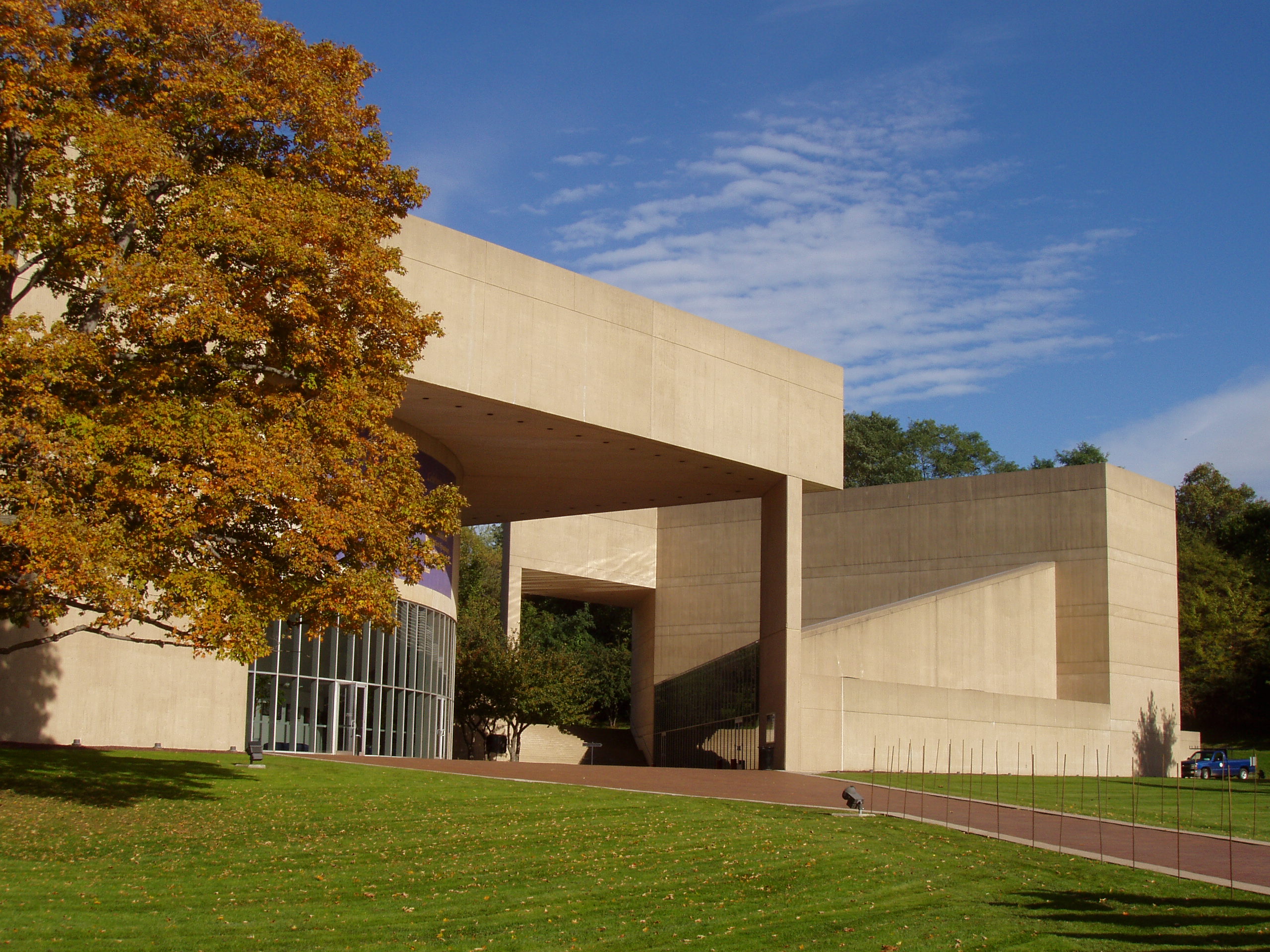
Third, Choate’s deliberate balance between national reach and institutional intimacy: 860 students across an interactive 300-acre campus with I.M. Pei-designed Paul Mellon Arts Center (1972), Colony Hall as community center, and the Andrew Mellon Library. The student-teacher ratio of 7:1 supports close faculty-student relationships. The school maintains its distinctive co-educational identity since the 1978 merger of The Choate School (boys) and Rosemary Hall (girls), founded in the 1890s by Mary and William Choate. For families weighing the broader value of elite educational pathways, see our ROI analysis on elite education.
When and how should families apply to Choate?
The Choate application timeline runs on a defined annual cycle. The application deadline is January 15 for entry in September that year. Choate accepts the Gateway to Prep School Application (recommended) and requires school transcripts from the current and prior two academic years, SSAT or ISEE standardized test scores (TOEFL accepted for international students), two to three teacher recommendations, a student essay, parent statement, and admission interview. Decisions are typically released on March 10.
Interviews can be conducted on campus, virtually, or with Choate representatives in major metropolitan areas. On-campus interviews are strongly preferred and pair with a campus tour. Choate’s applicant pool typically includes families also applying to Phillips Exeter, Phillips Andover, Lawrenceville, Deerfield, and Hotchkiss; the strategic baseline is to apply to 4-8 boarding schools across selectivity tiers and decide based on admitted-student programming, financial aid offers, and individual fit.
How does Choate compare to other Ten Schools peers?
Choate sits in the middle of the Ten Schools enrollment range (860 students), larger than Hotchkiss, Deerfield, St. Paul’s, Hill, and Taft (each 540-700) but smaller than Phillips Exeter, Phillips Andover, and Lawrenceville (each 800-1,150). The 16% acceptance rate is competitive with peer schools. Choate’s most distinctive comparative advantage among Ten Schools peers is tuition affordability: at $74,530 boarding, Choate sits materially below Phillips Andover ($76,731), Hotchkiss ($71,170), Hill ($78,300), and Taft ($75,250).
Geographic positioning differs across the Ten Schools: Choate is in central Connecticut (Wallingford), close to Yale University in New Haven (15 miles) and accessible to both New York (90 minutes) and Boston (2.5 hours). The school is a member of both the Eight Schools Association (with Andover, Deerfield, Exeter, Hotchkiss, Lawrenceville, Northfield Mount Hermon, and St. Paul’s) and the Ten Schools Admission Organization, providing collaborative admissions outreach and combined open-house opportunities for prospective families.
How does Choate prepare students for elite college admissions?
Choate’s College Counseling Office is among the strongest in US secondary education. Each Fifth Form (senior year) student is assigned a college counselor in junior year who works closely with the family through the application process. The office maintains direct relationships with admissions offices at virtually every selective US university. Choate students benefit from intentional course rigor design: more than 300 courses across multiple subject areas, with the Signature Programs providing university-level depth in specific disciplines.
Selective university admissions officers read Choate applications in the context of historical Choate cohorts and current applicant pool strength. Students who pursue the most rigorous coursework, engage substantively with one or more Signature Programs, and develop strong relationships with faculty for recommendation letters tend to compete strongly against peer applicants from feeder secondary schools. For families seeking additional strategic support that complements the school’s College Counseling Office, independent advising from Oriel Admissions can supplement what Choate provides. For school-list construction principles, see our reach, match, and safety school guide.
What does the day student experience at Choate look like?
Choate enrolls a meaningful day-student population from the Wallingford, Cheshire, Meriden, North Haven, and broader central Connecticut region, with some commuting from New Haven and Hartford metropolitan areas. Day students participate fully in academic and co-curricular life, are assigned to dormitories for community purposes, and have access to athletics, arts, clubs, and Signature Programs. Day tuition is materially below boarding tuition, making Choate a strategic choice for families within reasonable commuting distance.
The trade-off for day students is reduced immersion in the residential community that defines much of the Choate experience. Dorm life, evening dining hall conversations, weekend campus activity, and informal Signature Program collaboration are central to how Choate builds peer and faculty relationships. The strongest day-student outcomes typically involve active engagement with weekend programming, athletics, and frequent campus presence outside required class time.
Frequently Asked Questions About Choate Rosemary Hall
Choate Rosemary Hall is in Wallingford, Connecticut, a town in the central part of the state between New Haven and Hartford. It occupies a large, traditional New England campus and is roughly two hours from both New York City and Boston. The Connecticut setting places it among the cluster of historic Northeastern boarding schools, offering a self-contained residential environment within reach of major Northeast cities.
Choate is a coeducational boarding and day school serving grades 9 through 12, plus a postgraduate (PG) year. It was formed by the merger of the formerly separate Choate (boys) and Rosemary Hall (girls) schools and is now fully coed. Most students enter in 9th or 10th grade and continue through graduation, living on campus or attending as day students from the surrounding area.
It is an informal admissions association of ten historic, highly regarded Northeastern boarding schools that collaborate on outreach, including Choate, Hill, Lawrenceville, Phillips Exeter, Phillips Andover, Deerfield, Hotchkiss, Loomis Chaffee, Taft, and St. Paul’s. Membership signals a school’s standing among the elite boarding institutions. Families often compare these peers when weighing options, since they share rigorous academics and strong college placement records.
Boarding students live on campus full-time in dormitories and are immersed in the residential community around the clock, while day students attend classes and many activities but live at home in the surrounding area. Choate enrolls primarily boarders, with a smaller day-student population. The boarding experience is central to its identity, offering structured study, advising, and community life, though day enrollment can suit local families seeking the academics without residence.
Yes; Choate provides need-based financial aid and is committed to access, awarding assistance to qualifying families based on demonstrated financial need through a separate aid application during admissions. Like most boarding schools, it does not generally offer merit scholarships; aid is determined by financial circumstances. Because boarding tuition is substantial, families seeking support should apply for aid alongside the admission application rather than waiting until after a decision.
Choate, like most boarding schools, has typically used the SSAT (Secondary School Admission Test) as its standardized testing component, though some schools accept the ISEE or have adopted test-flexible policies in recent years. Applicants also complete interviews, essays, and recommendations. Because testing requirements can change between cycles, families should confirm the current policy on Choate’s admissions site and prepare for whichever assessment is required for their application year.
No; while Choate sends many graduates to selective colleges through rigorous academics and dedicated college counseling, attendance guarantees nothing, and admission to top universities has grown intensely competitive even for boarding-school students. Choate helps by preparing students academically and supporting their applications, but each student must still excel and present a compelling case. Treating any elite school as an automatic path to a top college is a costly misconception.
Residential life centers on dormitories where students live with housemates and faculty advisors nearby, structured around academics, supervised study hours, athletics, arts, and weekend activities. The all-in community fosters close friendships, independence, and mentorship from faculty who often live on campus. Days are full and scheduled, blending classes, sports, and dorm life, so students gain maturity and time-management skills while being supported within a close-knit boarding environment.
Sources: Choate Rosemary Hall Office of Admission; Choate Tuition and Financial Aid; Wikipedia institutional history; Boarding School Review profile; National Center for Education Statistics; Gateway to Prep School Application.
About Oriel Admissions
Oriel Admissions is a Princeton-based college admissions consulting firm advising families nationwide on elite university admissions strategy. Our team brings deep expertise across every dimension of the application, and our distinctive 360 approach develops strategy, positioning, activities, essays, and interviews as one coherent whole. To discuss your family’s admissions strategy, schedule a consultation.