New Jersey Medical School Pathways: Rutgers BA/MD, BS/DO, and Direct-Admit Routes for NJ Families
By Rona Aydin
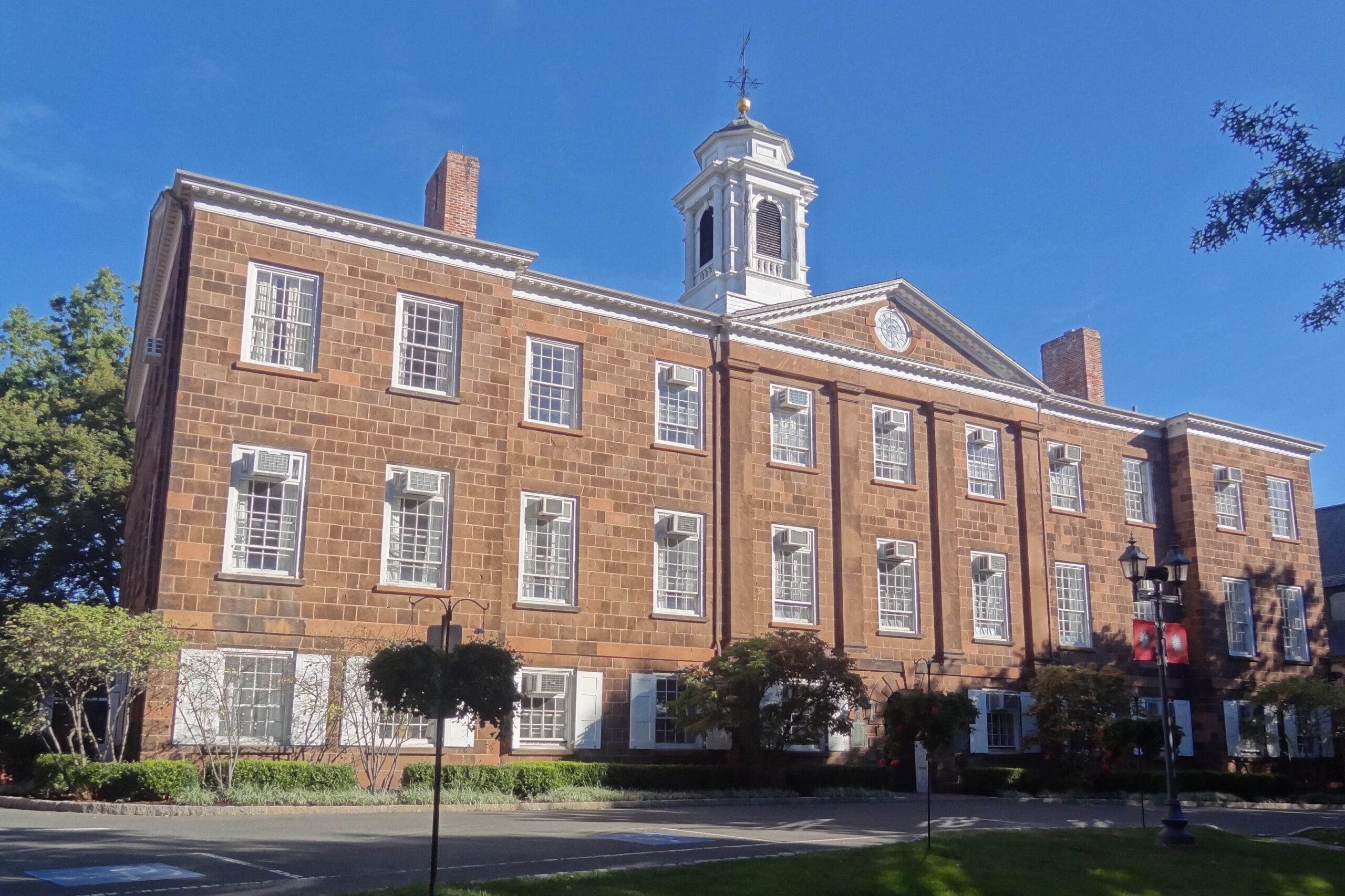
TL;DR: New Jersey has direct-admit medical pathways most national guides miss. On the MD side, Rutgers runs seven-year BA/MD programs through New Jersey Medical School and Robert Wood Johnson Medical School. On the DO side, Rutgers-Camden and Stockton University offer seven-year BS/DO programs with Rowan-Virtua School of Osteopathic Medicine. These programs are being restructured under the future Rutgers School of Medicine, so confirm current terms (Rutgers Health, Rowan-Virtua SOM, 2025-2026).
What Medical School Pathways Exist Specifically for New Jersey Families?
New Jersey is unusual among states in offering several direct-admit and accelerated medical pathways anchored to in-state institutions, which national BS/MD guides routinely overlook. For the programs in other states with the lowest published floors, see our guide to the easiest BS/MD programs. These fall into two tracks. The allopathic (MD) track centers on Rutgers, whose New Jersey Medical School (NJMS) in Newark and Robert Wood Johnson Medical School (RWJMS) in New Brunswick both offer combined BA/MD pathways, alongside a long-running seven-year program at The College of New Jersey. The osteopathic (DO) track centers on Rowan-Virtua School of Osteopathic Medicine, which partners with undergraduate campuses including Rutgers-Camden and Stockton University on seven-year BS/DO programs.
For NJ families, these pathways carry a structural advantage: as a public-university system, Rutgers reserves meaningful capacity for state residents, and in-state tuition makes both the undergraduate and medical-school years dramatically more affordable than private combined programs. That combination of direct admission, lower cost, and in-state preference is why these routes deserve a dedicated look rather than a footnote in a national pre-med list.
What Are the Rutgers BA/MD Programs at NJMS and RWJMS?
Rutgers operates combined BA/MD pathways through both of its medical schools. The New Jersey Medical School BA/MD is a seven-year structure: roughly three years of undergraduate study followed by the four-year MD program, with admission decided at the high-school-senior stage for the most direct route. Robert Wood Johnson Medical School has historically offered both an early-assurance BA/MD reached during undergraduate study and an eight-year BA/MD aligned with Rutgers-New Brunswick. Students admitted out of high school gain conditional acceptance to medical school contingent on meeting GPA, coursework, and other benchmarks throughout college.
Both programs are highly selective and built for students with a clear, demonstrated commitment to medicine. The value proposition is certainty: a qualified student locks in a medical-school seat years early, removing the uncertainty of the traditional applicant pool, while completing undergraduate work at a strong public research university at in-state cost.
How Do New Jersey BS/DO Osteopathic Pathways Work?
Osteopathic medicine leads to the DO degree, a fully licensed physician credential equivalent in practice scope to the MD, with additional training in osteopathic manipulative medicine. New Jersey families have direct-admit access to this route through Rowan-Virtua School of Osteopathic Medicine, the state-affiliated osteopathic school. Rowan-Virtua partners with undergraduate campuses on accelerated seven-year BS/DO programs, including Rutgers University-Camden and Stockton University, where a student completes roughly three years of undergraduate coursework before entering the four-year DO program.
Rowan also offers a range of 3+4 affiliations with other undergraduate institutions. These BS/DO pathways are frequently overlooked by families fixated on the MD label, yet they offer the same direct-admit certainty, often with admissions profiles that reward genuine interest in primary care, community medicine, and the osteopathic philosophy of whole-person treatment.
| Pathway | Undergraduate Campus | Medical School | Structure |
|---|---|---|---|
| BA/MD (MD) | Rutgers | New Jersey Medical School (Newark) | Seven-year (approx. 3 + 4) |
| BA/MD (MD) | Rutgers-New Brunswick | Robert Wood Johnson Medical School | Early-assurance and eight-year tracks |
| Seven-year medical (MD) | The College of New Jersey | Partner medical school | Seven-year (3 + 4) |
| BS/DO (DO) | Rutgers University-Camden | Rowan-Virtua School of Osteopathic Medicine | Seven-year (3 + 4) |
| BS/DO (DO) | Stockton University | Rowan-Virtua School of Osteopathic Medicine | Seven-year dual-degree |
MD or DO: Which Pathway Should a New Jersey Family Consider?
Both the MD and DO degrees produce fully licensed physicians who can pursue any specialty, prescribe medication, and practice anywhere in the United States. The practical differences are matters of emphasis and perception rather than capability. DO training adds osteopathic manipulative medicine and has historically emphasized primary care and whole-person treatment, though DO graduates now match into competitive specialties as well, especially since the residency match systems unified.
For NJ families, the decision should hinge on fit and certainty rather than prestige instinct. A student passionate about the osteopathic approach, or one whose profile is strong but not at the very top of the MD-program applicant pool, may find a BS/DO pathway both more attainable and more aligned. A student fixed on academic-medicine research careers at the most research-intensive institutions may lean MD. Neither closes meaningful doors, and the direct-admit certainty of either NJ pathway is a substantial advantage over the traditional route.
Do These New Jersey BS/MD and BS/DO Programs Require the MCAT?
MCAT requirements vary by program and have shifted over time, which is exactly why families should verify current terms directly. Some combined programs waive the MCAT entirely for students who maintain the required undergraduate GPA and meet coursework and progression benchmarks; others require a minimum MCAT score as a condition of matriculation even after direct admission. The trend has been toward retaining some standardized benchmark, but specifics differ between NJMS, RWJMS, and the Rowan-Virtua partner programs.
The practical takeaway: a direct-admit seat is conditional, not unconditional. Families should treat any combined program as a multi-year commitment with defined academic guardrails, and confirm the exact MCAT policy for the specific program and entry year before assuming a student can skip the exam.
What Is the In-State Advantage for New Jersey Residents?
This is the factor that most distinguishes the NJ pathways from national private BS/MD programs, and it operates on two levels. First, admission: as public institutions, Rutgers and Rowan-Virtua serve a state mission, and New Jersey residency is a meaningful factor in combined-program admissions in a way it never is at private programs. Second, cost: in-state tuition at a public undergraduate campus followed by in-state medical-school tuition can save a family well into six figures compared with a private combined program, before accounting for the avoided opportunity cost of a compressed timeline. The standard route numbers behind that advantage – both campuses, side by side – are in our Rutgers medical school acceptance rate guide.
For higher-income NJ families who would not qualify for need-based aid, this cost structure is especially relevant, because it delivers an elite-outcome physician pathway at public-university pricing without depending on financial-aid formulas. The combination of residency preference and predictable cost is the strategic core of the NJ advantage.
What Makes a Competitive Applicant for New Jersey Direct-Admit Medical Programs?
Direct-admit medical programs evaluate high school students for a commitment that traditional applicants do not make until age 22, so they look for unusually clear evidence of readiness. Strong applicants combine top-decile academics in rigorous science coursework with sustained, genuine clinical exposure: hospital or clinic volunteering, shadowing physicians across settings, and meaningful research or community-health involvement that demonstrates motivation beyond a resume line.
Equally important is a coherent narrative. Admissions committees want to see why this student is ready to commit to medicine now, not a collection of activities assembled to look impressive. For osteopathic BS/DO programs specifically, demonstrated understanding of and interest in the osteopathic philosophy strengthens an application materially. Maturity, resilience, and the ability to articulate a authentic reason for choosing medicine carry real weight in interviews.
How Are Rutgers Medical Pathways Changing, and What Should Families Watch?
Rutgers is restructuring its medical education under a future integrated Rutgers School of Medicine model, and combined-program offerings, particularly on the RWJMS side, have been evolving as a result. The New Jersey Medical School BA/MD has been expected to continue, while RWJMS offerings have been subject to change. Because direct-admit programs are created, modified, and discontinued on a regular basis across the country, the specific structure available in any given application cycle can differ from what older guides describe.
Families should treat program details, including years, MCAT policy, and partner campuses, as a moving target and verify directly with each program before building a strategy around it. Confirming current terms early prevents building a plan around a pathway that has changed, and it is the single most important habit for families navigating these NJ options.
Frequently Asked Questions About New Jersey Medical School Pathways
Very. These pathways admit only a small number of students each year and draw far more qualified applicants than they accept, so the odds at the high-school stage are slim even for strong candidates. The selectivity reflects what the seat is worth: a reserved place in medical school years early. Families should treat acceptance as a reach outcome and build a complete application strategy with realistic backup plans rather than counting on a single direct-admit offer.
Generally no. These programs admit students out of high school as a cohort, and the guaranteed medical-school seat is tied to that entry point, so mid-college transfer into the assured pathway is rarely possible. A student already in college who wants medical school typically applies through the traditional route instead. Anyone hoping to join later should confirm directly with the program, but should plan around the standard application path as the realistic option.
For a committed student, often yes: they eliminate the gamble of competing in the regular medical-cycle crowd later, can shorten the timeline, and pair an assured medical seat with in-state value at Rutgers. The cost is flexibility, since the commitment is made early and benchmarks must be met throughout. A student unsure about medicine, or aiming at a specific elite medical school, may prefer the traditional route, which keeps every option open at the price of later uncertainty.
Not in the way many families fear. DO graduates train in a unified residency system alongside MD graduates and practice the full range of specialties with the same licensure. Highly competitive specialties can be statistically tougher to match into from some DO programs, so a student targeting a narrow, ultra-competitive field should weigh that. For the large majority of medical careers, a DO from a New Jersey osteopathic pathway opens the same doors as an MD.
Each program sets its own conditions, but they typically include a minimum college GPA, completion of specified prerequisites, and often an MCAT threshold or progression checkpoints met on schedule. Some also require interviews or professionalism standards along the way. Because the exact figures and how strictly they are enforced differ by program and year, families should confirm the precise benchmarks for each pathway rather than assuming a single standard applies across all of them.
It depends on the program. Several Rutgers-affiliated pathways prioritize or restrict admission to New Jersey residents, while others consider out-of-state applicants under different terms, sometimes without the in-state tuition benefit. Residency rules can affect both eligibility and cost, so a family outside New Jersey should verify each program’s policy before investing in an application. For in-state families, residency is often a meaningful advantage in both access and price.
Early in high school. Because these programs evaluate applicants as seniors, the grades, science rigor, testing, and healthcare experiences they review are built over the prior three years. A student should pursue strong academics, clinical or research exposure, and a clear interest in medicine well before senior-year deadlines. Beginning in ninth or tenth grade lets a genuine, demonstrated commitment develop, which weighs far more than activities assembled hastily in the final year.
They forfeit the assured medical-school placement, though not their undergraduate progress. A student who falls below the required GPA, misses an MCAT benchmark, or fails a progression standard typically loses the guarantee and must then apply to medical school through the traditional, competitive route like any other applicant. This is why the early commitment suits students confident they can sustain high performance, and why families should understand each program’s exact conditions before enrolling.
Sources: Rutgers Health Professions Office (hpo.rutgers.edu); Rutgers New Jersey Medical School (njms.rutgers.edu); Robert Wood Johnson Medical School (rwjms.rutgers.edu); Rowan-Virtua School of Osteopathic Medicine (som.rowan.edu); Stockton University (stockton.edu); The College of New Jersey (tcnj.edu). Program details current as of 2025-2026 and subject to change.
About Oriel Admissions
Oriel Admissions is a Princeton-based college admissions consulting firm advising families nationwide on elite university admissions strategy. Our team brings deep experience from the most selective admissions environments in the country. To discuss your family’s admissions strategy, schedule a consultation.