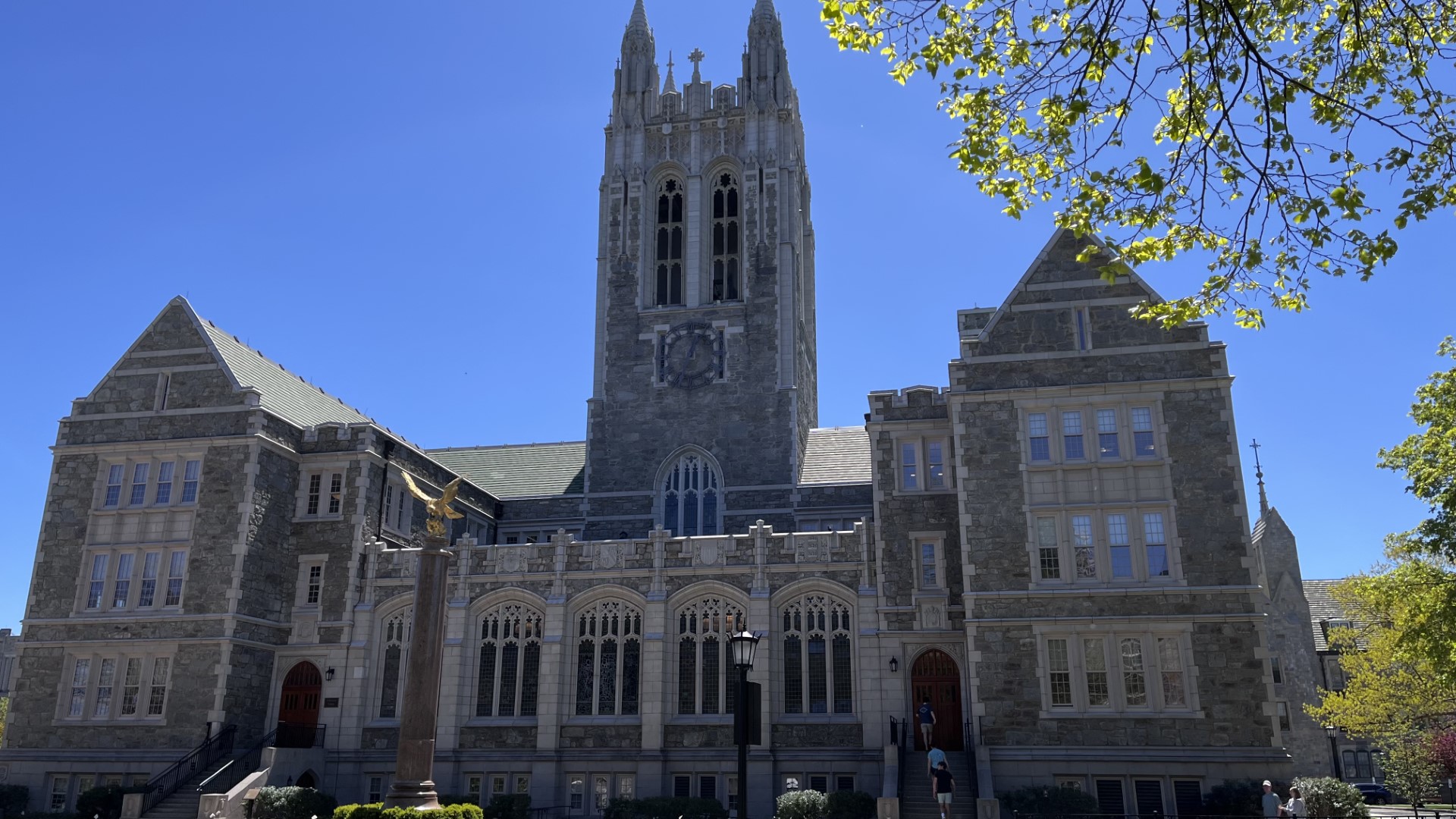
TL;DR: The Boston College Early Decision acceptance rate was approximately 29% for the Class of 2030, when 4,934 students applied through the binding ED I and ED II rounds, against a 12.7% overall acceptance rate from a record 41,898 applications. In the most recent Common Data Set year, Boston College admitted 33.4% of Early Decision applicants versus 13.8% of applicants in all other rounds, and Early Decision admits accounted for roughly 60% of enrolled first year seats. (Sources: Boston College Office of Undergraduate Admission; Boston College Common Data Set 2024-2025; The Heights, April 2026.) For families deciding whether to commit a binding application to Boston College, Oriel Admissions builds early round strategy around your student’s specific positioning: schedule a consultation.
Boston College Early Decision Acceptance Rate by Class Year
Boston College runs two binding Early Decision rounds and has done so since it replaced Early Action beginning with applicants to the Class of 2024. The Boston College Early Decision acceptance rate has held in a band between the high 20s and the low 30s in percentage terms across recent cycles, consistently more than double the rate applicants face in the regular round. The table below combines the exact figures Boston College reported in its most recent Common Data Set with the approximate figures the university and its student newspaper have released for the two most recent classes.
| Entering Class | ED Applicants | ED Admits | ED Acceptance Rate | Overall Acceptance Rate |
|---|---|---|---|---|
| Class of 2030 | 4,934 | Not published | Approximately 29% | 12.7% |
| Class of 2029 | Approximately 5,000 | Not published | Approximately 30% | 14% (12.6% initial) |
| Class of 2028 | 4,288 | 1,434 | 33.4% | 16.2% (final) |
Class of 2028 figures are exact values from the Boston College Common Data Set 2024-2025, which also reported a 13.8% acceptance rate across all non ED rounds that year. Class of 2029 and Class of 2030 figures are the approximations Boston College and The Heights have released; the university has been slower recently to publish full Common Data Set breakdowns. Overall context for the university sits in our Boston College acceptance rate analysis, and cross school comparisons live in our Early Decision acceptance rates hub.
How Large the Early Decision Advantage Really Is
Two numbers define the structure of Boston College admissions. First, the multiple: 33.4% for Early Decision against 13.8% for everyone else in the last full Common Data Set year is a factor of roughly 2.4. Second, the class share: Boston College reported 1,434 Early Decision admits against 2,394 enrolled first year students, which means binding admits filled roughly 60% of the seats before a single Regular Decision file was decided. With overall yield at 43%, the university leans on Early Decision to stabilize enrollment, and its own admissions materials state plainly that the early rounds help it enroll students committed to its Jesuit, Catholic approach to education.
One honest caveat belongs in every family conversation about these numbers. Published Early Decision rates include recruited athletes, legacy applicants, and other institutional priorities who concentrate in the early pool, so the advantage available to an unhooked applicant is real but somewhat smaller than the headline multiple. Our Early Decision versus Regular Decision guide walks through how to discount for pool composition, and our ED versus RD advantage calculator lets you model the adjusted odds for a specific profile.
Boston College ED I vs ED II: Deadlines, Notification, and Conversion
Boston College states that ED I and ED II differ only in timing; the binding commitment is identical. Admitted students in either round must withdraw applications to other institutions and submit an enrollment confirmation fee within 10 days of the offer.
| Round | Application Deadline | Decision Released | Strategic Notes |
|---|---|---|---|
| Early Decision I | November 1 | By December 15 | Aligns with the November 1 scholarship priority deadline; strongest signal of conviction |
| Early Decision II | January 4 | By February 15 | A pending Regular Decision application may be converted to binding ED II |
Two mechanics matter for planning. First, Boston College permits a student who filed Regular Decision to convert that application to Early Decision II by January 4, which makes ED II a live second chance for students whose early result elsewhere did not land. Second, families targeting the university’s only merit award need November 1 on the calendar regardless of round, as covered below. For the broader question of when a second round binding application is the right instrument, see our Early Decision II strategy guide.
The Binding Commitment: Financial Aid and Full Pay Considerations
Boston College practices need based aid almost exclusively and reports meeting 100% of demonstrated financial need. The Common Data Set 2024-2025 shows only 34 first year students, about 1% of the class, receiving a scholarship without demonstrated need. The single meaningful exception is the Gabelli Presidential Scholars Program: 18 full tuition awards each year, with no separate application, open to ED I, ED II, and Regular Decision candidates alike, but only if the Boston College application is submitted by the November 1 priority scholarship deadline. Finalists are notified together with an offer of admission by February 1.
For families unlikely to qualify for need based aid, the binding structure deserves clear eyed treatment before anyone clicks submit. Across selective admissions, the recognized release from an Early Decision agreement is a financial aid award that does not make attendance feasible, and that release is not designed for families comparing offers. The disciplined sequence is to model expected net cost first, confirm the family is comfortable enrolling at that figure, and only then file the binding application. Our guides on Early Decision and financial aid and what happens if you break an Early Decision agreement cover the mechanics in detail.
Who Should Use an Early Decision Application on Boston College
The Boston College Early Decision acceptance rate rewards a specific applicant: the student for whom Boston College is a genuine first choice and whose academic profile already sits inside the admitted band. In the most recent Common Data Set, admitted students posted a middle 50% SAT range of 1460 to 1520 and an ACT range of 33 to 35, with 30% of admits submitting SAT scores and 15% submitting the ACT. Early Decision does not lower that bar; it converts an already competitive file at better odds by adding a binding signal the university values for yield.
The harder question for many families is opportunity cost. A strong but unhooked student holds one binding card, and the probability math frequently favors playing it at a university like Boston College, where commitment moves the odds from 13.8% to 33.4%, rather than at the most selective institutions, where early rounds remain in the single digits. That is the logic of applying Early Decision to a clear eyed second choice, and it is the single most consequential strategic conversation of the fall for applicants in this band. A student deferred from ED I rolls into the regular pool and should respond with updated grades and a focused letter of continued interest, as outlined in our guide on what to do after an Early Decision deferral.
Frequently Asked Questions About the Boston College Early Decision Acceptance Rate
Yes, by the numbers. In the most recent Common Data Set year, Boston College admitted 33.4% of Early Decision applicants versus 13.8% of applicants in all other rounds, a multiple of roughly 2.4. Part of that gap reflects recruited athletes and other institutional priorities concentrated in the early pool, so the advantage for an unhooked applicant is real but smaller than the headline suggests.
Roughly 60%. In the Common Data Set for the Class of 2028, Boston College reported 1,434 Early Decision admits against 2,394 enrolled first year students. Because ED admits are bound to enroll, well over half of the class is effectively settled before Regular Decision files are read, which compresses the odds in the regular round.
The rounds differ only in timing: ED I closes November 1 with decisions by December 15, and ED II closes January 4 with decisions by February 15. Both are equally binding. ED I aligns with the November 1 scholarship priority deadline and signals earlier conviction, while ED II suits students who need fall semester grades on the transcript or who pivot after an early result elsewhere.
Yes, it is binding. Admitted ED students must withdraw all other applications and submit an enrollment confirmation fee within 10 days of the offer. Across selective admissions, the recognized release from an ED agreement is a financial aid award that does not make attendance feasible, which is why families should model expected net cost carefully before filing a binding application.
It depends on honest probability math. Boston College rewards binding commitment with an acceptance rate more than twice the regular round, while the most selective universities admit early applicants at far lower rates. For a strong but unhooked student, an Early Decision application to Boston College often converts to an offer at meaningfully better odds than a restrictive early application elsewhere.
Almost none. Boston College awards need-based aid nearly exclusively: the most recent Common Data Set shows only 34 first year students, about 1%, receiving a non-need scholarship. The exception is the Gabelli Presidential Scholars Program, 18 full-tuition awards each year. There is no separate application, but candidates in any round must submit the Boston College application by the November 1 priority deadline to be considered.
Admitted students in the most recent Common Data Set posted a middle 50% SAT range of 1460 to 1520 and an ACT range of 33 to 35, with 30% of admits submitting SAT scores and 15% submitting the ACT. Early Decision does not lower the academic bar; it rewards students who already sit inside the admitted profile and add a binding signal of commitment.
A deferred ED I applicant rolls into the Regular Decision pool and should submit updated grades and a focused letter of continued interest. A denied student cannot reapply in the same cycle, so attention shifts to the rest of the list, including ED II options at other universities. Separately, a student who filed Regular Decision to Boston College may convert that application to binding ED II by January 4 if it becomes the clear first choice.
Sources: Boston College Office of Undergraduate Admission, Early Decision vs. Regular Decision; Boston College, Gabelli Presidential Scholars Program; Boston College Common Data Set; The Heights, April 2026; NCES College Navigator, Boston College; Common Data Set Initiative; NACAC.
About Oriel Admissions
Oriel Admissions is a Princeton-based college admissions consulting firm advising families nationwide on elite university admissions strategy. Our team pairs deep admissions expertise with a distinctive 360 approach spanning academic planning, extracurricular strategy, essays and application execution. To discuss your strategy, schedule a consultation.