Easiest BS/MD Programs to Get Into: Published Minimums, Class Sizes, and Real Odds
By Rona Aydin
What Makes a BS/MD Program Easier to Get Into?
Four things, and all four are published by the programs themselves. The first is the score floor: some programs will not read an application below a 1500 SAT, while others start at 1160. The second is class size, since a program that fills 105 seats has ten times the room of one that fills 10. The third is the applicant pool, which a few programs publish and which lets Oriel Admissions compute an admit rate. The fourth is residency: a program that prefers or requires students from its own state is competing for a smaller pool.
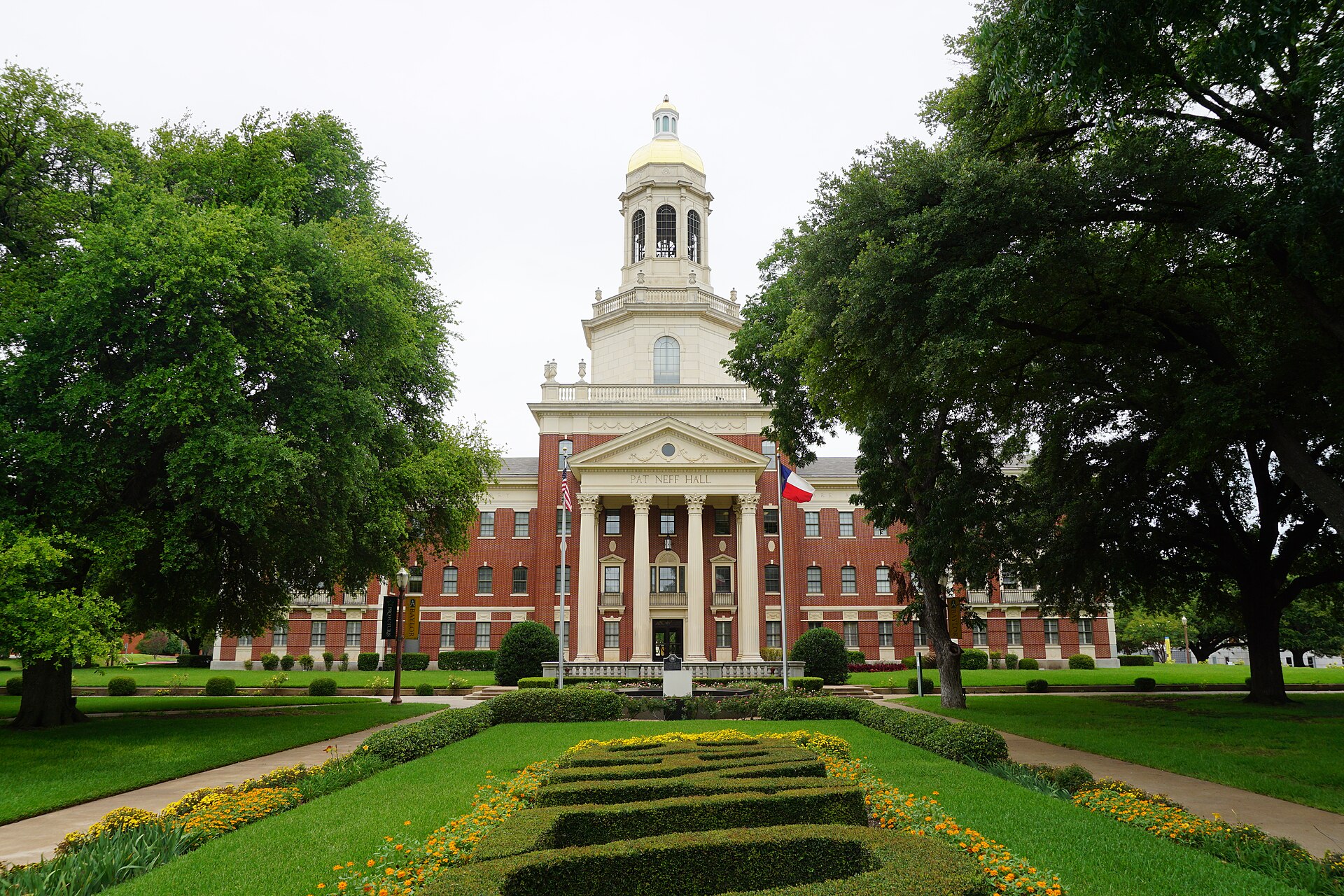
Oriel Admissions compiled the table below from each program’s own admissions page in October 2026. Where a program publishes applicants and admits, the rate is ours; where it does not, the cell says so. Programs that are paused, closed, or open only to enrolled college students are left out. Two programs that publish seats but not applicants, the Penn State BS/MD program (about 25 seats on a 1470 minimum) and the Baylor BS/MD program (six seats on a 1430 floor), have guides of their own.
Which BS/MD Programs Publish the Highest Acceptance Rates?
Only a handful of programs publish both applicants and admits. These are the ones where a family can see the odds instead of guessing.
| Program | Years | Published applicants and admits | Rate computed by Oriel Admissions | Score floor | MCAT to continue |
|---|---|---|---|---|---|
| University of Missouri-Kansas City BA/MD | 6 | About 1,500 initial applications, about 1,000 completed, about 350 interviewed, class of 105 to 110 | About 7% of initial applications, about 11% of completed ones | 24 ACT or 1160 SAT, 3.0 unweighted in the 17 core courses | None. Students never take the MCAT |
| Augusta University Professional Scholars (Medical College of Georgia) | 7 | About 250 BS/MD applications, up to 25 accepted | About 10% | 32 ACT or 1450 SAT, 3.7 recalculated GPA | Score at or above the prior year’s national mean for matriculants |
| Union College Leadership in Medicine (Albany Medical College) | 8 | 400 applicants for fall 2026, 150 forwarded, 85 interviewed, 22 offered, 15 enrolled | 5.5% | 1410 SAT or 30 ACT, top 10% expected | None. No MCAT required |
| UAB Early Medical School Acceptance Program | 8 | 339 applicants in 2024 (54 Alabama, 285 out of state), 17 accepted, 12 matriculated | About 5% | 30 ACT or 1370 SAT, 3.5 GPA | 506 |
| Virginia Commonwealth Guaranteed Admission for Medicine | 8 | 945 applicants for fall 2026, 60 interviewed, 32 accepted | 3.4% | 1330 SAT or 29 ACT, 3.5 unweighted GPA | 508 |
| Drexel BA/BS plus MD Early Assurance | 8 | 2,406 applicants for fall 2026, 1,288 met the minimums, 133 interviewed, 66 admitted, 34 enrolled | 2.7% | 1420 SAT or 32 ACT, 3.5 weighted GPA | 513, or 128 in each section |
| Hofstra 4 plus 4 BS-BA/MD (Zucker School of Medicine) | 8 | About 2,000 applicants indicate interest, class of 10 to 15 | Under 1% | 1410 SAT or 32 ACT, 3.7 GPA, top 10% | 80th percentile at the first sitting |
The table shows why “easiest” needs a definition. UMKC’s floor is the lowest in the country and its class is the largest, but its average admitted student still carries a 3.9 unweighted GPA. VCU’s floor of 1330 is modest, yet the accepted students last cycle averaged a 3.9 and scored between 1410 and 1600. A low floor widens the door; it does not lower the bar for the students who walk through it.
Which BS/MD Programs Have the Lowest Score Floors?
Several programs publish low minimums but not their applicant counts. For these, the floor is the only published measure of difficulty.
| Program | Years | Score floor | GPA floor | Seats | MCAT to continue | Deadline |
|---|---|---|---|---|---|---|
| University of Cincinnati Connections Dual Admissions | 8 | 27 ACT or 1270 SAT, no superscoring | None for high school | 3 to 15 accepted on average, up to 32 interviewed | 507 | December 1 |
| Howard University BS/MD | 6 | 28 ACT or 1300 SAT | 3.5 | Cohort of 12 to 15 | 504 | With the Howard application, by invitation |
| Wayne State Wayne Med-Direct | 8 | 1310 SAT or 28 ACT, superscored | 3.5 | 10 | 70th percentile | December 1 for scores |
| University of South Alabama Early Acceptance Program | Not stated | Alabama residents 27 ACT or 1260 SAT, others 30 ACT or 1360 SAT | 3.5 | A small number | 504 | December 15, 2026 |
| Siena University and Albany Medical College | 8 | 1360 SAT or 30 ACT | Top 10% of the class | 15 | None. The MCAT is waived | November 1 |
| University of Toledo Bacc2MD | Not stated | 30 ACT or 1410 SAT, no superscoring | 3.8 unweighted | No limit | 506 | Not stated |
Cincinnati stands out for having no high school GPA minimum at all and for a 27 ACT floor, but it accepts as few as three students in some years and requires a 507 MCAT. Howard’s booklet states that there are no citizenship requirements for its program, which makes it one of very few options for international students, and its 504 MCAT bar is among the lowest. Toledo’s program is new, has no cap on seats, and asks for the highest GPA on this list.
Which BS/MD Programs Favor In-State Students?
Residency rules shrink the pool, which helps the students who qualify and removes everyone else.
| Program | Residency rule | Seats |
|---|---|---|
| University of New Mexico BA/MD | Must have lived in New Mexico or the Navajo Nation for at least 12 consecutive months, or graduate from a New Mexico high school; students sign a commitment to practice in New Mexico | 28 |
| University of Missouri-Kansas City BA/MD | No requirement, but 60 to 65 of the 105 to 110 seats go to Missouri residents | 105 to 110 |
| UAB Early Medical School Acceptance Program | Must attend a high school in Alabama or a contiguous state (Florida, Georgia, Tennessee, Mississippi); about two-thirds admitted are from Alabama | 17 accepted in 2024 |
| University of South Alabama Early Acceptance Program | Preference to Alabama residents, with a lower score floor for them | A small number |
| Augusta University Professional Scholars | Preference to Georgia residents | Up to 25 |
New Mexico’s program is the clearest case. Its published minimums are section scores, an ACT Math of 22 and Reading, Science and English of 19, or an SAT Math of 540 and Reading of 510, and it fills 28 seats a year. A New Mexico senior with a strong record faces far better odds there than at any national program. A student from New Jersey cannot apply. Our guide to New Jersey medical school pathways covers the equivalent routes for New Jersey families.
Which Easiest BS/MD Programs Skip the MCAT?
Four programs on this list never ask for the MCAT: UMKC, Union College, Siena, and the Rensselaer Polytechnic Institute program with Albany Medical College, which publishes no score floor and no seat count. The CUNY School of Medicine’s seven-year program in New York City also admits on a high school average of 85 across the first three years and keeps SAT and ACT scores optional through spring 2027, with three essays and five recommendation letters instead.
Every other program in the tables sets an MCAT condition between 504 and 513. Oriel Admissions tells families to read the MCAT condition as the real admission standard, because a student who clears the high school floor but cannot reach the score loses the seat in junior year. Our guide to BS/MD continuation requirements lists each program’s GPA and MCAT conditions.
What Is the Catch With the Easiest BS/MD Programs?
Three catches, in order of importance.
The seat is conditional everywhere. UMKC students must pass USMLE Step 1 in year four. VCU, Toledo and UAB students must keep a 3.5 or higher and clear an MCAT score. Wayne State requires a 70th percentile MCAT. A program that is easy to enter can still be hard to finish, and a student who leaves one of these programs in junior year has a transcript built for a medical school that is no longer waiting.
Do the Easiest BS/MD Programs Expect a Service Commitment?
Many of them describe a mission. UMKC, CUNY, New Mexico and Howard describe a purpose that includes training physicians for communities with shortages or for primary care, and New Mexico requires a written commitment to practice in the state. A student who wants a research career at an academic medical center should read those mission statements as a fit question, not a formality.
The binding question also applies to the easiest BS/MD programs. Several programs expect students to stay for the full undergraduate phase at one university, and a 17-year-old who accepts a seat is choosing a medical school eight years early. Our comparison of the BS/MD and traditional pre-med paths is the place to test that choice.
Who Should Apply to the Easiest BS/MD Programs?
A student who is certain about medicine, holds nearly all As in the hardest classes the school offers, and tests below the 1500 range that the most selective programs expect. For that student, UMKC, VCU, Union, Augusta and Cincinnati are real options with published odds between about 3% and 11%, and New Mexico or UAB are better still for the residents they serve.
A student with a 1550 and the same record should not pick a program for its floor. Oriel Admissions advises those students to apply to the selective programs in our BS/MD acceptance rates table and to add one or two from this list as the realistic layer of the application. The strongest applicants we have worked with treat the BS/MD selection framework as a list-building exercise, not a search for a single shortcut.
Finally, check the dates. The deadlines in these tables range from November 1 to December 15 and several fall before the Common App’s regular deadline, so a senior who decides in December has already missed most of them. Our BS/MD preparation timeline sets the calendar from 10th grade.
Frequently Asked Questions About the Easiest BS/MD Programs
By published floors and class size, the University of Missouri-Kansas City six-year BA/MD, which admits 105 to 110 students a year on a 24 ACT or 1160 SAT minimum and never requires the MCAT. Oriel Admissions computes its rate at about 7% of initial applications.
Among programs that publish counts, UMKC at about 7%, Augusta University at about 10% of BS/MD applicants, Union College at 5.5%, UAB at about 5%, and VCU at 3.4%.
UMKC accepts a 1160 SAT or 24 ACT. New Mexico publishes section minimums of 540 Math and 510 Reading but only for New Mexico residents. Cincinnati starts at 1270 and Howard at 1300.
Yes. UMKC, Union College, Siena, Rensselaer Polytechnic Institute and the CUNY School of Medicine do not require the MCAT to continue into medical school.
Most do not. Howard states that its program has no citizenship requirement. UMKC, Cincinnati, Wayne State, Drexel, Hofstra, Union, Siena, UAB and VCU require U.S. citizenship or permanent residence.
No. UMKC and VCU both report an average admitted GPA of 3.9, and VCU accepted students scored between 1410 and 1600 last cycle. The floor opens the review; the record wins the seat.
New Mexico requires state residency or a New Mexico high school diploma. UAB requires a high school in Alabama or a neighboring state. UMKC, South Alabama and Augusta give preference to in-state students without requiring it.
Most fall between November 1 and December 15 of senior year. UMKC and VCU close November 1, UAB November 16, Cincinnati and Wayne State December 1, and South Alabama December 15.
Sources: University of Missouri-Kansas City School of Medicine: B.A./M.D. admission requirements, University of Missouri-Kansas City School of Medicine: B.A./M.D. FAQs, University of Cincinnati College of Medicine: Connections requirements, University of Cincinnati College of Medicine: Connections FAQs, Virginia Commonwealth University Honors College: Guaranteed Admission for Medicine, Union College: Leadership in Medicine admissions, Augusta University: Professional Scholars Program FAQ, UAB Heersink School of Medicine: EMSAP, UAB: EMSAP application information, University of South Alabama: Early Acceptance Programs, Howard University: BS/MD and BS/DDS Combined Degree Booklet, Fall 2026, Wayne State University: Wayne Med-Direct eligibility, Siena University: Albany Medical College Program, how to apply, University of New Mexico School of Medicine: BA/MD admissions, Drexel University: BA/BS plus MD Early Assurance Program, Hofstra University: 4 plus 4 BS-BA/MD Program, University of Toledo: Bacc2MD, CUNY School of Medicine: BS/MD requirements, Rensselaer Polytechnic Institute: Physician-Scientist (B.S./M.D.) Program
About Oriel Admissions
Oriel Admissions is a Princeton-based college admissions consulting firm advising families nationwide on elite university admissions strategy. Our team brings deep expertise across every dimension of the application, and our distinctive 360 approach develops strategy, positioning, activities, essays, and interviews as one coherent whole. To discuss your family’s admissions strategy, schedule a consultation.