Barnard Early Decision Acceptance Rate: The Single Binding Round and What the College Stopped Publishing
By Rona Aydin
TL;DR: The Barnard Early Decision acceptance rate is no longer published: the college stopped disclosing ED figures with the Class of 2029, even as its Common Data Set continued to report overall numbers, most recently 1,048 admits from 10,426 applications for a 10.1% overall rate. The last verifiable ED points show 25.6% for the Class of 2028 (434 of 1,694, per the Barnard Common Data Set 2024-2025), 27% for the Class of 2027, and 33.4% for the Class of 2025. Barnard runs a single binding Early Decision round closing November 1, with no Early Action and no ED II, and Regular Decision compresses to an estimated 6-7%. (Sources: Barnard College Common Data Set 2025-2026; Barnard Office of Admissions.) For families weighing a binding application to Barnard, Oriel Admissions builds early round strategy around your student’s specific positioning: schedule a consultation.
Barnard Early Decision Acceptance Rate: What Is Verifiable
Barnard has moved toward the quiet end of the disclosure spectrum. Beginning with the Class of 2029, the college stopped releasing Early Decision figures in its admissions announcements, and its Common Data Set filings report overall results without a binding round breakdown. Cycle announcements and CDS filings have also differed in the past, so we treat the CDS as the authoritative record. The most recent authoritative numbers: 10,426 applications, 1,048 admits, and a 10.1% overall acceptance rate for the Class of 2029, a slight rise from 8.8% the prior year as applications fell from 11,836. Yield tells the rest of the story: 68.7% of admitted students enrolled for the Class of 2028, a figure few liberal arts colleges approach and one that reflects heavy binding enrollment plus the pull of the Columbia affiliation and New York City.
| Entering Class | Applications | Overall Acceptance Rate | ED Acceptance Rate |
|---|---|---|---|
| Class of 2029 | 10,426 | 10.1% | Not published |
| Class of 2028 | 11,836 | 8.8% | 25.6% (434 of 1,694) |
| Class of 2027 | Approximately 11,900 | 8.0% | 27% |
Overall figures are from Barnard’s Common Data Set filings; the Class of 2028 ED figures are the last ones published, appearing in the Common Data Set 2024-2025, the Class of 2027 rate is likewise CDS confirmed, and Barnard reported a 33.4% ED rate as recently as the Class of 2025. The strategic read is direct: the Barnard Early Decision acceptance rate has consistently run at roughly three times the overall rate, and with roughly 10% admitted overall, the Regular Decision rate compresses to an estimated 6-7%. Admissions strategy for the college lives in our guide on how to get into Barnard, and cross school comparisons live in our Early Decision acceptance rates hub.
One Round, One Date: The Single Binding Structure
Unlike peers that run four or five early pathways, Barnard offers exactly one: a binding Early Decision round closing November 1 with decisions in mid-December. There is no Early Action and no Early Decision II. That structure changes the planning calculus in two ways. First, the November 1 decision is all or nothing: a student cannot hedge with a non-binding Barnard application, so the choice is between committing early and waiting for Regular Decision, which closes in early January with results in late March. Second, because Barnard has no January binding round, a student deferred or denied in December cannot re-commit to Barnard on binding terms; the January pivot, if any, points to Early Decision II programs at other universities, a decision framework we cover in our Early Decision II strategy guide.
| Round | Application Deadline | Notification | Binding |
|---|---|---|---|
| Early Decision | November 1 | Mid-December | Yes |
| Regular Decision | Early January | Late March | No |
The Columbia Affiliation and Why the Binding Round Works
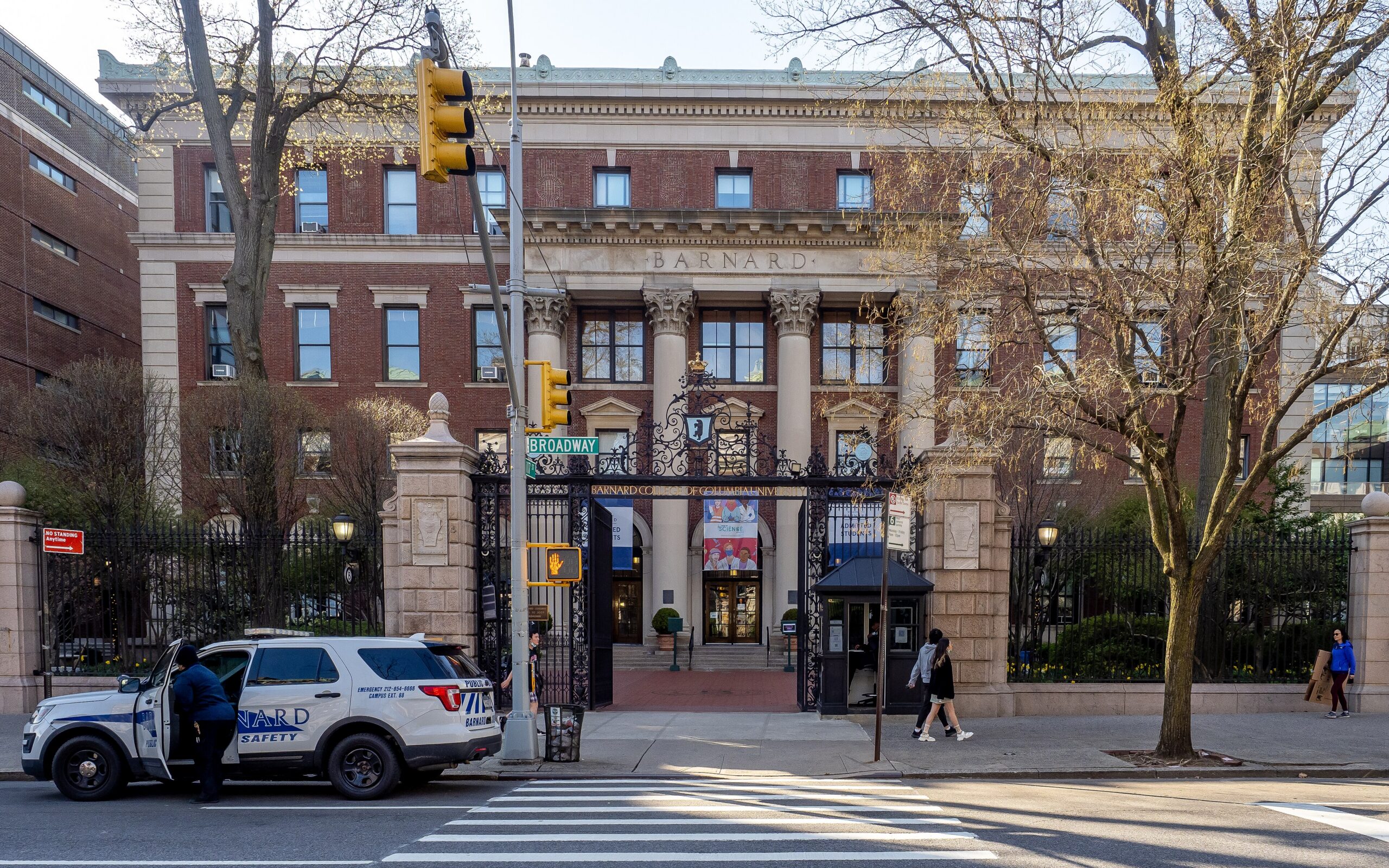
Barnard’s demand profile is unlike any other liberal arts college. As a women’s college in partnership with Columbia University, it offers cross registration, shared student life, and a Columbia University degree signature, all inside a 3,000 student liberal arts community on Broadway. That combination drives both the applicant volume and the 68.7% yield, and it is why the binding round carries so much weight: a student who signs the ED agreement is telling an enrollment conscious admissions office that the Barnard specific package, not a generic elite admit, is the goal. Barnard and Columbia run fully separate admissions processes, so a student may apply to both in the same cycle through non-binding routes, but an Early Decision admit to Barnard is bound to enroll and must withdraw all other applications, including any at Columbia. The published history suggests what that commitment has been worth: roughly three times the overall admission rate in every cycle where data exists. The usual caveat is milder here than at Division I research universities, since athletic recruitment runs through the Columbia-Barnard consortium and institutional priorities in the ED pool are narrower, but the estimates remain estimates. Our Early Decision versus Regular Decision guide covers how to discount published multiples, and our ED versus RD advantage calculator lets you model the arithmetic.
Financial Aid and the Binding Commitment
Barnard’s aid architecture keeps the binding risk manageable. The college is need blind for domestic applicants and meets 100% of demonstrated financial need for admitted students, which removes the gapping scenario that complicates binding applications at schools meeting only partial need. Barnard awards aid on need rather than merit, so families should not build a plan around a merit scholarship offsetting cost. The recognized release from an Early Decision agreement remains the standard one across selective admissions: a financial aid award that does not make attendance feasible. For an affluent family the sequence is unchanged: model the expected net cost with the college’s estimator, confirm comfort at that figure, and only then sign. Our guides on Early Decision and financial aid and what happens if you break an Early Decision agreement walk through the mechanics.
Who Should Use the Barnard Early Decision Round
The case for spending the single binding application on Barnard rests on fit and arithmetic together. Barnard remains test optional, per the college’s stated policy through the current cycles, which concentrates evaluative weight on the transcript, the recommendations, and essays that speak specifically to a women’s college experience inside a major research university, and the strongest files make the Barnard specific case rather than a generic New York City case. On the numbers, the Barnard Early Decision acceptance rate has historically run near three times the overall rate, and the overall rate sits near 10%, so the binding round is the only lever that moves a strong applicant’s odds into double digits with confidence. A student deferred in December continues automatically in the Regular pool with the binding obligation released and should send midyear grades and a focused letter of continued interest, as outlined in our guide on what to do after an Early Decision deferral, while a denied applicant is done at Barnard for the cycle and should have January binding options elsewhere scoped in advance.
Frequently Asked Questions About the Barnard Early Decision Acceptance Rate
Not anymore. Beginning with the Class of 2029, Barnard stopped disclosing Early Decision figures, and its Common Data Set reports only overall results, most recently 1,048 admits from 10,426 applications for a 10.1% rate. The last published ED figures are for the Class of 2028: 25.6%, with 434 admitted from 1,694 binding applications, per the Common Data Set 2024-2025.
Every cycle with published data says yes. Barnard’s ED rate has consistently run near three times the overall rate: 27% ED against 8.0% overall for the Class of 2027, and 33.4% ED as recently as the Class of 2025. With the overall rate near 10% and Regular Decision estimated at 6-7%, the binding round is the strongest statistical lever available to an applicant whose first choice is Barnard.
No. Barnard runs a single binding Early Decision round closing November 1 with decisions in mid-December, and Regular Decision closing in early January with results in late March. There is no non-binding early option and no second binding window, so a student deferred or denied in December who wants a January binding move must look to ED II programs at other universities.
Yes, it is binding: an admitted ED student must enroll and withdraw all other applications. The financial risk is limited because Barnard is need blind for domestic applicants and meets 100% of demonstrated need, so a properly modeled aid package should not surprise the family. Barnard awards aid on need rather than merit, and the recognized release from the agreement remains an award that does not make attendance feasible.
Barnard and Columbia run fully separate admissions processes, so a student may hold applications at both in the same cycle through non-binding routes. An Early Decision admit to Barnard, however, is bound to enroll at Barnard and must withdraw every other application, including any pending at Columbia. Families should confirm the current terms of the ED agreement with the admissions office before filing.
Barnard remains test optional under its stated policy, which concentrates weight on the transcript, recommendations, and writing. The strongest binding applications make a Barnard specific case: why a women’s college, why the Columbia partnership, and why New York as an academic environment, supported by a record that sits at the top of the student’s school context. The ED signature itself is the clearest possible statement of demonstrated commitment.
Barnard has not stated a reason. The change arrived with the Class of 2029 and tracks a broader movement among selective institutions, including Columbia, toward limiting cycle level disclosures. Families should treat circulating ED rates for recent classes as estimates, anchor decisions on the verifiable history of roughly three times the overall rate, and expect official confirmation only if the college resumes reporting.
A deferred applicant continues automatically in Regular Decision with the binding obligation released, and should submit midyear grades plus a focused letter of continued interest. A denied applicant is done at Barnard for the cycle; the productive January move is a binding ED II application at another university whose deadline falls in early to mid January. Either way, the rest of the list should be ready before December decisions arrive.
Sources: Barnard College Common Data Set; Barnard College Office of Admissions, First-Year Applicants; Common App, Barnard College; NCES College Navigator, Barnard College; Common Data Set Initiative; NACAC.
About Oriel Admissions
Oriel Admissions is a Princeton-based college admissions consulting firm advising families nationwide on elite university admissions strategy. Our team pairs deep admissions expertise with a distinctive 360 approach spanning academic planning, extracurricular strategy, essays and application execution. To discuss your strategy, schedule a consultation.