How to Get Into The Brearley School: Admissions Strategy for NYC’s Top All-Girls School
By Rona Aydin
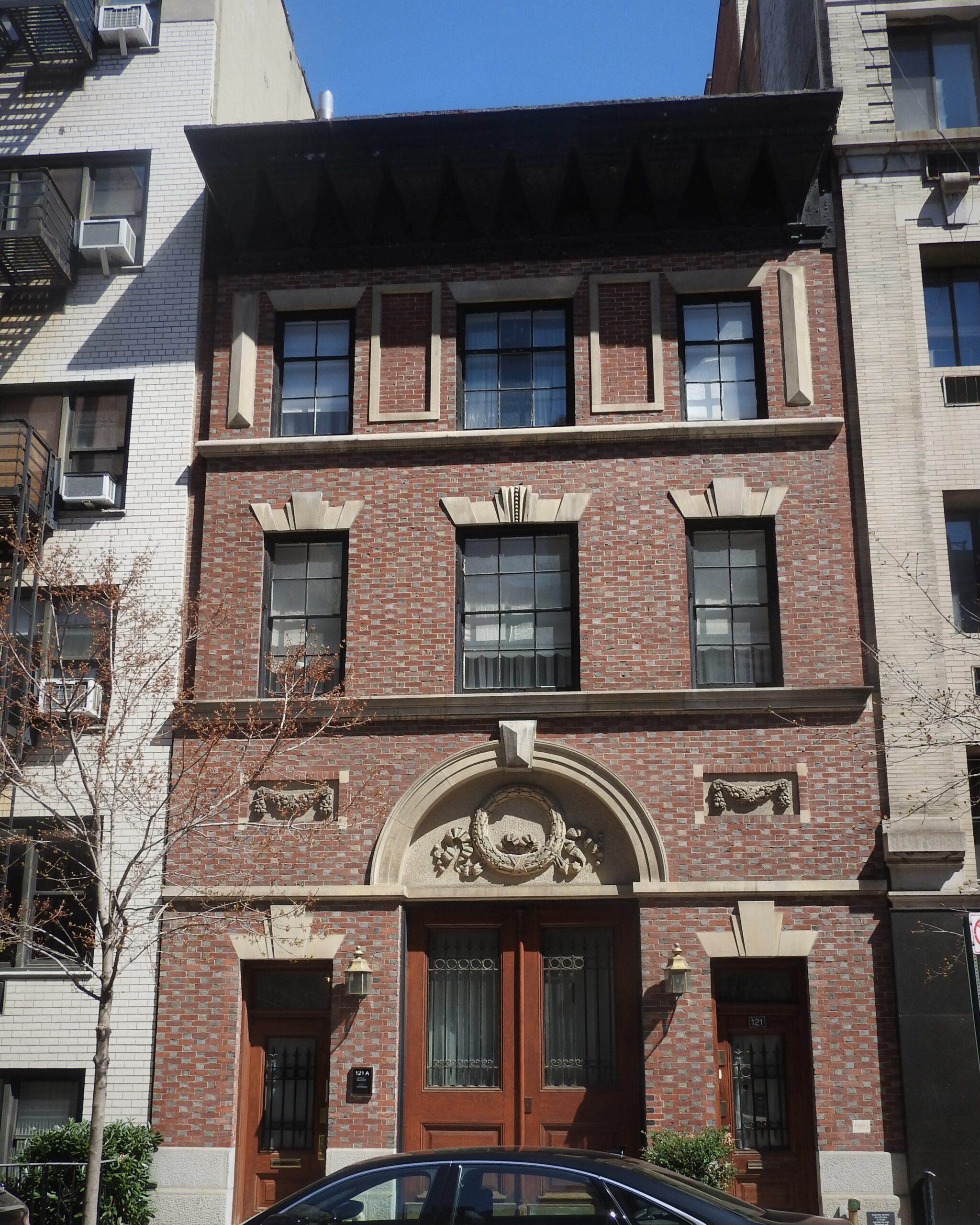
What is The Brearley School and why is it considered NYC’s top all-girls school?
The Brearley School, founded by Samuel A. Brearley in 1884, is a K-12 all-girls independent day school located on Manhattan’s Upper East Side. The school enrolls approximately 772 students across 13 grade levels, with class sizes of 60-65 students per grade. Brearley’s 6:1 student-faculty ratio supports its humanities-intensive curriculum and intellectually demanding culture. Niche ranked Brearley the nation’s top girls’ school for 2025 and the third-best private K-12 school in the country.
| Brearley School at a Glance | Detail |
|---|---|
| Type | All-girls K-12 independent day school |
| Founded | 1884 |
| Location | Manhattan, Upper East Side |
| Enrollment | ~772 students across 13 grades |
| Class size | 60-65 students per grade |
| Student-faculty ratio | 6:1 |
| Acceptance rate (estimate) | ~6-12% at Kindergarten and Grade 9 entry points |
| Primary entry points | Kindergarten (~50-60 admits) and Grade 9 (~10-15 admits) |
| Tuition (2025-2026) | $66,800 (all grades K-12, comprehensive) |
| Free Tuition Program | Families earning ≤$100,000 (effective Sept 2025) |
| Ivy League placements | 124 students to Ivy League from 2020-2024 (39.6% of recent graduates) |
What sets Brearley apart from peer NYC all-girls schools is academic intensity combined with concentrated college matriculation outcomes. From 2020-2024, Brearley placed 124 students at Ivy League schools; 39.6% of recent graduates have matriculated to one of seven Ivy League institutions. The school emphasizes critical reasoning, written and oral expression, and intellectual courage within a tight-knit community of 50-65 graduates per class.
What is Brearley’s acceptance rate at each entry point?
Brearley does not publish official acceptance rate figures. Independent analyst estimates place the acceptance rate at approximately 6-12% at the Kindergarten and Grade 9 entry points, with one published estimate citing 6% (EduAvenues, 2025). The Kindergarten cohort represents the largest entry point, with approximately 50-60 students admitted from a substantially larger applicant pool. Grade 9 entry is smaller (typically 10-15 new students) and competitive given the school’s established cohort.
Non-entry grades (Grades 1-4, 5-8, 10-12) admit only when current students leave the school, which is uncommon at Brearley. Applications for non-entry grades are reviewed, but families should maintain realistic expectations and apply to multiple schools concurrently.
How does Brearley’s admissions process work?
Brearley follows the ISAAGNY coordinated calendar for the admissions cycle. Applications open in early September on the Ravenna platform and close in early-to-mid January (specific deadlines vary by grade). A complete Brearley application includes the online application form, parent statement, student essay (Grade 5 and up), teacher recommendations (current English and Math teachers plus counselor or principal), transcripts for the current and prior year, ISEE or SSAT scores (Grade 5 and up), and an in-person interview or child visit. Financial aid applicants additionally submit the Clarity Financial Aid application.
The Brearley interview for upper-grade applicants is a one-on-one conversation that evaluates intellectual depth, self-awareness, and engagement with ideas. Faculty pay close attention to how an applicant thinks aloud, considers counter-arguments, and demonstrates curiosity rather than rehearsed answers. For Kindergarten applicants, the school conducts a child visit during which trained faculty observe social interaction, language development, and self-regulation.
What does Brearley cost in 2025-26 and what financial aid is available?
Brearley’s tuition for the 2025-2026 academic year is $66,800 for all grades K-12 (Brearley School Office of Admission). The tuition is comprehensive and includes books, lunch, technology, athletics, grade-level trips, and required extracurricular activities. Parents’ Association dues and a small registration fee apply. Approximately 20% of the student body received financial aid in 2024-2025, with the average grant covering approximately 91% of tuition (Brearley reported average grant of $58,552).
Effective September 2025, Brearley launched a Free Tuition Program for families with annual household incomes of $100,000 or less and minimal non-liquid assets. The program covers full tuition plus afterschool programs, summer programs, music lessons, and other expenses generally outside tuition. Families above the free-tuition threshold may still qualify for partial aid; Brearley commits to meeting 100% of demonstrated financial need.
What ISEE or SSAT scores does Brearley expect?
Brearley accepts both ISEE and SSAT scores for Grade 5-12 admissions. The school does not publish a required cutoff score; instead, admissions officers review scores in context with the broader applicant profile. Competitive Brearley applicants typically present ISEE stanines in the 7-9 range across the Verbal, Quantitative, Reading, and Math sections. Strong scores do not guarantee admission; weak scores rarely sink an otherwise compelling application backed by exceptional teacher recommendations and a strong interview.
Brearley’s enrolled students perform at an extraordinarily high level on standardized testing. The school’s reported average ACT composite is approximately 35, which places students in the 99th percentile nationally. This reflects the academic strength of the admitted cohort rather than a stated admissions threshold. Take the ISEE or SSAT in October or November to allow one retake before application deadlines.
How does Brearley compare to Spence and Chapin?
Brearley, Spence, and Chapin form NYC’s top tier of all-girls K-12 day schools. All three share the New York Interschool consortium, comparable academic rigor, and elite college matriculation. The differences are cultural and curricular. Brearley is the most humanities-focused, with an intellectually intense classroom culture and a long tradition of strong writing. Spence emphasizes science research, with established Fellows programs in Science, Language, History, and Eco. Chapin emphasizes traditional liberal arts within a strong community structure under one Upper East Side roof.
For college matriculation, Brearley leads in Ivy League density (39.6% of graduates), while Spence has slightly broader matriculation reach to top-25 non-Ivy schools such as Stanford, Duke, and the University of Chicago. Chapin matriculates broadly to top-25 institutions with consistent strong placement at Brown, Columbia, Cornell, Duke, Georgetown, Harvard, Princeton, UChicago, Penn, and Yale. The “right” choice depends on your daughter, not the relative ranking.
What college outcomes do Brearley graduates achieve?
Brearley produces among the strongest college matriculation outcomes of any K-12 day school in the United States. From 2020-2024, the school placed 124 graduates at Ivy League institutions. Over 39.6% of graduates from 2021-2025 matriculated to one of seven Ivy League schools (Brown, Columbia, Cornell, Harvard, Penn, Princeton, Yale), with the largest cohorts at Harvard, Columbia, Yale, and Penn. Secondary matriculation hubs include the University of Chicago (18 graduates over five years), NYU, UVA, and Stanford.
These outcomes do not mean admission to Brearley guarantees Ivy League admission. Brearley graduates face the same hyper-competitive landscape as all other applicants, and even with Brearley’s reputation, top universities reject the majority of Brearley applicants. Ivy League acceptance rates have reached historic lows for the Class of 2030, and Brearley families should plan strategically rather than assume the school’s name carries the application.
What strategic advice would help families maximize Brearley chances?
For Kindergarten applicants, the strongest determinants of admission outside the child visit are the parent statement (which functions as a window into family values and engagement), the depth of relationship with the applicant’s nursery school director or referring head, and sibling/legacy status. Strong nursery-school recommendations remain meaningful at Brearley. Visit during the Open House and tour days, attend admissions information sessions, and complete the parent visit and child visit thoughtfully.
For Grade 5-12 applicants, the trio of teacher recommendations, the student essay, and the interview dominate the file. Strong ISEE or SSAT scores are necessary but not sufficient. Brearley pays attention to how an applicant engages substantively with ideas; rehearsed answers underperform thoughtful, original conversation. Apply to other top-tier NYC schools (Spence, Chapin, Trinity) and stronger fit options as a backup. Decision day in mid-February will concentrate joy and disappointment into a single afternoon; build the list accordingly.
Frequently Asked Questions About Brearley Admissions
Brearley is on the Upper East Side of Manhattan, with its main building near the East River and an additional facility nearby. The location places it among a cluster of elite independent schools in the same part of the city. Families considering Brearley should factor in the Upper East Side setting and commute, since proximity and daily travel across Manhattan are practical considerations for younger students attending each day.
Brearley is a K-12 school, enrolling girls from kindergarten through twelfth grade on a single continuous track. The largest entry point is kindergarten, with smaller numbers admitted at later transition years. Because most seats fill at the youngest grade, families aiming for a specific entry year should understand that openings shrink considerably after kindergarten, making the timing of an application an important strategic consideration for prospective families.
Founded in the late nineteenth century, Brearley is one of New York City’s oldest and most distinguished independent schools, long known for academic rigor, intellectual seriousness, and strong preparation of young women for top colleges. Its reputation rests on demanding academics and a tradition of producing accomplished graduates. This long history and consistent excellence are central to why families regard it among the city’s most selective schools.
Proponents argue that all-girls schools can foster confidence, leadership, and strong participation in fields like math and science by removing certain social dynamics of coed classrooms, and research on outcomes is mixed but often favorable. The benefit depends on the individual child and family values. Families should weigh whether a single-sex environment suits their daughter’s learning style and temperament, since fit matters more than any general claim about the model.
No; Brearley is a secular, nonsectarian independent school with no religious affiliation, focusing on academic and personal development rather than religious instruction. It welcomes families of all backgrounds and beliefs. Families seeking a faith-based education would look elsewhere, while those wanting a rigorous secular program will find Brearley fits that profile, so religious affiliation is not a factor in its admissions or curriculum.
Brearley combines demanding academics with a wide range of arts, athletics, clubs, and community activities, fostering a close, intellectually engaged community of students. The culture emphasizes curiosity, discussion, and high expectations alongside support. Students typically describe a serious but collaborative environment. Families should consider whether their child will thrive in a rigorous, achievement-oriented setting that also values creativity and involvement beyond the classroom when evaluating fit.
No; while Brearley sends many graduates to highly selective colleges, attending does not guarantee any specific admission, and elite colleges admit students individually based on their own records. A strong school provides excellent preparation and counseling, but the student must still excel. Families should view Brearley as outstanding preparation rather than a guaranteed pipeline, since no school, however prestigious, ensures a place at a particular college.
Families help most by keeping the process low-pressure, letting the child’s genuine personality show in interviews and assessments rather than over-coaching, and choosing schools that fit the child well. Reading to and engaging young children supports natural development more than drilling. Authenticity matters, since admissions teams notice over-prepared responses. A calm, supportive approach focused on fit serves children better than treating the process as a high-stakes competition to win.
Sources: Brearley School official site, New York State Association of Independent Schools (NYSAIS), National Association of Independent Schools (NAIS), NCES Private School Universe Survey, Parents League of New York, ERB (Educational Records Bureau), and independent NYC private school admissions analyses.
About Oriel Admissions
Oriel Admissions is a Princeton-based college admissions consulting firm advising families nationwide on elite university admissions strategy. Our team brings deep expertise across every dimension of the application, and our distinctive 360 approach develops strategy, positioning, activities, essays, and interviews as one coherent whole. To discuss your family’s admissions strategy including NYC private school admissions, schedule a consultation.