What is Caltech’s acceptance rate for the Class of 2029?
Caltech admitted 427 of 11,285 applicants for the Class of 2029, an overall rate of 3.78% (Caltech News, March 2025). The Class of 2028 set an all-time record at 2.27% (315 admitted from 13,863 applications). For the Class of 2030, Caltech has announced 428 admitted students, but the total application count has not yet been released; based on recent trends, the rate is projected at 3-4%. The institute does not break out separate Restrictive Early Action and Regular Decision rates, but states publicly that both rounds run “under 5%” with negligible difference between them.
| Class | Applications | Admits | Acceptance Rate |
|---|---|---|---|
| Class of 2026 | 16,626 | 447 | 2.69% |
| Class of 2027 | 13,847 | 356 | 2.57% |
| Class of 2028 | 13,863 | 315 | 2.27% |
| Class of 2029 | 11,285 | 427 | 3.78% |
| Class of 2030 | n/a (pending) | 428 | ~3-4% (projected) |
For broader context, see our most competitive colleges in America overview.
Why is Caltech harder to get into than Harvard or MIT?
By acceptance rate, Caltech (3.78% for the Class of 2029) is comparable to Harvard (~4.2% for Class of 2029) and lower than MIT (4.5% for the Class of 2029). But the underlying mechanics are different. Caltech enrolls only about 230 students per year, compared with roughly 1,650 at Harvard and 1,100 at MIT. Caltech’s tiny class size means even modest application volume produces an extraordinarily low admit rate.
The applicant pool composition also differs. Caltech selects exclusively for top-tier STEM ability – applicants who lack the mathematical and scientific preparation for proof-based coursework are filtered out at first read, regardless of how strong their humanities profile is. Harvard and MIT admit students across a broader academic range. For school-specific guidance, see how to get into MIT, Harvard, and Stanford.
What does Caltech actually look for in applicants?
Caltech’s Common Data Set lists five factors as “very important” in admission decisions: rigor of secondary school record, standardized test scores, application essays, recommendations, and character or personal qualities. Class rank, GPA, and extracurricular involvement are listed as “important.” This weighting differs from most peer institutions and reveals what Caltech is selecting for: demonstrated readiness for proof-based mathematics and graduate-level research, paired with the personal qualities to thrive in one of the most rigorous undergraduate environments in the world.
The Class of 2029 admitted students hailed from 41 U.S. states and territories and 27 countries. The Class of 2028 was 56% public-school, with 45% female and 54% male enrollment. Roughly 90% of Caltech undergraduates participate in research during their degree, and the student-to-faculty ratio is 3:1. The institute is selecting for students who will use these resources, not students who will be intimidated by them. For more on what fails at this level, see our analysis of why valedictorians get rejected from elite schools.
What GPA and course rigor does Caltech require?
Caltech does not publish a GPA cutoff, but the practical reality is that nearly all admitted students hold a 4.0 unweighted GPA or very close, with a transcript that includes the most rigorous mathematics and science available at their high school. Caltech specifies course requirements explicitly: four years of math including calculus, one year of chemistry, one year of physics, three years of English, and biology recommended. Applicants who have not reached calculus by senior year are at a structural disadvantage that essays and test scores rarely overcome.
For competitive applicants, the floor is multivariable calculus, linear algebra, or differential equations completed by senior year (typically through dual enrollment, online coursework, or advanced AP / post-AP sequences), AP Physics C (Mechanics and Electricity & Magnetism), AP Chemistry, and ideally an additional advanced science elective. The transcript should signal not just success in these courses but genuine intellectual engagement with the underlying mathematics. For more on academic positioning, see our Academic Index calculator.
What test scores does Caltech require?
Caltech reinstated SAT/ACT requirements beginning with the Class of 2029, after finding that more than 95% of applicants submitted scores during the test-optional period despite being told scores would not be considered. Applicants for the 2025-26 cycle and beyond must submit either an SAT or ACT score. Caltech superscores the SAT and requires all test scores ever taken to be submitted (a “score choice” policy that differs from many peer institutions).
| Test | 25th Percentile | 75th Percentile | Recommended Target |
|---|---|---|---|
| SAT Composite | 1540 | 1590 | 1560+ |
| SAT EBRW | 760 | 790 | 770+ |
| SAT Math | 790 | 800 | 800 |
| ACT Composite | 35 | 36 | 35+ |
| ACT Math | 34 | 36 | 36 |
For testing strategy, see our which colleges require the SAT or ACT guide and our SAT vs ACT decision guide.
How does Caltech’s Restrictive Early Action work?
Caltech offers a single early pathway: Restrictive Early Action (REA), with a November 1 deadline and mid-December decisions. REA is non-binding – admitted students are not required to enroll – but applicants cannot apply Early Decision or Restrictive Early Action to any other private institution. Public university EA programs and rolling admissions are permitted. Unlike most elite institutions, Caltech publicly states that the REA admit rate is “under 5%” with “negligible differences” from Regular Decision. Applying early at Caltech does not provide the statistical boost it does at Harvard, Yale, Princeton, or Stanford.
The strategic implication: apply REA only if Caltech is genuinely the top STEM choice and the academic file is finalized by November 1. Applicants whose senior fall transcript or January testing will materially improve the file should generally apply Regular Decision (January 3 deadline) instead. For broader Early Action and Early Decision strategy, see our Early Decision strategy guide.
What does Caltech cost, and what financial aid is available?
For 2025-26, Caltech’s tuition is approximately $66,762, and total cost of attendance is approximately $90,000. Caltech meets 100% of demonstrated financial need without loans for all admitted U.S. students through its Caltech Promise program. International students are need-aware in admissions but receive full-need aid if admitted. Two thresholds matter for affluent and middle-income families:
| Family Income | Typical Outcome | Notes |
|---|---|---|
| Under $100,000 | $0 tuition (Caltech Promise) | Tuition fully covered for admitted U.S. students |
| $100,000-$200,000 | Sliding scale aid | Need-based grants typical for this band |
| $200,000-$300,000 | Variable | Aid possible with multiple students in college simultaneously |
| $300,000+ | Generally full pay | Aid rare absent unusual circumstances |
For families earning $200,000+ with significant assets, Caltech typically expects full pay. Run Caltech’s Net Price Calculator on the Financial Aid site before applying to confirm the aid estimate.
How Should Applicants Approach Caltech Supplemental Essays?
Caltech’s supplemental essays carry significant weight in admissions decisions because they differentiate among academically qualified applicants. Strategy varies meaningfully by prompt, word limit, and the specific qualities Caltech looks for. For complete prompts, strategic approach for each prompt, common rejection patterns, and the timeline applicants should follow, see our deep-dive guide: Caltech Supplemental Essays Strategy.
What kind of extracurricular profile does Caltech admit?
Caltech values demonstrated technical depth more than positional prestige. The strongest admitted profiles show sustained, substantive engagement in 1-2 STEM areas with concrete output: original research with a faculty mentor (often through programs like RSI, SSP, or independent collaboration), competitive recognition at the national or international level (USAMO, USAPhO, USACO Platinum, USNCO finals, International Olympiads, Intel/Regeneron STS, Davidson Fellow), or a substantial maker project (a built robot, a published software project, an original engineering or scientific contribution). Roughly one-third of admitted students historically submitted a portfolio or maker work alongside their application.
“Math team captain” without USAMO or significant competition placement signals little. “Robotics club president” without a built and documented project signals little. The differentiating factor is what the applicant produced – working code, derived results, original engineering – not what positional title they held. About 20% of admitted students in recent years have been scholar-athletes, with athletics treated as one extracurricular among several rather than a primary admissions hook.
How does Caltech compare to MIT and other STEM-focused peers?
For students choosing between Caltech, MIT, and other elite STEM programs, the choice is genuinely about institutional culture and class size. Caltech is smaller (about 230 enrolled per year vs MIT’s 1,100), more concentrated in pure science and theoretical engineering, and known for an unusually rigorous and proof-based undergraduate experience. MIT is larger, broader (with stronger humanities, business, and biological sciences engagement), and culturally more diverse in extracurricular range. Both schools admit students at similar academic floors but select for slightly different applicant profiles – Caltech leans more toward applicants whose intellectual identity is fully STEM-centric.
Stanford and Princeton offer comparable STEM strength with broader undergraduate experiences. UChicago and Harvard offer top-tier mathematics and physical sciences with greater humanities integration. Strong STEM applicants typically apply to several of these schools simultaneously rather than treating Caltech as a standalone choice. For complete comparisons, see our guides: MIT, Stanford, Princeton, Harvard, UChicago, and Johns Hopkins.
What is the Caltech application timeline for Class of 2030 and 2031 applicants?
For students applying in the 2025-26 cycle (Class of 2030) or the 2026-27 cycle (Class of 2031), the operational timeline is identical. Restrictive Early Action applications are due November 1, with decisions released in mid-December. Regular Decision applications are due January 3, with decisions released in mid-March. CSS Profile and FAFSA must be submitted by November 15 for REA applicants and by February 1 for RD applicants.
| Milestone | Restrictive Early Action | Regular Decision |
|---|---|---|
| Application deadline | November 1 | January 3 |
| Financial aid forms due | November 15 | February 1 |
| Decision release | Mid-December | Mid-March |
| Reply deadline | May 1 | May 1 |
For Class of 2030 applicants currently in junior year, the most consequential decisions are math course selection (ensuring multivariable calculus or further is achievable by senior year) and identifying summer research programs (RSI, SSP, MITES) that strengthen the academic file before fall 2026 applications.
Frequently Asked Questions About Caltech Admissions
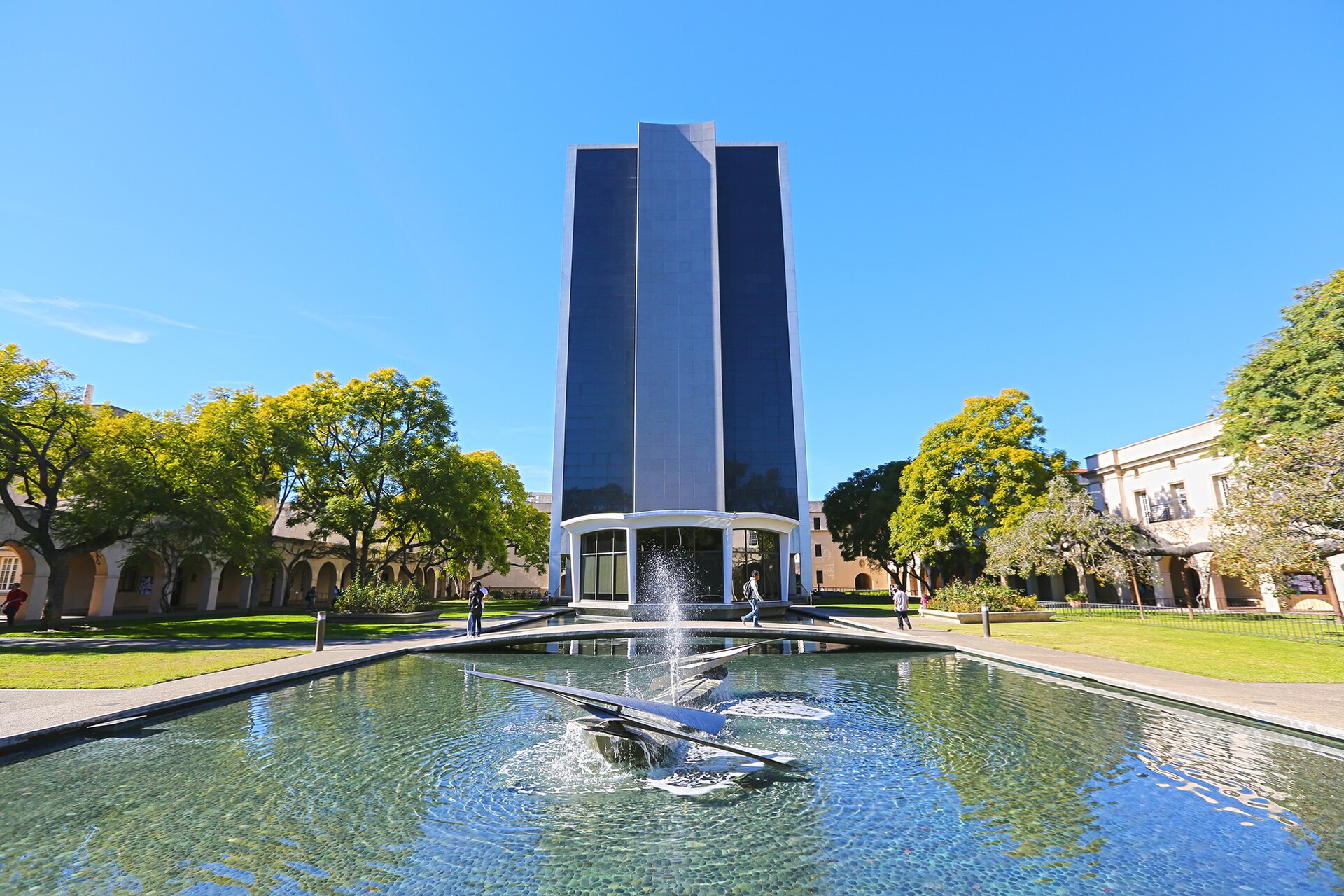
The California Institute of Technology is in Pasadena, California, a city just northeast of Los Angeles in the San Gabriel Valley. Its compact campus sits in a residential area with easy access to the greater LA region and to research facilities like NASA’s Jet Propulsion Laboratory, which Caltech manages. The Southern California setting offers a mild climate and proximity to a major metropolitan area while keeping a small, contained campus feel.
Caltech is known as one of the world’s premier science and engineering institutions, with extraordinary strength in physics, chemistry, biology, mathematics, engineering, and astronomy, and an exceptional concentration of Nobel laureates relative to its tiny size. It manages NASA’s Jet Propulsion Laboratory and is famous for cutting-edge research. Among elite universities it stands out for an intense, almost entirely STEM-focused academic culture and a very small, research-driven student body.
No; the Ivy League is a specific athletic conference of eight Northeastern universities, and Caltech, located in California, is not a member. However, it is widely regarded as one of the most prestigious and selective universities in the world, often grouped with MIT, Stanford, and the Ivies among the very top institutions. So while not Ivy League, Caltech’s reputation in science and engineering rivals or exceeds any of them.
Caltech’s testing policy has changed in recent years, including periods of being test-blind and then reinstating a testing requirement, so how scores are treated depends on the current cycle. When scores are considered, applicants should present their strongest results, with especially high math scores given Caltech’s STEM intensity. Because the policy has shifted notably, confirm the current testing and superscore rules on Caltech’s admissions site before applying.
No; Caltech awards financial aid based solely on demonstrated need and does not offer merit or athletic scholarships, similar to the Ivy League. It meets full need for admitted students with generous packages, and families below certain income levels may pay little or nothing. A high-achieving applicant cannot earn a discount for grades or scores, but need-based aid can make Caltech very affordable for families who qualify.
Yes, exceptionally; Caltech is consistently ranked among the very best universities in the world for science and engineering, and its research output, faculty, and Nobel-laureate density are remarkable for an institution of its size. For students passionate about rigorous STEM study and research, it is among the strongest choices anywhere. Its prestige is global, though its intense, math-and-science-centered environment suits a specific kind of highly driven student.
Very small; Caltech enrolls only around 1,000 undergraduates total, far fewer than most universities, with a low student-to-faculty ratio that gives students close access to world-class researchers. This tiny scale fosters an intense, collaborative, and academically demanding community. The small size is central to Caltech’s character, meaning students should expect a close-knit, high-pressure environment rather than the breadth and anonymity of a large university.
It is possible but extremely difficult; Caltech admits very few transfer students each year, and transfers must demonstrate exceptional preparation in advanced mathematics and science, often beyond standard community college offerings. The transfer acceptance rate is even lower than its already minuscule first-year rate. Community college students aiming to transfer should pursue the most rigorous math and physics courses available and excel completely, while recognizing that transfer admission to Caltech is rare.
About Oriel Admissions
Oriel Admissions is a Princeton-based college admissions consulting firm advising families nationwide on elite university admissions strategy. Our team includes former admissions officers from Harvard, Princeton, and Columbia. To discuss your family’s admissions strategy, schedule a consultation.