What is Colby College’s acceptance rate for the Class of 2029?
Colby College’s overall acceptance rate for the Class of 2029 was 7%, with approximately 1,410 students admitted from a record-breaking 20,144 applications – the largest and most competitive applicant pool in the college’s history (Colby News, April 2025). The acceptance rate has compressed dramatically over the past decade: as recently as the Class of 2020, Colby’s acceptance rate was 10.27%; by the Class of 2025, it had dropped to 9.4%; the Class of 2027 reached 6%; the Class of 2028 was 6.83%; and the Class of 2029 settled at 7%. This represents the most rapid selectivity compression in the elite LAC universe over the past ten years.
Colby targets an entering class of approximately 600 students and reports a 49% yield rate, comparable to peer institutions like Williams (47%), Pomona (50%), and Swarthmore (42%). The Class of 2029 represents all 50 states, the District of Columbia, five U.S. territories, and 82 countries, with admits coming from more than 870 high schools worldwide. Approximately 95% of admitted students graduated in the top 10% of their high school class.
For broader Class of 2030 admissions context across peer institutions, see our Top 25 admissions statistics breakdown.
| Class | Applications | Acceptance Rate |
|---|---|---|
| Class of 2029 | 20,144 | 7% |
| Class of 2028 | 17,786 | 6.83% |
| Class of 2027 | ~17,800 | 6% |
| Class of 2026 | ~16,000 | ~8% |
| Class of 2024 | ~13,000 | 9.4% |
(Source: Colby News, Colby Office of Admission)
What is Colby’s Early Decision acceptance rate?
Colby offers two binding Early Decision rounds: ED I (deadline November 15) and ED II (deadline January 3). Colby does not publicly release recent ED-specific acceptance figures, which makes precise calculation difficult. However, historical data suggests a substantial structural advantage: the most recent publicly available ED acceptance rate, from the Class of 2020 cycle, was 43.23%, when the overall acceptance rate was approximately 10%. The implied ED multiplier of roughly 4x has likely compressed somewhat as overall application volumes have grown, but Colby continues to fill a substantial proportion of its entering class through binding ED commitments.
The strategic implication for applicants is that Colby ED offers one of the most pronounced statistical advantages in the elite LAC universe, particularly given the college’s compressed overall acceptance rate. For applicants whose academic profile would be competitive at top-10 LACs and whose authentic top choice is Colby, the binding ED commitment converts a single-digit Regular Decision probability into something materially more favorable. For the school-by-school ED calculus, see our Early Decision vs. Regular Decision acceptance rates breakdown.
The trade-off is binding commitment. Applicants admitted ED to Colby must withdraw all other applications and enroll. The Colby Commitment and the expanded Fair Shot Fund provide meaningful security for ED applicants concerned about financial aid, but the actual financial offer can vary based on family circumstances, and ED admits do not have the option to compare aid offers from multiple institutions before committing.
What is the Colby Commitment, and how does the Fair Shot Fund work?
The Colby Commitment is the college’s pledge to meet 100% of each admitted student’s demonstrated financial need without loans. The Fair Shot Fund, expanded for the Class of 2029, establishes specific income-based benchmarks for family contribution that go beyond traditional need-based aid:
| Family Income | Maximum Family Contribution |
|---|---|
| $75,000 or less (with typical assets) | $0 |
| Up to $100,000 | $10,000 per year |
| Up to $150,000 | $15,000 per year |
| Up to $200,000 | $20,000 per year |
For affluent families earning above $200,000, the Colby Commitment continues to meet 100% of demonstrated need based on the standard need-based methodology, with the practical implication that families earning $200,000-$300,000 with typical assets often pay substantially less than the published $91,650 comprehensive fee. The strategic implication for upper-middle-class families is that running Colby’s Net Price Calculator is a critical step in the application process, as the actual cost of attendance is often meaningfully lower than the sticker price assumes.
For broader analysis of how high-income families fare under elite LAC financial aid policies, see our Net Price Comparison Calculator.
What test scores and GPA do Colby admits have?
Colby has been test-optional since the 1960s, making it one of the longest-standing test-optional institutions in American higher education. For applicants who submit scores, the median SAT for the Class of 2029 was 1520 and the median ACT was 34. The 75th percentile SAT for the Class of 2028 reached 1530, indicating that admitted students who submit scores present academic profiles comparable to peers at the most selective LACs.
Approximately 95% of Class of 2029 admits graduated in the top 10% of their high school class. The strategic implication for applicants is that competitive Colby candidates from rigorous high schools should expect their unweighted GPA to be 3.9 or higher with the most demanding course load available. Colby’s compressed acceptance rate (7% overall) and very strong academic profile mean the admissions committee identifies academically dominant applicants even within the test-optional framework. Colby will superscore SAT and ACT exams and accept individual section retest results as part of the superscore.
What is Colby looking for in applicants?
Colby’s holistic review identifies four factors as “very important”: rigor of high school course load, GPA, recommendations, and character/personal qualities. Five additional factors are labeled “important”: class rank, the essay, extracurricular activities, talent and ability. The college does not offer interviews, which means counselor and teacher recommendations carry substantial weight in distinguishing among academically strong applicants.
The strongest Colby applications demonstrate three things. First, intellectual depth in at least one substantive area, supported by sustained extracurricular engagement, independent work, or competitive recognition. Second, authentic engagement with Colby’s specific institutional identity, communicated through supplemental essays that engage with the rural Maine setting, the Davis Connects program, the Colby Museum of Art, or specific Colby academic programs. Third, character and contribution potential – Colby is selecting for students who will engage meaningfully with a 2,200-student residential community in a contained Maine setting, and applications that signal preference for urban or larger-campus environments consistently underperform.
For deeper analysis of why high-stat applicants get rejected from elite institutions, see why valedictorians get rejected from Ivies. For broader extracurricular strategy, see our college application spike strategy guide.
How does Colby compare to peer NESCAC institutions?
Colby sits within the New England Small College Athletic Conference (NESCAC) alongside Williams, Amherst, Bowdoin, Middlebury, Hamilton, Bates, and Wesleyan. The NESCAC peer group represents the densest concentration of elite LACs in the country, and Colby’s 7% acceptance rate places it in the top tier of NESCAC selectivity, comparable to Bowdoin (~7%) and meaningfully more selective than Hamilton (~13%), Middlebury (~14%), and Bates (~14%).
The comparison most applicants and families care about is Colby versus Bowdoin, the two flagship Maine LACs. Both schools have similar enrollment sizes (~2,000-2,200 undergraduates), comparable acceptance rates (~7%), and similar geographic profiles. The institutional differences are real but subtle: Bowdoin is older (founded 1794), more politically liberal in student body, and slightly more closely tied to the Boston-Washington intellectual corridor; Colby has invested heavily in expanded facilities (the new Colby College Museum of Art expansion, the Gordon Center for Creative and Performing Arts, the Harold Alfond Athletics and Recreation Center) and has the most rapidly rising selectivity profile in the LAC universe. For applicants whose preferences align with either school, the binding ED commitment is the most consequential strategic decision.
What are common mistakes Colby applicants make?
Five mistakes recur in Colby applications. First, treating Colby as a Bowdoin backup rather than as a top-tier LAC with its own selection criteria. Colby’s 7% acceptance rate places it among the most selective LACs in the country, and applications that signal Colby is a fallback fail to convey the engagement Colby is selecting for. Second, ignoring the rural Maine setting in supplemental essays. Strong Colby applications engage substantively with the Waterville context and the contained-campus residential culture, not as a generic talking point but as evidence of authentic fit.
Third, generic supplemental essays that could apply to any small liberal arts college. Strong Colby essays demonstrate specific engagement with the Davis Connects program, the Colby Museum of Art, the Lyons Arts Lab, the Halloran Lab for Entrepreneurship, the Island Campus, or particular Colby academic programs. Fourth, applying ED based on perceived statistical advantage rather than authentic fit. Colby’s admissions readers identify strategic ED applications without substantive engagement, and these applicants face deferral or denial regardless of academic credentials. Fifth, underestimating the importance of recommendations. Colby does not offer interviews, which means counselor and teacher recommendations carry substantial weight in distinguishing among academically strong applicants.
Frequently Asked Questions About Colby College Admissions
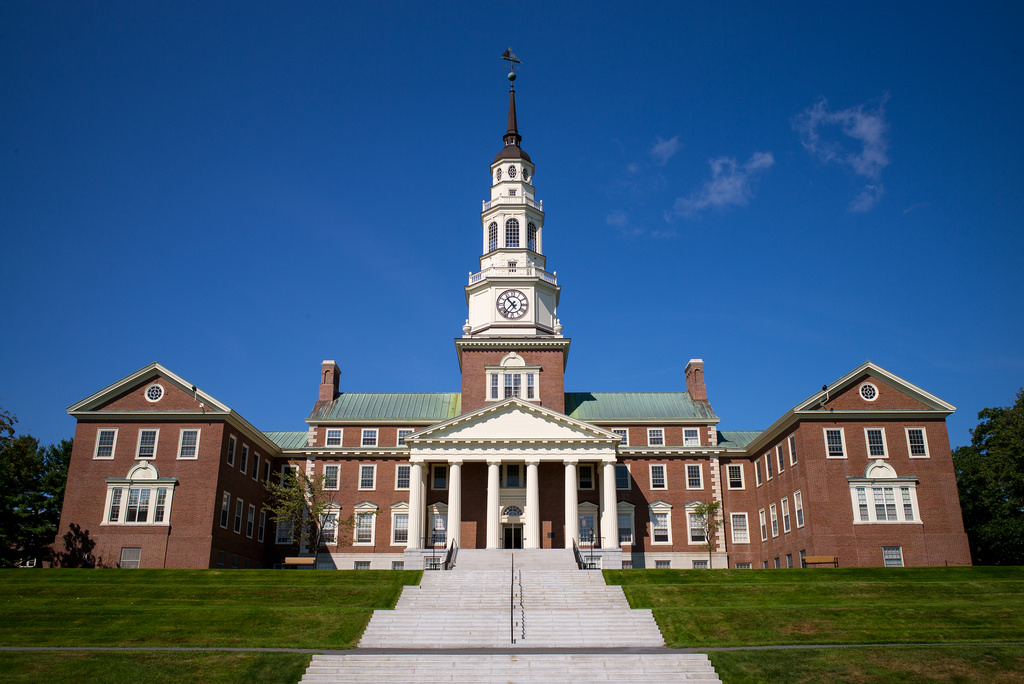
Colby is in Waterville, Maine, a small city in the central part of the state, set on a hilltop campus called Mayflower Hill. It sits in a classic New England college-town environment, with access to Maine’s lakes, mountains, and coast nearby. The location offers a tight-knit residential community somewhat removed from a major metropolitan area, appealing to students who want an immersive small-college experience in a scenic, outdoorsy setting.
NESCAC stands for New England Small College Athletic Conference, a group of eleven highly regarded liberal arts colleges that includes Colby, Bates, Bowdoin, Williams, Amherst, and others. Colby is also commonly counted among the ‘Little Ivies,’ an informal label for elite Northeastern liberal arts colleges. It is not part of the Ivy League, which is a conference of universities, but its selectivity and prestige place it among the top liberal arts colleges.
Colby has generally considered an applicant’s best section scores across test dates when reviewing submitted results, a superscoring-style approach, though it has also offered test-optional admission in recent cycles. Because testing policies have shifted across selective colleges, applicants should confirm Colby’s current policy on its admissions site. Where scores are submitted, presenting the strongest combination of sections is generally to an applicant’s advantage.
No; like most elite liberal arts colleges, Colby awards financial aid solely on the basis of demonstrated need and does not offer merit, athletic, or academic scholarships. Through the Colby Commitment it meets full demonstrated need, often with reduced or no loans. A high-achieving applicant cannot earn a tuition discount for grades, but families with financial need frequently find Colby far more affordable than the published sticker price.
Colby is small, enrolling roughly 2,000 to 2,300 undergraduates, typical of an elite liberal arts college and far smaller than a research university. The intimate scale supports small classes, close faculty relationships, and a strong residential community on Mayflower Hill. Students who want personal attention, discussion-based learning, and direct access to professors, rather than the scale of a large university, often find Colby’s size a major draw.
Jan Plan is Colby’s distinctive January term within its 4-1-4 academic calendar, a short month between fall and spring semesters when students focus on a single course, independent project, internship, research, or off-campus experience. It encourages experimentation and hands-on learning outside the usual semester structure. This signature feature lets students explore an unusual subject, build skills, or pursue an internship, and is a hallmark of the Colby academic experience.
Colby, Bates, and Bowdoin are the three elite Maine NESCAC liberal arts colleges, often grouped and compared. All are small, highly selective, and residential, but they differ in feel: Bowdoin is frequently seen as the most selective and polished, Bates for its lack of fraternities and a collaborative ethos, and Colby for its strong sense of community and the Jan Plan. The best fit depends on culture, location, and academic priorities.
Colby has offered test-optional admission in recent cycles, allowing applicants to choose whether to submit SAT or ACT scores, though policies can change year to year. Where strong scores are submitted, they can help, and Colby generally considers an applicant’s best sections. Because test policies have been in flux across selective colleges, applicants should confirm Colby’s current requirement on its admissions site and decide whether submitting scores strengthens their application.
Final Thoughts on Colby Admissions
Colby College represents the most rapid selectivity rise in the elite LAC universe over the past decade. From a 10.27% acceptance rate in the Class of 2020 to 7% in the Class of 2029, Colby’s profile has shifted into the top tier of LAC selectivity alongside Bowdoin, Williams, Amherst, Pomona, and Swarthmore. The Colby Commitment and Fair Shot Fund represent one of the most generous financial aid policies among top LACs, and the recently expanded Davis Connects, arts, and athletic facilities have substantially upgraded the on-campus experience.
For affluent families with a candidate whose preferences align with Colby’s contained Maine setting and intellectual culture, the strategic case for Colby ED is among the strongest in the LAC universe, with a binding commitment offering meaningful statistical advantage over the 7% Regular Decision rate. The cycles ahead will likely continue this trajectory: continued application growth, sustained downward pressure on the overall acceptance rate, and an ED program that fills a substantial proportion of the entering class.
For further reading: NCES College Navigator (federal data on enrollment, costs, and outcomes), the Common Data Set Initiative (standardized institutional reporting used across U.S. higher education), NACAC (the National Association for College Admission Counseling), and College Board BigFuture (admissions and financial aid resources for families).
About Oriel Admissions
Oriel Admissions is a Princeton-based college admissions consulting firm advising families nationwide on elite university admissions strategy. Our team brings deep expertise across every dimension of the application, and our distinctive 360 approach develops strategy, positioning, activities, essays, and interviews as one coherent whole. To discuss your family’s admissions strategy, schedule a consultation.