Who Counts as an Unhooked Applicant at Columbia?
In Columbia admissions terminology, an “unhooked” applicant is one who does not benefit from any of the institutional priority categories that account for a meaningful share of the admitted class. The hooks that admissions offices weight in their decisions are well-documented and concrete (Columbia Office of Undergraduate Admissions).
The standard hook categories at Columbia and peer Ivies are: recruited athletes (Ivy League varsity sport coach support), legacy applicants where the parental degree is undergraduate at Columbia and the preference still operates, QuestBridge match scholars (high-achieving low-income students who match through the QuestBridge National College Match program), faculty and staff children, ALDC applicants (athletes, legacies, dean’s interest list, children of faculty and staff), and development-priority applicants (children of significant donors or families with development potential).
An applicant who falls into none of these categories is unhooked. By the most common estimate, approximately 65-70% of Columbia’s admitted class is unhooked; the remaining 30-35% benefit from one or more of the priority categories. The split is significant because the unhooked pool is much larger (typically 90-95% of all applications) but admit at meaningfully lower rates than the hooked pool.
For families considering Columbia, the relevant question is rarely “what is Columbia’s acceptance rate?” The relevant question is “what is the acceptance rate for an applicant with my child’s profile, applying without a hook, in the regular pool?” That question has a much lower answer than the headline figure suggests.
How Does Columbia’s Effective Acceptance Rate Differ From the Published Rate?
The published 4.23% Class of 2030 acceptance rate aggregates several distinct applicant pools that admit at very different rates. Decomposing the headline figure produces a significantly different picture for unhooked families.
Columbia’s Class of 2030 admitted approximately 2,581 students. Estimating institutional priority allocations based on published research and disclosed Columbia data, the breakdown is approximately as follows. Recruited athletes account for approximately 125 admits, given Columbia’s 31 varsity teams and Ivy League athletic recruiting limits. Legacy admits, where the parent holds a Columbia undergraduate degree and Columbia’s legacy preference continues to operate, account for approximately 250-300 admits. QuestBridge National College Match scholars, who are admitted as binding ED equivalents, account for approximately 75 admits. Faculty and staff children, faculty admits, and other ALDC categories account for an additional 75-100 admits combined. Development-priority applicants account for approximately 50-100 admits, though the exact figure is rarely disclosed.
| Applicant Pool | Approximate Admits | Approximate Applications | Approximate Rate |
|---|---|---|---|
| Recruited athletes | ~125 | ~250 | ~50% |
| Legacy applicants | ~275 | ~1,800 | ~15% |
| QuestBridge match | ~75 | ~750 | ~10% |
| Faculty/staff children, ALDC | ~85 | ~400 | ~21% |
| Development priority | ~75 | ~150 | ~50% |
| Total hooked | ~635 | ~3,350 | ~19% |
| Unhooked applicants | ~1,946 | ~57,681 | ~3.4% |
| All applicants | 2,581 | 61,031 | 4.23% |
Source: Estimates based on Columbia Common Data Set filings, Ivy League athletic recruiting reports, QuestBridge match data, and academic research on hook prevalence at peer institutions including Arcidiacono, Kinsler, and Ransom (2022) on Harvard. Exact Columbia disclosures are not public; figures reflect best available estimates.
The unhooked rate of approximately 3.4% is an aggregate. Within the unhooked pool, applicants are not uniformly distributed: a meaningful share have application weaknesses (low test scores, weak high school course rigor, weak essays) that effectively self-eliminate. For an unhooked applicant with strong but not exceptional credentials, the effective rate is closer to 2.5-3%. For an unhooked applicant with a genuinely standout profile, the rate may exceed 5%, but the distinction depends entirely on what “standout” means in the comparative read.
For more detail on Columbia’s overall admissions math, see our Columbia acceptance rate analysis. For a deeper treatment of how legacy and ALDC preferences operate at Columbia and other Ivies, see our Ivy League legacy and ALDC analysis.
What Drives Admission for an Unhooked Columbia Applicant?
The Columbia application is read holistically, but holistic does not mean unstructured. Admissions readers evaluate applications across a defined set of dimensions and assign internal ratings on each, then make admit/deny/waitlist recommendations based on aggregate strength and institutional priorities. Understanding the dimensions that move Columbia’s decision is the first step in knowing where to invest application effort.
The major rating dimensions used by Columbia and peer Ivy admissions offices, drawing from public reporting, leaked admissions training documents, and former admissions officer accounts, are: academic rating (course rigor, GPA, test scores, academic achievements), extracurricular rating (depth, leadership, impact, distinctiveness), personal rating (essays, recommendations, character signals), and overall rating (the reader’s aggregate judgment).
| Rating Dimension | What It Measures | Strong Signal | Weak Signal |
|---|---|---|---|
| Academic | Course rigor, GPA, test scores, academic achievements | 1540+ SAT, 12 APs, national academic awards | 1480 SAT, 6 APs, no external recognition |
| Extracurricular | Depth, leadership, impact, distinctiveness | Spike with concrete output, scaled organizational impact | Multiple clubs, leadership titles, no external output |
| Personal | Essays, recommendations, character signals | Specific Why Columbia, distinctive voice, engaged teachers | Generic essays, template-driven content, weak counselor letter |
| Overall | Reader’s aggregate judgment | Application that survives comparative read against strongest peers | Application that fits standard pile, no advocacy in committee |
Source: Reconstructed from public reporting on Ivy admissions evaluation, leaked admissions training materials at peer institutions, and former admissions officer accounts. Columbia does not publish its internal rating rubrics.
For an unhooked applicant, the academic rating is the foundation. Columbia’s admitted class has SAT scores concentrated in the 1500-1560 range and ACT scores in the 34-35 range, with high school GPAs in the 3.95+ unweighted range when GPAs are reported. An unhooked applicant whose academic rating is below the 90th percentile of the admitted class is unlikely to clear the initial review threshold regardless of other strengths, because the comparative read against academically stronger applicants is unforgiving.
The extracurricular rating is where most unhooked applicants are made or broken. Columbia distinguishes between standard high-achievement profiles (multiple varsity letters, club president, volunteer hours) and distinctive profiles (state or national level achievements, original research, sustained creative or entrepreneurial work, advanced subject matter expertise). The rating dimension here is not just achievement level but distinctiveness: an applicant who has done something Columbia admissions officers cannot easily categorize is harder to deny than one who fits a standard profile.
The personal rating, driven by essays and recommendations, is often underestimated. Columbia’s essay prompts (Why Columbia, list-based prompts about books and activities) reward specificity and intellectual seriousness. Generic essays that could have been written for any school produce mediocre personal ratings; essays that engage Columbia’s specific academic ecosystem and reflect genuine intellectual depth produce strong ratings. The personal rating can lift an otherwise standard application or drag down an academically strong but personally generic application.
How Should Unhooked Applicants Build Their Academic Profile?
Academic rating is non-negotiable for unhooked Columbia applicants. The rating is built from course rigor, GPA in those courses, standardized test scores, and academic achievements outside coursework. Each component is weighted, but rigor and GPA together carry the most signal in the initial reader review.
Course rigor at Columbia means the most demanding curriculum available at the applicant’s high school. For schools offering AP courses, this typically means 8-12 AP courses by graduation, including the core academic subjects (calculus, English, history, science, foreign language). For International Baccalaureate schools, this means the full IB Diploma with at least three Higher Level subjects in challenging areas. For schools without AP or IB, this means honors-track everything plus dual enrollment in college-level courses where available.
Test scores have returned to mandatory status at Columbia for the Class of 2029 cycle and beyond. The middle 50% range for admitted students sits at approximately 1500-1560 SAT and 34-35 ACT (NCES College Navigator; IPEDS Data Center). Unhooked applicants should target the upper end of this range. A 1500 SAT for an unhooked applicant is acceptable but not strong; a 1560+ is in the band where Columbia would consider it a clear academic strength rather than a baseline.
Academic achievements outside coursework matter more than most applicants realize. National-level science fair (Regeneron STS, ISEF), nationally recognized humanities work (Concord Review publication, Scholastic gold key portfolios), USAMO/Olympiad participation, recognized research output, and similar credentials shift the academic rating from strong to distinctive. For unhooked applicants, the difference between strong and distinctive academic ratings is often the difference between admit and deny.
How Should Unhooked Applicants Build Their Extracurricular Profile?
Extracurricular rating is where Columbia readers form a clear picture of the applicant beyond the transcript. The most common extracurricular pattern, multiple sports, club leadership, and volunteer hours, produces a standard rating that is unlikely to drive admission for unhooked candidates. The patterns that move the rating are different.
The first pattern is the “spike” or distinctive depth profile. The applicant has invested several years in a single area (research in computational biology, competitive debate at the national level, original creative work, social entrepreneurship) and has produced concrete output that demonstrates expertise beyond high school peers. The output matters more than the time investment: a published research paper, a tournament finalist record, a documented business with revenue, a substantial creative portfolio. Without output, the depth investment reads as a hobby.
The second pattern is the “scale” profile. The applicant has built or led an organization, initiative, or project that has measurable impact at scale beyond a typical high school activity. Founding a nonprofit with documented beneficiaries, leading a regional or national student organization, building a product or service used by thousands, organizing a major event with sustained operations. The pattern requires authentic impact, not staged credentials; Columbia readers are skilled at distinguishing real organizational leadership from resume-padding.
The third pattern is the “uncommon excellence” profile. The applicant has reached a level of achievement in a specific domain that is rare among applicants regardless of social context. National team in an unusual sport, professional-track creative or technical work, recognized expertise that has produced external validation (publications, performances, awards from non-school institutions). The pattern is harder to engineer because it requires genuine talent or dedication beyond what most applicants can manufacture.
The shared feature of all three patterns is that they produce a story Columbia readers cannot easily summarize in one sentence. Standard profiles get summarized in one sentence (“strong student, three sports, club president”) and slot into the comparative pile. Distinctive profiles require the reader to engage with what the applicant actually did, which is the cognitive prerequisite for advocacy in committee.
What Role Do Essays Play for Unhooked Columbia Applicants?
Essays carry disproportionate weight for unhooked applicants because they are the primary tool for converting a standard application into a memorable one. Columbia’s supplemental essays include the Why Columbia question, list-based prompts about books and academic interests, and short-answer prompts about the applicant’s life. Each prompt tests something specific.
The Why Columbia essay tests whether the applicant has engaged with Columbia’s actual academic ecosystem versus a generic Ivy template. Specificity is the signal: naming the Core Curriculum component the applicant finds most compelling and explaining why, identifying specific faculty whose work the applicant has read and engaged with, articulating an academic plan that is uniquely well-served by Columbia’s structure. Generic Why Columbia essays that list “diverse student body” and “rigorous academics” produce weak personal ratings.
The list-based prompts (books read for pleasure, current events sources, academic interests) test whether the applicant has genuine intellectual life beyond school assignments. The lists are not graded for sophistication of titles but for coherence of intellectual identity. A list of fifteen Hemingway novels is less compelling than a list mixing fiction, philosophy, and a contemporary essay collection that together suggest a real reader. The Common App personal statement, the third essay tool, tests narrative depth and self-awareness.
Recommendations function as essay-equivalents from a different perspective. Strong recommendations from teachers in the applicant’s strongest academic subjects (typically the subject area aligned with intended major) carry more weight than evenly distributed letters from less engaged teachers. The counselor recommendation, often overlooked, carries significant weight at Columbia because it provides the only contextual read on the applicant’s standing within the high school cohort. Applicants who have not built relationships with their counselor receive generic letters that hurt the personal rating.
Should Unhooked Applicants Apply Early Decision to Columbia?
Columbia’s Early Decision rate runs approximately 11-13% based on Common Data Set retrospective filings, compared to a Regular Decision rate near 3.2%. The headline ratio of approximately 3.6x suggests ED is significantly easier, but the institutional priority math complicates the picture for unhooked applicants.
A meaningful share of Columbia’s ED admits are recruited athletes (athletic likely letters are typically conditioned on ED applications), legacy applicants who use ED to signal genuine first-choice status (and to capitalize on the legacy preference operating most strongly in the binding round), and other priority categories. After removing the priority-driven ED admits, the unhooked ED rate is closer to 7-8%, still meaningfully higher than the unhooked RD rate of approximately 2.5-3% but smaller than the headline ratio suggests.
For an unhooked applicant who has Columbia as the unambiguous first choice and whose application is genuinely ready by November 1, ED captures approximately 2.5-3x effective rate advantage. The trade-off is forfeiture of merit aid comparison at peer institutions and the inability to compare admit results across Ivies. For families where Columbia is genuinely first, the trade-off is reasonable; for families where Columbia is interchangeable with Yale, Penn, or Princeton, ED forecloses optionality.
Unhooked applicants should not use ED to “game” admissions. Submitting a weaker November 1 application via ED, hoping the rate advantage offsets application strength, is a poor strategy. The ED pool is on average academically stronger than the RD pool because hooked applicants concentrate in ED; an unhooked applicant submitting a weaker ED application is competing against a stronger field, partially negating the rate advantage.
For families weighing the binding decision, see our Columbia, Cornell, and Penn ED strategy guide.
Does the Choice Between Columbia College and SEAS Affect Unhooked Admit Chances?
Columbia’s undergraduate program splits between Columbia College (the liberal arts division) and the Fu Foundation School of Engineering and Applied Science (SEAS). Applicants apply to one or the other and are evaluated separately. The two divisions historically run at slightly different acceptance rates, with SEAS typically running 1-2 percentage points higher than Columbia College.
The rate differential reflects pool composition rather than easier admission standards. SEAS applicants are typically more academically homogeneous (strong STEM profiles, calculus-track curriculum, science research experience) while Columbia College applicants vary more widely. The smaller, more uniform SEAS pool produces a slightly higher rate without lower selectivity per applicant.
Unhooked applicants should choose between Columbia College and SEAS based on genuine academic fit, not strategic rate optimization. Applying to SEAS without a credible STEM profile (rigorous calculus, physics, computer science coursework, demonstrated technical extracurriculars) produces a weaker comparative read than applying to Columbia College with the same profile. Applications evaluated against the SEAS-specific applicant pool are read against engineering and computer science peers; weak technical credentials stand out negatively in that comparison.
For applicants whose interests genuinely sit at the intersection of liberal arts and applied sciences, the SEAS-Columbia College choice can be made based on which division’s curriculum better serves the academic plan. SEAS offers Combined Plan options and substantial flexibility for engineering students to take Columbia College courses; Columbia College offers strong STEM departments for students who want to study sciences without an engineering focus.
What Should Unhooked Applicants Avoid?
Three common patterns produce weak applications for unhooked Columbia applicants. Each is worth understanding because they are the failure modes that most often surprise high-stat families when their child is denied.
First, the resume-padded profile. The applicant has a long list of clubs, leadership positions, and volunteer hours, but no concentrated investment that produces external output. The pattern reads as box-checking and produces a standard extracurricular rating that does not move the application out of the comparative pile. Columbia readers see thousands of these applications and reject most of them; the holistic review philosophy is articulated in resources from NACAC. Depth over breadth is not a cliche; it is the actual rating dimension.
Second, the credential-chasing profile. The applicant has accumulated competitive credentials (summer programs, research experiences, leadership awards) that have selectivity but no production. A Telluride Association summer program acceptance signals academic strength but does not produce work; a research lab placement that does not result in publication or substantial output reads as access rather than achievement. Columbia readers distinguish between credentials and production.
Third, the over-coached application. The applicant has received intensive consulting support that produces an application with the right elements but an inauthentic voice. Essays that read like consultant templates, extracurricular descriptions that overstate impact, recommendations that have been heavily managed by the applicant. Experienced Columbia readers spot over-coaching reliably; the result is a weak personal rating that drags down otherwise strong applications. Authentic voice is non-negotiable, and authentic voice does not require absence of consulting support but does require that the consulting support produces an application that the applicant could plausibly defend in person.
What Should Unhooked Class of 2031 Applicants Do This Cycle?
Unhooked applicants targeting Columbia for the Class of 2031 cycle (applications submitted fall 2026, decisions spring 2027) should organize their work around a concrete sequence of investments.
First, audit the academic profile against Columbia’s admitted student range. Course rigor (8-12 APs or full IB Diploma equivalent), GPA in those courses (unweighted 3.95+), test scores (target 1540+ SAT or 35+ ACT for unhooked applicants). Where the profile falls short, identify the specific component that needs work and invest there. A 1480 SAT and a thin AP load are both fixable in the time available; ignoring them in hopes that essays compensate is not a viable strategy.
Second, identify the extracurricular spike, scale, or excellence pattern that the application will articulate. By the start of senior year, the applicant should be able to describe their distinctive contribution in a single sentence and produce concrete evidence of impact. If the sentence does not exist, the application strategy is to either build the evidence over the next 6-9 months or accept that the extracurricular rating will be standard rather than distinctive.
Third, plan the essay strategy around Columbia’s specific prompts well before the application deadline. Why Columbia essays require genuine engagement with Columbia’s academic structure (the Core, specific departments, named faculty work). The list-based prompts require curated lists that reflect real intellectual identity rather than generated impressive titles. The Common App personal statement should not mention Columbia at all; it should be about the applicant.
Fourth, decide on the early application strategy with the family’s actual preferences clearly articulated. ED to Columbia makes sense only if Columbia is unambiguously first. ED to a peer institution (Penn, Cornell, Brown) where the applicant has stronger fit may be a better strategic call. Restrictive Early Action at Yale, Princeton, or Stanford preserves more optionality but caps the rate advantage. Regular Decision at all targets preserves full optionality at the cost of the early round advantage.
Fifth, build a balanced college list. Even with strong execution on the work above, an unhooked applicant’s effective Columbia rate sits in the 2-5% range. A balanced list includes 2-3 reach institutions like Columbia, 4-6 target institutions where the applicant’s profile aligns with the admitted student range, and 2-3 likely institutions where the applicant’s profile exceeds the admitted student range. Likely institutions should be schools the applicant would genuinely attend, not throwaway safety options.
For complete strategic guidance on Columbia admissions, see our Columbia admissions strategy guide, our Columbia GPA requirements analysis, and our Columbia waitlist guide for applicants who land on the waitlist in spring.
Frequently Asked Questions About Unhooked Columbia Admissions
A hook is a characteristic that gives an applicant a meaningful institutional advantage beyond academic and extracurricular strength, such as recruited-athlete status, legacy ties, major donor connections, first-generation or low-income background, or membership in an underrepresented group. Hooks reflect priorities a college actively seeks to fill. Because they can measurably raise admission odds, candidates lacking them compete in a tougher pool and must distinguish themselves on merit alone.
An unhooked candidate is someone without any of the special institutional advantages colleges weigh, meaning no recruited-athlete status, legacy, development connection, or sought-after background factor. Such applicants are judged almost entirely on academics, extracurriculars, essays, and overall fit. Because hooked candidates fill some of each class, those without hooks effectively compete for fewer remaining spots, which makes their profiles need to be especially strong and distinctive to stand out.
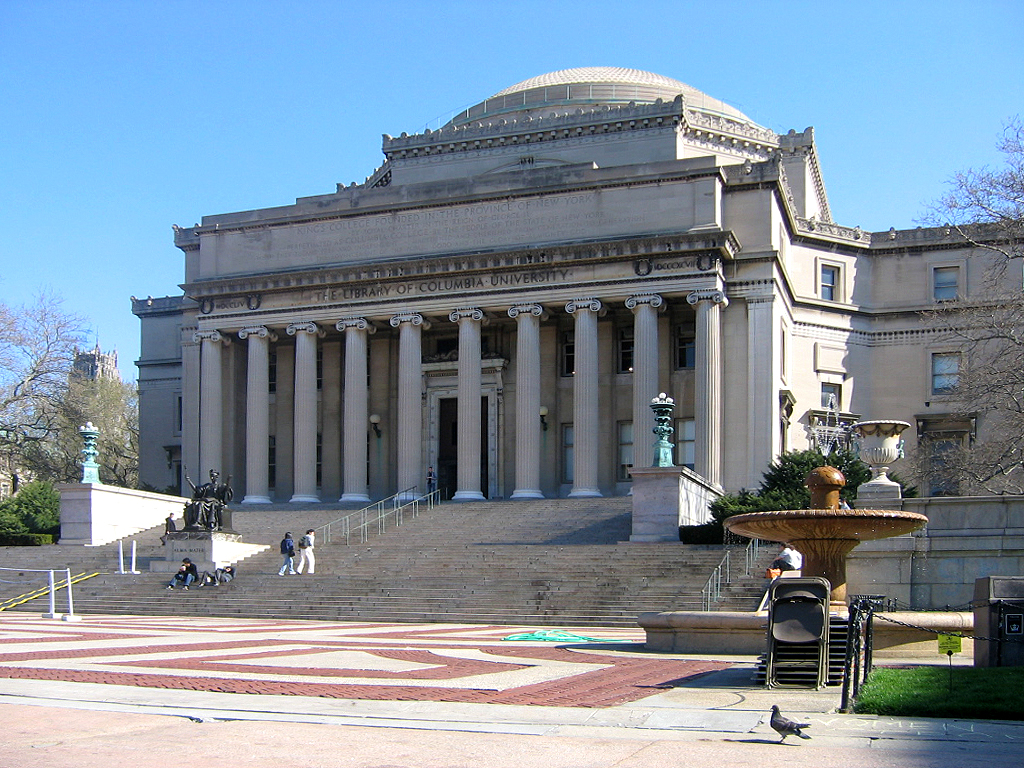
Columbia is in New York City, with its main undergraduate campus in the Morningside Heights neighborhood of upper Manhattan, along with the Manhattanville campus nearby. Its location in the heart of New York City is a defining feature, giving students access to the cultural, professional, and research resources of one of the world’s major cities. The urban campus blends a traditional collegiate quad with full immersion in city life.
Yes; Columbia is a member of the Ivy League, the athletic conference of eight historic Northeastern universities that also includes Harvard, Yale, Princeton, Penn, Brown, Dartmouth, and Cornell. One of the oldest universities in the country, it is consistently ranked among the top national universities and is highly selective. Columbia’s Ivy status and elite academic standing are well established and beyond dispute.
Yes; Columbia considers an applicant’s highest section scores across multiple test dates, forming the best composite. A stronger Math from one sitting and stronger Reading and Writing from another count together, rewarding strategic retakes. Columbia’s testing requirements have shifted in recent cycles, so confirm the current policy on its admissions site, but the superscoring practice benefits applicants who take the test more than once.
The Core Curriculum is Columbia’s signature set of required courses that all undergraduates in Columbia College complete, covering literature, philosophy, art, music, science, and writing through small, discussion-based classes. It is one of the oldest and most distinctive general-education programs in the country. The Core gives students a shared intellectual foundation and is a defining feature of the Columbia experience, attracting applicants who value broad, rigorous study across disciplines.
Barnard is a women’s liberal arts college affiliated with Columbia through a long partnership, so Barnard students earn a Columbia University degree and can cross-register, while the two remain separate institutions with their own admissions, campuses across the street from each other, faculty, and identities. Columbia College is coeducational; Barnard enrolls women. An applicant chooses just one of the two, since each has a distinct application and character.
Columbia is need-blind for domestic applicants and meets full demonstrated need, and like all Ivy League schools it awards only need-based aid with no merit, athletic, or academic scholarships. Its aid program is generous, often making attendance affordable for middle- and lower-income families. A high-achieving applicant cannot earn a tuition discount for grades, but families with financial need frequently find Columbia far cheaper than its published sticker price.
About Oriel Admissions
Oriel Admissions is a Princeton-based college admissions consulting firm advising families nationwide on elite university admissions strategy. Our team brings deep expertise across every dimension of the application, and our distinctive 360 approach develops strategy, positioning, activities, essays, and interviews as one coherent whole. To discuss your family’s admissions strategy, schedule a consultation.