How Selective Are MIT and Caltech?
MIT and Caltech run the lowest acceptance rates of any STEM-focused undergraduate institution in the United States. The most recent published data shows Caltech at 2.27% acceptance for the Class of 2028 and MIT at approximately 4-5% for the same cycle. Both rates have declined consistently over the past decade as application volume has grown faster than admit class size (MIT Office of Undergraduate Admissions; Caltech Undergraduate Admissions).
Caltech’s lower published rate reflects its smaller class size rather than higher selectivity per applicant. Caltech admits approximately 235 students per year against approximately 13,000 applications; MIT admits approximately 1,300 students per year against approximately 28,000 applications. The math produces Caltech’s lower headline rate, but the academic profile of admitted students is similar at both schools: 1530+ SAT, 35+ ACT, unweighted GPA near 4.0, AP coursework including Calculus BC, Physics C, Chemistry, and at least one humanities AP.
Acceptance rates for international applicants are dramatically lower at both schools. Caltech admits approximately 1% of international applicants; MIT admits approximately 2%. The international rate differential reflects both the smaller international admit allocation and the larger international applicant pool relative to domestic applicants. International applicants competitive at MIT or Caltech typically present national-level academic credentials (Olympiad medals, original research output, university-level mathematics by age 16).
Both schools are need-blind for domestic applicants and meet 100% of demonstrated financial need without loans for families earning under approximately $200,000 (College Board BigFuture). MIT and Caltech both offer financial aid that is among the most generous in American higher education, with median net price for full-aid families approaching zero. Neither school offers merit aid; financial aid is exclusively need-based.
How Do MIT and Caltech Compare on Class Size and Scale?
The single most consequential structural difference between MIT and Caltech is undergraduate enrollment scale. MIT enrolls approximately 4,535 undergraduates; Caltech enrolls approximately 987 (NCES College Navigator: MIT; NCES: Caltech). The 4.6x size differential produces meaningfully different academic environments, social dynamics, and curricular options.
MIT’s scale supports 50+ undergraduate majors across five schools (Architecture and Planning; Engineering; Humanities, Arts, and Social Sciences; Management; Science). The breadth includes traditional engineering disciplines (mechanical, electrical, chemical, materials science, nuclear, aero/astro), emerging fields (artificial intelligence and decision-making, brain and cognitive sciences, computational biology), and applied programs (management at Sloan, urban studies, architecture). Students can pursue interdisciplinary work across the schools, including the popular Course 6-14 (Computer Science and Economics) and Course 6-9 (Computation and Cognition) joint majors (MIT course catalog).
Caltech’s scale supports 28 undergraduate majors concentrated in pure sciences and engineering. Caltech offers physics, mathematics, chemistry, biology, geology, computer science, and several engineering disciplines (mechanical, electrical, chemical, applied physics), plus a small humanities and social sciences program. Caltech does not offer architecture, urban studies, management, or many of the interdisciplinary majors that MIT supports. The narrow focus is intentional: Caltech’s academic identity is concentrated in pure science and the sciences-most-adjacent engineering fields.
The class size differential affects daily academic experience meaningfully. Caltech’s upper-level science courses typically enroll 5-15 students; MIT’s upper-level courses typically enroll 20-40 students with some popular courses approaching 100. Caltech students have more direct faculty contact through small seminars and research opportunities; MIT students have more diversity of perspective in classroom discussions and broader access to specialized courses that Caltech’s smaller faculty cannot offer. Neither environment is universally better; the right fit depends on whether the student values intimacy or breadth.
Social scale also differs. MIT supports a recognizable college experience with Greek life (approximately 35% of students participate), varsity athletics across 33 NCAA Division III teams, dozens of student organizations, and a residential system that approximates standard university social structure. Caltech has no Greek life, smaller athletics, fewer organizations, and a unique House system that organizes social life around eight residential houses with distinctive cultures. Caltech’s social environment is intense, intimate, and academically dominant; MIT’s social environment is more variegated and includes substantial non-academic activities.
How Do the MIT GIRs and Caltech Core Curriculum Compare?
Both schools require a substantial core curriculum that all undergraduates must complete regardless of major, but the contents and orientation of the cores differ meaningfully.
MIT’s General Institute Requirements (GIRs) include six science and math courses (calculus through differential equations, physics mechanics and electromagnetism, chemistry, biology), plus eight humanities, arts, and social sciences (HASS) courses, plus a laboratory requirement, plus a physical education requirement, plus a Communication Intensive requirement spread across the curriculum. The HASS requirement is substantial and not optional: students must complete a HASS Concentration (3-4 courses in one area) plus distribution courses across humanities, arts, and social sciences. The GIRs reflect MIT’s philosophy that strong scientists and engineers benefit from substantive humanities exposure (MIT School of Humanities, Arts, and Social Sciences).
Caltech’s core curriculum is dominated by science and mathematics. The core includes five terms of mathematics (through multivariable calculus and differential equations), five terms of physics, two terms of chemistry, one term of biology, and a small humanities and social sciences requirement (12 units, approximately three to four courses across four years). The core is rigorous and highly technical, with courses typically taught at a faster pace than at peer institutions. Caltech’s humanities requirement is meaningful but not the substantial commitment that MIT’s HASS represents.
The orientation difference matters for student fit. MIT students who want a STEM degree but also want substantive humanities and social science exposure (history, philosophy, economics, foreign language, creative writing) find the GIRs supportive. Caltech students who want pure technical immersion with minimal humanities distraction find the core supportive. Students who want both substantive humanities AND deep technical training will find MIT a better structural fit; students who want compressed technical training to free time for research and graduate-level coursework will find Caltech a better fit.
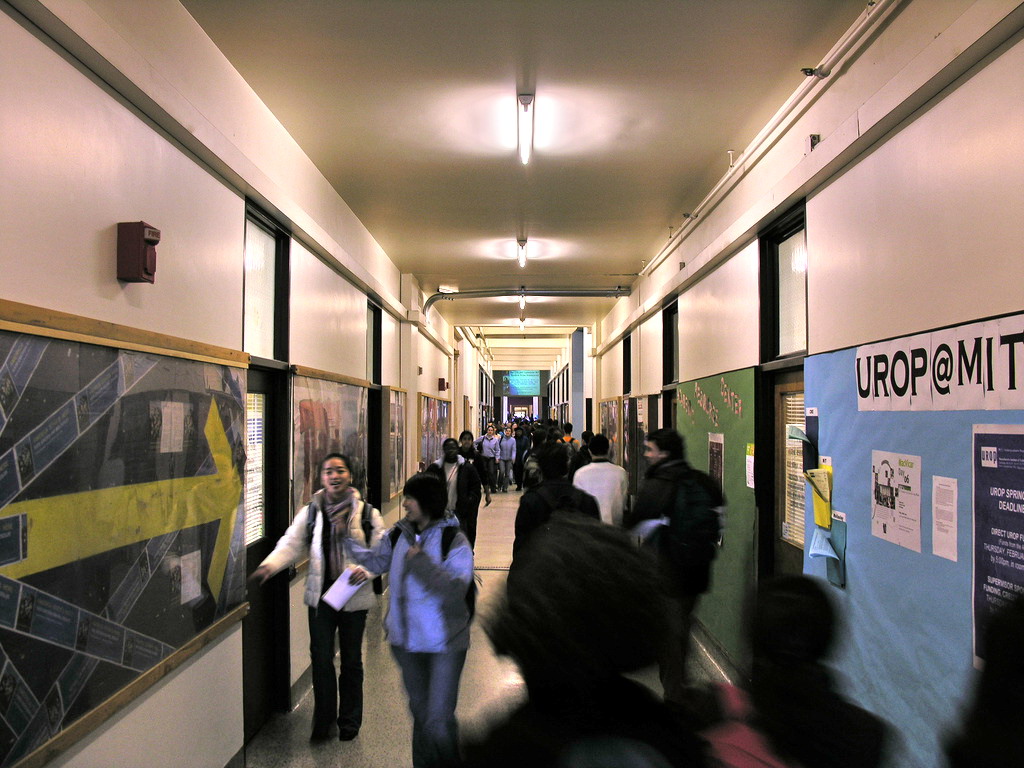
Both schools allow undergraduate research engagement starting in the freshman year. MIT’s UROP (Undergraduate Research Opportunities Program) is the original undergraduate research model and remains the largest in the country, with approximately 90% of MIT undergraduates participating in research. Caltech’s SURF (Summer Undergraduate Research Fellowships) is similarly comprehensive, with approximately 80% of Caltech undergraduates participating. Both schools produce undergraduate research output at a level comparable to top graduate programs.
How Do MIT and Caltech Compare Side by Side?
The aggregate dimensions for STEM-focused applicants are summarized in the table below.
| Dimension | MIT | Caltech |
|---|---|---|
| Undergraduate enrollment | ~4,535 | ~987 |
| Class of 2028 acceptance rate | ~4-5% | 2.27% |
| Annual admits | ~1,300 | ~235 |
| International acceptance rate | ~2% | ~1% |
| Number of undergraduate majors | 50+ | 28 |
| Schools/divisions | 5 (Engineering, Science, Architecture, HASS, Sloan) | 6 academic divisions, all science/engineering |
| Core curriculum humanities content | Substantial (HASS Concentration plus distribution) | Minimal (~12 units total) |
| Greek life | Yes (~35% participation) | None |
| Athletics | NCAA Div III, 33 varsity teams | NCAA Div III, fewer teams |
| Undergraduate research participation | ~90% via UROP | ~80% via SURF |
| Test policy (Class of 2031) | Test required | Test required |
| Need-based aid | Meets full need, no loans | Meets full need, no loans |
| Merit aid | None | None |
Source: MIT Office of Undergraduate Admissions, Caltech Undergraduate Admissions, NCES College Navigator, and institutional Common Data Set submissions for 2024-2025 academic year.
Which School Is Stronger for Specific STEM Disciplines?
The right school depends substantially on intended major and academic interests. Several disciplines have clear comparative strengths.
Theoretical physics and pure mathematics: Caltech has a meaningful edge. Caltech’s physics department has produced more Nobel laureates per faculty member than any other institution in the world, and the small upper-level cohorts allow undergraduate access to advanced graduate-level coursework that is harder to access in MIT’s larger classes. The Caltech mathematics department is similarly intense, with upper-level courses that approach research-mathematician level by junior year. Students focused exclusively on pure science with PhD trajectory often choose Caltech for the curricular intensity.
Engineering breadth and applied disciplines: MIT has a decisive edge. MIT’s School of Engineering supports nine departments with substantial faculty depth in each: aero/astro, biological engineering, chemical engineering, civil and environmental, electrical engineering and computer science (EECS), materials science, mechanical, nuclear, and the Institute for Data, Systems, and Society. Caltech’s engineering offerings are narrower; students interested in disciplines like aerospace, biomedical engineering, or nuclear engineering will find more depth at MIT.
Computer science and AI: MIT has a meaningful edge driven by scale. EECS at MIT is the largest department in the school, supporting roughly 1,000 undergraduate majors and a faculty depth that produces strong research output across machine learning, theory, systems, AI, and applications. Caltech’s computer science department is high-quality but small (approximately 30 faculty serving roughly 200 majors). For students pursuing competitive PhD admission in AI, both schools place well, but MIT’s scale produces more peers, more course options, and a larger alumni network.
Biology and bioengineering: Both schools are strong, with different orientations. MIT’s biology department emphasizes molecular and computational biology with strong cross-listing into the EECS curriculum (Course 6-7, Computer Science and Molecular Biology). Caltech’s biology emphasizes systems biology and the bio-physics interface. Pre-medical applicants are well-served at both schools but Caltech’s smaller scale produces a less standard pre-med trajectory; for the most direct path from high school to medical school, see our BS/MD combined medical programs analysis.
Chemistry and chemical engineering: Caltech has a slight edge in pure chemistry; MIT has a slight edge in chemical engineering due to scale. Both departments produce strong PhD applicants and industry placements, as documented in NSF doctoral surveys reported by NACAC.
Earth, planetary, and atmospheric sciences: Caltech has a clear edge through the Division of Geological and Planetary Sciences and the affiliated Jet Propulsion Laboratory (JPL), which Caltech operates for NASA. Students interested in planetary science, geophysics, or atmospheric science have access to research opportunities at JPL that no other institution can offer.
What Profile Fits MIT Versus Caltech?
Decision frameworks for MIT vs Caltech come down to fit by interest profile. The table below maps common applicant profiles to the school most likely to produce the best fit.
| Applicant Profile | Recommended Choice | Reasoning |
|---|---|---|
| Theoretical physics or pure math, PhD trajectory | Caltech | Smaller cohorts, faster pace, direct faculty access |
| Engineering with breadth interests (mechanical, aerospace, nuclear, biomedical) | MIT | Wider engineering portfolio, larger faculty depth in each discipline |
| Computer science, AI, machine learning | MIT | Larger department, more course options, deeper alumni network in tech |
| Planetary science, astronomy, geophysics | Caltech | JPL access; division depth in earth and planetary sciences |
| Computational biology or systems biology | Either; MIT for breadth, Caltech for depth | Both excel; MIT cross-listings broader, Caltech bio-physics deeper |
| STEM with substantial humanities or social science interest | MIT | HASS Concentration plus distribution requirements support humanities depth |
| STEM with management or entrepreneurship interest | MIT | Sloan School cross-registration; larger entrepreneurship ecosystem in Cambridge/Boston |
| Pre-medical with research focus | Either; MIT for standard pre-med pathway | MIT pre-med structure more standard; Caltech smaller cohort more research-intensive |
| Architecture or urban planning | MIT | Caltech does not offer these majors |
| Maximum technical immersion, minimal humanities | Caltech | Core curriculum prioritizes science and math depth over breadth |
| Wants standard college social experience (Greek life, large athletics) | MIT | Caltech has no Greek life and smaller athletic culture |
| Wants intense, intimate residential community | Caltech | House system creates tighter social bonds in smaller cohort |
Source: Curricular catalogs, departmental data, and analysis of program strengths from National Research Council assessments and academic discipline surveys. Individual fit may vary.
How Do MIT and Caltech Compare on Graduate School and Industry Outcomes?
Both schools produce extraordinary post-graduation outcomes, with placement at top PhD programs and major tech firms running at rates that few peer institutions match.
Graduate school placement: Both schools place graduates at top PhD programs (Stanford, Berkeley, Princeton, Harvard, the partner institution) at high rates. MIT produces more total PhD candidates per year due to scale; Caltech produces a higher per-capita rate, with approximately 40-45% of Caltech graduates entering PhD programs versus approximately 30-35% at MIT. The differential reflects student culture: Caltech’s smaller, research-intensive environment self-selects for academia-trajectory students; MIT’s broader environment includes substantial industry-trajectory students.
Industry placement: MIT has stronger industry placement at major tech firms by absolute volume due to scale. Google, Meta, Microsoft, Apple, and other top tech employers recruit at MIT extensively, and MIT alumni occupy senior positions across the industry. Caltech places strongly at the same firms but with smaller absolute numbers; Caltech graduates entering industry often choose specialized roles (research scientist positions, quantitative finance, deep-tech startups) that match the school’s research-intensive training.
Entrepreneurship outcomes: MIT has produced significantly more billion-dollar startups by founder count, reflecting the larger alumni base and Boston/Cambridge ecosystem. The MIT-affiliated venture network (the Engine, MIT Sandbox, MIT entrepreneurship resources) provides infrastructure that Caltech’s smaller scale cannot match. Caltech entrepreneurs are highly visible in deep-tech and aerospace startups but produce fewer total ventures.
Academic faculty placement: Caltech produces a meaningfully higher rate of graduates becoming academic faculty, particularly at top research universities. The intensity of Caltech’s undergraduate research training and the school’s academic prestige in pure science combine to produce strong academic placement outcomes per capita.
How Should Families Decide Between MIT and Caltech?
The decision framework for families weighing MIT vs Caltech has four concrete questions.
First, what is the student’s specific intended major? If the major is one Caltech does not offer (architecture, urban studies, management, several engineering disciplines), MIT is the only option. If the major is in pure science (physics, math, chemistry) with PhD trajectory, Caltech’s curricular intensity and faculty access produce a meaningful advantage. If the major is in engineering breadth (mechanical, aerospace, biomedical) or applied computer science, MIT’s scale and depth produce a meaningful advantage.
Second, what is the student’s preferred social and academic environment? Caltech’s undergraduate environment is intense and academically dominant; MIT’s is broader and includes substantial non-academic activities. Visit both campuses and observe student culture in dining halls, dorms, and informal settings. The right fit will be apparent within a few hours of campus visit; the wrong fit will be apparent within a few days of attending.
Third, does the student want to engage with humanities and social sciences as part of undergraduate education? MIT’s GIRs require substantial HASS coursework; Caltech’s core minimizes humanities content. Students who want both technical depth AND humanities exposure will find MIT structurally supportive; students who want pure technical immersion will find Caltech structurally supportive.
Fourth, what is the family’s preference on geographic location and post-graduation environment? MIT is in Cambridge, Massachusetts, with the Boston ecosystem (financial services, biotech, healthcare, education). Caltech is in Pasadena, California, with the Los Angeles ecosystem (entertainment, aerospace, tech, biomedical). Both locations produce strong post-graduation networks but the industry mix differs.
For families considering broader STEM strategy beyond the MIT-Caltech choice, see our Williams vs Amherst for STEM-leaning students guide for the liberal arts college alternative, our Cornell ED by college guide for engineering applicants, and our Columbia unhooked applicants guide for the Ivy League STEM alternative.
Frequently Asked Questions About MIT Versus Caltech
Where scores are required or submitted, both have generally considered an applicant’s best section results across test dates, a superscoring approach, letting applicants present their strongest combined result. Testing policies at each school can change by cycle. Applicants should confirm the current requirement and superscoring practice on each school’s admissions website, since for two such quantitatively focused institutions, strong math and science results carry particular weight in the review.
Both have moved away from legacy preferences; neither gives meaningful weight to a family connection, emphasizing instead demonstrated talent and fit in math and science. A relative attending provides no real advantage. Applicants with a family tie to either school should focus entirely on academic strength, research, and authentic interest rather than counting on legacy, since these institutions evaluate candidates on individual merit rather than family history in their admissions process.
Both are expensive at sticker price but meet full demonstrated need with need-based aid and award no merit scholarships, so what a family actually pays depends on financial circumstances rather than a published figure. Neither offers academic merit money. Families should run each school’s net price calculator for a realistic estimate, since the generous need-based policies at both can make the real cost far lower than the headline tuition for families who qualify for aid.
Both ease grading for new students to smooth the transition; Caltech grades first-term, and in some cases first-year, courses on a pass/fail basis, and MIT similarly grades the first semester pass/no-record. The intent at each is to help students adjust to a demanding workload. Applicants should view these policies as cushioning the start of an intense curriculum, though both schools quickly transition to rigorous standard grading after the initial period ends.
Caltech is well known for a strong honor code governing academic and personal conduct, which shapes a high-trust campus culture including take-home and unproctored exams. MIT emphasizes integrity through its own policies rather than an identically structured single code. Applicants drawn to Caltech should appreciate how central its honor system is to daily life, since it reflects a distinctive culture of trust that differs in character from MIT’s larger institutional environment.
It is possible but demanding at both; each allows students to pursue additional majors or minors, though the heavy core requirements and rigorous workload make a full double major challenging to complete. Many students opt for a major plus a minor instead. Applicants should know that combining fields is feasible at either school but requires careful planning given the intensity of the curriculum, so students often weigh depth against breadth when structuring their studies.
MIT is known for its enormous breadth, entrepreneurial culture, and hands-on, build-it ethos across engineering, computing, sciences, and even strong economics and management, while Caltech is renowned for an intensely focused, theory-driven environment with an exceptionally small student body and deep ties to research like JPL. Applicants should weigh MIT’s scale and breadth against Caltech’s intimacy and theoretical intensity, since these cultural differences often matter more than rankings.
Both post high graduation rates typical of elite institutions, with the large majority of students completing their degrees, though the demanding workload means some take extra time or shift paths. Strong support systems help students persist. Applicants should view both as schools where the vast majority graduate successfully, while recognizing that the rigorous curriculum at each requires genuine commitment, and checking each school’s current published rates gives the most precise comparison.
About Oriel Admissions
Oriel Admissions is a Princeton-based college admissions consulting firm advising families nationwide on elite university admissions strategy. Our team brings deep expertise across every dimension of the application, and our distinctive 360 approach develops strategy, positioning, activities, essays, and interviews as one coherent whole. To discuss your family’s admissions strategy, schedule a consultation.