What Is Penn State’s Acceptance Rate for the Class of 2029?
Penn State University Park admitted approximately 50-55% of applicants for the Class of 2029, based on institutional reports and Common Data Set data. Penn State received approximately 105,000-110,000 undergraduate applications across all campus locations and admitted roughly 55,000-60,000 students. The University Park campus (the flagship campus in State College, PA) is more selective than other Penn State campuses; admit rates at Commonwealth Campuses (Altoona, Erie, Harrisburg, etc.) run substantially higher.
Penn State University Park admit rate has gradually decreased over the past decade. The Class of 2024 admit rate was approximately 75%; the Class of 2027 rate was approximately 56%; the Class of 2029 rate is approximately 50-55%. The trajectory reflects application volume growth from out-of-state and international applicants. Penn State currently enrolls approximately 64% Pennsylvania residents and 36% out-of-state per NACAC data, with NJ, NY, MD, and VA families representing the largest out-of-state cohorts.
The headline 50-55% admit rate substantially understates selectivity for the programs that families typically target. The Schreyer Honors College, the Smeal College of Business direct-admit program, and selective majors within the College of Engineering operate at admission rates approaching elite private universities. families weighing Penn State should focus on these program-specific admit rates rather than the overall University Park rate.
Penn State does not offer Early Decision but does offer Early Action with a November 1 deadline. Early Action applicants receive admission decisions in mid-December and are not bound to attend. The Early Action admit rate runs approximately 65-70%, modestly higher than Regular Decision, but the differential is much smaller than at private universities with binding ED. The functional benefit of Early Action at Penn State is timing (early certainty for Schreyer applicants) rather than admit rate boost.
For NJ and PA families, Penn State has historically been the most-Googled non-Ivy school. The university’s combination of strong alumni network (the largest dues-paying alumni network in the United States), large student body (40,000+ undergraduates at University Park), and competitive merit aid for high-academic-profile applicants from out-of-state has produced sustained interest among families even as in-state public universities (Rutgers, U Maryland, Virginia Tech) compete for the same demographic.
How Does the Schreyer Honors College Admit Process Work?
The Schreyer Honors College is the most strategically important Penn State application path for families with strong academic profiles. Schreyer is the highly selective honors college within Penn State, comparable in selectivity and academic rigor to Ivy League and elite private institutions. Schreyer admits approximately 7-9% of applicants and enrolls approximately 300 incoming students per year out of approximately 3,500 applications.
Schreyer admission requires a separate application beyond the standard Penn State application. The Schreyer application includes three additional essays (the standard Penn State application requires only one short essay), a separate interview process for shortlisted applicants, and additional evaluation of academic profile. The Schreyer deadline is November 1 (matching Penn State Early Action); decisions are typically released in early February.
Schreyer admit profile expectations: GPA 3.95+ unweighted, SAT 1480+ (1500+ for competitive applicants), 5+ APs at score 5 with strong subject relevance, demonstrated intellectual depth through research, competitions, or independent projects, and substantial subject-relevant extracurricular leadership. The applicant pool resembles top US private university applicant pools (per U.S. News rankings) more than typical state university honors college applicants.
Schreyer benefits include guaranteed honors housing (Atherton Hall and Simmons Hall, the highest-quality dorms on campus), priority course registration, dedicated honors advising, $4,500 per year in scholarships for all admits, undergraduate research funding, and access to Schreyer-specific study abroad programs. Schreyer graduates have strong placement to top US graduate and professional schools (medical school, law school, top PhD programs) and elite employers (McKinsey, BCG, Bain, Goldman Sachs, top tech firms).
For applicants, the Schreyer admit decision often determines the Penn State decision. A Schreyer admit produces an academic credential that competes with Ivy League acceptances at substantially lower cost. A standard Penn State admit (non-Schreyer) produces a credential that competes with other state flagships at similar or lower price points. The strategic implication: applicants pursuing Penn State should apply to Schreyer as the primary objective, with standard Penn State admission as the floor outcome.
How Selective Is the Smeal College of Business?
The Smeal College of Business is the second strategically important Penn State application path for families. Smeal direct admission for incoming first-year students runs approximately 25-30% admit rate, substantially more selective than the overall Penn State rate. Within Smeal, specific majors operate at additional selectivity: Finance and Accounting are the most competitive direct-admit majors.
Smeal direct admission requires applicants to indicate Smeal as their first-choice major on the Penn State application. The Smeal admissions process evaluates academic profile (GPA, test scores, course rigor), supplemental essays, and demonstrated business interest. Applicants admitted to Penn State but not directly to Smeal can apply for internal transfer to Smeal after the first year, but the internal transfer process requires meeting GPA thresholds (typically 3.5+ in business prerequisites) and is not guaranteed.
Smeal admit profile expectations: GPA 3.85+ unweighted, SAT 1430+ (1480+ for Finance and Accounting), 5+ APs at score 4-5 with quantitative emphasis (AP Calculus BC, AP Statistics, AP Macroeconomics, AP Microeconomics), and demonstrated business interest through extracurricular leadership, work experience, business competitions, or related activities.
Smeal career outcomes are strong, particularly for Finance, Accounting, and Supply Chain Management. Smeal Finance graduates place to investment banking (Goldman Sachs, JP Morgan, Morgan Stanley, Bank of America), private equity, and asset management. Smeal Accounting graduates place to Big Four (Deloitte, PwC, EY, KPMG) and corporate finance roles. Smeal Supply Chain Management is widely recognized as a top-5 program nationally and produces strong placement to consulting, logistics, and corporate operations roles. For broader undergraduate business comparison context, see our Wharton vs Dyson vs Stern vs Ross analysis.
How Selective Is the College of Engineering?
The Penn State College of Engineering admits approximately 35-40% of applicants overall, but specific majors operate at meaningfully different selectivity levels. Computer Science is the most selective engineering major, with admit rate approximately 20-25%. Aerospace Engineering admits approximately 28-32%. Industrial Engineering and Mechanical Engineering admit approximately 35-40%. Civil Engineering and Materials Science admit approximately 40-45%.
Penn State Computer Science specifically has become substantially more competitive over the past five years. The major was added to a list of capacity-constrained programs in 2022, meaning students cannot freely change into Computer Science from other majors after enrollment. Direct admission as a first-year applicant is the primary path; internal transfer requires substantial GPA and prerequisite performance and is not guaranteed.
College of Engineering admit profile expectations: GPA 3.85+ unweighted, SAT 1430+ (with 720+ Math), 5+ APs at score 4-5 including AP Calculus BC and AP Physics C (both Mechanics and E&M for selective majors), demonstrated engineering interest through research, competitions, or independent projects. For Computer Science specifically, applicants should also have AP Computer Science A at score 5 and demonstrated programming experience.
Penn State College of Engineering career outcomes are strong across majors. Aerospace Engineering produces strong placement to Boeing, Lockheed Martin, NASA, and SpaceX. Industrial Engineering and Computer Science produce strong placement to consulting, technology, and operations roles. The Penn State alumni network in engineering is large and active in PA, NJ, NY, MD, and DC corridor employers. For broader engineering-track context, see our 3-2 engineering combined-degree programs and our Cornell vs Michigan vs Georgia Tech engineering and CS comparison.
How Do Penn State Costs Compare to Top Privates and Other Public Flagships?
Penn State out-of-state tuition for 2025-26 runs approximately $43,000-$45,000 per year per NCES College Navigator. Pennsylvania resident tuition runs approximately $20,000-$22,000. Room and board adds approximately $14,000-$16,000 per year; books, fees, and personal expenses add approximately $4,000-$6,000. Total annual cost for out-of-state students runs approximately $63,000-$68,000; for PA residents approximately $40,000-$45,000.
The four-year out-of-state cost of approximately $250,000-$270,000 compares meaningfully to top US privates ($360,000-$400,000) and other state flagships. For NJ families specifically, the comparison set typically includes Rutgers (approximately $35,000-$40,000 in-state, $55,000 out-of-state but NJ residents qualify for in-state), Penn State out-of-state ($63,000-$68,000), University of Maryland out-of-state ($60,000-$65,000), and University of Virginia out-of-state ($75,000-$80,000). Penn State sits in the middle of this range.
Penn State offers limited but meaningful merit aid for high-academic-profile out-of-state applicants. The Provost’s Award provides $4,000-$8,000 per year for top out-of-state admits. The Discover Penn State Award provides additional merit aid based on academic profile. Schreyer Honors College admits receive a guaranteed $4,500 per year scholarship. Stacked merit aid for top applicants can reduce out-of-state cost by $15,000-$25,000 per year, bringing four-year cost to $190,000-$220,000.
For donut hole income families ($200K-$400K), Penn State out-of-state with merit aid often produces lower net cost than need-based aid at Ivy League schools. A $300,000 income family would likely face $90,000+ annual cost at Princeton or Harvard (full-pay or near-full-pay through CSS Profile methodology); the same family at Penn State with $20,000 in stacked merit aid would face $43,000-$48,000 annual cost. The four-year savings can reach $180,000-$220,000. For broader cost decision context, see our CSS Profile vs FAFSA analysis and our financial aid for upper-middle-class families guide.
How Do Penn State Programs Compare in Admit Rate and Required Profile?
The decision to apply to Penn State is rarely about Penn State broadly; it is about the specific program. The table below summarizes admit rates and competitive profiles across the most strategically important Penn State paths for families.
| Program | Approximate Admit Rate | Required Profile | Strategic Notes |
|---|---|---|---|
| Schreyer Honors College | ~7-9% | GPA 3.95+, SAT 1480+, 5+ APs at 5 | Separate application, 3 essays, interview. Highest priority for applicants. |
| Smeal Finance / Accounting (direct admit) | ~15-20% | GPA 3.9+, SAT 1480+, quantitative APs | Indicate Smeal as first-choice major. Internal transfer not guaranteed. |
| College of Engineering: Computer Science | ~20-25% | GPA 3.9+, SAT 1480+, AP CS at 5 | Capacity-constrained since 2022. Direct admit is primary path. |
| Smeal (other majors direct admit) | ~25-30% | GPA 3.85+, SAT 1430+ | Marketing, Management, Supply Chain less competitive than Finance/Accounting. |
| Engineering: Aerospace | ~28-32% | GPA 3.85+, SAT 1430+, AP Physics C | Strong placement to Boeing, Lockheed, SpaceX. |
| Engineering: Industrial / Mechanical | ~35-40% | GPA 3.8+, SAT 1400+, AP Calc BC | Industrial Engineering particularly strong placement to consulting and operations. |
| College of Communications | ~40-45% | GPA 3.7+, SAT 1380+ | Strong journalism and PR programs; less selective than Smeal/Engineering. |
| College of Liberal Arts | ~50-55% | GPA 3.6+, SAT 1300+ | Standard Penn State admit. Use as floor; aim higher for strategic value. |
| Eberly College of Science | ~50-55% | GPA 3.6+, SAT 1300+ | Pre-med pathway; competitive within for medical school placement. |
| Division of Undergraduate Studies (DUS) | ~55-60% | GPA 3.5+, SAT 1250+ | For applicants undecided on major. Most flexible internal transfer. |
Source: Penn State University Common Data Set, institutional admissions reports, and analysis of recent admissions cycles. Specific rates vary year-to-year based on applicant pool composition and program-specific application requirements.
How Do Penn State Decisions Vary for Pennsylvania, NJ, and NY Families?
The Penn State decision varies meaningfully based on geographic origin because the cost differential between in-state and out-of-state pricing fundamentally changes the value calculation.
Pennsylvania resident families: Penn State at $40,000-$45,000 annual cost (in-state) competes directly against Pittsburgh ($35,000-$40,000), Penn ($90,000+), CMU ($90,000+), Lehigh ($90,000+), and Villanova ($90,000+). For PA families with strong academic profiles, Schreyer Honors at in-state pricing produces a credential approaching Ivy League quality at less than half the cost; this is among the strongest value propositions in US higher education for PA residents. For PA families with profiles below Schreyer threshold, standard Penn State at in-state pricing remains highly competitive against Pitt and other in-state options.
New Jersey resident families: Penn State out-of-state at $63,000-$68,000 competes against Rutgers in-state ($35,000-$40,000), Maryland out-of-state ($60,000-$65,000), Virginia Tech out-of-state ($55,000-$60,000), and TCNJ in-state (approximately $30,000-$35,000). For NJ families, the Penn State decision typically requires Schreyer admission or strong merit aid to justify the cost premium over Rutgers. Standard Penn State admission for an NJ resident typically does not produce sufficient credential differentiation over Rutgers Honors College or TCNJ to justify the $25,000+ annual cost premium.
New York resident families: Penn State out-of-state at $63,000-$68,000 competes against SUNY Binghamton in-state (approximately $35,000), SUNY Stony Brook in-state (approximately $35,000), Cornell out-of-state ($90,000), and other private universities. NY families face similar value calculations to NJ families: Schreyer or competitive program admission typically required to justify cost premium over SUNY options for academically strong applicants.
The cross-cutting strategic principle: Penn State value for NJ, NY, and out-of-state families lives in the specific high-selectivity programs (Schreyer, Smeal direct admit Finance/Accounting, College of Engineering Computer Science). Standard Penn State admission for out-of-state students often does not produce sufficient credential differentiation to justify the cost premium over in-state public alternatives. Apply to Penn State strategically; treat the standard admit as a floor outcome that may not be the right financial choice depending on alternatives.
Should Families Choose Penn State Over Rutgers, Maryland, or Pitt?
The Penn State vs other state flagships decision is one of the most common cross-application sets for NJ, PA, and Mid-Atlantic families. The right answer depends on specific program selectivity, geographic preference, and cost flexibility.
Penn State vs Rutgers (for NJ residents): Rutgers in-state at $35,000-$40,000 competes against Penn State out-of-state at $63,000-$68,000. The Rutgers Honors College admit rate runs approximately 12-15% with strong academic outcomes. For NJ families with academically strong applicants, Rutgers Honors at in-state pricing typically produces better four-year value than standard Penn State out-of-state admission. Penn State Schreyer admission changes the calculation; Schreyer at out-of-state pricing produces a stronger credential than Rutgers Honors at in-state pricing for many career paths. The decision typically turns on Schreyer admission status.
Penn State vs University of Maryland (for NJ, NY, and out-of-state families): Maryland out-of-state at $60,000-$65,000 competes against Penn State out-of-state at $63,000-$68,000. Maryland Computer Science is widely considered top-15 nationally and produces stronger CS placement than Penn State CS. Maryland Engineering is competitive with Penn State Engineering. Penn State alumni network is substantially larger and more active in NJ, NY, and DC corridor. For CS-focused applicants, Maryland often outperforms; for general engineering and business, Penn State and Maryland are similar; for alumni network value, Penn State outperforms.
Penn State vs University of Pittsburgh (for PA residents): Pittsburgh in-state at $35,000-$40,000 competes against Penn State in-state at $40,000-$45,000. Pittsburgh produces stronger pre-med and health sciences placement (UPMC affiliation); Penn State produces stronger engineering, business (Smeal), and traditional liberal arts placement. For PA pre-med applicants, Pittsburgh often outperforms; for engineering and business, Penn State outperforms; for general liberal arts, the choice depends on campus environment preference (urban Pittsburgh vs college-town State College).
What Are the Most Common Mistakes Families Make on Penn State Applications?
Three patterns produce regrettable Penn State outcomes for families. Each is preventable with the right preparation.
First, applying to Penn State broadly without targeting Schreyer or competitive direct-admit programs. Standard Penn State admission for an out-of-state student at $63,000+ annual cost typically does not produce sufficient value over in-state alternatives. The fix: identify the specific Penn State path (Schreyer, Smeal direct admit, Computer Science direct admit) that justifies the cost; apply to that program as the primary objective. If the academic profile does not support these competitive paths, reconsider whether Penn State is the right financial choice.
Second, missing the Schreyer Honors College November 1 deadline. Many strong applicants miss the Schreyer deadline because they are focused on Penn State Early Action and assume Schreyer follows the same timeline. The Schreyer application is separate, requires three additional essays, requires a possible interview, and is due November 1 with no late submission. The fix: treat November 1 as the firm Schreyer deadline; complete the supplemental essays and interview preparation by mid-October.
Third, applying to a Penn State major without considering capacity constraints. Penn State Computer Science is now capacity-constrained: applicants admitted as undeclared or in other majors cannot freely transfer into CS. Engineering majors broadly are also subject to internal transfer restrictions. The fix: indicate the specific competitive major as first-choice on the application; do not assume internal transfer flexibility after enrollment.
A fourth common mistake worth flagging: assuming Penn State out-of-state credential equals Penn State in-state credential. The credential is the same, but the cost differential ($23,000 per year, $92,000 over four years) means the value calculation differs substantially. PA families benefit from Penn State at in-state pricing; out-of-state families need program-specific selectivity to justify the cost premium.
Frequently Asked Questions About Penn State Admissions
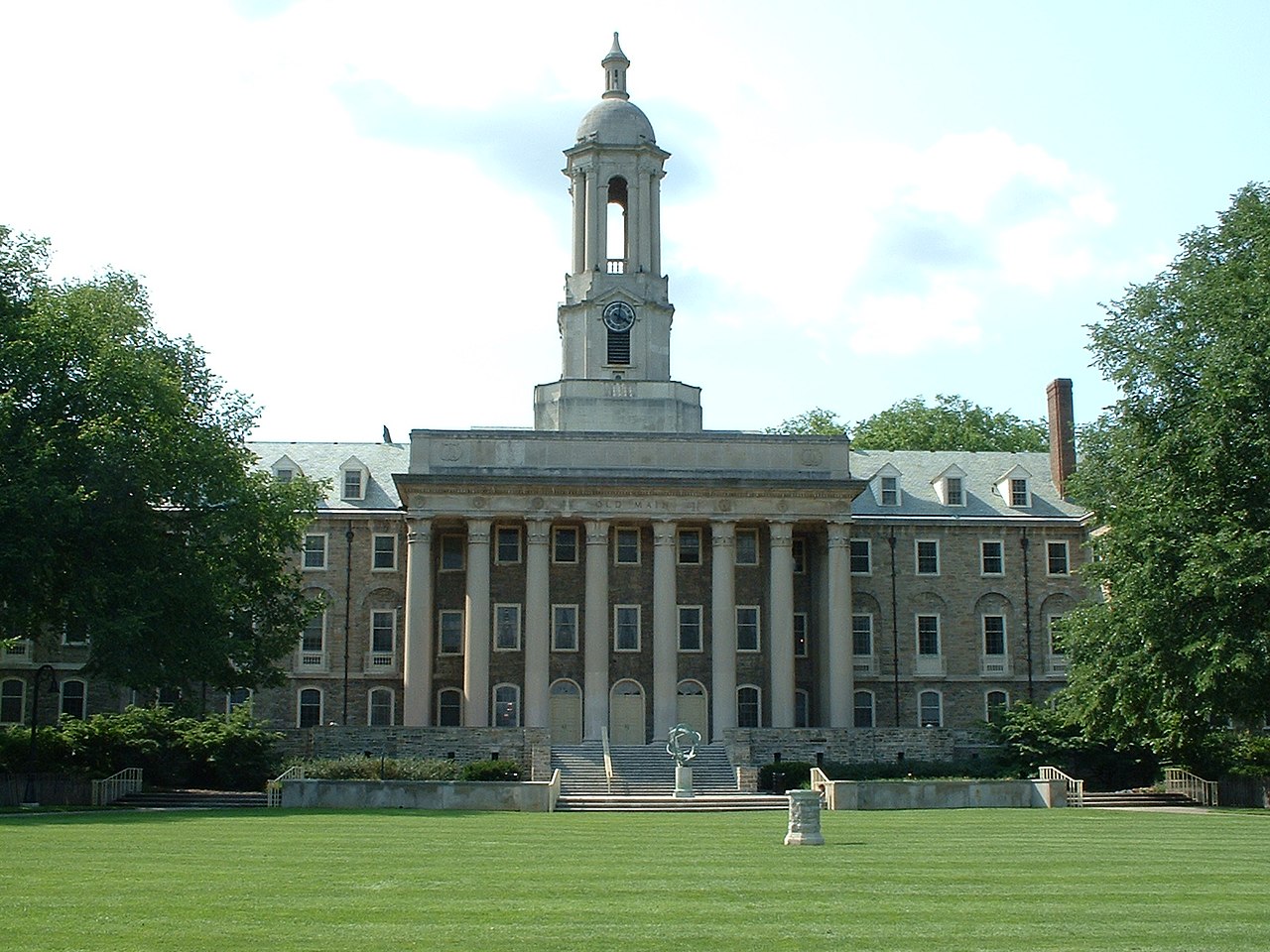
Penn State’s main campus, University Park, is in State College, Pennsylvania, in the central part of the state often called ‘Happy Valley.’ It is a classic large college town built around the university, roughly equidistant from Pittsburgh, Philadelphia, and other regional cities, each a few hours away. Penn State also operates many branch campuses across Pennsylvania, but University Park is the flagship and the campus most applicants mean.
Penn State is a major public land-grant research university known for strong programs in engineering, business through the Smeal College, the sciences, communications, and agriculture, plus the elite Schreyer Honors College. It is also famous for its enormous alumni network, school spirit, and Big Ten athletics. Among public flagships it stands out for scale, a powerful alumni base, and breadth across professional and research fields.
Moderately selective overall, but it varies sharply by program; admission to University Park and to competitive majors like engineering and business is more demanding than to branch campuses or less competitive programs. Admitted students generally present solid grades and rigorous courses. The Schreyer Honors College is highly selective. Because selectivity depends heavily on campus and major, applicants should gauge difficulty against their specific target program.
Penn State considers an applicant’s best section scores when scores are submitted, and it has used test-optional policies in recent cycles, so submitting scores may be a choice. When scores are sent, presenting your strongest results helps, particularly for competitive majors. Because testing and superscore policies can shift between cycles, confirm the current requirement on Penn State’s admissions site before applying, especially if targeting a selective program.
Limited, competitive merit aid exists, but out-of-state tuition is high and most aid is need-based, so non-resident families should generally budget for the full out-of-state cost unless they earn a competitive scholarship. Some merit awards are available to strong applicants. Out-of-state families should research specific scholarship criteria and deadlines early, since merit aid for non-residents is competitive and not guaranteed at a large public flagship like Penn State.
They are entirely separate schools, often confused. Penn State (Pennsylvania State University) is a large public land-grant university whose main campus is in State College, while the University of Pennsylvania (Penn) is a private Ivy League research university in Philadelphia. Penn is far more selective and Ivy League; Penn State is a major public flagship. Despite similar names, they differ in type, selectivity, location, and mission.
Penn State uses a priority application system rather than a single hard deadline for first-year applicants, encouraging students to apply early (often by late fall) because admissions and competitive majors fill on a rolling, space-available basis. Applying earlier improves chances, especially for popular programs and University Park. Exact dates and priority deadlines shift yearly, so confirm the current cycle on Penn State’s admissions site and submit as early as possible.
Penn State is very large; its University Park campus alone enrolls around 40,000 students, and the university system across all campuses serves far more, making it one of the biggest universities in the country. The scale brings extensive course offerings, research, activities, and a vast alumni network, but also large introductory classes. Students who want breadth, school spirit, and a big-university experience often find the size a major draw.
About Oriel Admissions
Oriel Admissions is a Princeton-based college admissions consulting firm advising families nationwide on elite university admissions strategy. Our team brings deep expertise across every dimension of the application, and our distinctive 360 approach develops strategy, positioning, activities, essays, and interviews as one coherent whole. To discuss your family’s admissions strategy, schedule a consultation.