What is Pomona College’s overall acceptance rate, and how selective is it?
Pomona College admitted approximately 7.2% of applicants for the Class of 2029, placing it in the same selectivity tier as Amherst (7.4%) and Swarthmore (7.4%) and meaningfully more selective than Williams (8.5%). Pomona is the most selective liberal arts college on the West Coast and consistently ranks among the top three liberal arts colleges in the United States. The Class of 2029 enrolled 414 students from 711 high schools across the United States and the world (Pomona College news, March 21, 2025).
Pomona’s selectivity is driven by three structural factors. First, application volume has grown substantially over the past decade as Pomona’s national reputation has expanded beyond its traditional West Coast base. Second, Pomona’s location and the Claremont Consortium make it functionally unique: students who want a small-college experience plus the resource depth of a multi-institution consortium have very few alternatives. Third, Pomona’s financial aid generosity (need-blind for U.S. applicants, no-loan, meets full demonstrated need) attracts strong applicants who would also be competitive at Ivy League institutions but prefer the West Coast and the LAC model.
For comparison with East Coast top LACs, see our Williams vs. Amherst vs. Swarthmore comparison, our Williams admissions guide, and our Amherst admissions guide.
What is Pomona’s Early Decision acceptance rate, and how does the class composition break down?
Pomona’s binding Early Decision program is statistically advantageous compared to the Regular Decision round. For the Class of 2029, Pomona received 1,726 ED applications and admitted 224, producing an ED acceptance rate of approximately 12.98%. The class composition reflects Pomona’s reliance on ED yield: 210 of the 414 enrolled students arrived through Early Decision, with 204 enrolling through Regular Decision (Pomona College, “Profile: Who Goes to Pomona?”).
The strategic implication is that Pomona ED carries a real advantage but requires genuine commitment. The 12.98% ED rate is roughly 1.8 times the overall rate, which is meaningful but not as dramatic as the ED multiplier at some peer schools. ED yield works because applicants demonstrate authentic fit with Pomona specifically, not generic LAC interest. Strategic ED applications without engagement with Pomona’s distinctive features (the Claremont Consortium, the size, the West Coast location, the academic culture) are detected and frequently deferred or denied.
Pomona offers ED I (November deadline) but not ED II. Applicants who miss the November deadline default to Regular Decision rather than a second ED round. For broader analysis of ED strategy, see our ED vs. RD Advantage Calculator.
What does the Class of 2029 student profile look like?
| Metric | Pomona Class of 2029 |
|---|---|
| Total applications | 12,470 (record) |
| Total enrolled (Class of 2029) | 414 students |
| Early Decision matriculants | 210 (50.7% of class) |
| Regular Decision matriculants | 204 (49.3% of class) |
| ED applications received | 1,726 |
| ED admits | 224 |
| ED acceptance rate | 12.98% |
| Estimated overall acceptance rate | ~7-7.2% |
| Initial Academic Interests: Humanities & Arts | 21% |
| Initial Academic Interests: Interdisciplinary | 20% |
| Initial Academic Interests: Natural Sciences | 30% |
| Initial Academic Interests: Social Sciences | 21% |
| Initial Academic Interests: Undecided | 9% |
Pomona’s stated initial-academic-interest distribution shows a notable strength in natural sciences (30% of the entering class), reflecting Pomona’s substantial science infrastructure and the college’s reputation for sending strong cohorts to medical school, doctoral programs, and graduate research. The interdisciplinary share (20%) reflects Pomona’s emphasis on cross-disciplinary work and the Claremont consortium structure that enables it.
What is the Claremont Consortium, and how does it shape the Pomona experience?
The Claremont Consortium (also called the Claremont Colleges or “the 5Cs”) is the single most distinctive feature of attending Pomona. Five undergraduate colleges share a single contiguous 1-mile-square campus in Claremont, California: Pomona College (the founding institution, ~1,750 undergrads), Claremont McKenna College (CMC, ~1,400 undergrads, focus on government, economics, and public affairs), Harvey Mudd College (~900 undergrads, focus on STEM), Scripps College (~1,100 undergrads, women’s college focused on humanities and arts), and Pitzer College (~1,100 undergrads, focus on social sciences and environmental studies). Two graduate institutions (Claremont Graduate University and Keck Graduate Institute) round out the consortium.
For Pomona students specifically, the consortium produces three practical benefits. First, cross-registration: students can take courses at any of the other 4 undergraduate colleges with minimal procedural friction, effectively expanding course offerings from Pomona’s roughly 600 courses to a combined 2,500+ courses across the consortium. Second, social and residential breadth: students dine, socialize, and form friendships across the 5Cs, producing a community that combines small-college intimacy with mid-sized university social options. Third, specialized resources: students at Pomona can access Harvey Mudd’s STEM facilities, Scripps’ arts programming, CMC’s government internship pipeline, and Pitzer’s environmental studies programs without changing institutions.
The trade-off is real but minor. Pomona students must navigate cross-registration paperwork for non-Pomona courses, and the consortium’s logistical complexity (separate dining contracts, separate financial aid offices, separate residential systems) takes a semester to learn. Students who actively use the consortium graduate with substantively broader academic and social experience than peers at standalone LACs. Students who do not engage with the consortium effectively attend a 1,750-student college, which is still strong but does not realize the full value of the Pomona experience.
What does Pomona’s academic culture actually look like?
Pomona’s academic culture combines liberal arts intensity with a notably less competitive social atmosphere than peer East Coast LACs. The faculty-to-student ratio is approximately 8:1 (Pomona College, Profile data), and most courses are taught in seminar format with fewer than 15 students. The curriculum requires breadth distribution: students must complete coursework across six modes of inquiry (creation and performance, formal reasoning, social institutions and human behavior, historical understanding, physical and biological sciences, and analyzing texts) plus a foreign language requirement and a writing-intensive seminar.
The academic culture is rigorous but not cutthroat. Students report a collaborative tone in classes, frequent faculty engagement (open office hours and faculty homes are common student gathering spaces), and a culture that prioritizes intellectual exploration over GPA optimization. The senior-year capstone requirement varies by department but typically involves either a thesis, a comprehensive examination, or a substantial research project. Students drawn to traditional liberal arts immersion find Pomona an ideal fit; students drawn to preprofessional pathways or research-university scale often find better fits at Stanford, Berkeley, or the Ivy League.
What is Claremont, California like as a setting?
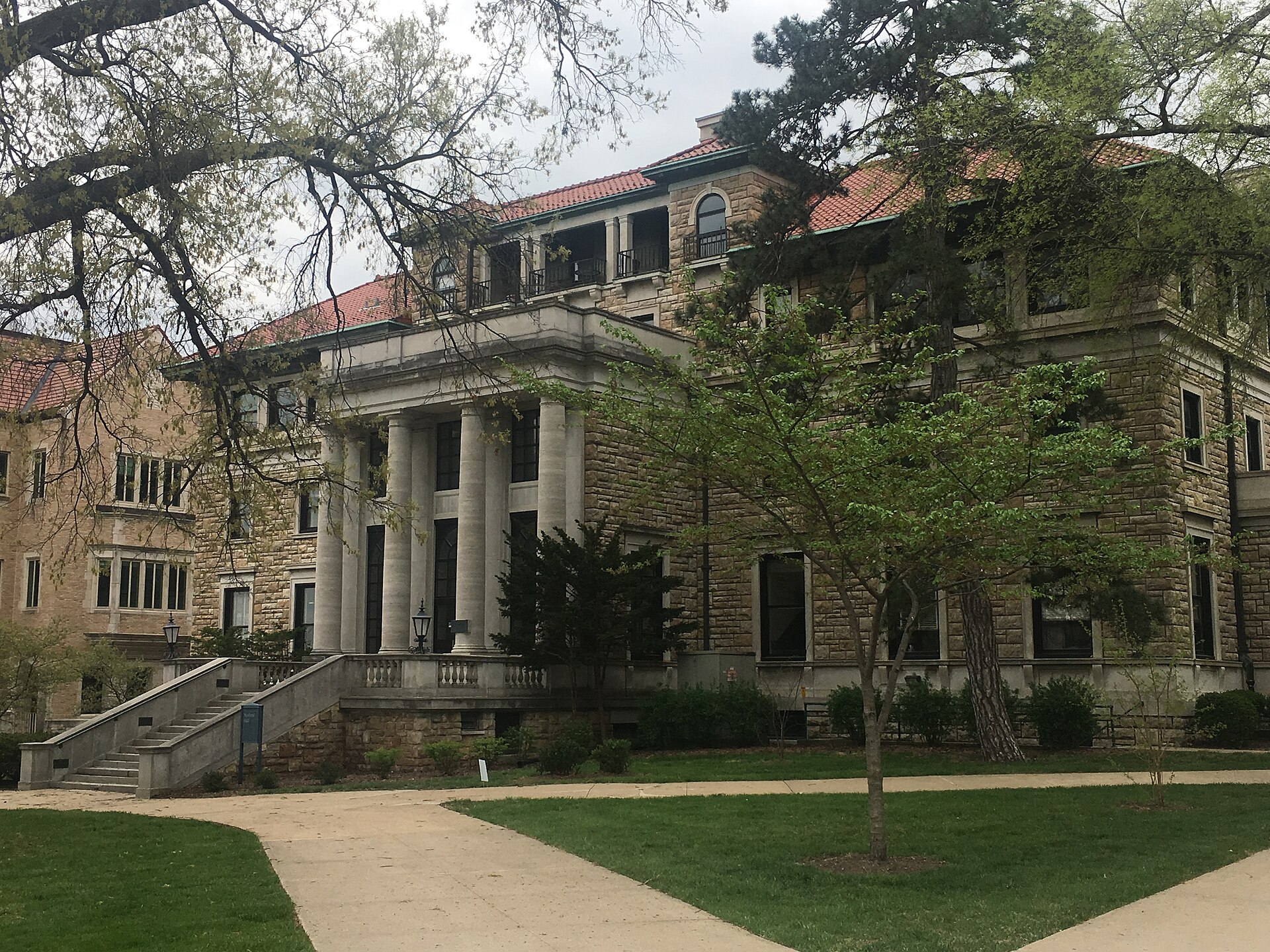
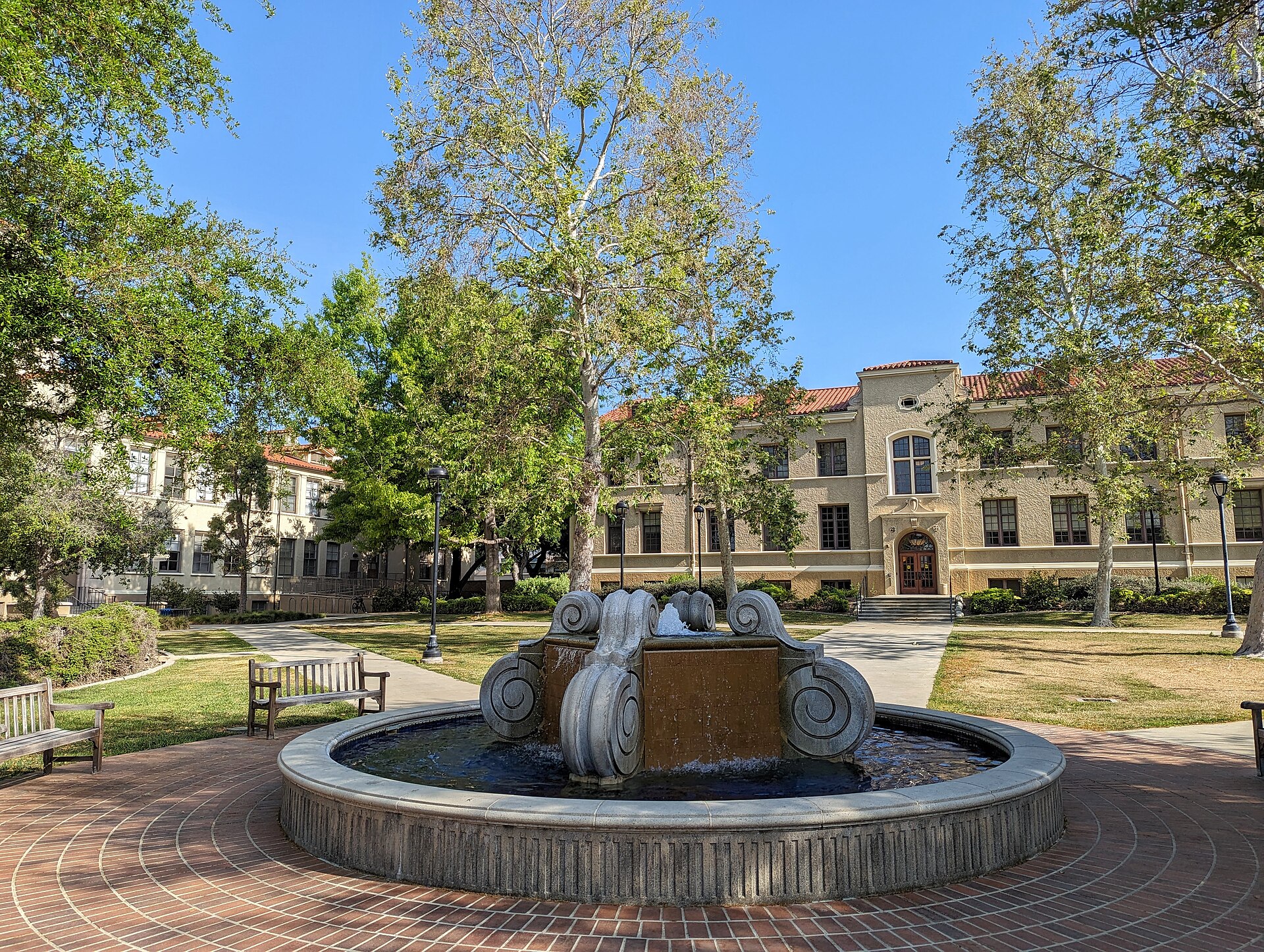
Claremont is a small college town (population approximately 36,000) about 35 miles east of downtown Los Angeles, at the foothills of the San Gabriel Mountains. The setting is suburban California: tree-lined streets, walkable residential neighborhoods, a Mediterranean climate with warm dry summers and mild winters, and the year-round outdoor culture that defines Southern California. Students who want immediate access to a major city often find Claremont quiet; students who want a contained college-town experience with day-trip access to LA, the Pacific coast, and the mountains find Claremont ideal.
The proximity to Los Angeles is genuine but not immediate. Public transportation to LA is limited; most LA trips require a car or the Metrolink commuter rail (about 50 minutes to Union Station). The mountains, however, are 15 minutes away by car, and weekend hiking, skiing (Mount Baldy, 30 minutes), and beach trips (Newport Beach, 90 minutes) are common student activities. Pomona students who arrive expecting an LA-immersive experience are sometimes surprised by how rural Claremont feels; students who view Claremont as a contained college community with regional access find the setting genuinely transformative.
What kind of applicant does Pomona actually admit?
Pomona admits applicants who combine strong academic credentials with demonstrated intellectual seriousness and authentic personality. The academic floor for serious consideration is roughly the same as the top Ivies: standardized test scores in the 1500-1560 SAT or 33-35 ACT range (Pomona was test-optional through recent cycles but has reintroduced testing requirements for the Class of 2030 and beyond), unweighted GPA at or near 3.95, and a demanding course load including AP, IB, or comparable advanced coursework throughout high school.
Above the academic floor, Pomona admissions officers select for three things. First, intellectual personality: the supplemental essays test whether applicants engage substantively with ideas rather than performing achievement. Second, authentic interest in Pomona specifically: applications that ignore the Claremont Consortium, treat Pomona as interchangeable with East Coast LACs, or fail to engage with the West Coast culture are quickly identified. Third, contribution to community: Pomona’s small size means every admitted student substantially shapes the residential experience, and admissions officers select for applicants who will contribute to community life rather than coast through it.
For analysis of why high-stat applicants get rejected from elite LACs and Ivies despite strong credentials, see why valedictorians get rejected.
How does Pomona compare on cost and financial aid for high-income families?
Pomona’s 2025-26 published tuition is $68,250 with $420 in fees, and the total cost of attendance (tuition, fees, housing, food, books, and personal expenses) is approximately $87,000-$88,000 for on-campus students (Pomona College Catalog 2025-26). The 2026-27 figures will be published by Pomona’s finance office and typically reflect 3-4% annual increases, putting the 2026-27 total cost of attendance in the $90,000-$92,000 range.
Pomona’s financial aid policy is one of the most generous among elite institutions. The college is need-blind for U.S. applicants, meets 100% of demonstrated financial need, and replaces loans with grants for all admitted students who qualify. For families with annual incomes under $100,000, Pomona typically provides full grant aid covering all costs. For families with incomes between $100,000 and $200,000, Pomona’s calculated expected family contribution is generally substantially lower than the sticker price, and grant aid covers the difference. For families above $300,000-$400,000 with substantial assets, Pomona generally calculates expected family contributions closer to full sticker price, similar to peer Ivy and LAC institutions.
For broader analysis of how high-income families fare under elite institution aid policies, see our Harvard financial aid expansion guide.
How Should Applicants Approach Pomona Supplemental Essays?
Pomona’s supplemental essays carry significant weight in admissions decisions because they differentiate among academically qualified applicants. Strategy varies meaningfully by prompt, word limit, and the specific qualities Pomona looks for. For complete prompts, strategic approach for each prompt, common rejection patterns, and the timeline applicants should follow, see our deep-dive guide: Pomona Supplemental Essays Strategy.
What are Pomona’s research opportunities and post-graduation outcomes?
Pomona produces unusually strong PhD placement and graduate school outcomes for its size. The college consistently ranks in the top tier of American institutions for the percentage of graduates earning PhDs in subsequent years, particularly in the sciences and social sciences. The Pomona Summer Undergraduate Research Program (SURP) provides funded research positions for approximately 200 students each summer, and the consortium structure expands research access to facilities at all five Claremont colleges plus collaborations with Caltech (35 minutes away in Pasadena).
For preprofessional pathways, Pomona produces strong outcomes in pre-med (with a robust pre-health advising program and access to medical research at Keck Graduate Institute within the consortium) and pre-law (with consistent placement at top law schools). For business and consulting, Pomona graduates place at major firms but typically rely on Claremont McKenna’s stronger preprofessional career services through the consortium rather than Pomona-specific resources. Tech recruiting is real but less concentrated than at Stanford or Berkeley; Pomona STEM graduates frequently complete Master’s degrees before entering top-tier tech roles.
What is the right academic profile for a Pomona applicant?
Pomona’s admitted student profile is comparable to Williams, Amherst, and Swarthmore at the top of the academic profile. Successful applicants typically present unweighted GPAs in the 3.9-4.0 range with rigorous course loads (multiple AP, IB, or college-level courses, particularly in their area of intellectual focus). Standardized testing remains relevant: Pomona returned to a test-optional policy through the Class of 2030 admissions cycle, but admitted students who submitted scores typically reported SAT scores in the 1500-1570 range or ACT scores of 34-35.
The strategic implication for testing is real but nuanced. Strong test scores help confirm academic readiness, particularly for applicants from less-known high schools or whose transcripts cannot be easily contextualized by admissions readers. Applicants from rigorous high schools with strong unweighted GPAs and demanding course loads can compete successfully test-optional. Applicants whose scores meaningfully exceed their grade trajectory benefit from submitting; applicants whose scores are below the admitted-student range are usually better served by withholding. For testing benchmarks at the most selective LAC tier, see our Academic Index Calculator.
Beyond grades and scores, the academic profile that succeeds at Pomona demonstrates intellectual depth in at least one substantive area. Successful applicants often show evidence of independent reading beyond the curriculum, original work (research, writing, art, code), or sustained engagement with a specific intellectual question over multiple years. The “spike plus breadth” profile that succeeds at Williams, Amherst, and Swarthmore also succeeds at Pomona; applicants who present as well-rounded but without a clear intellectual identity often face deferral or denial.
What are the most common mistakes applicants make when applying to Pomona?
Five mistakes recur. First, treating Pomona as interchangeable with East Coast LACs (Williams, Amherst, Swarthmore) and writing supplemental essays that could apply to any of them. Pomona’s institutional culture is genuinely different from the East Coast LACs, and admissions readers detect generic applications immediately. Second, applying to Pomona without engaging with the Claremont Consortium. The consortium is Pomona’s most distinctive feature, and applications that ignore it signal poor fit.
Third, applying to Pomona ED based on perceived statistical advantage rather than authentic first-choice fit. ED yields work because the application demonstrates real commitment; strategic ED applications often face deferral or denial. Fourth, treating Pomona as a Stanford or Berkeley fallback. Pomona admissions officers detect when applications are written with research-university culture in mind rather than LAC culture, and these applications fail to connect. Fifth, ignoring the West Coast and California-specific dimensions of Pomona. The setting, climate, and consortium structure are integral to what Pomona offers, and applications that ignore them signal misalignment with what Pomona actually is.
For deeper analysis of application strategy at this selectivity tier, see our college application spike strategy guide. For testing benchmarks, see our Academic Index Calculator.
Best for which student?
Best for academically ambitious students drawn to small-college liberal arts intensity who want the additional breadth of consortium-level course offerings: Pomona. Best for students who specifically want West Coast culture, year-round outdoor access, and Southern California proximity within a residential college experience: Pomona. Best for students seeking the highest statistical Early Decision advantage at a top-three liberal arts college: Pomona ED at approximately 12.98% acceptance for the Class of 2029. Best for students who want a small undergraduate community plus mid-sized social options through the 5Cs: Pomona’s consortium structure offers what no East Coast LAC can replicate.
Frequently Asked Questions About Getting Into Pomona College
Pomona is in Claremont, California, a leafy college town in the Inland Empire region, situated near the base of the San Gabriel Mountains and within driving distance of central Los Angeles. The setting offers a tree-lined residential campus with a mild Southern California climate, blending a quiet college-town feel with reasonable access to a major city. Students enjoy a self-contained small-college environment while remaining close to internship and cultural opportunities.
Pomona is widely regarded as one of the most prestigious liberal arts institutions in the nation and is sometimes grouped informally with the ‘Little Ivies,’ a term more often applied to elite Northeastern schools. As a West Coast college it is also nicknamed the ‘Williams of the West.’ It is not an Ivy League member, since that conference comprises universities, but its selectivity and reputation rank among the very top liberal arts colleges.
Pomona has generally considered an applicant’s best section scores across test dates when reviewing submitted results, a superscoring-style approach, though it has also offered test-optional admission in recent cycles. Because testing policies have shifted across selective colleges, applicants should confirm Pomona’s current policy on its admissions site. Where scores are submitted, presenting the strongest combination of sections is generally to an applicant’s advantage.
No; like most elite liberal arts colleges, Pomona awards financial aid solely on the basis of demonstrated need and does not offer merit, athletic, or academic scholarships. It is known for a generous, often loan-free program that fully covers a family’s calculated need. A high-achieving applicant cannot earn a tuition discount for grades, but families with financial need frequently find Pomona far more affordable than the published sticker price.
Pomona is small, enrolling roughly 1,700 to 1,800 undergraduates, typical of an elite liberal arts college and far smaller than a research university. Yet through its consortium it shares resources with neighboring colleges, expanding course and community options well beyond its size. The intimate scale supports small classes and close faculty relationships, while the wider consortium gives students access to a larger combined academic and social environment.
Pomona is the founding member of a cluster of five undergraduate colleges and two graduate institutions in Claremont, sometimes called the 5Cs, whose campuses adjoin one another. Students can cross-register for courses, share dining, libraries, and many activities across the group while belonging to their home college. This arrangement blends the intimacy of a small college with a much broader range of classes, clubs, and social life than any one campus alone.
Pomona is the oldest and a broad liberal arts college, while its consortium neighbors each have distinct focuses: one emphasizes economics and government, another science and engineering, another is a women’s college, and another stresses interdisciplinary and social-justice study. They share a town and many resources but remain separate institutions with their own admissions and identities. Applicants apply to one college, choosing the one whose character best fits them.
Pomona has offered test-optional admission in recent cycles, allowing applicants to choose whether to submit SAT or ACT scores, though policies can change year to year. Where strong scores are submitted, they can help, and Pomona generally considers an applicant’s best sections. Because test policies have been in flux across selective colleges, applicants should confirm Pomona’s current requirement on its admissions site and decide whether submitting scores strengthens their application.
About Oriel Admissions
Oriel Admissions is a Princeton-based college admissions consulting firm advising families nationwide on elite university admissions strategy. Our team brings deep expertise across every dimension of the application, and our distinctive 360 approach develops strategy, positioning, activities, essays, and interviews as one coherent whole. To discuss your family’s admissions strategy, schedule a consultation.