How to Get Into St. Paul’s School: Acceptance Rate, College Matriculation, and Admission Strategy
By Rona Aydin
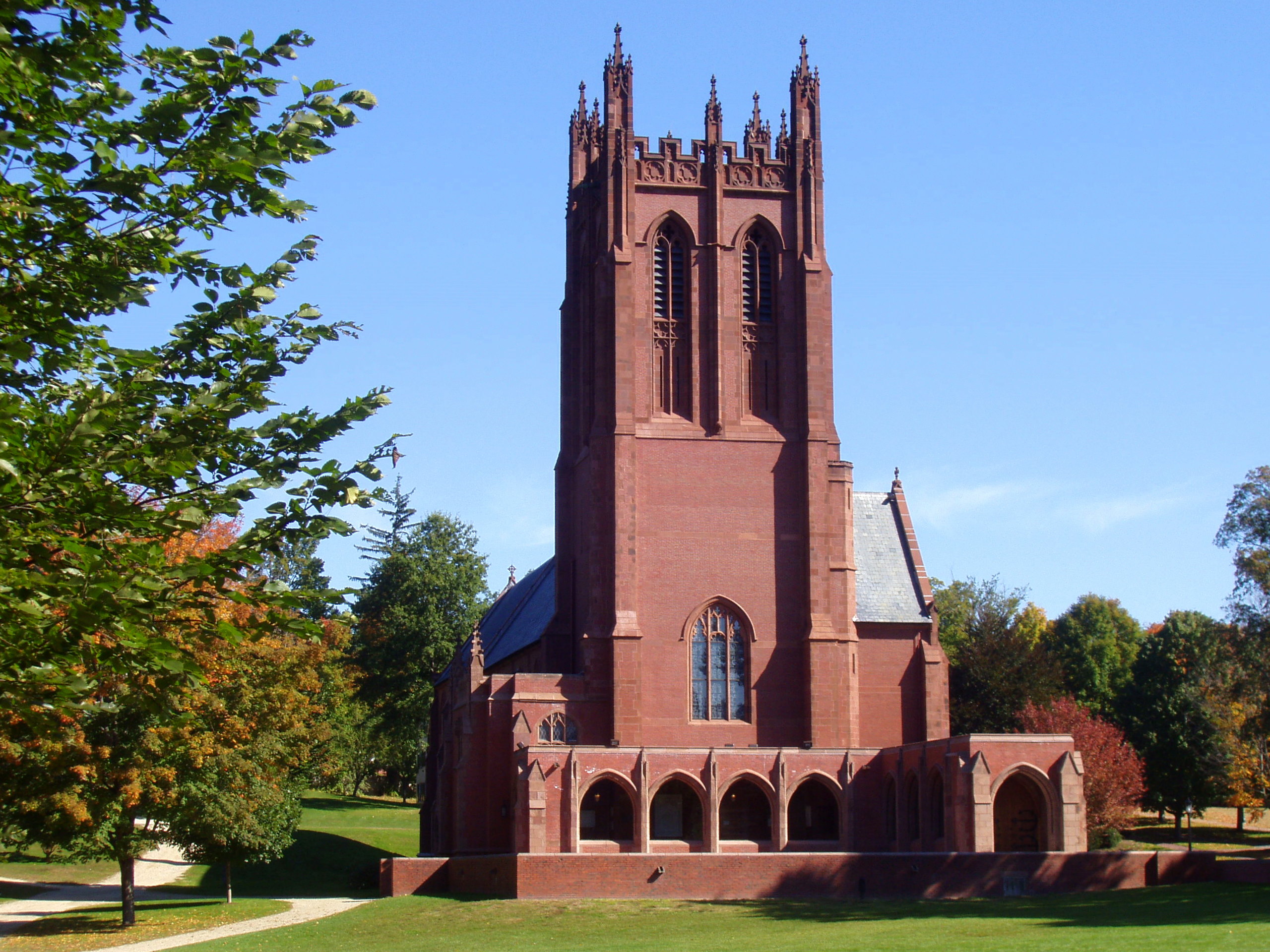
TL;DR: St. Paul’s School’s acceptance rate is approximately 13-16% (St. Paul’s Office of Admission; institutional reporting 2024-25), placing it among the most selective independent boarding schools in the world. Uniquely among Ten Schools members, St. Paul’s is 100% boarding (no day students), with all 542 students residing on the historic 2,000-acre campus in Concord, New Hampshire. Founded in 1856 by George Cheyne Shattuck Jr., St. Paul’s is an Episcopal institution with deep Anglican roots. Boarding tuition for 2024-25 was approximately $68,353. Based on 2023 data, 71.7% of accepted students chose to enroll, one of the highest yield rates among elite boarding schools. For families navigating St. Paul’s admission strategy or planning college applications during the St. Paul’s years, schedule a consultation with Oriel Admissions.
What is St. Paul’s School’s acceptance rate?
St. Paul’s School’s acceptance rate is approximately 13-16% in recent cycles (St. Paul’s Office of Admission; institutional reporting via boarding school admissions aggregators 2024-25). College Confidential reported a 12% acceptance rate based on Revisit Day data, with applications exceeding 1,600 per cycle. The school admits approximately 150-175 new students per year, with the entirety of the enrollment of 542 students residing on campus (the distinguishing 100% boarding model).
Strong applicants present academic profiles in the top 5-10% of their middle school class, standardized test scores at or above the 90th percentile on the SSAT or ISEE, two to three teacher recommendations, a student essay, parent statement, and admission interview. St. Paul’s applicant pool reflects deep national and international reach: in 2023-24, 48% of students identified as people of color, 22% were international students, and the student body represented 37 states and 28 countries. The school is a member of the Eight Schools Association and the Ten Schools Admission Organization.
Where do St. Paul’s graduates matriculate to college?
St. Paul’s College matriculation outcomes rank among the strongest at any US secondary school. The recent matriculation pattern includes substantial enrollment at Harvard, Yale, Princeton, Penn, Columbia, Brown, Cornell, Dartmouth, Stanford, MIT, and the elite non-Ivies. The five-year matriculation list also includes top liberal arts colleges (Williams, Amherst, Pomona, Swarthmore, Bowdoin, Middlebury, Wesleyan) and elite public flagships. The school’s 71.7% admitted-student yield rate (based on 2023 data) demonstrates strong family commitment to enrollment once admitted.
St. Paul’s notable alumni include Senator John Kerry, FBI Director Robert Mueller, Doonesbury creator Garry Trudeau, financier Edward Harkness (who funded the Harkness method that defines Phillips Exeter Academy), publisher William Randolph Hearst, and many influential figures in finance, government, and the arts. The school’s historical and institutional Anglican connections distinguish it from peer Ten Schools members. For broader context on elite US universities’ acceptance rates, see our Ivy League acceptance rates analysis.
| Matriculation Tier | Approx. Share of Class | Representative Schools |
|---|---|---|
| Harvard, Yale, Princeton, Stanford, MIT (HYPSM) | Substantial | Harvard, Yale, Princeton, Stanford, MIT |
| Top-25 US Universities | Substantial | Penn, Brown, Cornell, Dartmouth, Columbia, Duke, Northwestern, Johns Hopkins, Caltech |
| Top-50 US Universities | Substantial | Vanderbilt, Rice, Carnegie Mellon, WashU, Notre Dame, UVA, UCLA, UC Berkeley, Michigan, UNC |
| Elite Liberal Arts Colleges | Substantial | Williams, Amherst, Pomona, Swarthmore, Bowdoin, Middlebury, Wellesley |
Source: St. Paul’s College Counseling Office published matriculation data; institutional reporting via boarding school admissions aggregators 2024-25.
What does it cost to attend St. Paul’s School?
St. Paul’s School’s 2024-25 boarding tuition was approximately $68,353 (St. Paul’s Business Office published rates). Because St. Paul’s is 100% boarding, there is no separate day tuition – every enrolled student is a boarder, which simplifies tuition planning. Additional costs include textbooks, personal expenses, optional programs, athletic equipment, and senior-year college application costs. Total cost of attendance approaches $74,000-$76,000 per year before financial aid.
St. Paul’s operates one of the most generous financial aid programs in US secondary education. U.S. families with annual household incomes of $150,000 or below generally qualify for full tuition support (St. Paul’s School Office of Admission). Approximately 38% of St. Paul’s students receive financial aid, with the school’s $12.6 million financial aid budget supporting an average grant near $60,500. The school commits to meeting 100% of demonstrated financial need for every admitted student with no gaps. St. Paul’s $759.3 million endowment (June 2024), one of the largest in US secondary education, supports the aid program along with the school’s instructional and operational expenses.
What makes St. Paul’s distinctive among elite boarding schools?
Three institutional features distinguish St. Paul’s School from peer boarding schools. First, the 100% boarding model: every St. Paul’s student lives on campus, creating a residential community experience unmatched among Ten Schools peers (each of which enrolls 15-35% day students). The school’s 542 students and 100 teachers all live and learn together, creating an unusually immersive community. Second, the 2,000-acre campus: one of the largest US boarding school campuses, with 25 miles of wooded trails, four ponds, and the upper third of the Turkey River traversing the property.
Third, the school’s Episcopal heritage and traditions: founded in 1856, St. Paul’s maintains an Anglican identity that includes Anglo-Catholic chapel services and language drawn from English public schools (forms, removes, evensong, matins). The school is also a historical cradle of American ice hockey – the school and Concord more broadly were among the earliest US homes for ice hockey. The “All are welcome” motto inscribed outside the Chapel reflects the contemporary school’s commitment to community inclusion across backgrounds and traditions. For families weighing the broader value of elite educational pathways, see our ROI analysis on elite education.
When and how should families apply to St. Paul’s?
The St. Paul’s application timeline runs on a defined annual cycle. The application deadline is January 15 for entry in September that year. St. Paul’s accepts the Gateway to Prep School Application (recommended) or the Standard Application Online (SAO). Required materials include school transcripts from the current and prior two academic years, SSAT or ISEE standardized test scores, two to three teacher recommendations, a student essay, parent statement, and admission interview.
Interviews can be conducted on campus, virtually, or with St. Paul’s representatives in major metropolitan areas. On-campus interviews are strongly preferred and pair with a campus tour through the 2,000-acre property. Decisions are typically released on March 10. Most St. Paul’s applicants are also applying to Phillips Exeter, Phillips Andover, Choate, Deerfield, Hotchkiss, and Lawrenceville; the strategic baseline is to apply to 4-8 boarding schools across selectivity tiers. Families considering 100% boarding should be confident about full residential commitment before applying.
How does St. Paul’s compare to other Ten Schools peers?
St. Paul’s (542 students) is among the smaller Ten Schools members, comparable to Hill (527-539) and Taft (600) but materially smaller than Phillips Exeter, Phillips Andover, Lawrenceville, and Choate (each 800+). The 13-16% acceptance rate is among the most selective in the Ten Schools peer set. Tuition at $68,353 is competitive with Phillips Exeter ($69,537), Hotchkiss ($71,170), and below Phillips Andover ($76,731), Hill ($78,300), and Taft ($75,250).
St. Paul’s most distinctive comparative position among Ten Schools peers is its 100% boarding model – no peer Ten Schools member operates a fully residential structure. The 2,000-acre campus is materially larger than peer school campuses. The Episcopal heritage, while contemporary practice is broadly welcoming, gives St. Paul’s a distinctive religious-cultural identity within the peer set. Geographic positioning: Concord, New Hampshire, is one hour north of Boston, in a rural state capital setting.
How does St. Paul’s prepare students for elite college admissions?
St. Paul’s College Counseling Office maintains established relationships with admissions offices at virtually every selective US university. Each senior is assigned a college counselor in junior year who works closely with the family through the application process. St. Paul’s students benefit from the school’s 100+ course offerings, Independent Study Projects, internships, a Classical Honors program, and one of the only high school glassblowing hot shops in the country. The 100% boarding model produces the kind of substantive faculty-student relationships that result in strong recommendation letters.
Selective university admissions officers read St. Paul’s applications in the context of historical St. Paul’s cohorts. Students who pursue the most rigorous coursework, engage substantively with the residential community, and develop strong relationships with faculty for recommendation letters tend to compete strongly. The institutional alumni network at top universities, particularly in Anglophile and East Coast establishment institutional environments, is among the deepest of any US secondary school. For families seeking additional strategic support that complements the school’s College Counseling Office, independent advising from Oriel Admissions can supplement what St. Paul’s provides. For school-list construction principles, see our reach, match, and safety school guide.
What does the day student experience at St. Paul’s look like?
St. Paul’s does NOT enroll day students – the school operates a 100% boarding model where every student resides on campus. Families considering St. Paul’s must commit to full residential enrollment, which differs from peer Ten Schools members (each of which enrolls 15-35% day students). The 2,000-acre rural campus and the school’s deep residential traditions make day enrollment institutionally unworkable, and the school has consciously preserved this fully boarding model.
For families based in the Concord, Manchester, or southern New Hampshire region who would otherwise consider day enrollment at a peer school, St. Paul’s is not a viable option. Such families should consider Phillips Exeter Academy (which enrolls approximately 19% day students from the seacoast NH and northern MA region) or another peer school with a day-student program. The full residential commitment that St. Paul’s requires is also part of what creates the school’s distinctive community culture, which families considering the school value as a defining feature.
Frequently Asked Questions About St. Paul’s School
St. Paul’s School is in Concord, New Hampshire, the state capital, on a large rural campus of around 2,000 acres with ponds, woods, and playing fields. It sits in central New Hampshire, roughly 90 minutes north of Boston. The expansive, secluded setting reinforces its fully residential character and places it among the historic Northeastern boarding schools, offering an immersive campus environment well removed from urban distractions.
St. Paul’s School educates students in grades 9 through 12, which it designates as Third through Sixth Form, and has been coeducational since 1971 after a long history as a boys’ school. Students enter primarily in 9th or 10th grade and continue through graduation. As a coed institution, it brings boys and girls together across all four years within a single fully residential community.
It is an informal admissions association of ten historic, highly regarded Northeastern boarding schools that collaborate on outreach, including St. Paul’s, Phillips Exeter, Phillips Andover, Hill, Lawrenceville, Choate, Deerfield, Hotchkiss, Loomis Chaffee, and Taft. Membership signals a school’s standing among the elite boarding institutions. Families often compare these peers when weighing options, since they share rigorous academics and strong college placement records.
Yes; St. Paul’s is one of the few elite boarding schools that is entirely residential, meaning all students and most faculty live on campus, with no day-student option. Everyone is part of the around-the-clock community. This complete immersion is central to the school’s identity, shaping its close-knit culture, structured routines, and intensive faculty-student relationships, and distinguishing it from peer schools that enroll a mix of boarding and day students.
Yes; St. Paul’s provides substantial need-based financial aid and is committed to access, awarding assistance to qualifying families based on demonstrated financial need through a separate aid application during admissions. Like most boarding schools, it does not generally offer merit scholarships; aid follows financial circumstances. Because full residential tuition is substantial, families seeking support should apply for aid alongside the admission application rather than waiting until after a decision.
St. Paul’s, like most boarding schools, has typically used the SSAT (Secondary School Admission Test) as its standardized testing component, though it has adopted test-flexible or test-optional policies in recent years and some schools accept the ISEE. Applicants also complete interviews, essays, and recommendations. Because testing requirements change between cycles, families should confirm the current policy on the school’s admissions site for their application year.
No; while St. Paul’s sends many graduates to selective colleges through rigorous academics and dedicated college counseling, attendance guarantees nothing, and admission to top universities has grown intensely competitive even for its students. The school helps by preparing students academically and supporting their applications, but each student must still excel and present a compelling case. Treating any elite school as an automatic path to a top college is a costly misconception.
Because the school is fully residential, life centers entirely on campus, with students living in dorms alongside faculty families and following a structured schedule of classes, supervised study, athletics, arts, chapel, and shared meals. The all-in community fosters close bonds, independence, and constant faculty mentorship. Days are full and communal, so students gain maturity and self-direction while being supported within one of the most immersive boarding environments among elite schools.
Sources: St. Paul’s School Office of Admission; Wikipedia institutional history; Boarding School Review profile; Ten Schools Admission Organization profile; National Center for Education Statistics; Gateway to Prep School Application.
About Oriel Admissions
Oriel Admissions is a Princeton-based college admissions consulting firm advising families nationwide on elite university admissions strategy. Our team brings deep expertise across every dimension of the application, and our distinctive 360 approach develops strategy, positioning, activities, essays, and interviews as one coherent whole. To discuss your family’s admissions strategy, schedule a consultation.