Johns Hopkins CTY: Eligibility, Testing, Programs, and What It Means for College Admissions
By Rona Aydin
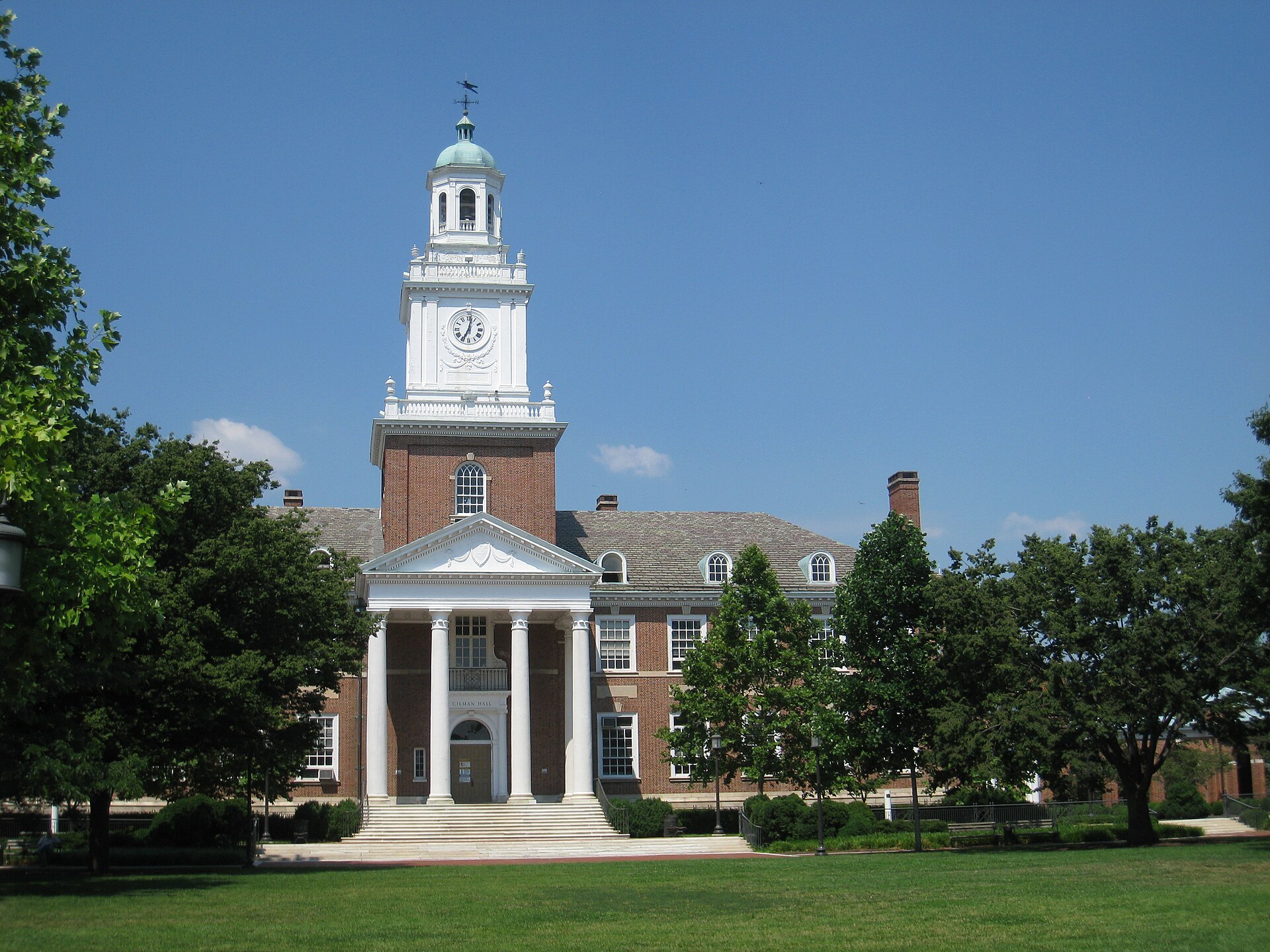
What Is Johns Hopkins CTY?
Johns Hopkins CTY is the Center for Talented Youth at Johns Hopkins University. For more than 45 years it has identified academically advanced students through above-grade-level testing and offered them courses that move faster and go deeper than a regular school curriculum. It is accredited for kindergarten through grade 12 by the Middle States commissions on elementary and secondary schools, and it serves students across the United States and abroad.
The center does two things that families sometimes confuse. It runs a testing and identification program, which tells a family how far above grade level a child is working. And it runs courses, which a student can take once identified. A student can do the first without the second.
Who Is Eligible, and How Does a Student Join?
Joining has three steps. First, a parent creates a MyCTY account and pays a fee of $55 per student. Second, the student establishes eligibility, either by registering for an above-grade-level test or by uploading qualifying scores from an accepted test already taken. Third, the student enrolls in courses at or below the identification level reached.
There is no application essay and no recommendation. Eligibility rests on test scores alone, and a small number of courses have no minimum score at all. Once eligibility is achieved, it does not expire, and a student retests only to reach a higher level.
What Are the CTY Identification Levels?
Test results place a student at an identification level, and each course lists the level it requires. Math and verbal ability are assessed separately, so a student can hold different levels in the two areas.
| Level | What it reflects | What it opens |
|---|---|---|
| Emerging | No minimum test score | The select courses that do not require a qualifying score |
| CTY-Level | Ability about two grade levels above the student’s current grade | Most courses |
| Advanced CTY-Level | Ability about four grade levels above the student’s current grade | The most demanding courses |
The center also recognizes the very highest scorers in grades 2 to 8 with honors designations. Those are recognition, not a further course level.
Which Tests Qualify a Student?
A family can choose among several tests, and the right one depends on the student’s grade and on how quickly a result is needed.
| Test | Grades | How it is taken | Results |
|---|---|---|---|
| SCAT (School and College Ability Test) | 2 to 12 | At a Prometric center, under one hour | About 48 hours |
| Online SCAT | 2 to 12 | At home, under one hour | About 48 hours |
| PSAT 8/9 | 5 to 6 | Through College Board, at a school | About six weeks |
| SAT | 5 to 12 | Through College Board | About six weeks |
| ACT | 7 to 12 | Through ACT | Three to seven weeks |
| Spatial Test Battery | 5 to 12 | At a Prometric center, 1.5 to 2 hours | About 48 hours |
| Existing school or outside test | 2 to 12 | Upload a score report in MyCTY | Three to five business days |
The SCAT is the quickest route, and a student must complete it within 30 days of registering. The existing score route is the cheapest, because it uses a test the student has already taken. The center publishes a list of the tests it accepts, including NWEA MAP, CogAT, the Iowa Assessments, i-Ready Diagnostic, the SSAT, and several state assessments. The score must be at the 98th percentile or higher, measured against the student’s grade, on a report dated after July 1, 2017.
That route has one limit. A student who qualifies with existing scores is not eligible for Advanced CTY-Level courses, which require one of the center’s own above-grade-level tests.
What Scores Does a Student Need for Johns Hopkins CTY?
The cutoffs depend on the test, the student’s grade, the subject area, and the time of year. The center publishes one set of scores for testing between August 15 and December 31 and a slightly higher set for testing between January 1 and August 14, because a student has learned more by spring.
As an example, a fifth grader testing in the fall reaches CTY-Level in math and science with 455 on the SCAT quantitative section, 320 on the mathematics section of the SAT or PSAT 8/9, 12 on ACT mathematics, or 425 on the Spatial Test Battery. In the spring those lines rise to 460, 340, 13, and 450. The numbers for other grades and for the verbal area are in the tables on the center’s site.
Oriel Admissions advises families to treat the first test as a reading, not a verdict. A student who misses a level in the fall can retest, and the score a sixth grader earns on a test written for older students says more about where to place the child in school than about any program.
What Programs Does Johns Hopkins CTY Offer, and When Is Summer 2027?
There are three formats. Online courses run through the year for grades 2 to 12. Day programs are for younger students, and the summer 2026 day courses were open to grades 2 to 8. Residential programs are for grades 5 to 12 at select sites and grades 7 to 12 at all sites.
| Residential detail | What the center publishes |
|---|---|
| Length | Three weeks |
| Summer 2027 Session A (tentative) | June 27 to July 16, 2027 |
| Summer 2027 Session B (tentative) | July 18 to August 6, 2027 |
| 2026 sites | Johns Hopkins University, Baltimore; Roger Williams University, Bristol, Rhode Island; Dickinson College, Carlisle, Pennsylvania; Ursinus College, Collegeville, Pennsylvania; Loyola Marymount University, Los Angeles; UC Santa Cruz |
| Daily pattern | Class by 9 a.m., a three-hour morning session, an afternoon session, and a final class session in the evening |
A residential student takes one course for the full three weeks. The format is closer to a short term at a boarding school than to a camp: several hours of class a day, supervised free time, and a hall meeting at night.
How Much Does Johns Hopkins CTY Cost?
Beyond the $55 fee to join, the center does not publish a single price. Tuition varies by course and length, and each course description in the catalog lists its own cost. A family that withdraws at least 90 days before a course starts receives a full tuition refund, and most courses can be paid in monthly installments for a fee.
Financial aid is need-based and limited. A family submits one application per term through MyCTY. Aid in the fall and spring can be applied to one online course, and summer aid can be applied to one online and one in-person course if funds are available.
Does Johns Hopkins CTY Help With College Admissions?
Not in the way many parents hope. Any student who meets the score can enroll and pay, so admissions readers treat a CTY course as enrichment, in the same way they treat most paid summer programs. Our guide to pre-college summer programs explains that distinction, and our list of the most selective summer programs shows the kind of program that does carry weight.
The value lies elsewhere. The testing gives a family an early, outside measure of ability, often years before the PSAT. The courses let a student study subjects a middle school does not offer and move ahead in mathematics, which shapes the high school transcript colleges later read. And for a student applying to selective private schools, a qualifying score and completed coursework are useful evidence.
In the view of Oriel Admissions, a family should choose a CTY course for what the student will learn in it. One course that leads to a lasting interest is worth more than three summers collected for a list. Families of highly advanced students can continue with our guides to college admissions for gifted students and acceleration.
Frequently Asked Questions About Johns Hopkins CTY
It is the Center for Talented Youth at Johns Hopkins University. It identifies academically advanced students in grades 2 through 12 through above-grade-level testing and offers them online, day, and residential courses.
The family creates a MyCTY account for $55 per student. The student then takes an above-grade-level test such as the SCAT, or uploads an existing score at the 98th percentile or higher on an accepted test.
The School and College Ability Test is a multiple choice test of verbal and quantitative skills that takes under one hour. It can be taken at a Prometric center or at home, and results arrive in about 48 hours.
Online courses are open to grades 2 through 12. Day programs serve younger students, and residential programs serve grades 5 through 12 at select sites and grades 7 through 12 at all sites.
The tentative core dates are June 27 to July 16, 2027 for Session A and July 18 to August 6, 2027 for Session B. Each session lasts three weeks.
No. Once a student reaches an identification level, it does not expire. A student retests only to reach a higher level.
A family pays $55 per student to create a MyCTY account. Tuition varies by course, and each course description in the catalog lists its own cost.
Attending a course is enrichment, not an admissions credential, because any student who qualifies can enroll. Oriel Admissions advises families to choose a course for what the student will learn and to use the test result as an early measure of ability.
Sources: Johns Hopkins Center for Talented Youth, CTY: Get Started, CTY: Tests and Testing, CTY: Identification Levels, CTY: Existing Test Scores, CTY: Residential Programming, CTY: Tuition and Financial Aid
About Oriel Admissions
Oriel Admissions is a Princeton-based college admissions consulting firm advising families nationwide on elite university admissions strategy. Our team brings deep expertise across every dimension of the application, and our distinctive 360 approach develops strategy, positioning, activities, essays, and interviews as one coherent whole. To discuss your family’s admissions strategy, schedule a consultation.