TL;DR: The Barnard acceptance rate for the Class of 2029 was 10.1%, with 1,048 students admitted from 10,426 applications (Barnard College Common Data Set 2025-2026). That is a rise from 8.8% for the Class of 2028, driven by a smaller applicant pool rather than looser standards, and yield remains among the highest of any liberal arts college at 68.7%. Barnard runs a single binding Early Decision round and stopped publishing ED figures with the Class of 2029; the last published ED rate was 25.6% for the Class of 2028 (434 of 1,694, Barnard Common Data Set 2024-2025). For families building a Barnard strategy, Oriel Admissions maps the binding round decision, the Columbia relationship, and the positioning that a women’s college application requires: schedule a consultation. For the Class of 2030, Barnard released decisions on March 21, 2026 without disclosing an acceptance rate; the college reported 10,763 applications, and the official rate will surface in the Common Data Set 2026-2027 this fall.
Where Do the Class of 2030 Numbers Stand?
Barnard released Class of 2030 decisions on March 21, 2026 and, as in recent cycles, did not disclose an acceptance rate. The college reported 10,763 total applications, a rise from 10,426 for the Class of 2029, and shared that first generation students make up 25 percent of admitted students, up from 21 percent, with 94 percent of admits in the top 10 percent of their class (The Barnard Bulletin, April 2026). The official rate typically appears in the Common Data Set published in the fall, and this page will be updated with the Class of 2030 figures when that data lands.
What Is the Barnard Acceptance Rate for the Class of 2029?
The Barnard acceptance rate for the Class of 2029 was 10.1%: 10,426 women applied and 1,048 received offers, per the college’s Common Data Set 2025-2026. The uptick from the prior cycle’s 8.8% traces to volume, not standards, as applications fell from 11,836 while the admitted count held essentially flat. Barnard no longer announces results during the admissions cycle and, like a growing set of selective institutions, releases figures only through the Common Data Set months later; past cycle announcements and CDS filings have occasionally differed, so we anchor every number here to the CDS as the authoritative record.
| Entering Class | Applications | Admits | Acceptance Rate |
|---|---|---|---|
| Class of 2029 | 10,426 | 1,048 | 10.1% |
| Class of 2028 | 11,836 | 1,046 | 8.8% |
| Class of 2027 | Approximately 11,900 | 950 | 8.0% |
Two structural facts frame the table. First, Barnard admits fewer than 1,100 students in a typical cycle to seat a class of roughly 700, which leaves no room for marginal files even in a year when the headline rate rises. Second, the yield: 68.7% of admitted students enrolled for the Class of 2028, a figure few liberal arts colleges approach and one produced by the binding Early Decision round plus the gravitational pull of the Columbia partnership and New York City. A rising Barnard acceptance rate paired with a stable yield signals an applicant pool that self selects harder, not a college that has become easier to enter.
How Does Early Decision Change the Math at Barnard?
Barnard offers exactly one early pathway: a single binding Early Decision round closing November 1 with decisions in mid-December. There is no Early Action and no ED II. The college stopped disclosing Early Decision figures with the Class of 2029, so the last published split is the Class of 2028: 25.6% admitted in the binding round (434 of 1,694, Common Data Set 2024-2025) against 8.8% overall, with 27% for the Class of 2027 and a 33.4% ED rate reported as recently as the Class of 2025. The pattern across every cycle with data is consistent, roughly three times the overall rate, which compresses Regular Decision to an estimated 6-7%. For a student whose first choice is Barnard, the binding round is the only lever that moves strong odds into double digits with confidence; our guides on Early Decision versus Regular Decision and Early Decision and financial aid cover the commitment calculus, our ED versus RD advantage calculator models the arithmetic, and cross school binding round comparisons live in our Early Decision acceptance rates hub. The full breakdown of the binding round, including the single deadline structure and what the college has stopped disclosing, lives in our guide to the Barnard Early Decision acceptance rate.
Why Is Barnard So Competitive? The Columbia Effect
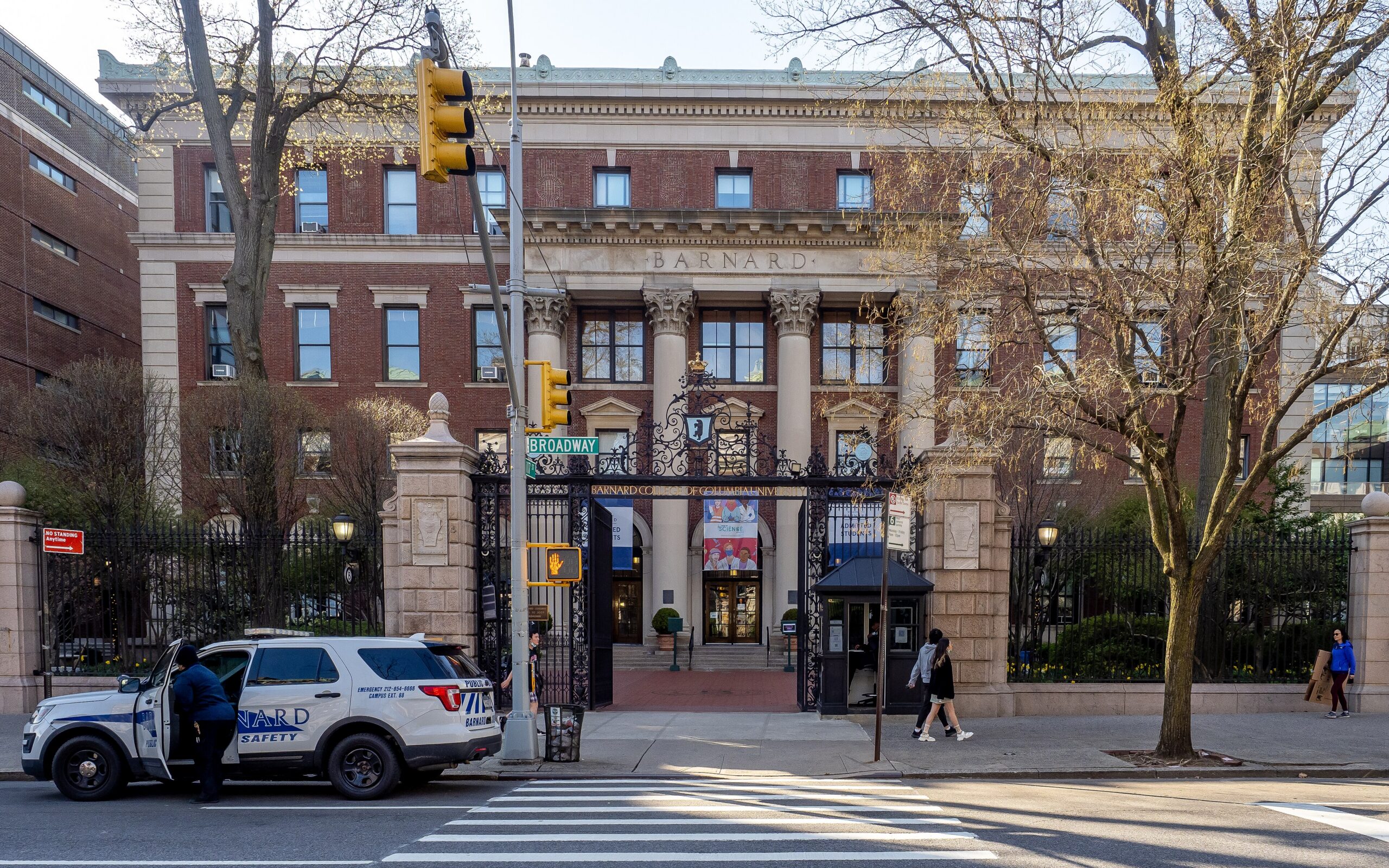
No other liberal arts college occupies Barnard’s position. It is a women’s college of roughly 3,000 students with its own faculty, admissions office, and endowment, in formal partnership with Columbia University across the street: cross registration in Columbia courses, shared clubs and student life, athletics through the Columbia-Barnard consortium, and a diploma bearing both institutions’ names. That package draws an applicant pool that behaves like an Ivy League pool while the college itself evaluates like a liberal arts college, reading for fit with a women’s college mission and not merely for credentials. Barnard and Columbia run fully separate admissions processes, so a student may apply to both in the same cycle through non-binding routes, and admission standards at the two institutions are set independently. The practical consequence of the structure is the one the numbers already showed: demand concentrated enough to hold the Barnard acceptance rate near 10% and yield near 69% even as the national applicant pool cooled.
What Barnard Looks For, and What It Costs
Barnard remains test optional under its stated policy, which concentrates evaluative weight on the transcript, the recommendations, and writing that makes a Barnard specific case: why a women’s college, why the Columbia partnership, and why New York as an academic environment. Generic prestige essays underperform here; the admissions office is staffing a mission, and the strongest files read as though the student chose Barnard over Columbia rather than beneath it. On cost, the architecture is protective: Barnard is need blind for domestic applicants, meets 100% of demonstrated financial need, and awards aid entirely on need, with no merit scholarships. Affluent families should expect to pay the full calculated contribution and should run the college’s net price estimator before any binding application, because the recognized release from an Early Decision agreement remains the narrow standard one, an aid award that does not make attendance feasible. The complete admissions playbook, from academic positioning through supplemental essays, lives in our guide on how to get into Barnard.
Frequently Asked Questions About the Barnard Acceptance Rate
The Barnard acceptance rate for the Class of 2029 was 10.1%, with 1,048 students admitted from 10,426 applications, per the Barnard College Common Data Set 2025-2026. Barnard no longer announces results during the cycle, so the CDS is the authoritative source for every figure.
Volume, not standards. Applications fell from 11,836 for the Class of 2028 to 10,426 for the Class of 2029 while the number of offers held essentially flat at just over 1,000. With yield steady near 69%, the rise reflects a smaller, more self selected applicant pool rather than an easier admissions bar.
Barnard stopped publishing Early Decision figures with the Class of 2029. The last published rate was 25.6% for the Class of 2028, with 434 admitted from 1,694 binding applications per the Common Data Set 2024-2025, after 27% for the Class of 2027 and 33.4% for the Class of 2025. The consistent pattern is roughly three times the overall rate, and Regular Decision compresses to an estimated 6-7%.
No. Barnard runs one binding Early Decision round closing November 1 with mid-December decisions, then Regular Decision closing in early January with results in late March. A student deferred or denied in December who wants a January binding move must look to ED II programs at other universities, because Barnard has no second binding window.
Yes. Barnard and Columbia run fully separate admissions processes with independently set standards, so a student may hold applications at both through non-binding routes. An Early Decision admit to Barnard, however, is bound to enroll and must withdraw every other application, including any pending at Columbia.
Barnard’s 68.7% yield for the Class of 2028 sits among the highest of any liberal arts college. The binding Early Decision round seats a meaningful share of the class by definition, and the remainder of the admitted pool is choosing a package no other school offers: a women’s college of roughly 3,000 students with Columbia cross registration, shared student life, and New York City. High yield in turn lets Barnard admit fewer students for the same class size, holding the acceptance rate down.
Barnard is test optional under its stated policy, which shifts evaluative weight to the transcript, recommendations, and essays. On aid, the college is need blind for domestic applicants and meets 100% of demonstrated financial need, but awards aid entirely on need: there are no merit scholarships, so families above the aid threshold should plan on the full calculated cost.
Treat the 10.1% headline as the average of two very different games: a binding round that has historically admitted near three times the overall rate, and a Regular round estimated at 6-7%. If Barnard is the genuine first choice and the family has confirmed comfort with the modeled net cost, the single Early Decision round is the strongest available lever; if not, the Regular application must make an unmistakably Barnard specific case to survive the compressed round.
Sources: Barnard College Common Data Set; Barnard College Office of Admissions, First-Year Applicants; Common App, Barnard College; NCES College Navigator, Barnard College; Common Data Set Initiative; NACAC.
About Oriel Admissions
Oriel Admissions is a Princeton-based college admissions consulting firm advising families nationwide on elite university admissions strategy. Our team pairs deep admissions expertise with a distinctive 360 approach spanning academic planning, extracurricular strategy, essays and application execution. To discuss your strategy, schedule a consultation.