Skip to content
Back

The Complete College Admissions Guide for NYC’s Other Elite Private Schools: Trinity, Riverdale, Chapin, Fieldston, Regis, Browning, Marymount & Lycée Français

By Rona Aydin
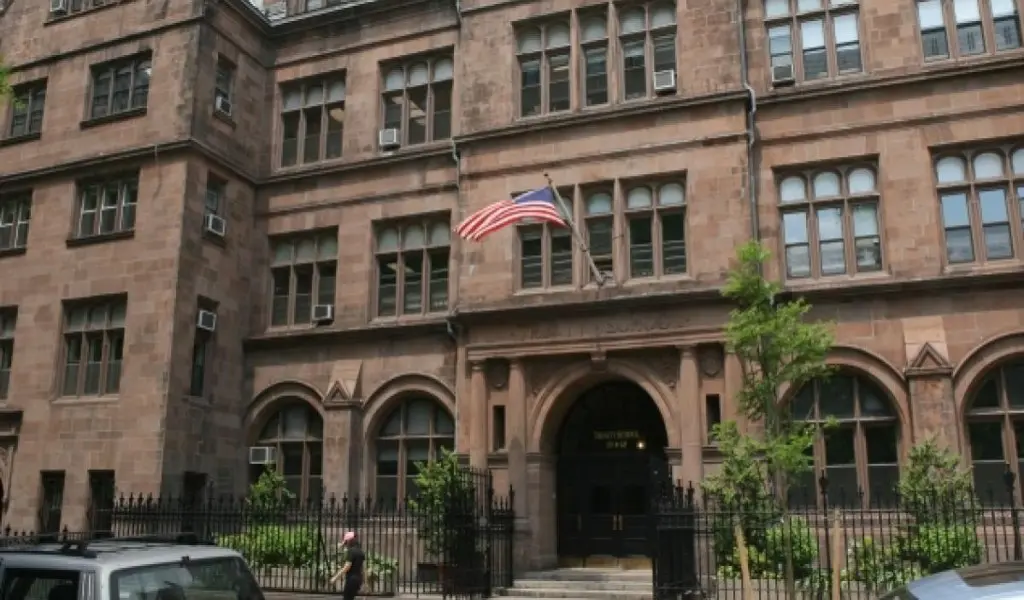
The Trinity School

A comprehensive, school-by-school college admissions playbook for families at Trinity, Riverdale, Chapin, Ethical Culture Fieldston, Regis, Browning, Marymount, and Lycée Français de New York – covering what the existing guides leave out.

Why This Guide Exists

Most NYC private school college admissions guides focus on the same handful of institutions: Dalton, Brearley, Horace Mann, Spence, Collegiate, Nightingale-Bamford. These are exceptional schools. But they represent barely half of the city’s elite private school landscape.

If your child attends Trinity School, Riverdale Country School, The Chapin School, Ethical Culture Fieldston School, Regis High School, The Browning School, Marymount School of New York, or Lycée Français de New York, you face the same high-stakes college admissions process – but you’ve had far less guidance tailored to your school’s specific environment, culture, and strategic position.

This guide fills that gap. It draws on publicly available data from school profiles, Niche rankings, Think Academy research, and official matriculation records to give families at these eight schools the same caliber of actionable, school-specific college admissions strategy that has previously been available only to families at the most commonly profiled institutions.

Quick-Reference: Eight Elite NYC Private Schools at a Glance

Before diving into school-specific strategy, here is a data snapshot comparing all eight schools. This table consolidates information that families typically have to piece together from dozens of sources.

SchoolTypeGradesEnrollmentTuition (2025-26)Student-Teacher RatioAvg SATNiche GradeLocation
Trinity SchoolCoedK-121,052$69,00013:1~1,510A+Upper West Side
Riverdale Country SchoolCoedPK-121,309$59,4126:1N/AA+Bronx (Riverdale)
The Chapin SchoolAll-GirlsK-12810$68,2506:1N/AA+Upper East Side
Ethical Culture FieldstonCoedPK-121,680$68,1627:11,330-1,530A+Bronx (Fieldston)
Regis High SchoolAll-Boys9-12532$0 (Tuition-Free)9:11,430-1,530A+Upper East Side
The Browning SchoolAll-BoysK-12470$68,9107:1N/AA+Upper East Side
Marymount School of NYAll-GirlsN-12780$67,5105:1N/AA+Upper East Side
Lycée Français de NYCoedN-12~1,300$49,9259:1N/AA+Upper East Side

Sources: Official school websites, Niche.com 2026 rankings, Think Academy (2025-26 research), school profiles. SAT data reflects publicly reported averages or mid-50% ranges where available. “N/A” indicates the school does not publicly report average SAT scores.

College Placement Comparison: Where Graduates Matriculate

The table below shows recent Ivy League and top-university matriculation data for each school, based on publicly available college lists and the most recent reporting windows. This is the kind of data that families at these schools rarely see compiled in one place.

SchoolReporting PeriodTop Matriculations (Ivy+ Highlights)Notable Placement Patterns
Trinity SchoolClasses 2021-2025Regularly admitted to all Ivies, Stanford, MIT, UChicagoStrong across all Ivies; UWS location feeds Columbia pipeline; no AP labels (like Fieldston)
Riverdale Country SchoolPast 5 yearsBrown, Cornell, Duke, Harvard, Stanford, UChicago, Penn, Princeton, YaleBroad Ivy+ placement; strong at Brown and Cornell; campus culture produces distinctive applicants
The Chapin School2021-2025Cornell (21), Yale (13), Penn (13), UChicago (8), Harvard (7), Princeton (6), Columbia (6), Stanford (5)Exceptionally strong at Cornell and Penn; competitive with Brearley/Spence cohort
Ethical Culture Fieldston2020-2025Emory (31), Northwestern (28), Cornell (25), plus Columbia, Brown, Penn, YaleStrong at “near-Ivy” schools; no-AP curriculum respected by selective admissions
Regis High School2021-2024Cornell (24), Princeton (11), UChicago (10), Stanford (9), Columbia (9), Georgetown (9), Yale (7), Harvard (6), Dartmouth (6)~20% Ivy; 25% top 20; 74% top 50; tuition-free model is unique nationally
The Browning SchoolClass of 2025Penn (2), Cornell, Columbia, Dartmouth, Northwestern, Georgetown, Johns HopkinsSmall class size means fewer raw numbers but strong per-capita Ivy+ placement
Marymount School of NYRecent yearsBrown, Columbia, Harvard, Yale, MIT, StanfordGlobal Sacred Heart network provides distinctive values narrative
Lycée Français de NY2021-2024Cornell (12), Columbia (5), Penn (5), Harvard (5), Princeton (4), Yale (3), Stanford (1)150+ institutions worldwide; dual French Bac/IB opens European university pathways

Sources: Think Academy (Aug 2025), official school matriculation pages, school profiles. Numbers represent enrolled students, not just acceptances, where data is available.

School-by-School College Admissions Strategy

Each of these eight schools has a distinct culture, academic model, and relationship with college admissions offices. The strategies below are tailored to each school’s specific context – not generic advice repackaged with a school name attached.

Trinity School – Upper West Side

Founded: 1709 | Enrollment: 1,052 | Tuition: $69,000 | Coed, K-12

How Colleges See Trinity

Trinity is, by many measures, the most glaring omission from standard NYC private school guides. It is the oldest continuously operating school in New York City and is frequently ranked among the top five private schools in the United States. With average SAT scores around 1,510 and 100% college acceptance, Trinity’s academic profile rivals or exceeds many of the schools that typically dominate these guides. Admissions officers at every selective university have a detailed Trinity profile and read its transcripts with high expectations.

What makes Trinity strategically distinctive is its combination of classical academic rigor with a curriculum that does not use AP labels – similar to Fieldston’s approach, though rooted in a different pedagogical tradition. Trinity’s honors and elective courses are designed to exceed AP depth, and admissions officers at top universities understand and respect this. A strong transcript from Trinity carries enormous institutional credibility.

The Opportunity

Trinity’s Upper West Side location puts Columbia University, Lincoln Center, the American Museum of Natural History, and the broader cultural ecosystem of the West Side within walking distance. This is a meaningfully different resource set than what UES schools offer, and students who take advantage of it develop a profile that reads differently to admissions officers. A Trinity student who interns at the AMNH, participates in Columbia’s pre-college research, or engages with the performing arts community around Lincoln Center has access to experiences that are both convenient and genuinely distinctive.

The Risk

Trinity’s size (1,052 students) means significant internal competition for the same university spots. The school’s intensity can also produce a culture where academic performance becomes all-consuming, leaving less room for the kind of exploratory, passion-driven activity that makes college applications compelling. At a school where peers are uniformly accomplished, the pressure to be “the best” rather than “the most interesting” is real.

What to Do in 9th and 10th Grade

Lean into Trinity’s non-AP curriculum as an asset, not a gap to compensate for. Take the most rigorous courses you can handle well. Use the UWS location to build a life outside the school’s walls – the West Side’s cultural institutions, community organizations, and proximity to Columbia create opportunities unavailable to students at most Manhattan schools. Build genuine relationships with at least two teachers per year who can speak to your intellectual growth, and begin narrowing extracurricular involvement from five activities in 9th grade to two or three by the end of 10th.

Riverdale Country School – Bronx

Founded: 1907 | Enrollment: 1,309 | Tuition: $59,412 | Coed, PK-12

How Colleges See Riverdale

Riverdale sits on a 27.5-acre campus in the Bronx – the most expansive physical environment of any school on this list. This is not a detail to overlook; it fundamentally shapes the student experience and, consequently, the kind of applicant Riverdale produces. Admissions officers at selective universities know Riverdale well and respect its academic rigor, but they also recognize that Riverdale students come from a different world than their Manhattan counterparts.

The school has strong Ivy+ placement, with recent graduates matriculating at Brown, Cornell, Duke, Harvard, Stanford, UChicago, Penn, Princeton, and Yale. The college counseling office has deep institutional relationships built over decades.

The Opportunity

Riverdale’s campus culture produces students with a different texture than those from vertical Manhattan schools – students who have played on real fields, walked through actual woods, and experienced a community that feels more like a New England prep school than an urban institution. This can be a genuine admissions advantage: Riverdale students are less likely to be slotted into the “Manhattan private school kid” archetype that admissions readers encounter hundreds of times each cycle. Additionally, at $59,412, Riverdale’s tuition is the lowest among the traditional elite private schools on this list (excluding tuition-free Regis), which may give families more financial flexibility for college planning.

The Risk

Riverdale’s Bronx location, while beautiful, creates a more insular student experience. Students who commute from Manhattan may spend significant time in transit, reducing opportunities for after-school engagement with the broader city. The campus can become a self-contained world where students interact primarily with peers from similar backgrounds.

What to Do in 9th and 10th Grade

Use Riverdale’s campus resources fully – the athletics, the outdoor spaces, the community – but deliberately build connections beyond the Riverdale bubble. Pursue summer experiences or weekend activities in different parts of the city. Lean into what makes the Riverdale experience genuinely different from the UES/UWS school experience when the time comes to craft your application narrative. The student who can articulate how Riverdale’s campus-based community shaped them differently is more compelling than one who tries to sound like a Dalton or Brearley student.

The Chapin School – Upper East Side (All-Girls)

Founded: 1901 | Enrollment: 810 | Tuition: $68,250 | All-Girls, K-12

How Colleges See Chapin

Chapin is ranked #3 among private high schools in the NYC metro area by Niche – higher than several schools that receive far more attention in college admissions guides. Its recent matriculation data is exceptional: 21 graduates to Cornell, 13 to Yale, 13 to Penn, 8 to UChicago, 7 to Harvard, 6 to Princeton, 6 to Columbia, and 5 to Stanford over the 2021-2025 period. These numbers place Chapin squarely among the most competitive college-prep schools in the city.

Student reviews consistently highlight the quality of Chapin’s faculty. The 6:1 student-teacher ratio ensures that teachers know students individually – a factor that translates directly into stronger recommendation letters and more personalized college counseling.

The Opportunity

Chapin’s particularly strong placement at Cornell and Penn suggests well-established institutional relationships with those universities. Families targeting these schools should engage with Chapin’s college counseling office early to understand how to leverage these pipelines. The all-girls environment, like that at Brearley and Spence, encourages girls to take academic and leadership risks – and this is well-documented in educational research and well-understood by admissions officers.

The Risk

Chapin sits in the same UES girls’ school cohort as Brearley, Spence, and Nightingale. An admissions reader processing applications from this cluster will see Chapin alongside its peer schools within the same reading cycle. The key differentiator for Chapin students is developing a profile with genuine depth and specificity that extends beyond the UES corridor.

What to Do in 9th and 10th Grade

In 9th grade, explore Chapin’s full range of offerings. By 10th grade, identify the one or two areas where your interest is deepest and invest disproportionately. Seek at least one significant extracurricular or community engagement outside the UES – in a different borough, a different community, a different kind of organization. An application that shows a Chapin student engaged with the world beyond the familiar private school ecosystem is significantly more compelling than one that doesn’t. The counseling office begins meeting with students and parents as early as 9th grade to discuss academic preparation and testing – take advantage of this early access.

Ethical Culture Fieldston School – Bronx (Fieldston Campus)

Founded: 1878 | Enrollment: 1,680 (600 Upper School) | Tuition: $68,162 | Coed, PK-12

How Colleges See Fieldston

Fieldston is one of the most intellectually distinctive schools on this list, and its approach to college preparation is genuinely unusual. In 2002, Fieldston eliminated Advanced Placement courses entirely, replacing them with its own advanced curriculum designed to be more rigorous and intellectually ambitious than the AP framework. This is a bold pedagogical choice with direct implications for college admissions.

Admissions officers at selective universities are well aware of Fieldston’s approach and respect it. The school’s SAT range of 1,330-1,530 reflects a broad student body, and its recent placement – Emory (31), Northwestern (28), Cornell (25), plus strong numbers at Columbia, Brown, Penn, and Yale – demonstrates that the no-AP model works. However, the school’s college counseling office plays a particularly critical role in contextualizing Fieldston transcripts for readers who may be less familiar with the model.

The Opportunity

Fieldston’s progressive identity, its emphasis on ethics and social justice, and its genuinely diverse student body (39% students of color) produce applicants with a distinctive voice. The school’s 18-acre Bronx campus provides a campus experience similar to Riverdale’s, and its ethical framework gives students a coherent worldview to articulate in applications. Students who can speak authentically about how Fieldston’s educational philosophy shaped their thinking are making an argument that no student from a traditional school can make.

The Risk

The absence of AP course labels on the transcript can create anxiety for families, particularly when comparing notes with parents at AP-offering schools. Some families attempt to compensate by having students take AP exams independently – an approach that is generally unnecessary and can signal a lack of confidence in the school’s own curriculum. The broader risk is that Fieldston’s strong placement at “near-Ivy” schools (Emory, Northwestern) but somewhat lower numbers at the Ivies themselves may reflect a ceiling that families need to understand realistically.

What to Do in 9th and 10th Grade

Embrace what makes Fieldston different. Thrive in the advanced curriculum rather than supplementing it with external AP exams. Use the school’s ethical framework to develop a coherent narrative about your values and how they inform your academic and extracurricular choices. The formal college counseling program begins in 11th grade (Form V), but foundational advising, course selection planning, and introduction-to-process programming starts in 9th and 10th grade – engage with it early. Fieldston’s emphasis on discussion-based, student-centered learning produces graduates who interview exceptionally well; develop that skill consciously.

Regis High School – Upper East Side (All-Boys, Jesuit, Tuition-Free)

Founded: 1914 | Enrollment: 532 | Tuition: $0 (Tuition-Free) | All-Boys, 9-12

How Colleges See Regis

Regis is arguably the single most unusual school on any list of NYC’s elite private institutions. A Jesuit, all-boys school that charges zero tuition – funded entirely by a 1914 endowment – Regis admits talented Catholic boys regardless of financial background. Admissions are highly selective, requiring top-10% standardized test scores and a rigorous interview process.

The results speak for themselves: approximately 20% of Regis graduates gain admission to Ivy League schools, 25% matriculate to top-20 universities, and 74% attend top-50 institutions. The school’s AP pass rate is 96%, and recent matriculation data shows strong placement at Cornell (24), Princeton (11), UChicago (10), Stanford (9), Columbia (9), Georgetown (9), Yale (7), Harvard (6), and Dartmouth (6) over a four-year period.

The Opportunity

Regis students have a genuinely distinctive profile that no other NYC private school can replicate. The Jesuit emphasis on service, intellectual inquiry, and ethical formation produces graduates with a coherent personal narrative that admissions officers respond to. The school’s unique socioeconomic diversity – a direct result of free tuition – means that Regis students learn alongside peers from genuinely different backgrounds, an experience that enriches both their worldview and their application essays. A Regis student who can speak authentically about the school’s values has material for an application unlike anything coming from the $60,000-tuition Manhattan private school world.

The financial dimension is equally significant. Because Regis families are not paying tuition, they may have more flexibility in college financial planning – or they may face a different set of challenges if household income is modest. Either way, the financial conversation deserves attention earlier than at most other schools.

The Risk

Regis is a 9-12 school, which means students arrive in 9th grade without the years of relationship-building that K-12 students at other schools enjoy. The first year is both an adjustment to a new environment and the beginning of the college admissions clock. The school’s Catholic identity, while an asset for many applicants, may require thoughtful framing for students applying to secular universities. Additionally, the all-boys environment, combined with a traditional Jesuit pedagogical approach, may not suit every learning style.

What to Do in 9th and 10th Grade

Invest heavily in building relationships during 9th grade – with teachers, with the school community, and with the Jesuit service framework. The transition from middle school to Regis is significant, and students who establish themselves quickly have a meaningful advantage. In 10th grade, begin to develop the “spike” – the one area of demonstrated excellence that will anchor the college application. Lean into the service requirement not as a checkbox but as an opportunity to develop genuine community connections. And begin financial planning for college early: run net price calculators, research merit scholarship opportunities at excellent universities outside the top 20, and understand how your family’s financial situation will be assessed by different institutions.

The Browning School – Upper East Side (All-Boys)

Founded: 1888 | Enrollment: 470 | Tuition: $68,910 | All-Boys, K-12

How Colleges See Browning

Browning is the city’s smaller all-boys counterpart to Collegiate. With approximately 470 students and a 7:1 student-teacher ratio, it is intimate by design. The school’s identity is built around character development – integrity, kindness, leadership – alongside academic rigor. The Class of 2025 earned offers from over 90 institutions, with placements at Penn, Cornell, Columbia, Dartmouth, Northwestern, Georgetown, Johns Hopkins, UCLA, and Michigan, plus international options at McGill and St. Andrews.

The Opportunity

Browning’s small size means every student is known. Teachers, counselors, and administrators can speak to a student’s character and growth with a specificity that is harder to achieve at larger schools. Recommendation letters from Browning tend to be detailed and personal. The college counseling office can invest significant individual time in each student – a luxury that schools with 150-student senior classes simply cannot provide.

The Risk

Fewer courses, fewer clubs, fewer athletic teams. Students whose passions fall outside the school’s offerings need to supplement externally. The smaller peer group also means fewer diverse perspectives and, sometimes, a more socially constrained environment. The raw number of students placed at top universities will be smaller simply because the graduating class is small – which can create anxiety when families compare Browning’s list to the lists from schools three times its size.

What to Do in 9th and 10th Grade

Supplement what the school doesn’t offer with ambitious outside pursuits. NYC’s resources are the answer: if Browning doesn’t have a competitive debate team, join one through an external league; if the science offerings are limited, pursue research through one of the city’s many mentorship programs. The combination of deep school engagement (where you’re genuinely known and valued) plus distinctive external pursuits demonstrates both community investment and independent initiative. Start identifying these external opportunities in 9th grade so that by 10th grade, you have a track record of commitment outside the school walls.

Marymount School of New York – Upper East Side (All-Girls, Catholic)

Founded: 1926 | Enrollment: 780 | Tuition: $67,510 | All-Girls, N-12

How Colleges See Marymount

Marymount is an all-girls Catholic school affiliated with the Religious of the Sacred Heart of Mary – a related but distinct order from the Convent of the Sacred Heart. With a 5:1 student-teacher ratio (the best on this list), Marymount offers an exceptionally personalized education that blends rigorous academics with a faith-based values framework. Graduates have been admitted to Brown, Columbia, Harvard, Yale, MIT, and Stanford, among other selective institutions.

The Opportunity

Marymount’s religious identity is an asset when leveraged authentically. Students who can articulate how the school’s values have shaped their worldview – not as a talking point, but as a genuine influence – bring something to an application that secular school students generally cannot. The school’s STEAM emphasis and full array of AP courses provide the academic rigor that top universities expect. Marymount’s global Sacred Heart network offers travel and exchange opportunities that can provide broadening experiences – families should explore them beginning in 9th grade.

The Risk

Marymount is less prominently positioned in the NYC private school conversation than Brearley, Spence, or even Chapin. This doesn’t reflect the quality of the education but may mean that the school’s brand does slightly less “heavy lifting” in the admissions process. Students need to ensure their individual profiles are strong enough to command attention independent of the school name.

What to Do in 9th and 10th Grade

Develop genuine intellectual depth in an area of passion – the 5:1 student-teacher ratio means teachers will notice and support authentic engagement. Build strong teacher relationships early; at a school this size, your recommenders will know you deeply. Use the global Sacred Heart network for summer travel or exchange experiences that broaden your perspective beyond the UES. Engage with the school’s STEAM programs to build a demonstrable skill set, and consider how the school’s values framework can inform a distinctive application narrative. If you’re targeting the most selective universities, consider supplementing with external academic enrichment or competitions that demonstrate the breadth of your ability.

Lycée Français de New York – Upper East Side (Bilingual French-English)

Founded: 1935 | Enrollment: ~1,300 | Tuition: $49,925 | Coed, N-12

How Colleges See the Lycée

The Lycée is genuinely unlike any other school on this list. With students drawn from dozens of nationalities, a fully bilingual French-English curriculum, and both the French Baccalaureate and IB Diploma available, it produces graduates with a profile that is fundamentally different from those of traditional American private schools. Recent Ivy+ matriculation includes Cornell (12), Columbia (5), Penn (5), Harvard (5), Princeton (4), Yale (3), and Stanford (1) over a four-year period, with graduates enrolling at more than 150 institutions worldwide.

At $49,925, the Lycée’s tuition is significantly lower than any other elite NYC private school on this list – roughly $18,000-$19,000 less than Trinity, Chapin, or Browning – which has meaningful implications for family financial planning around college.

The Opportunity

A Lycée graduate who is genuinely bilingual (or trilingual), educated in a European intellectual tradition that emphasizes philosophical inquiry and structured argumentation, and comfortable moving between American and international contexts brings something to a university campus that is rare and valued. This is a genuine differentiator in the admissions process – not a marginal advantage, but a fundamentally different kind of applicant.

The Lycée also opens a pathway that most NYC private school students don’t have: competitive applications to elite European universities. Sciences Po, the Sorbonne, universities in the UK, Switzerland, and the Netherlands – these are realistic options for Lycée graduates and should be explored during the 9th and 10th grade years.

The Risk

The Lycée’s curriculum does not map neatly onto the American admissions framework. French Bac courses are not APs. The grading scale and academic expectations are different. College counselors at the Lycée are experienced in translating this, but families should engage with the counseling office early – by 10th grade at the latest – to understand how the transcript will be presented. The school’s average class size of 21 and 9:1 student-teacher ratio are higher than most peer schools, which means students need to be more proactive about building teacher relationships.

What to Do in 9th and 10th Grade

Decide early whether you are pursuing the French Baccalaureate, the IB Diploma, or a combination – this choice has significant implications for both your transcript and your college options. Embrace the bilingual and international dimensions of the Lycée as your primary differentiator rather than trying to make your application look like it came from a traditional American prep school. Explore European university options in parallel with American ones. And invest in building relationships with teachers despite the larger class sizes – seek them out during office hours, engage in intellectual conversation, and make yourself known. These relationships will be essential for recommendation letters.

When Does College Counseling Start at Each School?

One of the most common questions families ask – and one that competitor guides rarely answer school-by-school – is when the college counseling process formally begins. Here is what we know from publicly available information and school profiles:

SchoolFormal Counseling BeginsEarly/Informal AdvisingKey Early Touchpoints
Trinity SchoolMid-Junior YearCourse advising from 9th gradeIndividual meetings, group sessions, Junior College Night
Riverdale Country School11th Grade9th-10th grade course planningCollege Office provides long-term planning resources early
The Chapin SchoolClass 11 (intensive)Class 9 (freshman year)Counselors meet with students and parents starting in 9th grade for academic prep and testing discussions
Ethical Culture FieldstonForm V (11th Grade)9th-10th grade foundational advisingCourse selection planning and introduction to process programming in freshman/sophomore year
Regis High SchoolJunior YearSophomore year preliminaryJesuit mission informs holistic preparation from day one
The Browning School11th GradeIndividual advising from 9th gradeSmall school means counselor knows every student from arrival
Marymount School of NY11th Grade9th-10th grade course advisingFull AP array requires early course planning; values framework integrated throughout
Lycée Français de NY11th Grade10th grade (recommended)French Bac vs. IB decision has major implications; early engagement critical

The universal takeaway: formal college counseling begins in 11th grade at every school, but the most strategic families engage with the counseling office informally in 9th or 10th grade. This early engagement helps with course selection, summer planning, and narrative development – all of which are harder to adjust once the formal process begins.

Leveraging Your School’s Specific Strengths: Quick-Reference Table

SchoolSignature Strength to LeverageCollege Prep EdgeWhat to Supplement Externally
Trinity SchoolAcademic rigor, UWS cultural access, 300+ year legacyTranscript carries enormous weight; no-AP curriculum respected at top universities; avg SAT ~1,510Seek experiences beyond the UWS; build distinctive extracurricular profile to stand out from large applicant pool
Riverdale Country School27.5-acre campus, character focus, strong communityCampus culture produces distinctive applicants; broad Ivy+ placement; most affordable traditional elite school ($59K)Combat insularity – pursue city-based activities; build narrative around what campus environment uniquely provides
The Chapin SchoolAll-girls leadership, exceptional faculty relationships (6:1)Outstanding Cornell/Penn pipeline; #3 Niche ranking in NYC metro; counselors engage from 9th gradeDevelop experiences beyond UES girls’ school corridor; coeducational activities; community engagement in different boroughs
Ethical Culture FieldstonProgressive pedagogy, ethical framework, no-AP advanced curriculum, diversity (39% students of color)Distinctive values narrative; strong at near-Ivy schools; students interview exceptionally wellMay need to strengthen case for top-5 Ivy targets specifically; external competitions or research can supplement
Regis High SchoolTuition-free Jesuit education, socioeconomic diversity, service mission~20% Ivy rate; 96% AP pass rate; uniquely distinctive narrative nationallyBuild relationships quickly (9-12 school); begin financial planning for college early; seek summer opportunities to broaden profile
The Browning SchoolIntimate community, character development, deep faculty knowledge of each studentPersonalized counseling; detailed recommendation letters; strong per-capita Ivy+ placementSupplement limited course/club offerings with city-wide programs; external competitions; ambitious independent projects
Marymount School of NY5:1 student-teacher ratio (best on this list), Catholic values, STEAM focus, global Sacred Heart networkExceptional personalization; faith-based narrative is distinctive; AP + values integrationBuild profile visibility beyond school; external academic enrichment for top-tier targets; leverage global network for travel/exchange
Lycée Français de NYBilingual fluency, international community, French Bac + IB dual credential, lowest tuition ($49K)Bilingualism is a genuine differentiator; 150+ university destinations worldwide; European pathways availableEngage college counseling by 10th grade; build teacher relationships proactively (larger classes); ensure American universities understand your transcript

The Freshman and Sophomore Playbook: Universal Advice for All Eight Schools

While the school-specific strategies above address each institution’s unique context, there are universal principles that apply across all eight schools during the critical 9th and 10th grade window.

9th Grade: Explore, Engage, Establish

Academics: Take the most rigorous courses you can handle well – emphasis on “well.” A strong performance in challenging courses is far more valuable than a mediocre one in the maximum possible course load. At schools like Trinity, Fieldston, or Regis where the baseline is already rigorous, focus on earning the strongest possible grades in the core curriculum.

Extracurriculars: Try three to five activities. This is the year for breadth, not depth. Join something unfamiliar. The goal is discovery – pay attention to what your child gravitates toward naturally, not what looks best on paper.

Relationships: Identify at least one teacher with whom your child can build a genuine intellectual relationship. At small schools like Browning or Marymount, this happens naturally. At larger schools like Trinity, Riverdale, or Fieldston, it requires more intentional effort.

Summer After 9th Grade: One structured experience plus genuine downtime. No need for expensive pre-professional programs after freshman year. A student who spent the summer reading widely, exploring a new interest, and engaging with their community has a richer story than one who attended a name-brand “leadership institute.”

10th Grade: Narrow, Deepen, Lead

Academics: Begin shaping the academic profile. If your child is science-oriented, this is the year to pursue advanced research opportunities – NYC offers access to labs at institutions from Rockefeller University to the New York Botanical Garden. If humanities are the strength, seek the most challenging writing-intensive courses available. Begin standardized test exploration: take a practice PSAT, identify whether SAT or ACT is a better fit, and plan a preparation timeline.

Extracurriculars: Narrow from five activities to two or three. Drop what doesn’t resonate; double down on what does. Begin pursuing leadership or increased responsibility. If your child started something in 9th grade, 10th grade is when it should show growth.

The “Spike” Conversation: By the end of 10th grade, families should be able to answer: “What is this student known for?” Not in a calculated way, but authentically. The student who is genuinely passionate about marine biology, urban planning, documentary filmmaking, or constitutional law – and has begun acting on that passion – is the student who stands out in the admissions pile.

NYC as Extracurricular: This is where the city becomes a superpower. A Chapin student volunteering at the Metropolitan Museum, a Fieldston student attending City Council hearings, a Regis student serving at a Bronx food pantry, a Lycée student translating for immigrant families – these experiences are not available to students in most American cities. Use them.

Relationships: Deepen relationships with two to three teachers. These will become your recommendation writers. Recommendations are most powerful when they come from teachers who have watched a student grow over time.

Summer After 10th Grade: This summer matters more. Pursue something substantive and aligned with your child’s emerging interests – a pre-college academic program, a research internship, a meaningful work experience, or an ambitious independent project. Admissions officers pay close attention to how students spend the summer between 10th and 11th grade because it reveals what a student chooses to do when the structure of school is removed.

Common Mistakes Families at These Schools Make

Mistake #1: Compensating for Perceived Brand Gaps. Families at schools that are less frequently profiled – Browning, Marymount, the Lycée – sometimes overcompensate by piling on external credentials, test prep, or resume-padding activities to “make up for” a school name they perceive as less powerful than Dalton or Brearley. This is misguided. Admissions officers know every school on this list. A strong student from Browning with genuine depth is more compelling than a mediocre student from a more famous school with a padded resume.

Mistake #2: Taking AP Exams at Non-AP Schools. Some families at Trinity or Fieldston have their students sit for AP exams at external testing centers to compensate for the lack of AP labels on the transcript. This is almost always unnecessary and can signal a lack of confidence in the school’s own curriculum. Trust the model. The school’s college counselor will contextualize the transcript appropriately.

Mistake #3: Ignoring the Financial Conversation. NYC private school culture discourages financial conversations. But a family spending $69,000 annually on high school tuition may arrive at the college process with limited savings for a $90,000-per-year university. Merit scholarships at excellent schools outside the top 20 can be transformative. Have the financial conversation before 11th grade.

Mistake #4: Applying Only to American Universities. This applies especially to Lycée families but extends to any student with international exposure. European universities offer world-class education at a fraction of American costs, and the application processes are often less holistic (more exam-based), which can benefit academically strong students. At minimum, explore the option.

Mistake #5: Waiting Until Junior Year to Engage the College Counseling Office. Every school on this list begins formal counseling in 11th grade. But every school also offers informal advising, course planning guidance, and early conversations in 9th and 10th grade. The families who engage early have a significant strategic advantage – in course selection, summer planning, and narrative development.

Frequently Asked Questions

Does it matter that my child attends Trinity or Riverdale instead of Dalton or Brearley?

No. Admissions officers at selective universities have detailed profiles for every school on this list. Trinity is ranked among the top private schools in the country, Riverdale is #2 in the NYC metro area by Niche, and Chapin is #3. The institutional credibility of these schools is equivalent to any on the more commonly profiled list. What matters is what your child does with the opportunities their specific school provides.

My child is at a school that doesn’t offer AP courses (Trinity, Fieldston). Is this a disadvantage?

No. Both Trinity and Fieldston have made deliberate curricular choices that admissions officers understand and respect. Selective universities maintain school-specific profiles and evaluate academic rigor within the context of what each school offers. A student who takes the most challenging courses available at Trinity or Fieldston is evaluated exactly as a student who maximizes the AP load at an AP-offering school. Do not take external AP exams to compensate – it is unnecessary and can undermine confidence in your school’s curriculum.

How does Regis’s tuition-free model affect college admissions?

Regis’s tuition-free, Jesuit model is a significant asset in college admissions. It produces a socioeconomically diverse student body, a service-oriented school culture, and graduates with a distinctive personal narrative. Approximately 20% of Regis graduates attend Ivy League schools – a rate that rivals or exceeds many $60,000+ tuition schools. The unique challenge for Regis families is financial planning for college itself, since the transition from free tuition to full college costs can be significant.

Should my child at the Lycée Français apply to European universities?

This should absolutely be explored. The Lycée’s dual French Bac/IB credential opens pathways to elite European universities – Sciences Po, the Sorbonne, UK universities, Swiss institutions – that are realistic and often significantly less expensive than American counterparts. Even if your child ultimately chooses an American university, having European options provides leverage, perspective, and financial flexibility. Begin researching these options in 10th grade.

Is a smaller school like Browning (470 students) a disadvantage compared to Trinity (1,052) or Riverdale (1,309)?

Not at all – the advantages differ. Browning’s small size means deeper teacher relationships, more personalized counseling, and recommendation letters that are detailed and specific. The trade-off is fewer courses and extracurricular options, which students can supplement with NYC’s extraordinary external resources. Admissions officers evaluate students within the context of their school; they do not penalize a Browning student for having fewer activities available than a Riverdale student.

When should we hire a private college admissions consultant?

A private consultant can complement your school’s college counseling – never replace it. The school’s counselor writes the school report and has direct relationships with admissions offices. A consultant adds value through additional essay coaching, strategic planning, extracurricular mentoring, and test prep coordination. The greatest value comes from engaging a consultant in 9th or 10th grade, before the school’s formal process begins – not in a junior-year scramble. Look for someone who enhances your child’s authentic voice rather than imposing a formula.

What SAT/ACT scores should students at these schools aim for?

Where data is publicly available, average SAT scores range from approximately 1,330-1,530 (Fieldston’s mid-50%) to ~1,510 (Trinity) to 1,430-1,530 (Regis mid-50%). A score at or above your school’s average puts you in strong standing. However, test scores are a threshold, not a distinguishing factor at the most selective universities. Prepare thoughtfully, take the test twice if needed, but do not let test preparation consume time that would be better spent on genuine intellectual engagement and extracurricular depth.

Final Thought: The Advantage Is Already Yours

Your child attends one of the finest schools in New York City – which means one of the finest in the country. Whether it’s Trinity’s 300-year legacy, Riverdale’s campus community, Chapin’s faculty intimacy, Fieldston’s progressive vision, Regis’s Jesuit mission, Browning’s character-first approach, Marymount’s values-driven education, or the Lycée’s global perspective, each of these schools provides an extraordinary foundation for college admissions and beyond.

The families who get the most out of these advantages are not the ones who pile on more pressure, more test prep, and more extracurricular padding. They are the ones who use the 9th and 10th grade years to help their child discover who they genuinely are, what they genuinely care about, and how they want to spend their time. That authenticity – supported by the institutional credibility of an elite NYC private school – is the most powerful college application possible.

Start now. Not with panic, but with purpose.


Oriel Admissions provides expert college admissions consulting for families at NYC’s top private schools. Our 360-degree approach pairs students with dedicated college counselors, writing coaches, career coaches, and project mentors beginning as early as 8th grade. 93% of our students are admitted to one of their top 3 college choices. To learn how we can support your family, contact us today.


Latest Posts

Show all
Harvard

The Hidden Ivy League Advantage: How Legacy, Donor, and ALDC Preferences Actually Work in 2026

Every year, families spend thousands of hours perfecting essays, building extracurricular profiles, and chasing perfect SAT scores. Yet one of the most powerful forces in Ivy League admissions is rarely discussed openly: ALDC preferences. These institutional preferences at every Ivy League school give certain applicants a significant, measurable advantage before a single essay is read. … Continued

Sign up for our newsletter