TL;DR: WashU pre-med carries one of the strongest published outcomes in the country: the university reports that 85% of students who worked with its PreHealth advisors were admitted to medical school as first-time applicants (source: WashU Undergraduate Admissions). Advising runs through the PreHealth program with one-on-one guidance from course selection through interviews, beside the WashU School of Medicine and Barnes-Jewish Hospital medical campus in St. Louis. Nationally, 54,699 applied and 23,440 matriculated in 2025 (AAMC). To build a pre-med positioning strategy for your student, schedule a consultation with Oriel Admissions.
What Does Pre-Med at WashU Actually Look Like?
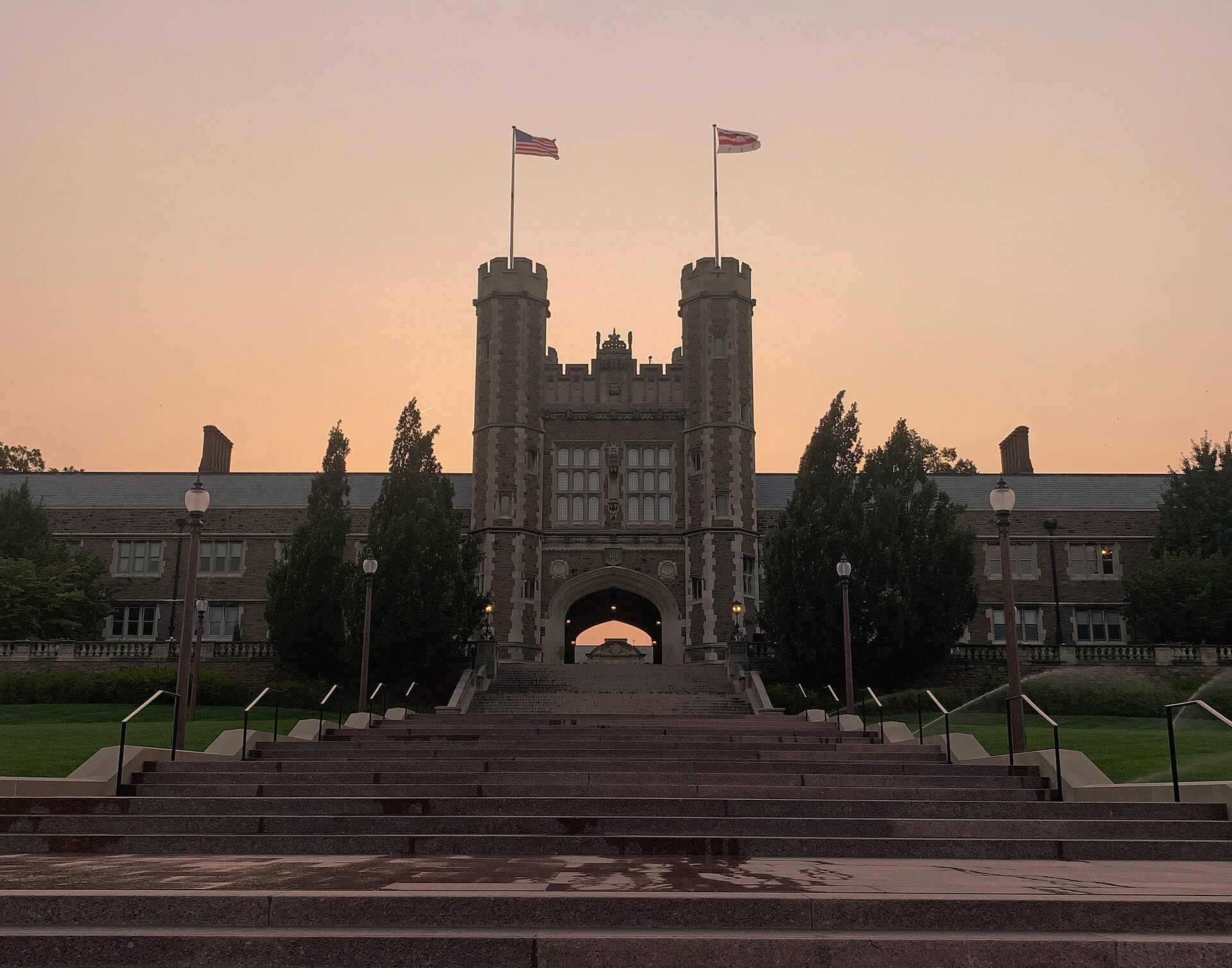
WashU has built its undergraduate identity around pre-med more deliberately than any other top-tier university. Pre-med is a track over any major, and the PreHealth advising program provides one-on-one guidance covering course selection, extracurricular strategy, application essays, and interview preparation, backed by a large community of fellow pre-health students.
The density of that community is the defining cultural fact. A substantial share of each entering class arrives pre-health, which means abundant peer knowledge, structured resources, and a campus that takes the path seriously – along with a peer group that sets a demanding curve in the sciences.
What Is Behind the WashU 85% First-Time Admit Figure?
WashU publishes the number directly: 85% of students who worked with PreHealth advisors were admitted to medical school as first-time applicants. Against a national picture in which roughly 43% of applicants matriculated in 2025, that is one of the strongest published outcomes at any university.
Read the definition carefully, because it is instructive rather than misleading: the figure covers students who engaged the advising system, and it measures first-time applicants. The lesson for families is that the WashU result is a product of process – students who work the advising structure from early on are the ones the statistic describes.
How Strong Are WashU Pre-Med Outcomes Overall?
In 2025, 54,699 people applied to United States medical schools and 23,440 matriculated, roughly 43% and the largest entering class on record. The average matriculant posted a 3.81 GPA and a 512 MCAT (AAMC). WashU applicants land across the top of American medicine each cycle, and the on-campus pipeline into the WashU School of Medicine, one of the premier research medical schools in the country, gives strong applicants a marquee home target.
The screening caveat holds here too: a pre-health-dense cohort sets a strong curve, and medical schools screen GPA and MCAT before reputation. WashU rewards students who use the advising infrastructure early rather than treating it as an application-year service.
What Clinical and Research Access Do WashU Pre-Meds Get?
The WashU School of Medicine and Barnes-Jewish Hospital anchor one of the largest academic medical campuses in the country in St. Louis, and undergraduates plug into it for research positions, clinical volunteering, and shadowing. Research spans medicine, biology, biomedical engineering, and public health.
St. Louis adds community-facing service depth, and the medical campus connection means sustained patient-adjacent commitments fit into the academic year. The strongest applicants convert early research placements into multi-year projects with real output.
How Should a High School Applicant Position for WashU Pre-Med?
There is no separate pre-med admission, so the assignment is winning admission to WashU with credible medical intent: rigorous science coursework, research depth, and clinical or service exposure. WashU responds well to demonstrated interest and to applicants who articulate why its specific pre-health ecosystem fits their plan.
Families comparing WashU against its closest rival on this dimension should read our Johns Hopkins versus WashU pre-med comparison, and the broader guide to the best colleges for pre-med.
Is WashU the Right Pre-Med Choice for Your Student?
WashU fits the student who wants a university that treats pre-med as a first-class institutional priority: published outcomes, structured advising, a huge adjacent medical campus, and a peer community that normalizes the path. For a family optimizing specifically for medical school odds, the published 85% first-time figure is hard to argue with.
It is a weaker fit for a student who wants distance from pre-professional culture or a smaller science cohort. Either way, the play is identical: engage PreHealth advising in the first year and anchor the plan to the medical school application timeline.
Frequently Asked Questions About WashU Pre-Med
There is no separate pre-med admission. Your student applies to WashU, and any admitted student in any major can pursue the pre-med track with PreHealth advising support.
It is the number WashU itself publishes: 85% of students who worked with PreHealth advisors were admitted to medical school as first-time applicants. The definition covers advised, first-time applicants, which is exactly why engaging the advising system early matters.
Nationally, roughly 43% of applicants matriculated in 2025, so the WashU published figure for advised first-time applicants is about double the national baseline.
It is dense and demanding – a large share of students arrive pre-health – but the culture is built around structured support rather than scarcity. Students who use the community and advising resources generally describe it as intense but navigable.
A student who values a contractual guarantee may prefer the reserved seat. A student who wants elite optionality with one of the strongest published pre-med outcomes anywhere is usually better served by WashU.
In the first year. The published 85% figure describes students who worked with advisors, so the statistic itself is an argument for early and sustained engagement.
It provides proximity, research access, and familiarity rather than a formal preference. The medical school remains among the most selective in the country for everyone, including WashU undergraduates.
Only partially. Committees know the cohort is strong, but GPA and MCAT screens come first, so course planning with advisor input matters from the first semester.
Sources: WashU Undergraduate Admissions: PreHealth, WashU School of Medicine, AAMC 2025 Applicant and Matriculant Data, AAMC Committee Letter Guidance, AAMC Anatomy of an Applicant.
About Oriel Admissions
Oriel Admissions is a Princeton-based college admissions consulting firm advising families nationwide on elite university admissions strategy. Our team pairs deep admissions expertise with a distinctive 360 approach spanning academic positioning, testing strategy, essays, and application execution – including pre-med planning from the first high school course selection through the college list. To discuss your strategy, schedule a consultation.