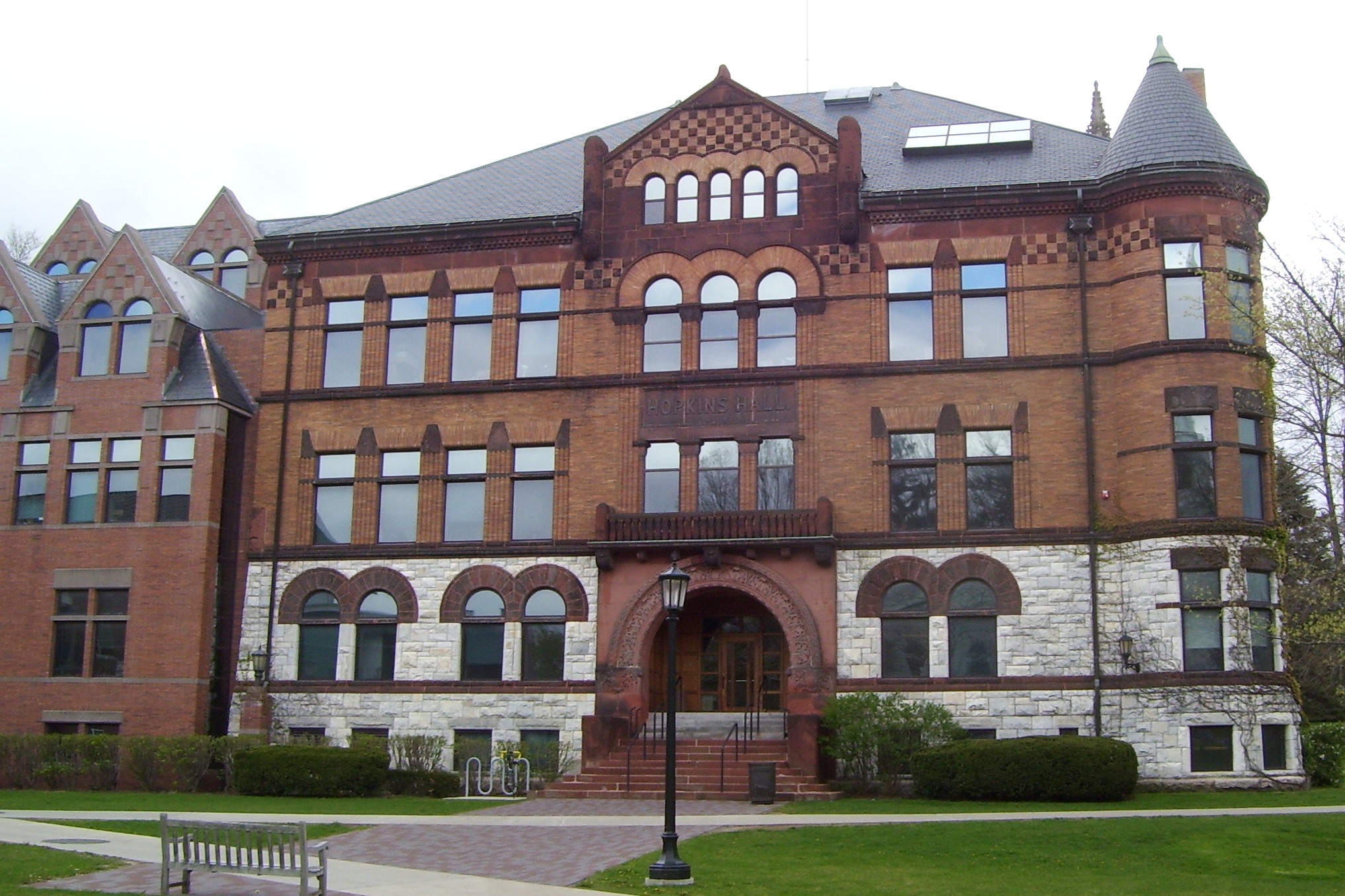
Beyond the numbers, our companion guide covers what Williams College is known for – academics, culture, and outcomes.
What Is Williams’s Acceptance Rate for the Class of 2030?
Williams’s Class of 2030 overall acceptance rate is 7.4%, with 1,239 students admitted from approximately 16,557 total applications (15,534 regular decision plus 1,023 early decision) (Williams College Office of Admission). The Class of 2030 cycle saw Williams’s largest applicant pool in college history and the lowest acceptance rate ever recorded at the institution.
The Class of 2030 figure represents a meaningful drop from the Class of 2029’s 8.61% rate. Application volume grew approximately 9% year-over-year, while admit count remained stable. Williams notified Regular Decision applicants on March 20, 2026, with detailed cycle reporting from The Williams Record. Historical Common Data Set filings are available through Williams’s Office of Institutional Research, and additional comparative data is available on College Board BigFuture. Williams complies with NACAC guidelines on admissions data disclosure.
Williams’s admit pool included 981 Regular Decision admits (6.3% RD rate), 258 Early Decision admits (25.2% ED rate), and 14 students matched through QuestBridge. The QuestBridge match brings high-achieving low-income students directly to Williams as binding ED equivalents.
What Were Williams’s Class of 2029 Admissions Numbers?
Williams’s Class of 2029 acceptance rate was 8.61%, with approximately 1,260 students admitted from approximately 14,640 applications. The Class of 2029 was Williams’s second cycle under sustained record-high application volume.
Williams enrolls approximately 575 first-year students, the smallest first-year class among top-30 ranked institutions. Williams’s yield rate has historically held above 50% and has trended upward in recent years as Williams has invested heavily in financial aid and yield programming. The small class size means admit counts remain extremely stable cycle to cycle.
Williams publishes detailed admissions data through The Williams Record (the student newspaper) and through the Williams Office of Admission, providing meaningful transparency on ED versus RD splits and historical trends.
How Has Williams’s Acceptance Rate Changed Over Time?
Williams’s overall acceptance rate has compressed steadily over the past decade, falling from above 17% for the Class of 2021 to 7.4% for the Class of 2030. The trend is driven primarily by application volume growth: applications rose from approximately 6,800 to over 15,500, while admit counts held relatively constant near 1,200-1,300 (NCES College Navigator; IPEDS Data Center).
| Class | Applications | Admitted | Acceptance Rate |
|---|---|---|---|
| 2030 | 16,557 | 1,239 | 7.4% |
| 2029 | ~14,640 | ~1,260 | 8.61% |
| 2028 | 15,758 | 1,300 | 8.25% |
| 2027 | 13,005 | 1,299 | 9.99% |
| 2026 | 15,321 | 1,302 | 8.50% |
| 2025 | 12,452 | 1,099 | 8.83% |
| 2024 | 9,715 | 1,176 | 12.10% |
| 2023 | 9,560 | 1,236 | 12.93% |
| 2022 | 8,594 | 1,261 | 14.67% |
| 2021 | 6,883 | 1,182 | 17.17% |
Source: Williams Common Data Set (multiple years, Williams College Office of Institutional Research) and The Williams Record reporting.
Application volume more than doubled across the decade, from 6,883 for the Class of 2021 to 15,534 (regular decision only) for the Class of 2030. The Class of 2025 cycle marked an inflection point as Williams’s test-optional pilot brought a large surge in applications. Williams’s yield-driven enrollment target keeps admit counts extremely stable, meaning future acceptance rate movement will be primarily a function of application volume.
Williams’s 7.4% Class of 2030 rate is the lowest in college history and reflects a structural shift in selectivity that places Williams among the most selective undergraduate programs in the United States, alongside the most selective Ivy League institutions.
How Does Early Decision Compare to Regular Decision at Williams?
Williams offers a binding Early Decision program: applicants who are admitted in mid-December must withdraw all other applications and commit to enrolling at Williams. Williams publishes detailed ED and RD split data each cycle through The Williams Record.
For the Class of 2030, Williams admitted 258 students from approximately 1,024 ED applications (25.2% ED acceptance rate) and 981 students from approximately 15,495 RD applications (6.3% RD acceptance rate). The ED rate was approximately 4 times the RD rate.
Williams’s ED admits typically fill approximately 45% of the enrolled class, with another 2-3% filled by QuestBridge match scholars. The ED pool includes a higher concentration of recruited athletes (Williams is in the NESCAC and fields 32 varsity teams), legacy applicants where the preference still operates, and students who have Williams as their unambiguous first choice.
Williams’s ED advantage reflects pool self-selection rather than preferential treatment for borderline candidates. The ED pool is meaningfully stronger on average than the RD pool, and the binding commitment provides yield certainty that Williams uses to manage institutional priorities. For complete strategic guidance on Williams admissions, see our Williams admissions strategy guide.
Why Does Williams Remain Test-Optional?
Williams is among the few elite institutions to maintain a test-optional admissions policy through the Class of 2031 cycle. While peer Ivies (Harvard, Yale, Brown, Dartmouth, Penn, Columbia) have all reinstated mandatory standardized testing, and peer LACs like Wesleyan have done likewise, Williams has explicitly committed to extending its test-optional pilot.
Williams’s rationale, articulated by Director of Admission Liz Creighton, focuses on internal research showing that test-optional applicants from Williams’s applicant pool perform comparably to test-submitter peers in first-year coursework. Williams has also emphasized that test-optional policies have meaningfully expanded the applicant pool, particularly from low-income and first-generation students.
Williams notes that approximately 50% of admitted Class of 2030 students submitted test scores. For broader context on testing requirements at top universities, see our analysis of mandatory testing reinstatements at elite universities, with the remainder admitted without scores. The middle-50% SAT range for score submitters was approximately 1480-1550, and the ACT range was 33-35. The rate at which test scores actually drive admit decisions appears to be higher for borderline applicants and lower for clear admits or denies.
What Is the Transfer Acceptance Rate at Williams?
Williams’s transfer acceptance rate has historically run between 5% and 12%, with the most recent cycles trending toward the lower end. Williams admits approximately 5-15 transfer students per cycle from approximately 100-200 applications. The small transfer cohort reflects Williams’s small overall enrollment and the limited number of seats available after retention.
Williams transfer applicants must have completed at least one full year of college coursework. Williams looks for transfer applicants whose academic interests align tightly with the liberal arts core and who demonstrate clear reasons for seeking a residential, undergraduate-only environment.
How Does Williams’s Acceptance Rate Compare to Peer Schools?
Williams sits among the most selective liberal arts colleges and competes for applicants with the most selective Ivy League and top-30 universities (College Board BigFuture). For the Class of 2030, several peer institutions have posted comparable or lower admit rates:
| School | Class of 2030 Acceptance Rate |
|---|---|
| Harvard | Not released (est. 3-4%) |
| Stanford | Not released (est. 3.5-4.0%) |
| Columbia | 4.23% |
| Yale | 4.24% |
| Princeton | Not released (est. ~4.4%) |
| Brown | 5.35% |
| Dartmouth | 5.8% |
| Pomona | ~7% |
| Williams | 7.4% |
| Cornell | ~7-8% (est.) |
| Amherst | ~9% |
| Swarthmore | ~7% |
Source: Institutional press releases and Common Data Set filings, Class of 2030 data.
Williams remains the most selective liberal arts college in the United States, with an admit rate now competitive with the most selective Ivy League institutions. For the full ranked comparison across top-25 universities and top-15 LACs, see our Class of 2030 acceptance rates analysis.
Why Is Williams’s Acceptance Rate Now Comparable to the Ivy League?
Williams’s 7.4% Class of 2030 acceptance rate places it within the same selectivity range as Cornell and below Penn’s estimated rate, an unprecedented competitive position for a liberal arts college. Three structural factors explain the convergence.
First, application volume growth. Williams’s applications more than doubled across the decade, from 6,883 to 15,534 regular decision applications. The growth reflects both Williams’s strengthened brand under the leadership of Presidents Adam Falk and Maud Mandel, and structural changes in the admissions market: the Common Application has lowered the marginal cost of an additional application, and the perceived selectivity hierarchy has compressed across top schools.
Second, the small enrolled class size. Williams enrolls approximately 575 first-year students, compared to Cornell’s 3,500 or Penn’s 2,400. Even with a smaller applicant pool, Williams’s admit count is mathematically constrained, producing the very low rate at the current application volume.
Third, yield strength. Williams’s yield has trended above 50% in recent years, allowing the admissions office to admit fewer students per enrollment slot. Combined with strong financial aid (Williams meets 100% of demonstrated need without loans for most families), the yield strength compounds selectivity.
What These Numbers Mean for Your Family’s Williams Application
The headline acceptance rate, 7.4%, is the wrong number to plan against. The single rate obscures three distinct realities that matter much more for application strategy:
The applied rate for a typical strong applicant is much lower than the published rate. Williams’s class is built around several institutional priority categories. Recruited athletes (Williams is in the NESCAC), legacies where the preference still operates, faculty children, and QuestBridge match scholars together account for a meaningful share of admits. For an unhooked applicant in the regular pool, the effective acceptance rate is closer to 4% to 6%.
Early Decision provides a structural advantage at Williams. The Class of 2030 ED rate (25.2%) was approximately 4 times the RD rate (6.3%). For applicants whose Williams application is fully ready by November 15, who are willing to make the binding commitment, and for whom Williams is genuinely the top choice, ED is the right strategic call.
Williams looks for applicants who genuinely want a small, residential, undergraduate-only liberal arts environment. Compared to peer LACs like Amherst, Williams’ admissions process places greater weight on cultural fit signals beyond academic indicators. The college’s Berkshires location, low student-to-faculty ratio, tutorials with two students per professor, and tight-knit residential life are not just academic features but cultural prerequisites. Generic “I want a great undergraduate experience” framing is not sufficient: Williams wants applicants who specifically value the Williams experience.
For families considering Williams, the work that matters is not gaming acceptance rate variation year-over-year but building an application that survives the comparative read against the strongest applicants in the pool. For complete strategic guidance, see our Williams admissions guide.
Frequently Asked Questions About Williams Admissions
Williams is consistently ranked among the very top liberal arts colleges, known for its distinctive Oxford-style tutorial classes, strength across the arts and sciences, a close-knit residential community, and a scenic rural setting. It is one of the historic Little Three. Applicants drawn to small, discussion-based learning, close faculty relationships, and a tight campus community in a quiet New England town often see these qualities as Williams’s most defining strengths.
Where scores are submitted, Williams has generally considered an applicant’s best section results across test dates, a superscoring approach, allowing the strongest combined result to be shown. Because testing policies shift, applicants should confirm both the current requirement and the superscoring practice on Williams’s admissions website before deciding which dates to report, since under a test-optional policy submitting strong superscored results remains a personal strategic choice rather than a requirement.
No; Williams meets full demonstrated financial need through need-based aid and does not award merit scholarships based on academic or other achievement alone. Support is determined entirely by a family’s financial circumstances. Families hoping for merit money should understand Williams’s model is purely need-based, so the focus belongs on the financial aid application, while those seeking non-need-based awards may need to consider institutions that offer merit scholarships instead.
They are entirely separate institutions; Williams is a small, highly selective private liberal arts college in Williamstown, Massachusetts, while William & Mary is a public university in Williamsburg, Virginia. The similar names cause frequent confusion. Applicants should be careful to confirm they are researching Williams College in Massachusetts, since the two differ completely in size, type, location, and character despite the resemblance, and a search can easily surface the wrong school.
Yes; Williams competes in Division III as the Ephs and is known as a strong athletic program within that division, fielding many varsity teams without offering athletic scholarships, in keeping with Division III rules. Sports are a prominent part of campus life. Recruited athletes still go through admissions, and applicants interested in competing should connect with coaches early, since athletic talent can be a factor in a holistic review even though no athletic money is awarded.
It plays a limited role; like many highly selective colleges, Williams focuses on academic strength and fit rather than tracking every interaction, though genuine, specific engagement can come through in essays and interviews. Authentic interest still strengthens an application. Applicants should write thoughtfully about why Williams suits them and engage sincerely where opportunities arise, since informed, specific interest tends to improve an application even where its formal weight in the decision is modest.
Interviews at selective liberal arts colleges like Williams are typically optional rather than required, sometimes conducted by admissions staff or alumni and increasingly available virtually. They are an opportunity rather than an obligation. Applicants should take advantage of an interview if offered to show genuine interest and add dimension to their application, but should confirm current availability on Williams’s website, since not being interviewed generally does not disadvantage a candidate.
For domestic applicants, Williams has practiced need-blind admission, meaning the ability to pay is not considered for those students, and it commits to meeting full demonstrated need. Policies can differ for international applicants. Families should confirm the current approach for their specific situation on the admissions website, since whether financial circumstances factor into a decision depends on residency and the policy in effect at the time of applying.
Sources: Williams College Office of Admission; Common Data Set; NCES College Navigator; IPEDS; NACAC.
About Oriel Admissions
Oriel Admissions is a Princeton-based college admissions consulting firm advising families nationwide on elite university admissions strategy. Our team brings deep expertise across every dimension of the application, and our distinctive 360 approach develops strategy, positioning, activities, essays, and interviews as one coherent whole. We offer a complimentary 30-minute discovery call to discuss your family’s situation, evaluate fit, and outline next steps. Schedule your discovery call →